
Specifics of tillage for stubble and post-harvest crops
14 min read
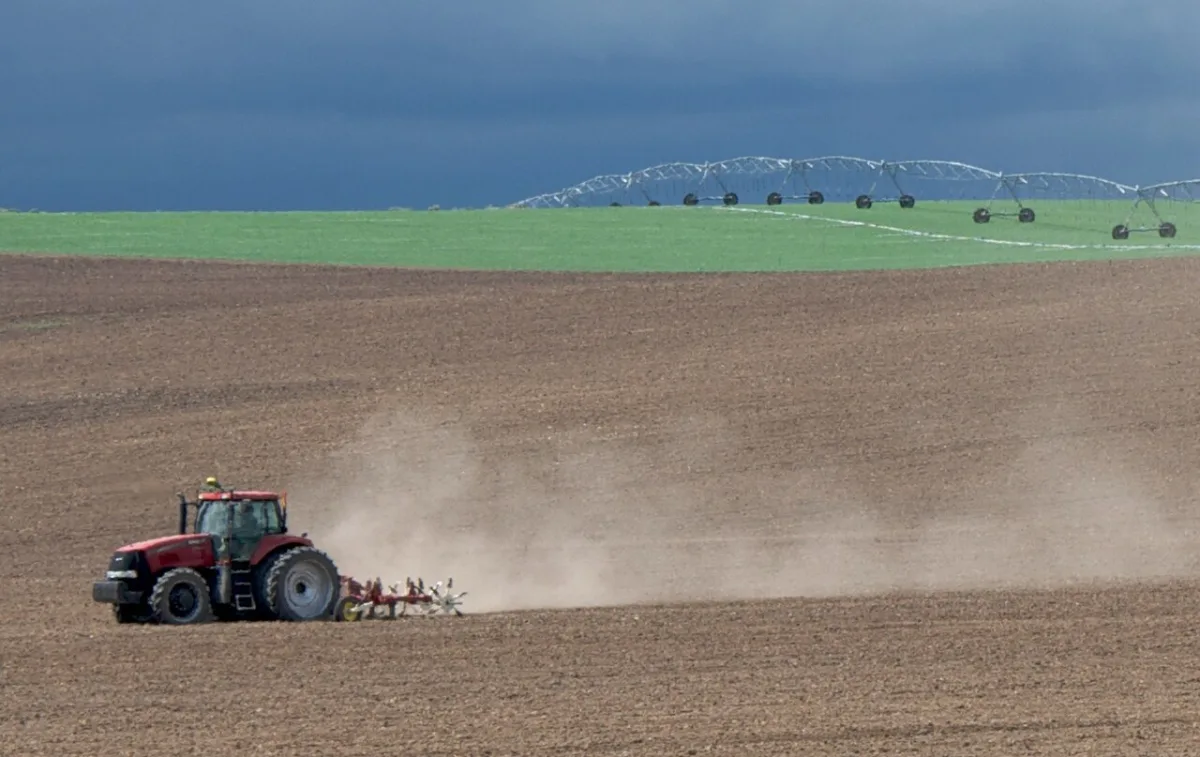
Not significant areas are occupied in the region by stubble and post-harvest crops. The most common crop for such sowings is maize and soybean.
Post-harvest crops are usually placed after grass mixtures, winter crops, and early spring crops harvested for green fodder in the spring and early summer. Stubble crops follow the grain harvest of winter and early spring grain crops.
By the time of harvesting the crops preceding post-harvest sowings, the upper layers of the soil in all zones of the region still have significant reserves of productive water. By the time of harvesting cereal grains used as predecessors for stubble crops, this moisture is much lower. It is especially scarce in the northern zone of the region.
Of course, moisture reserves by the time of tillage for second crops vary significantly by year. Tillage should ensure the maximum retention of moisture left after the harvest of the preceding crop and create optimal conditions for seed germination in the very top part of the plough layer.
The moisture-retaining soil structure created by it should best capture the low-productivity rainfall of the summer period. These tasks can be positively solved by tillage if, immediately after harvesting the predecessor, the treated layer is brought to a depth usually not exceeding 18–20 cm into a fine-crumbly, non-cloddy state and is slightly compacted, packed, and leveled on the surface.
It is very important to till the soil immediately after mowing the crop clearing the field. Delaying such treatment even by one or two days leads to the drying out of the topsoil, worsens the quality of the arable land, increases its cloddiness, and may jeopardize the seedling emergence of post-harvest and stubble crops. Therefore, if the harvesting of the field is prolonged (for example, maize is harvested for green top dressing for livestock), one should not wait for it to finish in the entire area, but prepare the soil as individual sections are mowed.
The choice of method and depth of tillage for second-harvest crops depends on moisture availability during the period of soil preparation and sowing. The study of tillage methods for post-harvest and stubble crops in various zones of the region allows us to conclude that they need to be differentiated in different years and for different districts.
In years with sufficient moisture, ploughing has some advantage. In dry years, a higher yield is obtained after stubbling. This also applies to tillage for stubble crops.
When tilling the soil for post-harvest crops, one should strive to perform the treatment to the depth of optimal crumbling immediately after mowing the green mass. It is better to use a combined ploughing unit consisting of:
- a plough;
- a battery of a disc stubble breaker;
- a drag or a section of a ring-spur roller.
If the plough layer crumbles well and the soil moisture is close to the capillary rupture moisture, the roller may not be used, and tooth harrows can be included in the unit.
In areas of insufficient moisture, as well as with low humidity and increased cloddiness of the treated layer, one should switch to surface tillage with thorough cultivation of the arable land and packing. The working depth of mouldboard stubble breakers, disc harrows, or subsoilers is set depending on the degree of soil crumbling.
For stubble crops, tillage is also carried out depending on the quality of the crumbling of the treated layer, using combined ploughing units, mouldboard stubble breakers, disc harrows, and subsoilers.
The use of disc stubble breakers for soil tillage for stubble crops almost always yields worse results. These implements do not provide a sufficient depth of loosening, which complicates the seed placement at the required depth. Crops under such surface tillage are more heavily infested with weeds.
The productivity of summer precipitation, which most often is of a torrential nature, is lower in such fields than in those that have received deeper tillage. In addition, with shallow tillage, especially on very heavy soils of the southern foothill zone, root growth into the depths is impaired due to significant compaction.
It is necessary to dwell on the differentiated use of rollers during soil preparation for stubble and post-harvest crops. At this time, the air temperature is quite high. The process of physical drying is significant. If the soil is kept in an excessively loose state, it dries out very quickly to the depth to which it was loosened.
Packing, by reducing total porosity, helps to reduce moisture losses by diffusion. Therefore, in all cases where the moisture of the tilled soil is less than the capillary rupture moisture, rollers must be used.
Packing and leveling the arable land also increase the productivity of summer precipitation. Work on creating an implement that combines tillage and the sowing of catch and stubble crops is extremely promising.
In the conditions of the steppe part of the Kuban, especially in the ordinary chernozem zone, years often occur when the surface layer of soil is blown away from autumn-plowed fields by wind during the winter-spring period. This erosion is particularly significant on wind-exposed slopes. Winter weather conditions have a major impact on the development of wind erosion processes. Their probability increases in a dry, frosty winter.
How weather destroys soil structure by spring
To prevent wind erosion, the condition of the top 5 cm layer of soil is critical. If the proportion of fine soil aggregates smaller than 1 mm exceeds 50% of the mass of this layer, the risk of soil blowing increases sharply. However, one should not rely on autumn ploughing to solve this problem by the time the spring dry winds arrive. It is impossible to manage soil structure during the winter period solely through tillage practices.
Winter weather conditions have a leveling effect on the structure of arable land. Sharp temperature fluctuations, alternating freezing and thawing, as well as wetting and drying cycles destroy large clods. As a result, by the beginning of spring, the aggregate composition of the top layer is practically leveled, regardless of the autumn tillage method used. The only reliable way to protect the soil from spring dust storms remains the preservation of stubble and harvest residues on the field surface.
Autumn tillage by itself does not guarantee soil resistance to wind in the spring. The structural condition of the top layer is largely determined by winter freezing and thawing processes, which break down the soil into dangerous fine-earth fractions.
| Tillage | First year | Second year | ||
|---|---|---|---|---|
| < 0.25 mm | < 1 mm | < 0.25 mm | < 1 mm | |
| Ordinary chernozem | ||||
| Late autumn ploughing | 7 | 31 | 9 | 30 |
| Early autumn ploughing | 6 | 32 | 7 | 24 |
| Soil-protective tillage | 11 | 35 | 8 | 25 |
| Typical chernozem | ||||
| Late autumn ploughing | 18 | 68 | 2.6 | 19 |
| Early autumn ploughing | 20 | 68 | 2.7 | 20 |
| Soil-protective tillage | 18 | 67 | 2.2 | 20 |
Soil-protective technology: stubble against the wind
For effective control of deflation, a soil-protective tillage system is being introduced into field practice, which allows for the preservation of vegetative cover for the winter. During the experiments, three variants of soil preparation after the harvest of cereal predecessors were studied. Traditional early and late autumn ploughing were compared with conservation tillage (subsurface tillage), where stubble remains on the surface.
Soil-protective tillage includes the following sequential stages:
- Immediately after harvesting cereal crops, the field is treated with a BIG-3 needle harrow with an attack angle of 8–12° with the working parts in a passive position.
- During the summer and early autumn, emerging weeds are destroyed as needed using a subsurface cultivator.
- In October, deep loosening of the soil is carried out using a subsurface deep-ripper.
For comparison, early autumn ploughing involved post-harvest stubble cultivation, August ploughing with a combined implement to the depth of the zone, and cultivation as weeds grew. Late autumn ploughing consisted of post-harvest disc cultivation, share (moldboard) cultivation after weed germination, and autumn ploughing in October without additional treatment. Both classical options leave the field without a protective vegetative cover for the winter.
The introduction of subsurface tillage has proven highly effective in combating the wind. According to observations on wind-exposed slopes in the northern zone (averaged over three years), subsurface technology reduces erosion significantly compared to classical ploughing. With sufficient stubble remaining, soil blowing practically does not occur.
- Soil loss on late autumn ploughing — 211 t/ha
- Soil loss on early autumn ploughing — 276 t/ha
- Loss on subsurface tillage — 31 t/ha
When switching to subsurface technology, it is important for the agronomist to control field weed infestation and consider the humidity of the zone. On ordinary chernozems in the northern zone, the number of weeds in maize crops increases insignificantly. On well-cultivated fields with timely application of herbicides, subsurface tillage does not pose a threat of high weed infestation.
In the more humid central zone on leached chernozem, subsurface tillage provokes heavy weed infestation in maize crops. On average, over two years, the number of weeds here increased by 138 units per 1 m² compared to ploughing.
Subsurface and chisel tillage: moisture conservation and yield
On ordinary chernozems, non-moldboard tillage allows for the preservation of soil structure and the accumulation of moisture without a loss in yield. Due to the stubble remaining on the field surface, wind erosion is reduced and the water regime is significantly improved, especially in dry years.
- Additional productive soil moisture by spring — 14–37 mm more compared to ploughing
- Stubble on the field surface in autumn — from 54 to 121 g/m²
- Stubble on the field surface in spring — from 47 to 90 g/m²
- Erosion-prone particle content in spring — 54–60% (with mouldboard ploughing — 56–57%)
On average over three years of trials, crop yield under subsurface tillage exceeded the performance of conventional ploughing: sunflower — by 0.4–2.1 centners per hectare, grain corn — by 4.8–5.2 centners per hectare, silage corn — by 26 centners per hectare. When growing peas, subsurface tillage over five years showed practically the same yield as ploughing, but allowed for a reduction in labor and fuel costs.
On heavy and wetter soils, yield under subsurface tillage decreases. Furthermore, when abandoning the plough, the amount of weeds in crops increases. To avoid losing the harvest, it is necessary to apply highly effective herbicides, especially in the autumn soil tillage system.
A comparison of corn yield using various methods of primary tillage soil depending on soil-climatic zones is provided in the table below.
| Tillage | Northern zone (silage corn), c/ha | Eastern zone (grain corn), c/ha | Central zone (grain corn), c/ha |
| Late autumn ploughing | 230.2 | 49.0 | 58.8 |
| Early autumn ploughing | 232.5 | 49.0 | 57.7 |
| Soil-protective | 238.1 | 43.4 | 52.0 |
On ordinary chernozems of the northern zone and northern subzones of the central zone, subsurface tillage for corn, sunflower, and peas is fully justified. When using a soil-applied herbicide, the sunflower yield under subsurface tillage to a depth of 22–25 cm and 14–16 cm on average over three years does not lag behind conventional autumn ploughing at 22–25 cm. The density of the arable layer under subsurface tillage is slightly higher, but on ordinary chernozems, it does not exceed the limits that restrict the yield.
Good results are provided by the use of chisel ploughs. They are less energy-intensive than mouldboard ploughs, do not overcompact the soil, and retain 60–65% of stubble on the arable surface. Over three years of testing, the sunflower yield when preparing the soil with a chisel plough proved to be 1.2 centners per hectare higher than with ploughing, provided there is quality weed control with herbicides.
Anti-erosion tillage on slopes
The main principle of working on sloped lands is the maximum retention of moisture and the prevention of soil wash-off. On gentle slopes with a steepness of up to 3°, special measures are usually not required, but on plots from 3° to 6–8°, active water erosion begins, threatening to wash away the topsoil.
Primary tillage on dangerous slopes is carried out perpendicular to the direction of surface runoff (across the slope). Contour tillage is even more effective, in which the unit moves along contour lines — lines with the same elevation of the terrain. When planning work, it is important to consider the stability limits of the equipment, as on slopes of more than 6–8°, machines operate with a side tilt.
| Equipment type | Stability limit (deg.) |
| Trailed machines (side-shifting) | 4 |
| Mounted machines (side-shifting) | 5–6 |
| Wheel tractors | 11–12 |
| Tracked tractors | 15–17 |
Before contour ploughing, based on topographic survey data, contour lines are staked out at a small distance from each other. The tractor driver ploughs the plot across the slope, orienting himself to these lines. Furrows with such ploughing will be perpendicular to the direction of runoff and reduce it.
Contour ploughing and any other tillage across the slope should become a mandatory measure when cultivating crops on gentle slopes. This can reduce wash-off by more than half.
Increasing the depth of the loose soil layer and converting surface runoff into internal infiltration restrain the development of water erosion processes. Deep loosening of the soil along the slope or at an angle to it, followed by ploughing across the slope, ensured a significant reduction in soil wash-off, reduced over-saturation of the upper part of the soil profile, and ultimately increased yield.
Of great importance for reducing water erosion on gentle slopes is the organization of the farm territory, in particular the strip arrangement of crops. Crop rotation fields, orchard and vineyard blocks should be located with their long side across the slope.
On slopes from 6–8 to 10–12°, contour tillage of the soil is also mandatory. However, its influence on soil wash-off processes, due to the increased steepness, decreases significantly. Here, within the primary tillage system, other special measures to reduce runoff should also be carried out. On autumn ploughing, furrowing can be performed.
Depending on the slope steepness, furrows are cut with a single-bottom plough 3–10 m apart. Their depth is from 20 to 35 cm. The furrows are made intermittent by disengaging the plough in a checkerboard pattern.
Ridge ploughing is possible. An elongated mouldboard is installed on even or odd plough bodies. When ploughing with a four-body plough, two ridges and two furrows are produced. If two cross-damming devices are additionally installed on such a plough, they will form transverse ridges. The surface of the arable land is given a cellular appearance, which significantly reduces runoff.
Strip deep soil loosening across the slope is also of importance.
It should be noted that in the foothills of the region, significant areas are occupied by heavy soils with a highly compacted massive horizon (massive chernozems, gray and dark gray forest soils). The arable layer on such lands is heavily waterlogged by spring, which hinders the implementation of spring field operations, delays their start, and worsens the living conditions of crops. Therefore, it is necessary to combat excess water by spring here.
Techniques such as cellular ploughing, intermittent furrowing, and all others that lead to an increase in the already excessive moisture of the top soil layers should not be used in these areas. It is believed that transferring surface runoff to subsurface runoff is promising for these soils on gently sloping hillsides.
Experiments by the Department of Agriculture have established that deep loosening before winter ploughing with a ripper along the slope significantly reduces surface runoff on slight slopes. It is transferred to subsurface runoff. As already noted, this reduces soil erosion and its waterlogging by spring, improves the physical properties of the arable layer, and ultimately increases the yield.
In the mountainous areas of the region on sloping hillsides, winter ploughing leads to an increase in soil erosion compared to areas not ploughed in the autumn or occupied by some winter or overwintering crop. Winter fallow in these excessively moist areas on heavy soils with high compaction in the sub-arable layer becomes heavily waterlogged by spring. The arable layer during a winter rich in precipitation is often so compacted that it must be re-ploughed in the spring. This results in poor, cloddy arable land and delays the start of sowing operations. On heavy soils in mountainous areas, spring ploughing during the period of good crumbling of the cultivated layer has an advantage over winter tillage. On well-drained soils of river valleys, winter tillage has the advantage.
Recommendations for combating water and wind erosion prohibit the ploughing of new lands for sowing annual agricultural crops on slopes over 10–15°. Land development according to slope steepness:
| Slope type | Steepness, degrees | Purpose |
| Significantly sloping | from 10–12 to 15° | Perennial plantations only (terracing) |
| Steep | from 15–17 to 25–30° | Perennial crops and afforestation (bulldozer-type terraces) |
Read next
Soil and tillage For agronomists
Specifics of soil tillage for winter crops after grain legumes and perennial grasses
Soil and tillage For agronomists
Technological features of effective tillage of occupied fallow in crop rotation
Soil and tillage For agronomists