
Specifics of soil preparation after row crops for spring crops
3 min read
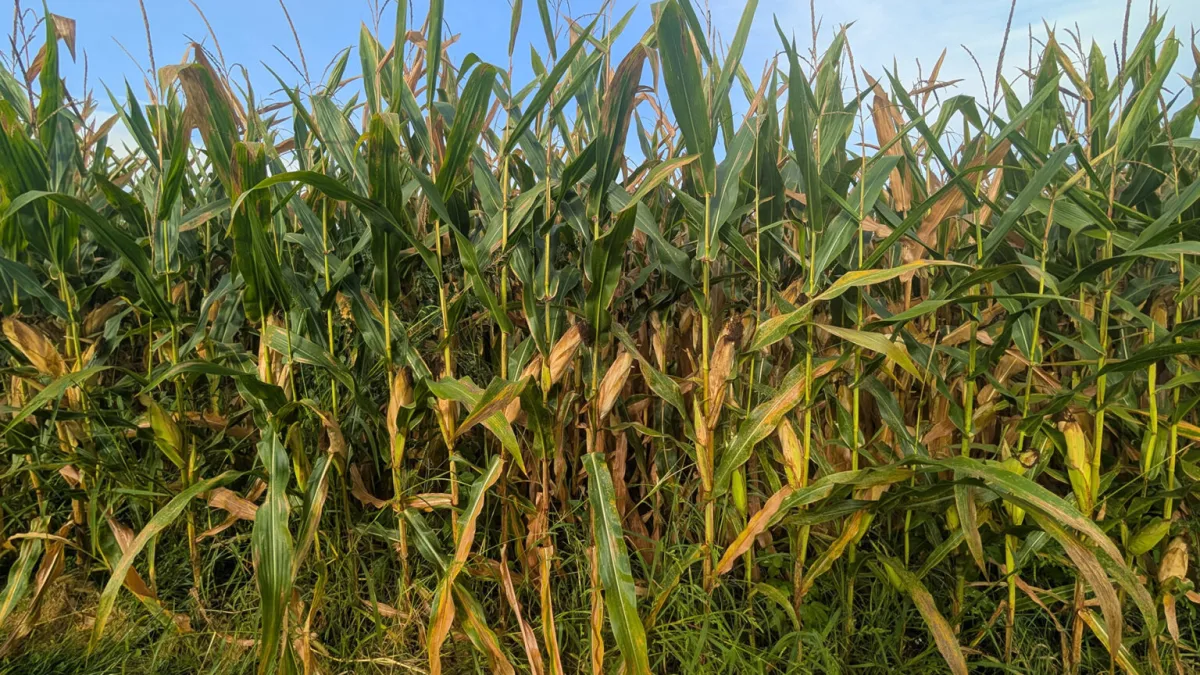
Row-crop predecessors — grain corn, soybean, beet, and sunflower — clear the fields late. The soil after them is highly compacted, desiccated, and infested with spring weeds. To prepare such plots for spring crops, it is important for the agronomist to timely stop moisture loss and efficiently process the stubble.
After harvesting sunflower and corn, perform high-quality stubble cultivation with a disc implement or a sweep cultivator to a depth of at least 8 cm. If a single pass does not provide the required depth of stubble cutting, repeat the treatment in the transverse direction. This technique shreds crop residues, cuts weeds, and creates a loose layer that prevents moisture evaporation. Furthermore, after cultivation, the dry soil crumbles better during ploughing, and the tractor's draft resistance is reduced.
Post-harvest cultivation on sunflower fields triggers uniform germination of volunteer plants. You will easily destroy all emerged crops with subsequent primary tillage.
If a long period passes between cultivation and ploughing, weeds will actively grow on the cultivated plots during a wet autumn. Plan the timing of operations without long gaps.
On weed-free fields after crops that do not leave stubble (beet, vegetables, melons), cultivation can be skipped. If the soil crumbles well during ploughing, proceed directly to ploughing.
Choose the ploughing depth taking into account the residual effect. For row crops themselves, deep ploughing is usually performed; therefore, when preparing for spring crops, try not to increase the depth without urgent need. Increasing the ploughing depth makes sense only in cases of severe field infestation with perennial weeds.
Mulching tillage on ordinary chernozems
In the northern and central zones of Krasnodar Krai, on ordinary chernozems, it is advisable to use mulching soil-protective tillage for spring crops. With this method, the entire above-ground part of the row-crop predecessor remains on the field and acts to conserve moisture and protect against erosion.
- Minimum stubble cultivation depth — 8 cm
- Frequency of discing for mulch — 2–3 times
- Depth of mulching tillage — 12–18 cm
- Shred the above-ground part of the predecessor using two or three passes of a disc implement.
- Treat the field with an anti-erosion cultivator with a rod weeder attachment or a sweep cultivator.
Choose the depth of the primary mulching tillage based on the crumbling quality of the treated soil layer.
| Operation | Tillage depth, cm |
|---|---|
| Primary mulching tillage | 12–18 |
Read next
Soil and tillage For agronomists
Specifics of tillage after harvesting row crops for winter wheat
Soil and tillage For agronomists
Planning a tillage system within the crop rotation of an agricultural enterprise
Soil and tillage For agronomists