
Specifics of tillage after harvesting row crops for winter wheat
13 min read
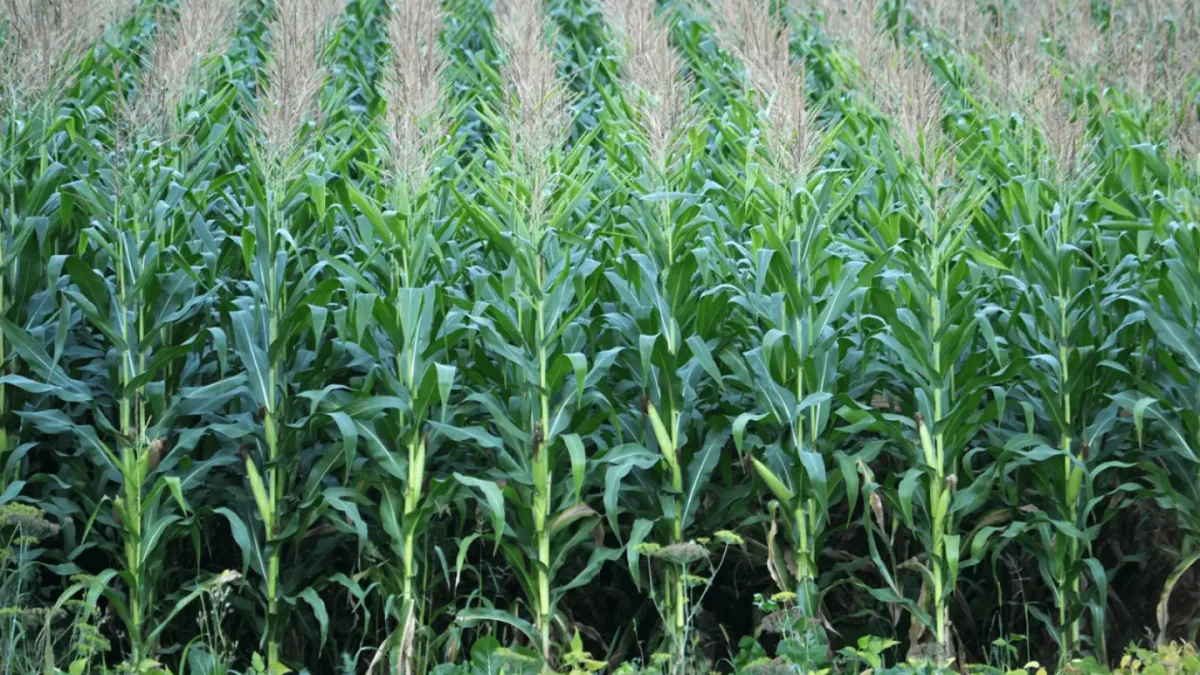
Physical state of the soil after row-crop predecessors
Row-crop predecessors for winter wheat have their own advantages. Thanks to high farming standards, crops in such fields are less affected by diseases and pests. A high level of mechanization and shorter harvesting times allow for faster preparation of the soil for sowing winter crops, and heavy fertilization of row crops improves the nutritional status.
However, by the time late row crops are harvested, the arable layer becomes severely desiccated, often down to the wilting point and below. After grain maize and sunflower, the soil loses moisture particularly intensely. Due to the lack of inter-row tillage before harvest, deep cracks form in the ground, which intensify the physical drying of the upper layers.
The soil becomes severely compacted under the influence of tractor running gear and machine implements. This effect is particularly pronounced on heavy soils of the southern foothill zone if the row crops were tended under high humidity conditions. At low humidity, due to the dense layer, the plough either surfaces or sinks too deep, where the soil density is lower.
- Density of the arable horizon — up to 1.35–1.4 g/cm³
- Soil cloddiness during tillage — more than 70%
- Porosity at a depth of 22–27 cm — up to 46–47% or less
- Proportion of the field area compacted by machinery — about 2/3 of the field
In addition to the physical properties of the soil, field weediness remains a serious problem. After row-crop predecessors, late spring weeds grow massively in the fields: yellow and green foxtail, barnyard grass, common ragweed, and amaranth. Sunflower also leaves behind volunteer plants, the seeds of which remain viable in the soil for several years.
Tillage technology before sowing winter crops
Timely tillage directly affects the yield of winter wheat. Preparing the field one month before sowing ensures a yield increase of more than 2–3 centners/ha compared to tillage two days before sowing. To meet optimal agrotechnical deadlines, fields after row-crop predecessors must be cleared of crop residues first.
- Immediately after harvesting the predecessors, clear the field of crop residues.
- Perform stubble loosening to a depth of at least 8–10 cm with heavy disc harrows.
- Carry out primary tillage, focusing on maximum crumbling of the worked layer and minimal cloddiness.
Loosening to a depth of 8–10 cm immediately after harvesting sunflower shreds stem residues for better incorporation, triggers autumn germination of volunteer plants, and ensures a yield increase of winter wheat of up to 2–3.2 centners/ha.
Ploughing dry soil after row crops leads to severe cloddiness and rapid loss of residual productive moisture. Emergence in such areas will only occur after heavy precipitation. The settling of the cloddy arable layer in winter breaks plant roots, and at low temperatures, the wheat fails to form a secondary root system.
When choosing the depth of tillage, be sure to consider the soil type. On ordinary, typical, and leached chernozems, the density of the arable layer under winter wheat does not exceed optimal values even without ploughing (by summer it is no more than 1.3 g/cm³, even if sowing was carried out without tillage). On heavy soils of the southern foothill and western zones, soil density can exceed optimal values, especially when using surface tillage.
Influence of tillage on moisture, nitrates, and development of winter crops
In a dry autumn, surface tillage of the soil retains moisture in the seed placement zone much better than ploughing. The dense lower layer, covered by loose mulch, prevents water from evaporating. Conversely, deeply ploughed cloddy arable land loses moisture quickly due to high inter-aggregate porosity. As a result, in the event of rainfall shortages, seedlings in disked areas emerge faster.
| Soil indicator | Surface tillage | Ploughing (plough) |
|---|---|---|
| Moisture reserves in the seed placement layer during drought | Higher by 3–6 % of absolutely dry soil mass | Lower due to rapid water evaporation |
| Nitrate accumulation in the topsoil in autumn | 2 times higher (with a humidity difference of only 1.8 % after maize) | Significantly lower due to the dryness of the arable horizon |
| Soil density in spring (deeper than 10–15 cm) | Soil becomes more compacted by the critical phase of winter crops | Optimal looseness of chernozem is preserved |
Nitrate accumulation in a dry autumn directly depends on humidity. In experiments on leached chernozem, an increase in humidity by just 2–3 % (in the range from 14 to 19 % of absolutely dry mass) sharply activated nitrification. At the same time, the difference in humidity and nitrates between ploughing and disking is expressed only in the upper layer and is not observed deeper than 20–30 cm.
Crops grown using shallow tillage are always more weed-infested than those grown after ploughing. This requires mandatory planning of herbicide applications.
The development of winter wheat changes with the seasons. In a dry autumn, plants develop better in disced fields due to high field emergence of seed and productive tillering. In spring, however, the advantage shifts to ploughed plots. Here, better loosening of chernozem soils is maintained (especially deeper than 10–15 cm), slightly more nitrates accumulate, and a more productive ear is formed.
Tillage technologies after different predecessors
The choice of autumn tillage depends on the preceding crop and the current weather in the region. To optimize costs and maintain yield, it is important to correlate the tillage method with the biological characteristics of the predecessor.
- Yield increase from discing after grain maize — 3–4 dt/ha
- Yield increase from ploughing after sunflower in a wet year — 3–4 dt/ha
- Depth of preliminary stubble peeling after maize — more than 8–10 cm
- Depth of ploughing after silage maize — 20–22 cm
Long-term experiments on studying tillage after sunflower have shown the equivalence of ploughing and discing. Ploughing provides a yield increase only in wet years, when the moist plough layer crumbles well under the plough. In dry years, the advantage remains with shallow tillage. Soil after soybean is treated using the same technology as after sunflower.
After grain maize on leached chernozem, it is optimal to perform loosening with disc harrows immediately after harvesting. When preparing the field after silage maize, tillage is carried out according to the half-fallow type. Since silage is harvested early (in August), about a month and a half remains until the sowing of winter crops, and a significant reserve of soil moisture is preserved in the soil.
During harvesting of silage maize, follow a strict rule: the area mowed during the day must be tilled no later than the next day.
- Perform post-harvest peeling with heavy disc harrows to a depth of more than 8–10 cm immediately behind the mower. This is necessary for cutting and chopping the tough maize stubble.
- Plough the field without a time gap after peeling. The ploughing depth must ensure complete incorporation of crop residues. On common and leached chernozem of the Kuban, ploughing at 20–22 cm with field levelling provides the same wheat yield as discing.
- Carry out further technological operations according to the half-fallow stubble tillage scheme.
Sugar beet as a predecessor for winter wheat differs slightly from sunflower and maize. The field is usually vacated later, and its harvesting time often coincides with the wheat sowing period. During beet harvesting, the inter-row spaces are loosened by the harvesters' digging blades, but the compacted layer, typical for the lower part of the plough layer under row-crop predecessors, remains, which increases cloddiness during tillage under low humidity conditions. In addition, the field is compacted by transport vehicles after beet harvesting.
Experiments conducted on leached chernozem have revealed some advantages of shallow tillage of soil for winter wheat. The use of shallow soil tillage is economically profitable – costs are approximately half as much as when carrying out ploughing with subsequent field levelling.
It is necessary to emphasize the need for a flexible, creative approach to choosing soil tillage methods after row-crop predecessors.
The success of shallow soil tillage after row crops is largely determined by the thoroughness of its execution and how its depth is maintained. It should be at least 8–10 cm. When using disc harrows, difficulties arise in placing winter wheat seed at the optimal depth. Some of it is not covered at all. In adverse years, this can be the cause of a significant yield reduction and even the death of winter crops. This is why fallow cultivators are used to level the seedbed after shallow tillage.
The application of shallow soil tillage on weed-infested lands must be approached with caution. If a field or its part is heavily infested with perennial weeds, especially Cirsium arvense, Cynanchum acutum, or blackberry, ploughing should be carried out to a depth where cloddiness will be lower. To improve crumbling, the peeling preceding the ploughing should be done with disc harrows. Ploughing must be finished two to three weeks before sowing. Immediately after ploughing, without waiting for rain, field levelling should be performed.
On very heavy soils of the southern foothill zone with a physical clay content of up to 70–80% (compacted chernozem, grey and dark grey forest soils, heavy floodplain and meadow soils), it is necessary to carry out plough tillage of the soil after row-crop predecessors for winter crops. Such soils become heavily waterlogged and compacted by spring.
In areas of surface tillage, the soil density in the plough layer by the critical period of winter crop development increases to values significantly higher than optimal. In spring, these heavily waterlogged soils create poor aeration conditions, suppressing the accumulation processes of nutrients available to plants, especially nitrates. Numerous cracks appear in late spring and early summer. There are significantly more of them here than in ploughed areas.
Usually, on these soils, as well as in gullies, hollows, and depressions, the harvest of winter crops following surface tillage is significantly lower than following ploughing, although in autumn the plants develop even better here.
On vertic chernozem, the yield of winter wheat following surface tillage was on average 3.6–3.9 centners per hectare lower over three years than following ploughing. Increasing the depth of ploughing to 30 cm with proper tilling of the arable land increased the winter wheat yield by 3.4–4.6 centners per hectare compared to ploughing to 22 cm after sunflower, corn, and beet. The use of subsoilers during ploughing to 20–22 cm increased the yield by 4.4–4.6 centners per hectare.
Similar data were obtained on the same soils for winter barley. Increasing the depth of ploughing provided a greater gain in years with excessive moisture.
Improving soil tillage after row-crop predecessors for winter crops is a very acute problem in Kuban agriculture. Its solution, in our view, should proceed in two directions.
Firstly, by changing the quality of the row crops themselves as predecessors. Here, measures that reduce the density of the plough layer and decrease its desiccation are of the greatest importance. To a large extent, this will be facilitated by the reasonable introduction of minimum tillage while significantly increasing the general level of farming culture. Reducing the number of soil tillage operations on row crop sowings reduces soil density, which results in less cloddiness when tilling it for winter crops.
Secondly, by improving soil tillage after row-crop predecessors for the sowing of winter crops.
Combined tillage implements should be used more widely. The use of such an implement on ordinary chernozem ensures high-quality surface tillage, which in turn improves the field emergence of seed and conditions for autumn plant development, allowing for a yield gain of 5.2 centners per hectare compared to ploughing.
Sweep cultivators used for surface tillage on dry, compacted soils result in greater cloddiness than heavy disc implements.
In such conditions, it is better to use heavy disc harrows.
On ordinary chernozems in the northern and central zones of the region, soil-protective mulching tillage of row-crop predecessors for winter crops should be implemented. Its essence lies in the thorough shredding of crop residues of row-crop predecessors, loosening the soil to 8–10 cm while maintaining the maximum amount of crop residues on its surface, which are shredded by disc harrows. The harrows are loaded with ballast. The angle of attack during operation is 15–20°. The first pass is across the rows, the second at a slight angle. The third pass is performed if the shredding is not achieved after two passes. The loosening depth to preserve stalks is no more than 4–5 cm.
On heavy, compacted, and desiccated soils, a soil-protection cultivator with a rod weeder attachment is used. On looser soils with sufficient moisture, sweep cultivators are used, which loosen the soil to 8–10 cm and preserve 70–80% of crop residues on the surface of the arable land. Rollers can be used to level the field. Sowing is carried out using stubble seeders.
Such tillage provides protection for the soil against wind erosion, improves conditions for the development of winter wheat, and increases its yield by 1.7–3.1 centners per hectare. When choosing a method of soil tillage after row-crop predecessors, soil conditions in different fields should also be taken into account.
For instance, in the southern foothill zone, a study of soil tillage techniques for winter wheat after sunflower was conducted on two soil types: compacted leached chernozem and meadow-chernozem soil.
On meadow-chernozem soils containing less clay, increasing the tillage depth from 10–12 to 30–32 cm had no effect on the harvest. On the heavier, compacted leached chernozem, the yield reduction following disking averaged 5 centners per hectare over three years. By ploughing to 25–27 and 30–32 cm, a yield gain of 4.6 and 9.4 centners per hectare, respectively, was obtained compared to standard ploughing to 20–22 cm.
Different soil conditions in two adjacent fields are the reason for the unequal effectiveness of soil tillage.
Read next
Soil and tillage For agronomists
Effective tillage after harvesting cereal crops in the Kuban region
Soil and tillage For agronomists
Specifics of soil tillage for winter crops after grain legumes and perennial grasses
Soil and tillage For agronomists