
Technological features of effective tillage of occupied fallow in crop rotation
4 min read
Timely harvesting and soil preparation: how to avoid moisture and crop losses
For the northern zone of the region, green manure fallows serve as an excellent predecessor for winter wheat. Grain yield following these is almost on par with the figures for black fallows. Furthermore, under conditions of moisture deficiency by the time of harvest, green manure fallows help balance the water regime in the crop rotation. With proper agricultural practices, the autumn deficit of productive soil moisture in the root zone is minimal and typically does not exceed 100–120 mm.
It is best to use sainfoin or annual cereal-legume mixtures as green manure crops. The legume component is mandatory: it enriches the soil with nitrogen and improves its overall soil fertility. Tillage for the green manure crops themselves is carried out according to the standard farm scheme. However, if conditions permit, it is recommended to deepen the plough layer to the depth recommended for the zone. If the fallow is occupied by spring-sown crops, deep tillage is mandatory — its residual effect will have a positive impact on the subsequent winter wheat.
Timely harvesting of the green manure crop is of critical importance during soil preparation. The quality of subsequent tillage and the yield of winter crops depend directly on this. Delaying mowing leads to rapid drying out of the arable land and grain loss.
| Year conditions | Reduction in winter wheat yield with a 2-week harvest delay |
|---|---|
| Average indicators | 6 c/ha |
| Drought years | 8–10 c/ha |
To minimize moisture loss and ensure uninterrupted machinery operation, follow this sequence of operations:
- Lay out the plots for harvesting in such a way as to create optimal conditions for the passage of tillage implements.
- Carry out soil tillage immediately after mowing each individual plot, without waiting for the entire field to be harvested.
- Before sowing winter wheat, maintain the green manure fallow using the same scheme as for half-fallow tillage after cereal predecessors.
The dense stand of a green manure crop protects the soil from evaporation. After mowing, the exposed arable land loses moisture instantly, so it must be tilled right after the mower — without even a one-day delay.
Choosing tillage technology: depth, implements, and weather conditions
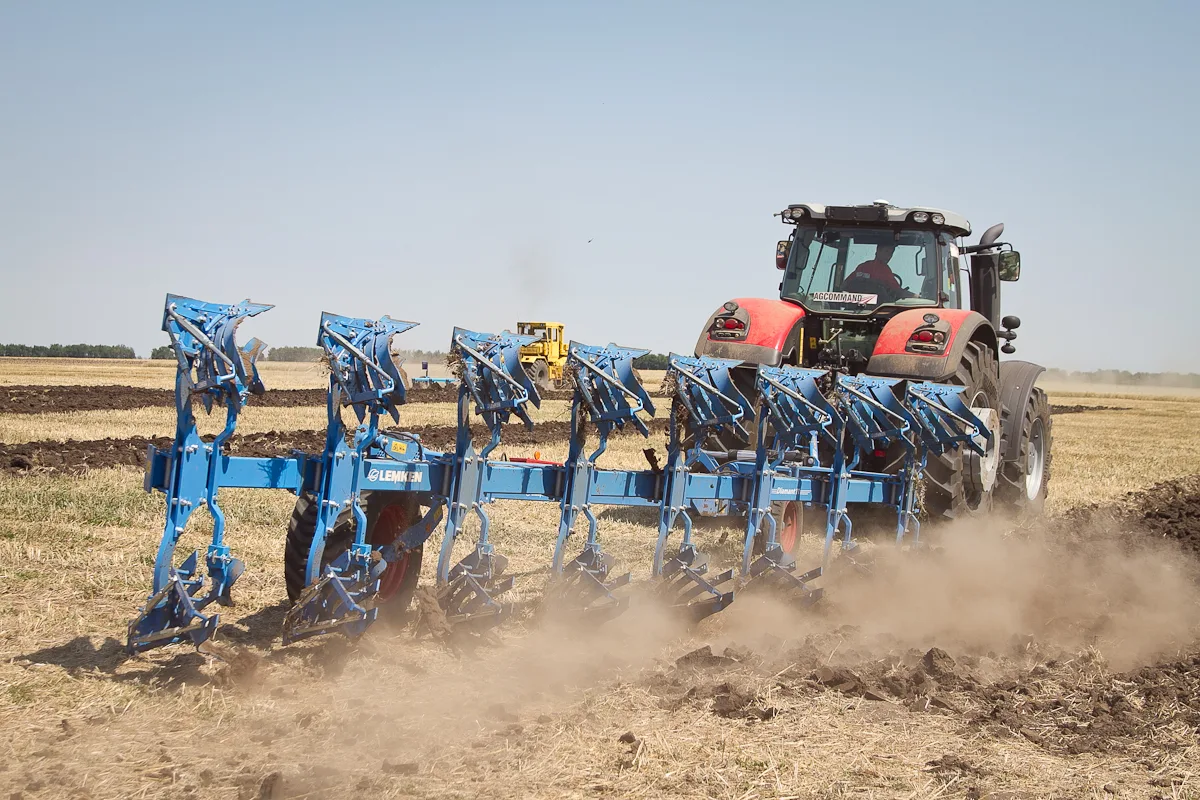
The depth and method of soil tillage after harvesting the green manure crop are selected based on specific conditions. Key criteria are the tilth quality of the plough layer, the degree of soil compaction, and the weed infestation of the field. If there are many perennial weeds in the field, it will be necessary to abandon disc implements, increase the tillage depth, and perform ploughing. At the same time, it is important from the very first passes of the machinery to give the arable land properties as close as possible to a black fallow and maintain them until sowing.
Ploughing deeper than 20–22 cm after harvesting the predecessor does not increase winter crop yield. In drought years, deep tillage may even reduce grain harvest. For better soil crumbling, it is recommended to plough to a depth of 16–22 cm.
Livestock grazing on the field after harvesting the green manure crop is strictly prohibited. On heavy and moist soils, livestock create excessive compaction, which causes large, indestructible clods to form during subsequent ploughing.
To reduce soil cloddiness, shorten the gap between mowing and tillage, vary the tillage depths, and be sure to perform deep pre-ploughing stubble cultivation. It is more effective to use combined implements for ploughing. If soil moisture has dropped below the capillary rupture level, use rollers (increasing pressure on cloddy areas). With good soil crumbling, tooth harrows and heavy drag harrows are sufficient.
According to field trial data on ordinary chernozems in the northern zone, methods of preparing sainfoin fallow significantly affect yield. The difference in grain harvest is determined mainly by the number of productive shoots. Specific test results under various humidity conditions are shown in the table:
| Moisture conditions | Method and depth of soil tillage | Impact on winter wheat yield |
|---|---|---|
| Sufficient moisture | Surface discing to 8–10 cm or milling to 8–10 cm | Greatest yield reduction — more than 6 c/ha |
| Ploughing to 20–22 cm or subsurface tillage to 20–22 cm | Higher yield | |
| Severe drought | Tillage with a subsurface deep-ripper to 20–22 cm followed by processing with a tiller or disc harrow | Highest yield; significant increase of 6.7–7.9 c/ha |
- Moisture deficit in the root zone — up to 100–120 mm
- Yield reduction due to delayed harvest — 6–10 c/ha
- Ploughing depth for good crumbling — 16–22 cm
- Yield increase from a deep subsurface ripper during drought — 6.7–7.9 c/ha
Read next
Soil and tillage For agronomists
Planning a tillage system within the crop rotation of an agricultural enterprise
Soil and tillage For agronomists
Effective tillage after harvesting cereal crops in the Kuban region
Soil and tillage For agronomists