
Renewal of soil tillage by deep loosening of vineyard inter-rows
5 min read
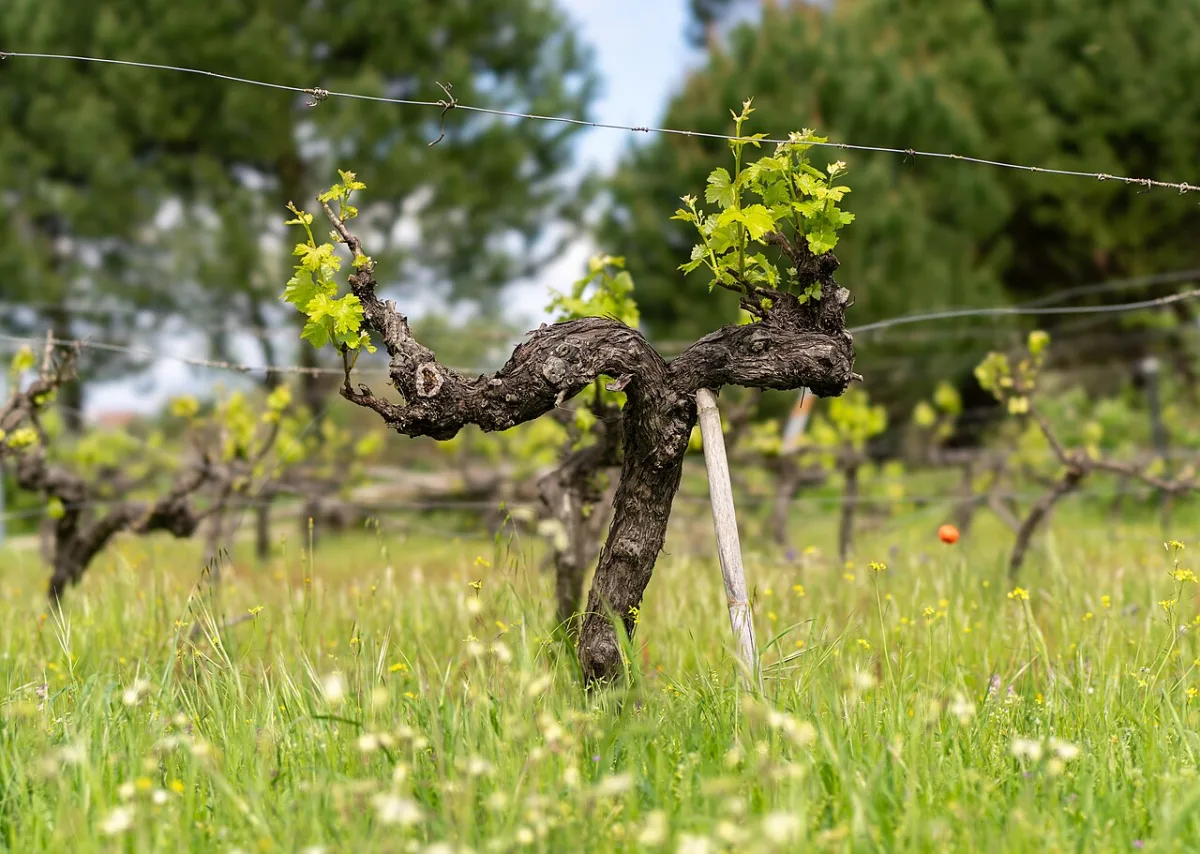
No matter how rationally the Tillage system of soil tillage and plant protection of vineyards against diseases and pests is structured from the perspective of its minimization, the number of tractor passes with various implements reaches 30 per season. Since the zone of such passes is limited to the width of the row spacing, the tracks and wheels of tractors and implements have been moving along practically the same rut, located 40–60 cm from the row, for many years.
All this leads to the following negative consequences:
- soil compaction exceeding permissible limits (1.3–1.4 g/cm3);
- inhibition of root system growth;
- general weakening of the grapevine;
- reduction in its yield.
Subsoil ploughing, as an obligatory pre-planting practice aimed at optimizing soil structure in the year of vineyard establishment, provides favorable conditions for the development of the root system of young plants only during the first two, or in some cases, five to six years. Therefore, subsoiling in fruit-bearing vineyards must be renewed by deep loosening of the row spacings once every 2–3 years.
| Parameter | Value |
| Zone of main root mass placement | 40–70 cm |
| Recommended loosening depth | 60–80 cm |
Good results are obtained with the following sequence of tillage:
- In one year, the even row spacings are deeply loosened.
- In another year, the odd row spacings are deeply loosened.
The necessity of alternating loosening by year is due to the fact that simultaneously with soil loosening, the plant's root system is pruned, which requires 3–4 months for regeneration. In this regard, deep tillage of two row spacings simultaneously inevitably causes large root losses and leads to plant inhibition.
The Viticulture Department of the Crimean Agricultural Institute has developed a method for renewing subsoiling based on the principle of forming the root system zone of grapevines starting from the first years of their life. In this case, annual deep soil tillage in all row spacings simultaneously is allowed. Here, pruning part of the roots should be considered a positive practice that induces rejuvenation of the root system and an increase in its absorbing part, since 20–30 young active rootlets develop at the site of one root cut.
Loosening of deep soil layers facilitates the accumulation and redistribution of soil moisture in the root-inhabited layer during critical periods of the grapevine's life. Hence, a saying originated among viticulturists: 2 deep loosenings replace 1 irrigation. In order to minimize the number of tillage operations and reduce costs, deep loosening of soil should be combined with fertilizer application and irrigation.
The zone of covered viticulture in the USSR, more than in any other country, occupies a large area. Every year, covering and uncovering of grape bushes are carried out on an area of 280 thousand hectares. The most radical means of protecting grapevines from critical temperatures of the winter period today is covering them in the autumn with an earthen mound 30 cm high and 100 cm wide. This work should be carried out before the onset of autumn frosts after pruning the grape bushes.
Covering bushes for the winter includes 2 main operations:
- laying down the bushes;
- covering them with a layer of soil.
Until relatively recently, these works were carried out manually, which consumed a large amount of working time (20 man-days per 1 ha). Currently, they are mechanized and carried out with the help of special machines and implements.
An important condition for high-quality mechanized covering of vineyards for the winter is the shape of the bushes. The most convenient in technological terms are one-sided forms, on the basis of which a large number of different models have been developed. Long-armed forms from the Ya. I. Potapenko All-Russian Research Institute of Viticulture and Winemaking, as well as forms developed by the "Magarach" All-Union Research Institute of Viticulture and Winemaking and the R. R. Shreder Research and Production Association for Horticulture, Viticulture and Winemaking, have become widespread in the RSFSR. For the convenience of the operation of mechanisms for covering and uncovering grape bushes, sectors of 10 rows with different directions of bush forms — one way and the other — are alternated on the plot. This allows organizing the work of units for covering and uncovering bushes in blocks.
For better quality covering of grape bushes with an earthen mound in the zone of irrigated viticulture, in order to create optimal physical properties of the soil, irrigation is carried out before covering.
Uncovering grape bushes in the spring is a more complex technological process than covering them, since in a mechanized way, without damaging the covered grapevine, 150–200 kg of soil must be removed from each running meter of the covering mound.
According to the technologies currently in use, this process is carried out in 2 or more passes along each inter-row. The sequence of work is as follows:
- The soil mounds are pre-ploughed using a PRVM–3 plough, as well as an MPV–1 machine.
- Then, the remaining soil is removed with an OVP–0.45A pneumatic machine, etc.
At the Ya. I. Potapenko All-Russian Research Institute of Viticulture and Winemaking, a pneumomechanical machine — the MOV–2 ("Mechta") vine uncoverer — has been developed and tested under production conditions; it completely removes soil from a covering mound in 1–2 passes. When using this method, a very important condition for ensuring high-quality work is the soil moisture, which should not exceed 27% of field capacity.
The effect of machine uncovering on soil structure
When switching to mechanized uncovering of vineyards, agronomists often have concerns regarding the preservation of soil structure. There is an opinion that the directed airflow of a pneumatic vine uncoverer destroys and pulverizes the top arable horizon. However, the results of field trials show that the physical condition of the soil does not deteriorate significantly.
A comparison of soil structure using different methods of operation confirms the safety of the technology. The increase in dust content in the top layer using the air method remains within acceptable limits and does not affect the overall productivity of the plantings.
| Bush uncovering method | Dust content in the top layer of soil, % |
|---|---|
| Air (machine) | 10 |
| Manual | 5–7 |
Using a pneumatic vine uncoverer allows for saving the labor of 25 workers, significantly reducing the farm's costs during the busy spring period.
Read next
Viticulture For agronomists
Biological principles and rejuvenation methods for aging grapevines
Viticulture For agronomists
Biological characteristics and breeding potential of the Amur grape
Viticulture For agronomists