
Technology of trench tillage for vineyard establishment
14 min read
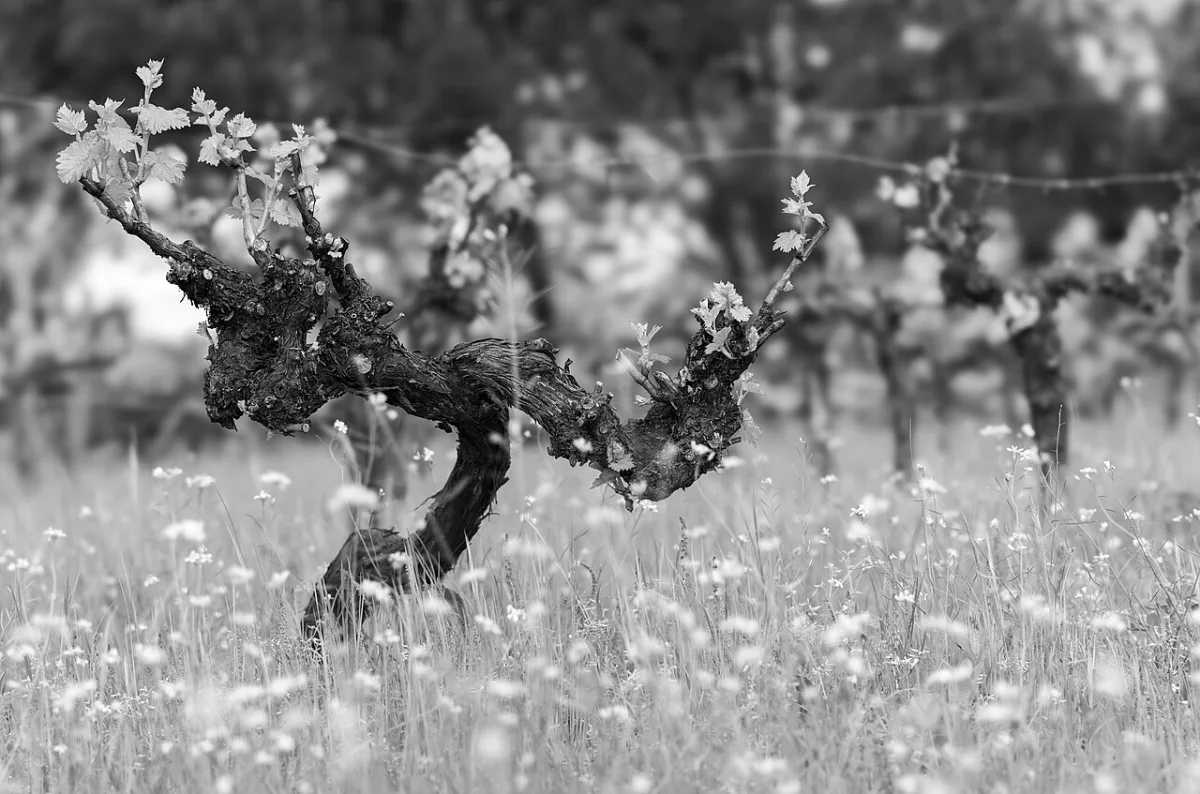
Since grapevines grow in the same place for 20–30 years or more, it is necessary to create optimal conditions for them in the very first years of life through complete pre-planting trench ploughing to a depth of 50–60 cm. This improves the physical and mechanical properties of the soil, increases its air oxygen content and water-holding capacity, and improves the activity of microorganisms as a result of shifting the upper, more organic-matter-rich topsoil layer downwards into the zone of development of the root system. It also aids in weed control and increases soil fertility in general.
All this, due to improved growth and development of the young grapevine, its root system, and the aerial part of the bush, brings the time of its entry into fruiting 1–2 years closer and increases productivity. At the same time, a good foundation is created for intensive-type plantations. Depending on the soil, the duration of the trench ploughing effect is from two to six years.
Methods of trench ploughing. In viticulture, various methods of carrying out trench ploughing are used:
- complete ploughing with inversion of the soil furrow, performed using trench ploughs with skim coulters;
- complete ploughing without inversion of the soil furrow — using subsoilers;
- trenching, carried out using excavators and bulldozers;
- explosive, carried out using explosives.
Complete ploughing trench ploughing. The most widely used method of soil tillage is ploughing to a depth of 50 cm or more with inversion of the soil furrow using trench ploughs. Its depth is determined by the structure of the subsoil horizons, taking into account the advisability of bringing the lower horizons to the surface of the plot. In cases where inversion of the soil furrow is undesirable, the soil is loosened deeply along and across the plot using an RN-80B subsoiler or similar equipment.
Trenching. This is usually used in mountainous conditions and on tracts of land with shallow underlying dense deposits (cemented conglomerate, coquina, limestone). The areas of such lands by region are:
| Region | Area, thousand hectares |
| Tarkhankut Peninsula, zones of Sevastopol, Bakhchisaray, Yevpatoriya, Kerch Peninsula | More than 100 |
| Republics of Transcaucasia (stony soils) | Up to 100 |
| Lower Dnieper loamy sands (Kherson region) | Over 200 |
Similar lands exist in Chechen-Ingushetia and Dagestan. In total, in the most favorable climatic zones of our country, there are over 1 million hectares of such land, a significant part of which can be used for growing grapes. The most expedient method of their deep processing is trenching, which, according to the recommendations developed by the All-Union Research Institute of Viticulture and Winemaking "Magarach", is carried out as follows.
Before starting earthworks, organic (up to 100 t/ha) and mineral fertilizers are scattered on the surface of the massif, including up to 4 t/ha of superphosphate and up to 2 t/ha of potash salt. The soil is tilled with a trench plough to the full depth down to the horizon of dense deposits.
Under the future row of the vineyard, on the strip from which the biologically active layer of soil has been removed and shifted, a trench 80–150 cm wide and 150–160 cm deep is dug with a rotary excavator. Then, using a bulldozer with a swivel blade, it is filled with a mixture of fertilizers and biologically active soil taken from the strip under the neighboring row. The destroyed rock excavated from the trenches is leveled by a bulldozer and a grader. The total cost of such soil tillage is about 3 thousand rubles/ha.
Explosive trench ploughing. Used in special cases on stony soils and in mountainous conditions where it is impossible to use machinery. It is conducted according to special technical instructions using explosives.
Timing for trench ploughing. Trench ploughing can be carried out in spring or autumn. Specific dates are set taking into account the time of planting the vineyard. A mandatory agrotechnical condition is a gap of 2–3 months between the completion of trench ploughing and the planting of the vineyard.
| Preparation method | Soil settling period |
| Trenching | 8—12 months |
This period is necessary for the soil to settle after the trench ploughing. Otherwise, if planting is done in freshly ploughed soil, the roots will break during the active settling process, which negatively affects the survival and development of young plants. Taking this into account, carrying out trench ploughing in the autumn is more preferable, since under the influence of winter precipitation, the soil settles better after ploughing and accumulates more moisture.
The timing of trench ploughing is also determined by considering soil moisture:
- At high humidity, large clods are formed that are difficult to work.
- If the soil is too dry, many voids appear in it after ploughing.
In the case of trenching in autumn, the soil is left in a cloddy state for the winter to improve moisture accumulation. After a certain period of time required for soil settling, the soil is leveled before starting the planting of grapes. For this purpose, across the direction of trench ploughing, the plot is worked with heavy disc harrows as well as a chisel cultivator. Then, the furrows and ridges formed during ploughing are eliminated using the following implements:
- angle bars;
- drags;
- leveling grader;
- automatic leveler PA–3.
If trenching is performed in the spring-summer period, the soil surface is leveled simultaneously with ploughing to conserve soil moisture. To this end, harrows or drags are attached to the tractor unit.
Trenching is of particular importance for establishing wide-row high-trunk plantings. This is because, due to the smaller number of plants per hectare and the larger size of each plant, the requirements for growing conditions increase, as the loss of a single plant in this case entails more significant damage.
The productivity of plantings, their profitability, and the rational use of land and machinery largely depend on the correct choice of the grape planting pattern, i.e., determining the optimal distance between rows and vines in a row. The planting pattern is organically linked to resolving issues of cultivation technology such as the training system, pruning, and the load of buds and harvest per vine. The width of row spacing determines the convenience of operation and the cost-effectiveness of using tractors and machinery for maintenance. Taking this into account, when addressing this issue, it is necessary to consider a complex of ecological, biological, economic, and organizational factors. First, the method of cultivation should be determined — whether with covering the vines for the winter or without it. In non-covering cultivation, the most progressive and promising technology of grape cultivation involves the use of trunk forms, which is associated with increasing the distance between rows, and the latter directly depends on the habit of the plants and the height of their trunk. This, in turn, is determined, on one hand, by the biological characteristics of the cultivars (vigorous, medium-vigorous, and weak-growing), and on the other, by the complex of environmental conditions affecting the growth and development of the grapevine: heat and water availability of the zone, soil fertility, etc.
In a heat-sufficient and irrigated zone on fertile soils, the optimal row spacing is 3.5 m. In particularly favorable conditions, the row spacing can be increased to 4 m. On rain-fed, less fertile lands, it is 3 m. The distance between vines in a row is set taking into account the vigor of the vines: for vigorous cultivars — 2.5 m, medium-vigorous — 2 m, weak-growing — 1.5 m. Of course, these are general guidelines, which should be adjusted according to specific conditions.
In the zone of covering viticulture, where the habit of the vines is forcedly reduced for the convenience of their covering and less voluminous non-trunk forms are used, the planting pattern must be denser. The distance between rows is usually 3–2.5 m, and between plants in a row, depending on the vigor of the vines, the forms used, water availability, and soil fertility — 1.5, 1.75, and 2 m.
In some cases, the range between these indicators can be changed. All of the above relates to the system of training vines on a vertical trellis. When cultivating grapes on an alley bower system, on a trellis with a canopy, or a high horizontal trellis, the planting patterns will be different (see the chapter "Training systems").
A distinction should be made between two types of layout: laying out the plot into sections, blocks, roads, and windbreak strips, and the layout within a block with determining the location of rows and vines in a row. The first type of layout is usually carried out by a surveyor using appropriate instruments; the second — by the personnel of the agronomic service of the department, brigade, or team.
To perform manual layout directly for grape planting, it is necessary to have a layout wire, preferably steel, which has marks (solderings, firmly fixed knots of light wire) for the distances between rows and vines in the row. Most often, two wires are used, one of which is intended for laying out rows, the other for marking the distances between vines in the row. For the convenience of plot layout, the soil must be well leveled and prepared.
First, along the perimeter of the block on both opposite sides, a layout wire is stretched with marks of the beginning of future rows, against which stakes are driven. Then, the layout wire with marks of the distance between vines in the row is placed and stretched over these marks, against which stakes are also installed. Moving the wire from row to row, the entire territory of the block is marked out.
When establishing vineyards on large areas, a mechanized method of field marking is used with the help of mounted cultivators such as KRN-4.2 and others, where the sections of working tools are set in accordance with the adopted distances between rows for longitudinal passes and between vines for transverse passes. Nursery plants of grapes are planted at the intersections of the furrows.
When selecting cultivars, the following guidelines should be followed:
- The selected assortment must correspond to the specialization of the viticulture sector of a specific farm and ensure the solution of the tasks it faces.
- Cultivars must be chosen only from those zoned for the area where the farm is located.
- The selected cultivars, based on their biological characteristics—ripening period, duration of the growing season, and response to heat and low winter temperatures—should most fully correspond to the ecological conditions of the zone for which they are intended.
Among the cultivars similar in the intended use of the produce and valuable economic traits, preference is given to those more resistant to unfavorable environmental conditions, diseases, and pests, as well as those better adapted to mechanized pruning and harvesting.
The number of cultivars should be limited and not exceed four to six for each direction of use. This allows for the application of variety-specific (standard) agricultural practices and the production of large batches of grapes of the same cultivar, which is a mandatory requirement for every farm.
Vineyard planning and cultivar selection
When designing plantings, be guided by the requirements of machinery and the features of the terrain. If you plan to use grape harvesters, the length of the run within a block should be at least 700–800 meters. In this case, each row along its entire length should be planted with only one cultivar — this is necessary for the efficient operation of the harvester.
On slopes, plant the most frost-resistant cultivars. This will allow for cultivation without winter cover, which means keeping the soil under sod or sowing green manure crops to protect against erosion. To ease the workload on equipment during harvesting, choose both table and technical cultivars with different ripening periods — this way you will create a continuous green conveyor.
Consider the specifics of plant pollination. Cultivars with a functionally female type of flower will not produce a full harvest through self-pollination. They must be planted in alternation: for every 1–2 rows of such grapes, there should be a row of a bisexual cultivar with the same direction of use and a similar ripening period.
Planting in dry soil without immediate subsequent irrigation will guarantee the desiccation of the root system of the nursery plants and will lead to plant mortality.
Timing, planting depth, and nursery plant preparation
Grapes can only be planted when the nursery plants are in a dormant state. The exception is plants with a closed root system, grown in special bags or pots with a peat mixture. They are planted while actively growing at the beginning of summer. For classic nursery plants, choose a warm period: active root life begins only when the soil temperature is above 10 °C.
The choice of planting season depends on the type of soil and climate. In southern viticulture zones, where there is no risk of deep soil freezing in winter, it is better to establish the vineyard in the autumn. On sandy soils, which freeze to a significant depth in winter, it is advisable to postpone work until spring.
- Harvester run length — from 700–800 m
- Start of root activity — above 10 °C
- Dangerous frost for own-rooted plants — -6 °C
- Dangerous frost for grafted plants — -11 °C
- Soaking time before planting — 1–2 days
Planting depth directly affects the survival rate of the vines. In northern regions with stable snow cover, grapes are planted more shallowly, as the soil warms up only to a small depth in summer. In the south with hot summers, the roots must be hidden deeper — where optimal soil moisture and temperature are maintained. When calculating depth, consider winter risks: the root system of own-rooted plantings is damaged at a temperature of -6 °C, and grafted ones — at -11 °C.
| Region or soil type | Planting depth, cm |
|---|---|
| European region | 55 |
| Deep irrigated soils of Central Asia | 60 |
| Sandy soils and steep slopes | 65 |
Use one-year-old own-rooted or grafted nursery plants for establishment. Sometimes two-year-old vines or callused cuttings are used. However, planting with cuttings is not economically feasible: due to a large number of losses, you will not obtain a full-fledged and uniform vineyard. The quality of the planting material directly determines the survival of the vines, the speed at which they enter the fruiting stage, and the profitability of the plantings.
- Evaluate the quality of the planting material: nursery plants should have a well-developed aerial part, strong roots, and, for grafted ones, a solid circular union at the grafting site.
- Discard dried out, frost-damaged, as well as plants affected by diseases and pests.
- Soak healthy nursery plants in water for one or two days immediately before planting in the field to bring them into an active physiological state.
Ensure the purity of the planting material. Mixing cultivars within a single row will complicate maintenance and make mechanical harvesting impossible.
Initially, a young grape nursery plant grows exclusively at the expense of accumulated nutrients. To ensure the plant does not exhaust itself, its load must be strictly limited. To achieve this, leave the minimum number of buds on the nursery plant necessary to start and properly form the bush.
Preparing the aerial part and the root system before planting involves several mandatory steps. Proper pruning stimulates survival and directs the plant's energy toward the development of the basal roots.
- Select 1 or 2 of the most developed, well-matured shoots on the nursery plant and prune them to 2–3 buds.
- Completely remove all roots that have grown above the first or second node from the base of the nursery plant.
- Shorten the main basal roots according to the chosen planting method.
- Soak the nursery plants in water before treatment.
- Protect the scion part by waxing to increase survival rates.
- Root length for pit planting — 15–18 cm
- Root length for water-jet planting — 3–5 cm
- Wax temperature — 80–85 °C
- Sleeve film thickness — 120–130 μm
Wax grafted nursery plants only after pruning and soaking. Maintain the melt temperature within 80–85 °C. The wax must completely cover the entire scion part and the top 5–6 cm of the rootstock.
Protecting the trunk with sleeves and preparing roots for planting
Good results are achieved by planting nursery plants with a graft bandage, as well as using protective sleeves made of polyethylene film. The sleeve isolates the underground trunk from direct contact with the soil. This solves the main problem of a young vineyard — it prevents the formation of surface roots.
For protection, use sleeves 35–45 cm long and 8–10 cm wide. The installation technology is as follows:
- Place the sleeve over the rootstock.
- Tie it tightly to the rootstock in two places: just above the main roots and directly below the graft union.
- Ensure that the top of the sleeve protrudes 8–10 cm above the soil surface.
Isolating the underground trunk with a sleeve completely eliminates the appearance of surface roots. This saves the grape grower from the need to perform desurfacing — the laborious manual work of removing them.
Immediately before placing the nursery plant into the ground, treat its root system. Disinfected roots are dipped into a special clay slurry. It ensures tight contact between the root system and the soil and creates favorable micro-conditions for the growth of new roots.
Slurry recipe: mix 2 parts clay and 1 part fresh cow manure, then dilute the resulting mixture with water to the consistency of thick sour cream.
Read next
Viticulture For agronomists
Technology for repairing young and fruiting vineyards
Viticulture For agronomists
Influence of soil conditions on grape yield and quality
Crop production For students