
History of development and methodology of ampelography as a science
12 min read
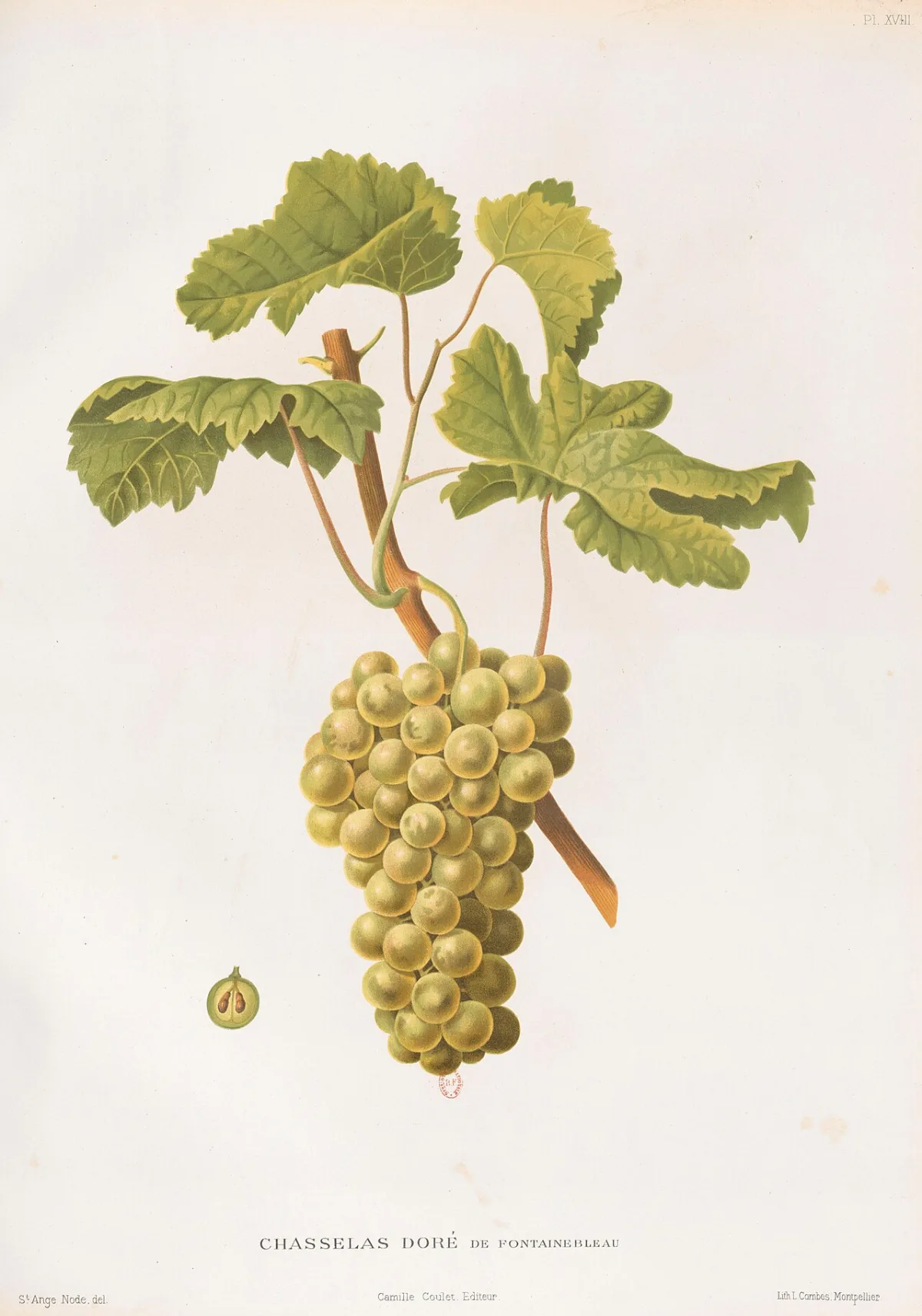
Ampelography (Greek ampelos — vine, grapho — I write) is the science of vine species and cultivars and the patterns of variability in their characteristics depending on environmental conditions and varietal technology. It is a constituent part of the science of viticulture. It is as ancient as viticulture itself. Descriptions of vine cultivars that have reached us are contained in the works of ancient Greek and Roman authors and medieval scholars.
The theoretical and methodological foundations of ampelography as a science were laid at the beginning of the 19th century in France and other European countries, including Russia. At the end of the 19th century, ampelography issues began to be discussed at congresses, and instructions for describing cultivars were developed, which served to develop a unified approach to their study. At the beginning of the 20th century, the largest work of that time (7 volumes), "Universal Ampelography" by P. Viala and V. Vermorel, was published in France, describing 5,200 cultivars.
Many Russian scientists and practitioners of the 19th century took part in the study of vine cultivars. In 1904–1911, S. I. Korzhinsky published "Ampelography of Crimea" in two volumes with photographs of the best cultivars. The science of ampelography achieved significant success during the Soviet era, when tasks were set to sharply increase the area under vineyards.
In the period from 1946 to 1972, the Magarach All-Union Research Institute of Viticulture and Winemaking, together with numerous Soviet and foreign scientists — ampelographers and viticulturists, prepared and published a major work, "Ampelography of the USSR," and an album, "The Best Vine Cultivars of the USSR," which includes 182 cultivars.
"Ampelography of the USSR" consists of two parts:
- general ampelography (Vol. I), which contains information on the origin, classification, structure and function of organs, mechanical and chemical composition of the vine, and its use;
- special ampelography (Vol. II–VI large volumes, the 1st small volume and a reference volume), which provides characteristics of the cultivars.
In 1984, the volume "Domestic Vine Cultivars" was published with a description of cultivars bred by Soviet breeders.
"Ampelography of the USSR" describes 3,070 cultivars, including 1,775 domestic and 1,295 foreign ones, of which 546 are grown in our country. The distribution of cultivars by intended use is presented in the table:
| Type of use | Number of cultivars |
| Technical | 1445 |
| Table | 1232 |
| Universal (table-technical) | 393 |
In the process of working on this publication, the varietal resources of various viticulture regions of our country were identified using the expedition method; a methodology for describing and studying cultivars was developed and tested; and vine cultivars were studied in industrial plantings and collections, both old and newly established.
Collections represent a rich fund of cultivars for breeding and production. They bring together on a single land plot local (indigenous) cultivars and those brought from various regions of our country and foreign countries (introduced). Extensive scientific research is being conducted everywhere in the collections on the study of cultivars, the development of the theoretical foundations of ampelography, and the streamlining of the varietal fund. The N. I. Vavilov All-Union Research Institute of Plant Industry (VIR) and its branches have played an important role in this.
In the USSR, there are 20 large and more than 50 small vine collections. The most famous of them are:
- The Magarach All-Union Research Institute of Viticulture and Winemaking (Yalta, 1814) — about 1000 cultivars;
- NPO "Vierul" (Moldova) — about 2800 cultivars;
- The Georgian Research Institute of Horticulture, Viticulture and Winemaking (Telavi);
- The V. E. Tairov Ukrainian Research Institute of Viticulture and Winemaking (Odessa);
- The Central Asian branch of VIR (where N. I. Vavilov and A. M. Negrul worked);
- The Ya. I. Potapenko All-Russian Research Institute of Viticulture and Winemaking (Novocherkassk);
- Collections of Azerbaijan and the Echmiadzin region of Armenia.
Catalogs of cultivars from the collections of the USSR and NPO "Vierul" have been published; ampelographies of vine cultivars growing in Georgia, Armenia, and Azerbaijan; an ampelography of cultivars of northern regions; and cultivars of Uzbekistan and Kazakhstan have been described in detail.
As a result of the ampelographic study of vine cultivars cultivated in the USSR, valuable local and introduced cultivars were identified, and work was carried out to streamline and inventory the varietal fund. By growing plants under uniform conditions, it was possible to identify and recognize homonyms (cultivars with different characteristics that have the same name) and synonyms (cultivars with the same characteristics that have different names in different regions).
| Cultivar | List of synonyms |
| Karaburnu | Aleppo, Bolgar, Regina, Chasselas zimushna, Tsargradsky, Afuz-Ali, Rezaki, Dattier de Beyrouth |
It is interesting to note that in "Ampelography of the USSR," 6,832 names are given for 2,801 cultivars, and 25 cultivars have from 6 to 8 synonyms.
The challenges facing ampelography at the current stage are extensive and complex. Based on the study of morphological, biological, and economic-technological characteristics of cultivars in various regions of their cultivation, ampelography develops and addresses the following issues:
Cultivar selection and the tasks of practical ampelography
The main task of practical ampelography is the selection of the most productive, resistant, and high-quality grape cultivars for each specific growing zone. This serves as the basis for the scientific justification of cultivar zoning, farm specialization, and the introduction of the crop into new regions. Proper selection of the cultivar assortment allows for the development of targeted cultivation technology and reduces risks when establishing new vineyards.
As a science, ampelography solves a complex set of applied tasks. A scientific approach to classification helps the agronomist navigate the diversity of grape forms. Based on ampelographic research, the following issues are addressed:
- establishing the origin of grape species and cultivars;
- development of scientific classification;
- justification of zonal distribution and viticulture specialization;
- selection of initial forms for breeding;
- studying the variability of species and cultivars depending on the environment and agricultural techniques;
- development of cultivar-specific cultivation technology;
- methodologically correct establishment of elite mother plantations.
The main difficulty in introducing new cultivars is the vast volume of the global cultivar pool, the properties of which may change depending on growing conditions. The traits of grapes must be studied not only in their places of origin but also directly in the regions of planned cultivation. Since grapes are a perennial crop, this assessment requires a long period of time. To obtain objective data, the description of cultivars is carried out according to a unified methodology adopted in the "Ampelography of the USSR".
The biological characteristics of grape cultivars are unstable during introduction. It is unacceptable to establish commercial plantations in new regions without prior study of plant response to local soil and climatic conditions.
The modern global grape assortment has a complex species structure. The bulk of cultivated plants belong to the European-Asian species, however, American and Amur grape species are actively involved in breeding. Various species confer resistance to phylloxera, fungal diseases, and low temperatures to hybrids.
- Global cultivar pool — more than 5000 names
- Hybrids and forms — about 10 000
- Cultivars from Vitis vinifera — about 4000
- Cultivars from Vitis labrusca — about 300
- Cultivars from Vitis rotundifolia — more than 40
- Cultivars from Vitis amurensis — about 40
Mechanism of grape variability and clonal selection
A grape cultivar is a collection of vegetatively propagated plants possessing hereditarily fixed similarity of traits and a unified reaction norm to external factors. The first cultivated varieties were primitive homogeneous populations close to wild grapes. Over time, in the process of cultivation, the polymorphism of cultivars increased significantly under the influence of combinative variability.
Grapes are an obligate cross-pollinating plant (allogamous) with a high level of heterozygosity. Sowing seeds always leads to the segregation of traits in the offspring; therefore, seedlings grown from seeds differ significantly from the mother bush. Valued cultivar properties can be preserved and fixed in production only through vegetative propagation.
To breed and fix a new grape cultivar, breeding uses a classic scheme:
- Sowing seeds obtained from natural or artificial pollination of the mother plant.
- Selection of an individual seedling with the best complex of economically valuable traits.
- Vegetative propagation of the selected seedling to obtain a homogeneous clone-cultivar.
In the process of long-term cultivation and vegetative propagation, a cultivar accumulates point and bud mutations (sports). Since the tissues of a grape bush can possess different heredity (the phenomenon of chimerism), shoots with altered properties periodically appear on the plants. Over time, a pure clone-cultivar turns into a cultivar mixture of clones with different productivity. It is important for the agronomist to identify such changes in order to select the best forms for improving plantations.
Most old grape cultivars today are mixtures of clones. Regular clonal selection in the vineyard allows for maintaining and improving the economic characteristics of planting material.
| Group of cultivars | Result of breeding work |
|---|---|
| Muscats | Pink Muscat and other clones |
| Kishmish (Sultana) | Pink Kishmish and other clones |
| Riesling | Selection of clones with high yield and quality |
| Pinot Noir | Productive Pinot Noir |
Cultivars that have arisen as a result of propagation by shoots with mutationally altered properties often differ by one or several traits. Such cultivars are grouped into cultivar groups. For example, there are Pinot cultivar groups (Meunier, Blanc, Gris, Noir), Chasselas (Blanc, Rose, Muscat, Parsley), Pukhlyakovsky (New, Noir, Large-berried, Noir No. 2). In most cases, the variability of traits in grapes is consistent with N. I. Vavilov's law of homologous series. Different cultivars repeat in mutations traits found in other cultivars. For example, the parsley leaf exists in the Chasselas Blanc and Kokur Blanc cultivars. A large group of cultivars (Muscats, Kishmishes, Pinot, Gamay, Chasselas) shows black, pink, white, and red berries.
Thus, grape cultivars were formed in a very complex way. Their evolution is equally complex. Many of them remained in their places of origin and are still poorly studied indigenous (local) cultivars, known only in a very limited zone or even in a single district or village. Some cultivars have gained wide renown and have been studied in detail. They have been introduced (Lat. introductio — introduction) into many countries on various continents. For example, Kishmish Bely oval has been introduced to Australia, the USA, and other countries, where it has become widely distributed. The Rkatsiteli cultivar occupies a leading position among other cultivars not only in its homeland — Georgia, but also in other republics of our country; it has begun to be grown in Bulgaria, Romania, and other countries. The Riesling, Aligoté, Saperavi, and Chasselas Blanc cultivars also account for a large proportion of grape plantings in many republics of the USSR. The varietal pool of the USSR has reached 2000 cultivars, 500 of which are introduced, and the rest are indigenous.
Due to the great diversity of biological and economic-technological traits, grape cultivars are used in various directions. A. M. Negrul (1946) proposed classifying them by use into the following groups: table (consumption fresh) for local use, export (transportable), and storage (keeping quality); for the production of juices, concentrates, non-alcoholic beverages, compotes, marinades, jams, and other confectionery products; for the production of dried products (raisins, kishmish, germian, korinka, malaga); technical for wine production; rootstock cultivars: phylloxera-resistant, frost-resistant, salt-tolerant, nematode-resistant; and for decorative purposes.
This division is conditional, as individual cultivars are used universally.
Cultivars differ in morphological traits, biological characteristics (yield, ripening dates, ability to accumulate sugars, resistance to frost, diseases, and pests), economic-technological and physiological-biochemical properties, which manifest under appropriate ecological conditions and methods of crop management as a product.
The identification of grape cultivars is carried out based on the knowledge of morphological traits and biological characteristics of the plants, visual and taste memory, visually and organoleptically at the end of the harvest ripening phase, when the berries acquire the color and taste characteristic of the cultivar. However, an ampelographer can distinguish no more than a hundred cultivars from memory, and viticulture specialists even fewer. Due to the difficulties in identifying cultivars because of their great diversity, and the modification and phenotypic variability of certain traits (coloring of shoots and berries, leaf traits, etc.), keys and other literary sources are used, where the cultivars of a specific zone are described in detail. In the USSR, there is the "Key to Grape Cultivars" by M. A. Lazarevsky, published in 1940 and 1959, and the "Key to the Main Grape Cultivars of the USSR" by P. Kh. Kiskin, published in 1961, 1962, 1964, and 1969.
M. A. Lazarevsky's key is based on a dichotomous system (thesis — antithesis). It is based on the assessment of the berry, the bunch, the morphological traits of leaves and shoots, and certain biological characteristics.
| Author of the key | Number of cultivars (year) |
| 128 (1940), 257 (1959) |
P. Kh. Kiskin's key is based on a polytomous principle. It includes 250 cultivars. This key is accompanied by punch cards that allow for the classification of cultivars by individual groups of traits, analyzing and systematizing them.
The convenience of the latter key lies in the digital coding of grape traits, which makes it possible to identify cultivars more accurately even in the absence of a number of traits. By coding all (2801) cultivars described in "Ampelography of the USSR" according to these traits, P. Kh. Kiskin significantly developed comparative ampelography.
The new system opens up great opportunities for a deep understanding of the origin and classification of cultivars, and for comparing them according to a number of traits. The advantages of using the system include:
- the ability to code new cultivars and include them in a general catalog;
- a substantial expansion of knowledge about cultivars;
- simplification of the work of inspectors when a local catalog with a description of all traits for each district is available.
In Moldova, a machine for studying and identifying grape cultivars has been created and is being improved.
Read next
Viticulture For agronomists
Biological characteristics and breeding potential of the Amur grape
Viticulture For agronomists
Development and formation of viticulture during the Soviet era
Viticulture For agronomists