
Biological characteristics and harmfulness of leaf and stem diseases of soybean
38 min read
Soybean is a promising high-protein crop, rich in fats, carbohydrates, and minerals. It is used in more than 10 industries to produce over 400 types of products. However, the actual yield of soybean often turns out to be lower than the potential due to the infection of crops by bacterial and fungal diseases.
Harmfulness of leaf spots and biology of soybean downy mildew
- Yield reduction from bacterioses — 10.0–34.8 %
- Losses from fungal diseases — 15.0–20.0 %
- Losses during epiphytotic — up to 50.0 %
- Damage from downy mildew — 6.0–15.0 %
- Incubation of downy mildew — 7 days
- Incubation of cercospora leaf spot — about 2 weeks
The dominant fungal diseases worldwide include downy mildew, powdery mildew, ascochyta blight, cercospora leaf spot, septoria brown spot, alternaria leaf spot, anthracnose, fusarium wilt, and sclerotinia rot. According to field trials, angular bacterial spot, alternaria leaf spot, cercospora leaf spot, and white mold are regularly found in crops. On the seed material of soybean, the following are detected: Fusarium oxysporum (Schlecht.) Snyd. et Hans., Stemphylium botryosum Wallr., Colletotrichum glycines Hori (C. truncatum (Schw.) Andrus et W.D. Moore), as well as Alternaria alternata (Fr.) Keissl.
Soybean downy mildew was first discovered in 1921 in Manchuria (now part of the territory of Inner Mongolia and China). The pathogen of the disease is the obligate parasite Peronospora manshurica (Naumov) Syd from the Peronosporaceae family. The phytopathogen is capable of infecting soybean at all stages of its growing season, causing premature leaf drop.
On the leaves, the disease manifests as pale green and subsequently yellowing spots, the tissue of which eventually turns brown and may rupture on the underside. In humid weather and during periods of frequent dew, a gray-violet felt-like layer of sporulation forms on these areas. In the diffuse form of the infection, all leaves and petioles are covered with a continuous layer, the plants lag in growth and often fail to produce fruit set. In the local form, the layer develops inside the pod valves, and the seeds become covered with a dense yellowish-gray powdery layer.
The primary infection is caused by dormant oospores on crop residues and seeds. Secondary infection occurs via zoospores, which are spread by wind and rain. The incubation period of the disease is 7 days.
Infection of soybean with downy mildew can occur in a wide temperature range starting from 10 °C. Optimal conditions for rapid infection are a temperature of 20–22 °C and high air humidity.
The geography of reported downy mildew is extensive:
- Australia and Oceania: Bermuda, New Zealand, Australia.
- Asia: China, India, Iran, Israel, Kazakhstan, DPRK (Democratic People's Republic of Korea), South Korea, Turkey, Indonesia, Malaysia, Philippines, Taiwan, Thailand, Vietnam, Japan.
- Europe: Croatia, Czechoslovakia (former), Czech Republic, Denmark, France, Germany, Hungary, Italy, Latvia, Moldova, Poland, Romania, Russia, Serbia, Sweden, Ukraine, United Kingdom.
- America: United States of America, Canada, Mexico, Brazil, Colombia.
- Africa: Ethiopia, South Africa, Zimbabwe.
| Indicator of soybean disease harmfulness | Yield reduction range, % |
|---|---|
| Bacterioses (in key cultivation countries) | 10.0–34.8 |
| Fungal diseases (typical yield loss) | 15.0–20.0 |
| Fungal diseases (during epiphytotic development) | up to 50.0 |
| Soybean downy mildew (oomycete infection) | 6.0–15.0 |
Cercospora leaf spot of soybean: geography and development features
Cercospora leaf spot of soybean was first discovered in Japan in 1915, and today it is widespread in the crop's cultivation zones. The disease is caused by the micromycete Cercospora sojina Hara from the Mycosphaerellaceae family. Plant infection can occur at any stage of the growing season, but most often starts in the reproductive phase. The pathogen attacks the stems, leaves, pods, and seeds of soybean, and its incubation period is about 2 weeks.
The disease has been registered in the following regions:
- Australia and Oceania: Tonga.
- Asia: India, China, South Korea, Nepal, Taiwan, Japan.
- Europe: Austria, Belgium, Bulgaria, Hungary, Germany, Greece, Denmark, Ireland, Spain, Italy, Cyprus, Latvia, Lithuania, Luxembourg, Malta, Netherlands, Poland, Portugal, Russia, Romania, Slovakia, Slovenia, Finland, France, Croatia, Czech Republic, Sweden, Estonia.
- America: Argentina, Brazil, Venezuela, Canada, Cuba, Mexico, United States.
- Africa: Zambia, Cameroon.
Cercospora leaf spot and septoria brown spot of soybean: symptoms, risks, and infection dynamics
During the development of cercospora leaf spot, it is important to timely identify its manifestations on all plant organs. On the leaves, the disease forms rounded or angular watery spots with a diameter of 1 to 5 millimeters. Over time, they darken, acquiring a color ranging from brown to gray with a thin reddish-brown border, lightening in the center, but remaining dark on the underside of the leaf. In humid weather, active sporulation of the pathogen begins on the underside of the leaf blade.
At later stages of the growing season, cercospora leaf spot spreads to the stems, pods, and seeds of the soybean. This directly threatens the quality of the future harvest and seed material. Symptoms of infection are distributed as follows:
- On stems: elongated purple-red spots that darken over time, developing a grayish center and a brown rim.
- On pods: slightly sunken rounded or elongated reddish-brown spots, developing into brown or light gray ones with narrow dark brown edges. The fungus penetrates to the seed through the pod walls.
- On seeds: convex surface spots of irregular rounded shape with a sharp brown rim (1–2 spots per seed, sometimes more), causing cracking and peeling of the seed coat.
The infection persists as mycelium in seeds and plant debris. During the growing season, conidia are dispersed by wind and rain, triggering new cycles of infection. In humid weather, the fungus begins to sporulate actively, primarily on the underside of leaves.
At a temperature of +25...+30 °C and a relative humidity of the air of 90.0%, re-infection with cercospora leaf spot can occur every 48 hours, leading to rapid spread of the infection in the crop.
Soybean septoria brown spot is caused by the micromycete Septoria glycines Hemmi (family Mycosphaerellaceae). The disease was first discovered in Japan in 1915; today, it is widespread. The pathogen is recorded in Asia (India, China, North Korea, South Korea, Nepal, Taiwan, Japan), Europe (Bulgaria, Germany, Italy, Russia, Romania, Serbia), America (Bolivia, Brazil, Canada, Colombia, United States of America), and Africa (Zimbabwe).
The infection begins to spread from the lower canopy of the plants, penetrating through the stomata and gradually moving up the stem. In dry weather, disease development ceases completely. The source of infection is plant debris and seeds, where the fungus survives as mycelium and pycnidia.
- Start of septoria infection phase — BBCH 12–13 (true leaf at the 2nd–3rd node unfolded)
- Incubation period — from 7 to 10 days
- Temperature range for development — from 15 to 30 °C
- Optimal temperature — +26...+28 °C
A characteristic symptom of septoria brown spot is angular or rounded red to brown spots surrounded by a chlorotic halo. Over time, they merge into large necrotic areas of irregular shape. After some time, small black dots — pycnidia — appear on these spots.
Soybean powdery mildew: biology of the pathogen and harmfulness
The disease is caused by the obligate parasite Erysiphe diffusa (Cooke & Peck) U. Braun & S. Takam (family Erysiphaceae). Soybean powdery mildew was first described in 1931. There were earlier reports of the fungus Erysiphe polygoni DC as a polyphagous pathogen on soybean Soja maxima (L.) Piper, but these were not confirmed by scientific data. Today, the disease is recorded in Asia (Vietnam, India, South Korea, Japan), Europe (Russia), and America (Brazil, Canada, United States).
Symptoms appear on the upper side of the leaves as small patches of white exogenous mycelium. The spots grow rapidly and merge, covering the entire leaf blade. Under high air humidity, the fungus also affects other aerial parts of the plant. The pathogen overwinters on plant debris in the form of cleistothecia: in spring, ascospores are dispersed by wind and rain for primary infection, while in summer, conidia provide secondary waves of infection.
An increase in air temperature to 30 °C acts as a limiting factor — under such conditions, the development of powdery mildew ceases.
The impact of foliar diseases on the yield and quality of soybean is presented in the table below.
| Disease | Optimal conditions for development | Yield losses, % | Impact on the plant and seed quality |
|---|---|---|---|
| Cercospora leaf spot | Temperature +25...+30 °C, relative air humidity 90.0 % | From 10.0 to 60.0 % | Reduction of the assimilation apparatus, premature leaf drop. Decrease in oil content in seeds by 2.1–6.9 %, protein — by 4.0–5.0 %. |
| Septoria brown spot | Temperature +26...+28 °C, relative air humidity 90.0 % | Up to 27.0 % | Leaf drop occurs 25–40 days earlier than the physiological term. |
| Powdery mildew | Temperature 18–24 °C, high air humidity | Up to 60.0 % (in susceptible cultivars) | Reduction of the photosynthetic activity of the leaf apparatus by up to 50.0 %. |
Soybean anthracnose: a hidden threat to the reproductive phase
Soybean anthracnose was first described in Korea in 1917. Now the disease has a complex etiology: a number of micromycetes of the genus Colletotrichum (family Glomerellaceae) have been recorded on the crop. These include Colletotrichum destructivum O’Gara, Colletotrichum coccodes (Wallr.) S. Hughes, Colletotrichum gloeosporioides (Penz.) Penz. & Sacc., Colletotrichum incanum H.-C. Yang, J.S. Haudenshield & G.L. Hartman, Colletotrichum plurivorum Damm, Alizadeh & Toy. Sato, Colletotrichum sojae Damm & Alizadeh, Colletotrichum musicola Damm, Colletotrichum brevisporum Phouliv., Noireung, L. Cai & K.D. Hyde and other pathogens previously classified as Colletotrichum truncatum (Schwein.) Andrus & W.D. Moore. The geography of the disease covers Australia and Oceania (Australia, Papua New Guinea, Tonga, Fiji), Asia (Brunei Darussalam, India, Iran, Cambodia, China, South Korea, Malaysia, Myanmar, Nepal, Pakistan, Taiwan, Thailand, Japan), Europe (Denmark, Spain, Italy, Russia, Romania, Serbia, Montenegro), America (Argentina, Brazil, Canada, Colombia, Cuba, United States), and Africa (Senegal, South Africa).
Pathogens can infect soybeans at all physiological growth stages. The main sources of infection are infected seed and plant debris remaining in the field.
On seedlings, the disease manifests as brown, sunken ulcers with a light center, which may subsequently lead to their death. Primary symptoms develop during the reproductive phase: a characteristic pattern appears on the abaxial leaf veins, and dark, irregular-shaped sunken spots with acervuli and dark setae form on stems and pods. Infected pods curl and abort, which leads to direct harvest losses. Disease development is favored by air temperatures above 25 °C and the presence of moisture on leaves for 24 hours.
| Country | Harvest losses from anthracnose, % |
|---|---|
| Brazil, India | up to 100 |
| Thailand | 30.0–50.0 |
| United States | 16.0–26.0 |
Alternaria leaf spot and Fusarium wilt: leaf spotting and vascular wilt
Soybean Alternaria leaf spot is caused by fungi of the genus Alternaria from the Pleosporaceae family — predominantly Alternaria alternata (Fr.) Keissl and Alternaria tenuissima (Kunze) Wiltshire. This phytopathogenic complex is widespread in Australia, Asia (India, China, Pakistan, Taiwan, Thailand, Turkey), Europe (Poland, Russia, Ukraine), America (Brazil, Venezuela, Cuba, Mexico, Nicaragua, United States), and Africa (Kenya, Malawi, Ethiopia, South Africa). The disease affects almost all plant organs, causing necrosis of leaves, petioles, and stems. It leads to yield reduction due to the decrease in photosynthetic leaf area and lowers seed germination.
The first signs of leaf spotting can be detected as early as the fully expanded cotyledon stage (BBCH stage 10) at temperatures of +12...+15 °C and high humidity. However, the disease begins to develop most actively during the flowering period.
Symptoms appear as small, brown, round or angular spots, which subsequently lighten and develop a dark brown border or concentric rings with a clear boundary. The spots expand, coalesce, and form large dead zones, causing the leaves to dry out and fall off. In humid conditions, an olive or black sooty coating of sporulation appears on the affected tissues. Infected seeds become shriveled, change color to green or brown, and in cases of severe infection, completely lose their ability to germinate.
- Optimal development temperature — +20...+27 °C
- Required leaf wetness period — 3–4 hours
- Incubation period of the disease — from 2 to 12 days
Primary infection sources are seeds and plant debris, while secondary infection during the growing season occurs via conidia. Pathogens overwinter on weeds and plant debris in the form of mycelium and conidia. Within seeds, the fungi can survive internally as mycelium, but more often, conidia are found only on the surface of the seed coat.
Fusarium wilt (also called tracheomycotic wilt and sudden death syndrome) was first recorded in the USA in 1970. The disease is caused by fungi of the Nectriaceae family from the genera Neocosmospora and Fusarium, predominantly Neocosmospora solani (Mart.) (synonym Fusarium solani (Mart.) Sacc.), Fusarium oxysporum Schltdl, Fusarium equiseti (Corda) Sacc, etc. It is widespread everywhere: in Australia, Asia (Brunei Darussalam, India, China, South Korea, Taiwan, Thailand, Japan), Europe (Bulgaria, Poland, Russia, Romania, Croatia), America (Canada, Argentina, Brazil, Cuba, Mexico, Nicaragua, Puerto Rico, United States), and Africa (Bolivia, Ghana, Zimbabwe, Tanzania, Ethiopia, South Africa).
Fusarium wilt and Ascochyta blight: risks and diagnosis
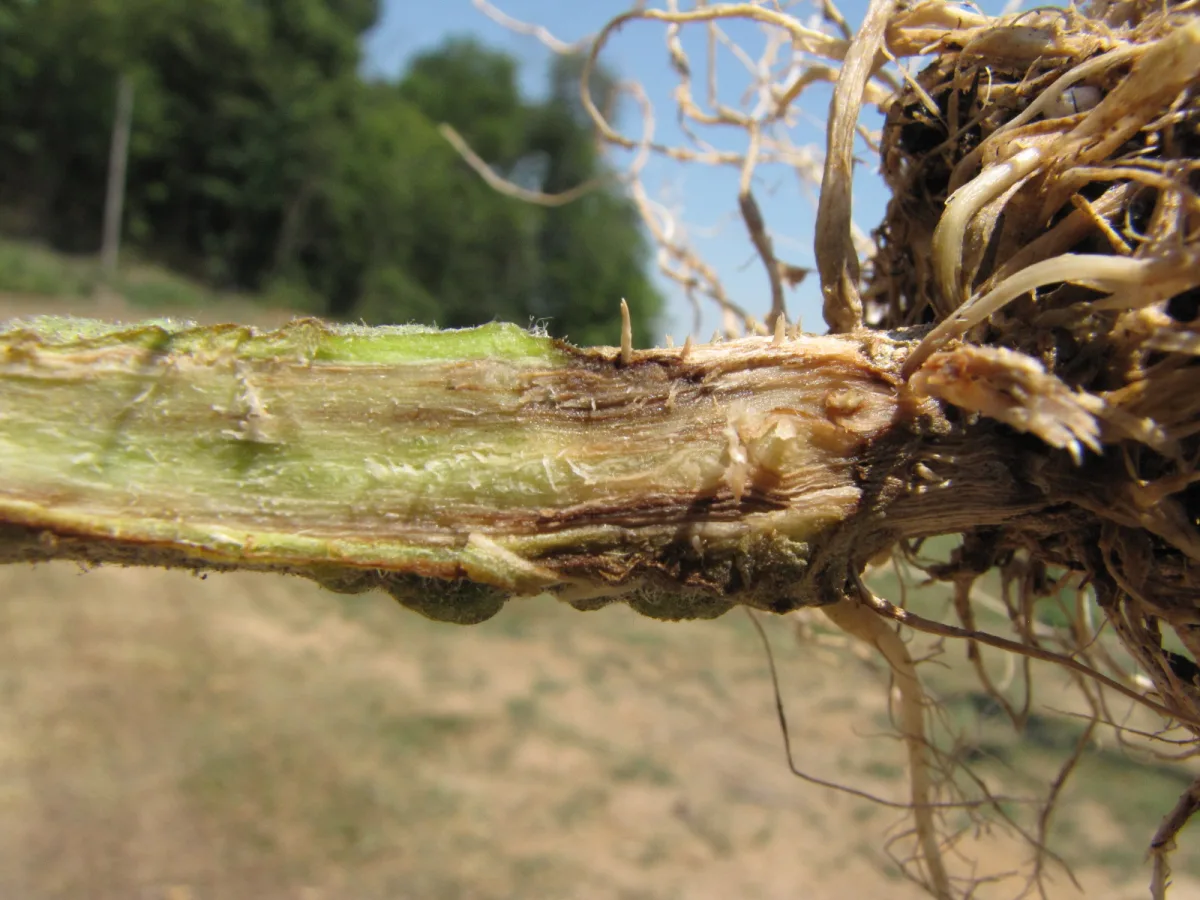
Soybean Fusarium wilt (tracheomycosis) begins to manifest actively from the flowering period. Pathogens penetrate the plant through the apical regions of young roots or mechanical injuries. The fungal mycelium grows inside the xylem vessels and spreads to the adjacent parenchyma tissues. As a result, the plant's supply of water and nutrients is disrupted, causing leaves to lose turgor and yellow, eventually leading to the death of the entire plant.
For accurate diagnosis of Fusarium in field conditions, pay attention to the following signs:
- On a cross-section of the root and stem, browning of the vascular bundles is clearly visible.
- Internal vascular browning can extend up the stem for 15–20 cm, even if only small dark spots are visible on the outside.
- Affected plants gradually yellow and fail to form pods. The disease also triggers the shedding of flowers and fruit set.
- At the end of the growing season, spots and ulcers appear on the pods. In wet weather, the pods discolor and become covered with sporodochia.
The development of tracheomycotic wilt is favored by dry and warm years with a hydrothermal coefficient (HTC) of less than 1.0. The minimum temperature for spore germination of the pathogen is 4 °C, while optimal mycelial growth occurs at temperatures of +20…+25 °C. Total harvest losses from the disease vary from 20.0 to 80.0 %.
| Soybean yield structure indicator | Reduction at maximum Sclerotinia infection, % |
|---|---|
| Number of pods per plant | 62.0 |
| Number of seeds | 86.2 |
| Seed mass per plant | 70.3 |
| 1000-seed weight | 16.3 |
Ascochyta blight of soybean is caused by fungi of the Pleosporaceae and Didymellaceae families. Phoma sojicola (Abramov) Kövics, Gruyter & Aa is considered the primary pathogen, although similar symptoms are caused by Didymella pinodella (L.K. Jones) Qian Chen & L. Cai, Phoma exigua var. exigua, Didymella heteroderae (Sen Y. Chen, D.W. Dicks. & Kimbr.) Qian Chen & L. Cai, and Didymella subglomerata Boerema, Gruyter & Noordel. The disease is widespread globally and is recorded in Russia, European countries (Germany, Poland, Hungary), Asia (Brunei Darussalam, India, China, Taiwan), the Americas (Brazil), Australia and Oceania (Fiji), as well as Africa (Zimbabwe, Rwanda, Tanzania, Ethiopia).
Symptoms of Ascochyta blight can be observed throughout the entire growing season:
- Dark brown spots with a nearly black rim appear on the cotyledons.
- Large spots with a dark brown border and a light center form on the leaves, where black dots—pycnidia—later develop. Over time, the necrotic center of the spot falls out.
- Brown stripes appear on young stems, leading to cracking and tissue destruction. On older plants, the spotting becomes elongated and dark.
- Infected seed becomes lighter, shriveled, wrinkled, and covered with pycnidia.
Sowing seed infected with Ascochyta blight leads to thinning of emergence and a reduction in germination by 25.0–40.0%. The pathogen survives as pycnidia on crop residues and as mycelium inside the seed. Favorable conditions for infection are cold, humid weather and the presence of free moisture at temperatures from 4 °C and air humidity from 90.0%.
The pathogen completes several generations per season. Yield losses due to Ascochyta blight development range from 15.0 to 20.0%.
White mold (Sclerotinia stem rot): outbreak conditions and harmfulness
The pathogen of white mold is the micromycete Sclerotinia sclerotiorum (Lib.) de Bary (family Sclerotiniaceae, genus Sclerotinia). The destructive nature of this disease with massive yield losses was first recorded in 1948 in the USA. Currently, the disease is registered in all key soybean-growing regions of the world: from Russia, Bulgaria, and Romania to Brazil, the USA, China, Australia, and South Africa.
On leaves, Sclerotinia manifests as browning and tissue necrosis. Stem areas around the infection site become discolored. In humid weather, white cottony mycelium grows on the stems, on and inside of which large sclerotia are formed (initially yellow-gray, then darkening to black). In dry weather, no mycelial growth occurs—the stems simply turn white, become brittle, and the plant dies.
Plant infection occurs primarily through fallen flower petals, which serve as a nutrient substrate for the fungus. Infection through wounds or by direct contact between a healthy plant and an infected one is significantly less common. The harmfulness of white mold is sporadic: depending on the weather, yield losses can reach 70.0%, and 1000-seed weight decreases by 18.8–38.6%.
- Sclerotia viability in the soil — up to 5 years
- Temperature for sclerotia germination — 4–16 °C
- Soil moisture for apothecia development — 75.0–80.0%
- Sclerotia burial depth for germination — up to 5 cm
Dense soybean stands during the "flowering to early fruiting" stages create an ideal humid microclimate for sclerotia germination and mass infection of plants.
To prevent serious yield losses from this complex of diseases, an agronomist must implement an integrated plant protection system for soybean. It should combine both timely preventive measures and effective curative fungicide applications.
Preventive measures consist of: crop rotation, selection of resistant cultivars, timing of sowing, seeding depth seeding depth and seed rate, and fertilizer application. These aspects of cultivation influence the overall crop resistance to pathogens.
Spatial and temporal placement of the crop. The best predecessors for soybean are winter and spring grain crops; the worst are sunflower, rapeseed, and legumes due to shared phytopathogens. Spatial isolation of at least one kilometer should be maintained between fields to prevent the spread of diseases to nearby soybean crops. When cultivating soybean on the same site, A. A. Maui noted an increase in the number of plants affected by white mold. For instance, in the first year it was 7.7%, in the second and third—17.3% and 33.0%, respectively. With continuous soybean monocropping for 2 years, the intensity of soil-borne pathogen infection increased from 1.0–9.5% to 21.0–35.0%, with yield losses of 11.6%; by the 3rd year, this led to a 19.2% loss, and within 4 years—a 65.4% yield loss.
Choosing a cultivar is one of the most important aspects of integrated crop protection against phytopathogens, as it allows not only to increase yield but also to reduce disease development through cultivar selection.
Currently, the list of registered agricultural plant cultivars includes the following cultivars with varying resistance to downy mildew: Akardiya, Aurelina, Adessa, as well as one cultivar with low susceptibility to Sclerotinia disease – Dobrynya.
Sowing at non-optimal times leads to a decrease in plant resistance at early stages of development, as a result of which seedlings are more severely affected by phytopathogens. Thus, in a study by V. I. Zaostrovnykh, it was reported that early sowing dates increased the development of fusarium wilt, ascochyta blight, and septoria blight by 4–5 times compared to later sowing dates. Plant infestation with white mold in the studies by A. A. Maui as a result of early sowing reached 27.0–33.0%, while at optimal sowing it decreased by 1.7 times. Deep sowing of seed, which impairs germination conditions, lengthens the hypocotyl of seedlings and the time for them to reach the soil surface, facilitates infection by soil micromycetes. According to Ch. Jiumei, plant infection increased from 19.0–30.0% when sowing at a depth of 3 cm to 46.0–51.0% when sowing seed at a depth of 4–7 cm.
In a study by V. I. Zaostrovnykh, it was reported that there was no clear relationship between the seeding rate, row spacing, and disease development, but there was a trend toward increased development with an increase in the seeding rate. At the maximum seeding rate, disease development increased sharply.
Fertilizers applied to soybean positively influence the crop's resistance to soil-borne pathogens. As a rule, the application of phosphorus fertilizer during seed sowing reduces disease intensity, while nitrogen application increases it.
G. O. Zhernov in his study reported a decrease in the development of soil phytopathogens with an increase in the NPK application rate. Thus, the development of fusarium wilt decreased by 6.9–10.2% depending on the developmental stage.
Currently, among the eradication measures, the chemical method of protection, including seed treatment and fungicide spraying during the growing season, is the most widely used.
Since seed and soil are the main sources of soybean disease infection, seed treatment allows for a significant reduction in the infection of seed material and provides protection for seedlings at the early stages of growth and development. Currently, three products are registered for pre-sowing soybean seed treatment in Belarus: Scarlet, ME (tebuconazole, 60 g/l + imazalil, 100 g/l); Tirada, SC (thiram, 400 g/l + difenoconazole, 30 g/l); Systiva, FS (fluxapyroxad, 333 g/l).
Considering that any seed treatment provides protection during the initial period of plant growth, fungicide spraying is required during the growing season for disease protection. To ensure high biological, agricultural, and economic efficiency, fungicides must be applied taking into account the biological characteristics of disease pathogens, i.e., based on the economic threshold of harmfulness. For the conditions of our country, such studies have not been conducted to date. The range of products permitted for use is very limited and includes 5 fungicides: Harviga, EC (pyraclostrobin, 150 g/l + fluxapyroxad, 75 g/l); Propulse, SE (fluopyram, 125 g/l + prothioconazole, 125 g/l); Titul Duo, MCE (propiconazole, 200 g/l + tebuconazole, 200 g/l), Euclid, SC (azoxystrobin, 250 g/l + boscalid, 150 g/l), Amistar Gold, SC (azoxystrobin, 125 g/l + difenoconazole, 125 g/l).
Conclusion. Thus, the analysis of literature data presented in the paper indicates the wide prevalence and high harmfulness of fungal soybean diseases. The dominance structure of pathogens parasitizing soybean depends significantly on the region of crop cultivation and the hydrothermal conditions occurring during the growing season. In Belarus, studies on the biodiversity of fungi causing soybean diseases are mainly fragmented. Therefore, research to clarify the species composition of soybean disease pathogens and their harmfulness under the conditions of Belarus, the biological justification of timing for fungicide application for crop protection, as well as the formation of an assortment of highly effective products, are relevant.
Gofman, A. V. Features of disease development on various soybean cultivars and the use of protective measures under irrigation conditions in the zone of unstable moisture of the Stavropol Territory: abstract of dissertation... Candidate of Biological Sciences: 06.01.11 / A. V. Gofman; Stavropol State Agrarian University. – Krasnodar, 2007. – 23 p.
Dega, L. A. Diseases and pests of soybean in the Far East / L. A. Dega; edited by A. P. Vashchenko; Russian Academy of Agricultural Sciences, Far Eastern Regional Scientific Center, Primorsky Research Institute of Agriculture. – Vladivostok: Dalnauka, 2012. – 97 p.
Zhernov, G. O. Protection of soybean against diseases under the conditions of the Kurgan region: abstract of dissertation for the degree of Candidate of Agricultural Sciences: 06.01.07 / G. O. Zhernov; Kurgan State Agricultural Academy named after T. E. Maltsev. – Novosibirsk, 2016. – 19 p.
Zaostrovnykh, V. I. The influence of certain agricultural practices on the phytosanitary situation of soybean crops / V. I. Zaostrovnykh // Siberian Bulletin of Agricultural Science. –
2005. – No. 5. – P. 62–69.
Zaostrovnykh, V. I. Soybean pests and phytosanitary optimizing of its cultivation: monograph / V. I. Zaostrovnykh, L. K. Dubovitskaya; ed. by V. A. Chulkina; Russian Academy of Natural Sciences, West-Siberian Branch, Kemerovo State Agricultural Institute, Far Eastern State Agrarian University. – Novosibirsk: [s. n.], 2003. – 528 p.
Contamination of soybean seed by phytopathogenic fungi under conditions of its adaptation in the forest-steppe of Western Siberia / N. M. Konyaeva [et al.] // Bulletin of the NSAU. – 2016. – No. 1. – P. 22–28.
Ivantsova, E. A. Soybean diseases / E. A. Ivantsova // Volgograd Farmer. – 2016. – No. 3. – P. 62–65.
Kazantseva, E. V. Prevalence of soybean diseases in the northern forest-steppe of the Ob region / E. V. Kazantseva, L. F. Ashmarina // Bulletin of the NSAU. – 2014. – No. 3. – P. 27–31.
Krylova, T. S. Improvement of the soybean protection system under conditions of the Amur region: dissertation for the degree of Candidate of Agricultural Sciences: 06.01.07 / T. S. Krylova; Russian State Agrarian University – Moscow Timiryazev Agricultural Academy. – M., 2021. – 139 p.
Maksimovich, Ya. V. Phytosanitary situation of soybean agrocoenoses under different agroclimatic conditions / Ya. V. Maksimovich, M. G. Nemkevich // Modern technologies of agricultural production: collection of scientific articles based on the materials of the XX International Scientific and Practical Conference (Grodno, May 26, March 24, March 21, 2017): technology of storage and processing of agricultural products, agronomy, plant protection / Ministry of Agriculture and Food of the Republic of Belarus, Grodno State Agrarian University; ed.: O. V. Vertinskaya. – Grodno, 2017. – P. 204–209.
Maui, A. A. Soybean pathogens in the conditions of the southeast of Kazakhstan / A. A. Maui, B. N. Sauranbaev, K. I. Orazbaev // J. of Social, Humanities and Administrative Sciences. – 2017. – Vol. 3 (5). – P. 20–26.
Evaluation of the biological efficiency of the preparation Phytodoc Planteco® against soybean ascochyta blight in the Almaty region / I. I. Temreshev [et al.] // Innovation in the modern world: experience, problems and development prospects: collection of scientific articles based on the materials of the III International Scientific and Practical Conference, Ufa, August 18, 2020 / Editorial board: I. A. Solovyov [et al.]. – Ufa,
2020. – P. 53–61.
Petibskaya, V. S. Soybean: chemical composition and use / V. S. Petibskaya; ed. by V. M. Lukomets; State Scientific Institution All-Russian Research Institute of Oil Crops named after V. S. Pustovoit of the Russian Academy of Agricultural Sciences. – Maykop: Polygraph-YUG, 2012. – 432 p.
Stancheva, Y. Atlas of crop diseases: in 5 vols. / Y. Stancheva; translated from Bulgarian by G. Danilova; ed.: A. S. Vasyutin, L. V. Shirina, O. A. Kulich. – M.: Pensoft, 2003. – Vol. 3: Diseases of field crops. – 175 p.
Juimei, C. Biological and toxicological justification for the use of chemical agents for soybean protection against root rot: abstract of dissertation for the degree of Candidate of Biological Sciences:
06.01.11 / C. Juimei; All-Russian Research Institute of Plant Protection. – SPb., 1998. – 24 p.
33. Alternaria alternata [Electronic resource] // MYCOBANK Database. – Mode of access: https://www.mycobank.org/page/Name %20details %20page/900. – Date of access:
34. Alternaria tenuissima [Electronic resource] // MYCOBANK Database. – Mode of access: https://www.mycobank.org/page/Name %20details %20page/1099. – Date of access:
36. Biology, Yield loss and Control of Sclerotinia Stem Rot of Soybean / J. P. Angelique [et al.] // J. of Integrated Pest Management. – 2012. – Vol. 3, iss. 2. – P. 1–7.
37. Cercospora sojina [Electronic resource] // MYCOBANK Database. – Mode of access: https://www.mycobank.org/page/Name %20details %20page/112959. – Date of access:
38. Colletotrichum brevisporum [Electronic resource] // MYCOBANK Database. – Mode of access: https://www.mycobank.org/page/Name %20details %20page/481576. – Date of access:
39. Colletotrichum coccodes [Electronic resource] // MYCOBANK Database. – Mode of access: https://www.mycobank.org/page/Name %20details %20page/5911. – Date of access:
40. Colletotrichum destructivum [Electronic resource] // MYCOBANK Database. – Mode of access: https://www.mycobank.org/page/Name %20details %20page/5967. – Date of access:
41. Colletotrichum gloeosporioides [Electronic resource] // MYCOBANK Database. – Mode of access: https://www.mycobank.org/page/Name %20details %20page/5976. – Date of access:
42. Colletotrichum incanum [Electronic resource] // MYCOBANK Database. – Mode of access: https://www.mycobank.org/page/Name %20details %20page/510514. – Date of access:
43. Colletotrichum musicola [Electronic resource] // MYCOBANK Database. – Mode of access: https://www.mycobank.org/page/Name %20details %20page/564242. – Date of access:
44. Colletotrichum plurivorum [Electronic resource] // MYCOBANK Database. – Mode of access: https://www.mycobank.org/page/Name %20details %20page/564245. – Date of access:
45. Colletotrichum sojae [Electronic resource] // MYCOBANK Database. – Mode of access: https://www.mycobank.org/page/Name %20details %20page/564246. – Date of access:
46. Colletotrichum truncatum [Electronic resource] // MYCOBANK Database. – Mode of access: https://www.mycobank.org/page/Name %20details %20page/6068. – Date of access:
51. Didymella heteroderae [Electronic resource] // MYCOBANK Database. – Mode of access: https://www.mycobank.org/page/Name %20details %20page/545496. – Date of access:
52. Didymella pinodella [Electronic resource] // MYCOBANK Database. – Mode of access https://www.mycobank.org/page/Name %20details %20page/545505. – Date of access:
53. Didymella subglomerata [Electronic resource] // MYCOBANK Database. – Mode of access: https://www.mycobank.org/page/Name %20details %20page/545511. – Date of access:
54. Pederson, V. D. Downy mildew of soybeans: a dissertation [Electronic resource] / V. D. Pederson. – Iowa State University of science and Technology ames, Iowa, 1961. – Mode of access: https://dr.lib.iastate.edu/server/api/core/bitstreams/0a6d2642-d72c-4615-87ac006e33f0a855/content – Date of access: 24.01.2024.
58. Erysiphe diffusa [Electronic resource] // MYCOBANK Database. – Mode of access: https://www.mycobank.org/page/Name %20details %20page/150030. – Date of access:
59. Evaluating Cercospora leaf blight resistance in soybean accessions using an improved categorical disease-evaluation scale / B. M. Ward [et al.] // J. of Crop Improvement. – 2021. – Vol. 35, iss. 11. – P. 1–21.
60. Express-PRA zu Cercospora sojina – Forschung und Züchtung [Electronic resource] // EPPO Platform on PRAs. – Mode of access: https://pra.eppo.int/pra/68e36f50-5dc0-405c-b7d90b1ed624a120. – Date of access: 24.01.2024.
62. Fungal Databases – Fungus-Host By Country [Electronic resource]. – Mode of access: https://fungi.ars.usda.gov/. – Date of access: 24.01.2024.
63. Fusarium equiseti [Electronic resource] // MYCOBANK Database. – Mode of access: https://www.mycobank.org/page/Name %20details %20page/10631. – Date of access:
64. Fusarium oxysporum [Electronic resource] // MYCOBANK Database. – Mode of access: https://www.mycobank.org/page/Name %20details %20page/10756. – Date of access:
65. Hartman, G. L. Compendium of Soybean Diseases / G. L. Hartman, J. B. Sinclair, J. C. Rupe. – 4th edition. – APS Press: St. Paul, 1999. – 100 s.
66. Hershman, D. E. Downy Mildew of Soybeans [Electronic resource] / D. E. Hershman // Plant Pathology Fact Sheet / Cooperative extension service; University of Kentucky, College of Agriculture. – Mode of access: http://plantpathology.ca.uky.edu/files/ppfs-ag-s-03.pdf. – Date of access: 24.01.2024.
67. Hissek, K. First report of Phoma sojicola (syn. Ascochyta sojicola) on Glycine max in Austria / K. Hissek, G. Bedlan // J. für Kulturpflanzen. – 2016. – Vol. 68, iss. 3. – P. 72–74.
69. Identification of Fusarium species associated with soybean root rot in Sichuan Province / X. L. Chang [et al.] // European J. of Plant Pathology. – 2018. – Vol. 151. – P. 563–577.
74. Kosvics, G. J. Phoma sojicola comb. nov. and other hyaline-spored coelomycetes pathogenic on soybean / G. Kosvics, J. de Gruyter, Аа H. A. Van Der // Mycol. Res. – 1999. – Vol. 103, iss. 8. – P. 1065–1070.
78. Meier, U. Growth stages of mono-and dicotyledonous plants: BBCH Monograph / U. Meier; Ed. by U. Meier. – 2 Edition. – Berlin an Braunschweig: ВВА, 2001. – 158 р.
79. Missouri. Soybean Disease Field Guide [Electronic resource] / ed. K. Bissonnette. – Missouri: University of Missouri, [w. y.]. – 64 pp. – Mode of access: https://mosoy.org/wp-content/ uploads/2021/03/59934-21-MO-Disease-Guide.pdf. – Date of access: 24.01.2024.
86. – Mode of access: https://sea.ufr.edu.br/SEA/article/view/1131 – Date of access: 24.01.2024.
81. Mycobank Database [Electronic resource]. – Mode of access: https://www.mycobank. org/. – Date of access: 24.01.2024.
82. Neocosmospora solani [Electronic resource] // Mycobank Database. – Mode of access: https://www.mycobank.org/page/Name %20details %20page/542273. – Date of access:
83. Paxton, J. D. Powdery Mildew of Soybeans / J. D. Paxton, D. P. Rogers // Mycologia. –
1974. – Vol. 66, iss. 5. – P. 894–896.
84. Peronospora manshurica [Electronic resource] // Mycobank Database. – Mode of access: https://www.mycobank.org/page/Name %20details %20page/145334. – Date of access:
85. Peronospora manshurica [Electronic resource] // EPPO Global Database. – Mode of access: https://gd.eppo.int/taxon/PEROMA/distribution. – Date of access: 24.01.2024.
86. Phoma exigua var. exigua [Electronic resource] // Mycobank Database. – Mode of access: https://www.mycobank.org/page/Name %20details %20page/21021. – Date of access:
87. Phoma sojicola [Electronic resource] // Mycobank Database. – Mode of access: https:// www.mycobank.org/page/Name %20details %20page/50121. – Date of access: 24.01.2024.
88. Phoma-like fungi on soybeans / G. J. Kosvics [et al.] // Crit. Rev. Microbiol. – 2014. – Vol. 40, iss. 1. – P. 49–62.
89. Saharan, G. S. Sclerotinia diseases of crop plants: biology, ecology and disease management / G. S. Saharan, N. Mehta. – Netherlands: Springer Dordrecht, 2008. – 486 s.
90. Sclerotinia sclerotiorum [Electronic resource] // Mycobank Database. – Mode of access: https://www.mycobank.org/page/Name %20details %20page/24988. – Date of access:
92. Septoria glycines [Electronic resource] // Mycobank Database. – Mode of access: https:// www.mycobank.org/page/Name %20details %20page/25453. – Date of access: 24.01.2024.
93. Septoria glycines [Electronic resource] // EPPO Global Database. – Mode of access: https://gd.eppo.int/taxon/SEPTGL/distribution. – Date of access: 24.01.2024.
94. Singh, G. Distribution, Importance and Diseases of Soybean and Common Bean: A Review / G. Singh, G. Dukariya, A. Kumar // Biotechnology J. International. – 2020. – Vol. 24, iss. 6. – P. 86–98.
96. Sweet, L. Soybean diseases / L. Sweet, A. Wrather, S. Wright; Integrated Pest Management; ed. D. Murphy. – Columbia: University of Missouri Extension, 2008. – 28 p.
E. O. Senkovsky, N. A. Krupenko RUE «Institute of Plant Protection», Priluki, Minsk region
MAIN LEAF DISEASES OF SOYBEAN, THEIR
BIOLOGICAL FEATURES OF DEVELOPMENT AND
Annotation. Soybean is a valuable forage and oil crop all over the world. One of these factors limiting the high growth of the crop are diseases arising among the lesions of fungi and fungus-like organisms, belong to the category of the most developed and economically significant. The expansion of soybean acreage in Belarus and the insufficient study of the species composition of pathogens of fungal etiology determine the relevance of the analysis of domestic and foreign literature to consider the issue. The article provides data on pathogens, conditions in soybean crops, their prevalence in the world, competitiveness, symptoms, biological characteristics and ways to limit their development.
Key words: soybean, diseases, downy mildew, powdery mildew, ascochytosis, cercospora leaf spot, septoria leaf spot, alternaria leaf spot, anthracnose, fusarium wilt, sclerotinia leaf spot, plant protection system.
Read next
Plant protection For agronomists
Dynamics of disease development in soybean cultivar Pripyat in Belarus
Plant protection For agronomists
Influence of hydrothermal conditions on the development of eyespot root rot in winter grain crops
Plant protection For agronomists