
Global viticulture: status of areas and gross production
4 min read

Viticulture is developed in many countries of the world located in the Northern Hemisphere at latitudes 20–52° and in the Southern Hemisphere between 30 and 45°, where there are favorable conditions for the development of the thermophilic and non-frost-resistant grape crop. For good growth and fruiting, the grape plant requires at least 2500–3000°C of active temperatures and mild winters with an absolute minimum air temperature not lower than 20°C during the growing season.
Of the 10,213 thousand hectares of grape plantations, 71% are concentrated in Europe, 14.4% in Asia, 9.6% on the American continent, 4% in African countries, and 1% in Oceania (Australia and New Zealand).
The distribution of gross grape production by continent is almost the same. Europe holds the leading position in grape production, accounting for 69.3% of the total amount of grapes produced annually worldwide (60,525.9 thousand tons). The American continent ranks second, with an average annual grape production of 15.4%, followed by Asia (10.3%), Africa (3.6%), and Oceania (1.4%). A certain discrepancy between the figures for vineyard area and grape production across continents is explained by the varying productivity of grape plantations.
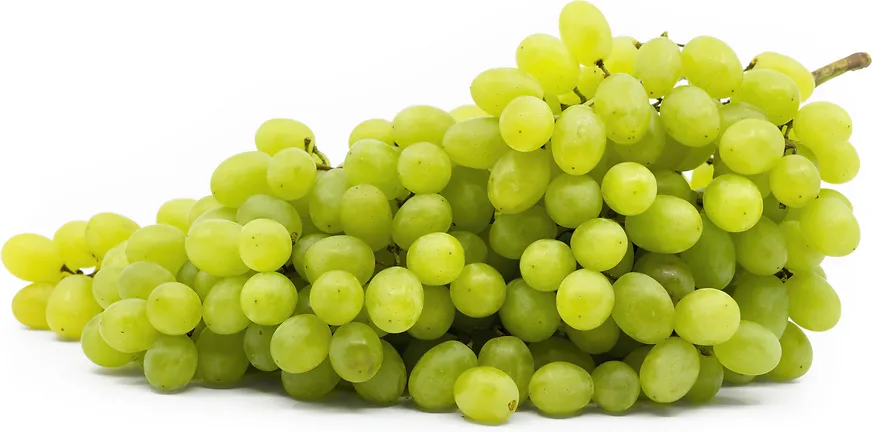
Important indicators of viticulture development are the production and consumption of table grapes. Worldwide, their production amounts to 7,246.4 thousand tons, or 6.1% of total grape production. The largest amount of table grapes (56.6%)1 is produced in European countries. Asia ranks second (22.6%), the American continent third (15.9%), Africa fourth (4.6%), and Oceania fifth (0.3%). Leading producers of table grapes in Europe are Italy and the Soviet Union; in Asia, Turkey and Japan; on the American continent, the USA; and in Africa, Egypt.
The production of dried grape products requires special cultivars that need a high sum of active temperatures, high juice sugar content in the berries, and a warm, dry autumn for air-sun drying. Only certain countries possess such conditions. On average, 750–770 thousand tons of dried grape products are produced worldwide annually, with kishmish and currants accounting for about 95% of this structure. Its gross production is distributed across continents as follows: about 35% falls to the American continent, 32% to Asia, 23% to European countries, about 8% to Oceania (mainly Australia), and the remaining insignificant portion to African countries. On the American continent, the leading role in the production of dried products belongs to the USA (97.3%), with only 2.7% coming from Argentina, Mexico, Chile, and Canada. In the USA, the main industrial region for dried product production is California. In Europe, 84% of dried grapes (kishmish and currants) are produced by Greece, with the rest by Spain, the USSR, and Italy. The main kishmish-producing countries in Asia are Turkey, Iran, and Afghanistan. Thus, 6 countries — the USA, Greece, Turkey, Australia, Iran, and Afghanistan — produce about 97% of the gross dried grape product.
Over 88% of all harvested grapes are processed into wine worldwide. The average annual wine production is 326,646 thousand hl. The quantity of wine produced varies significantly by continent, which is explained by the different attitude toward it. The largest amount of wine is produced in European countries (79.6%). The American continent ranks second in wine production volume (15.1%), followed by African countries (3.2%), Oceania (1.1%), and finally Asian countries (0.6%). The largest wine producers in the world and in Europe are Italy, France, and Spain; on the American continent, they are Argentina and the USA. 1 Of the total amount of table grapes.
An analysis of world viticulture statistics over the last 20–30 years shows that the area under grape cultivation in all countries of the world has steadily stabilized at the level of 10 million hectares. In a number of countries, there is a trend toward a reduction. Thus, areas under grape plantations have decreased in France, Italy, and North African countries (Algeria, Morocco, Tunisia). Vineyard areas are steadily increasing in the USSR, the USA, and Mexico.
Grape production shows a tendency to increase, which is primarily explained by the rise in grape yield in many countries of the world (USSR, USA, Germany, etc.). The production of table grapes worldwide across all continents also shows a tendency to increase. The volumes of dried product production fluctuate significantly from year to year. In European and Asian countries, it has declined slightly over the last 10–15 years, while in American and African countries and Oceania, it has increased.
Read next
Viticulture For agronomists
Technological requirements for grape cultivars for dried fruit production
Viticulture For agronomists
The state and characteristics of modern viticulture in France
Viticulture For agronomists