
Biological characteristics and history of breeding of American grapevine species
9 min read
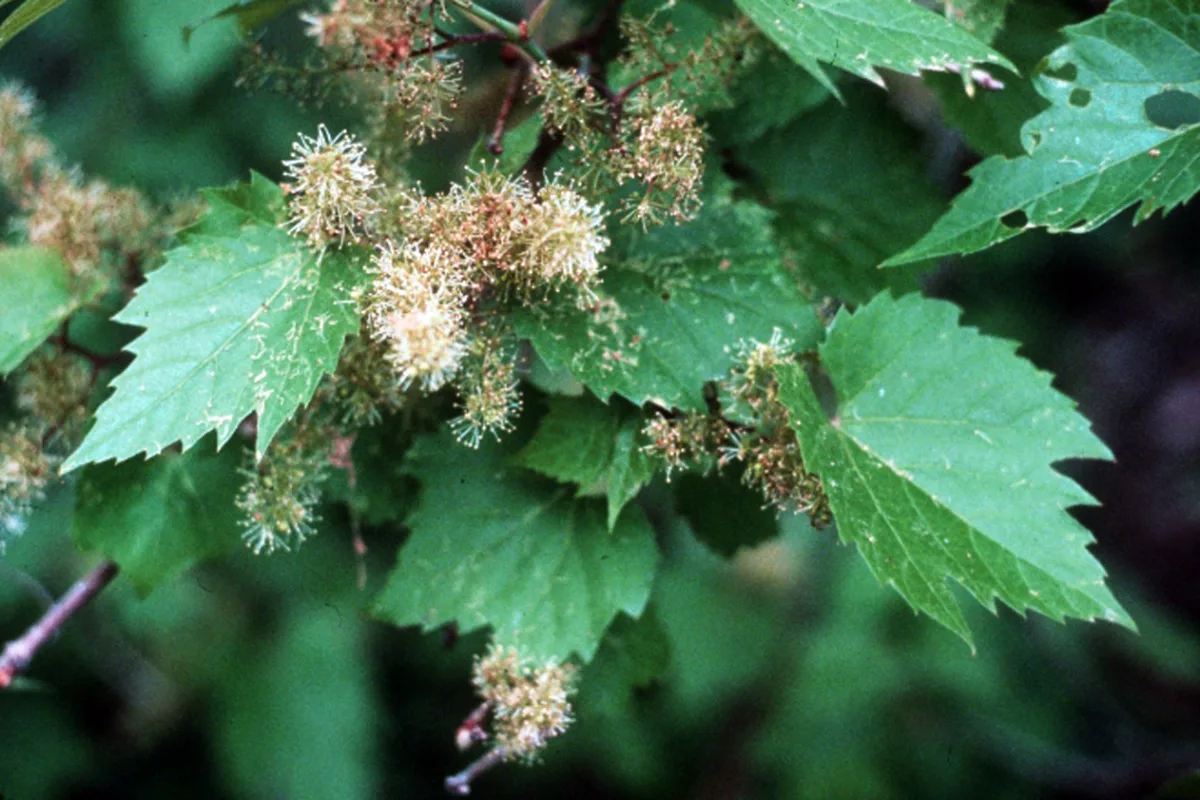
American grape species are the foundation of modern vineyard protection against phylloxera and the basis for rootstock breeding. In nature, these vigorous vines grow in the forests and along the riverbanks of North America. All of them are dioecious: some bushes bear only male flowers, others bear functionally female ones. Wild species crossbreed easily with each other, producing small berries with a specific strawberry ("fox") flavor.
- Number of grape species in the group — 28
- Well-studied species among them — 18
- Beginning of cultivation — 17th century
The biological properties of American grapes depend on their zone of origin. Species from the northern regions of Canada and the USA are characterized by high frost resistance. However, they lack immunity to the pest, as they grew in sandy soils and siliceous soils where phylloxera appeared late (for example, V. labrusca L., V. lincecumii Buckl.). Southern and southeastern species, by contrast, are resistant to phylloxera, drought, and high lime content in the soil.
From wild hybrids to phylloxera-resistant rootstocks
Attempts to grow European grapes in America in the early 17th century failed: the vines perished from phylloxera, fungal diseases, and an excess of carbonates. The solution was the natural hybridization of native species with European-Asian ones. New forms acquired bisexual flowers, larger berries, and resistance to diseases. Breeders selected the best forest forms suitable for fresh consumption and processing.
In the late 19th century, when phylloxera was massively destroying the vineyards of France and Italy, these hybrids gained particular popularity. They are still grown in the eastern United States and certain regions of Europe. The following direct producer cultivars have become established in vineyards:
- Isabella
- Concord
- Catawba
- Lydia
- Noah
Later, wild species began to be imported into Europe to create phylloxera-resistant rootstocks. V. vulpina L. (V. riparia Michx.), V. rupestris Scheele, and V. berlandieri Planch. were imported in large quantities. Their berries were inedible, so the plants were intended to be used exclusively as rootstock material. However, pure American species did not adapt well to the new soil and climatic conditions.
Grafting European cultivars onto pure American species leads to failure. Due to weak affinity (the physiological incompatibility of rootstock and scion), the bushes grow poorly, suffer from chlorosis, and fail to produce a harvest.
The problem of compatibility was solved only through long-term breeding. Specialists crossbred American species with each other and with European-Asian cultivars. Growing seedlings directly in European conditions made it possible to obtain adapted rootstocks. Now they ensure the resistance of vineyards to phylloxera on a wide variety of soil types.
From direct producers to grafted crops
In parallel with the development of rootstocks, breeders sought to combine the resistance of American grape species with the quality of European cultivars. The result of this work was interspecific hybrids — direct producers: Couderc 4401, Seibel 1, Seibel 14, Seibel 1000, Baco 1, Castel 120, and Terras 20. Initially, they gained widespread popularity due to their low soil requirements, high frost resistance, and resistance to fungal diseases. In the vineyards of Moldova and Ukraine, they were successfully grown without winter cover.
However, due to low berry quality and weak phylloxera resistance, plantings of direct producers began to be reduced. They were replaced by European-Asian cultivars grafted onto phylloxera-resistant rootstocks. Today, these hybrids are practically not cultivated for commercial berry production, but are actively used in breeding programs as donors of complex resistance.
Hybrids — direct producers played an important role in the rapid recovery of vineyards destroyed by phylloxera, but gave way to grafted crops due to mediocre berry quality.
American grape species in modern nursery production
For practical viticulture, four wild American species are of the greatest value. Each of them possesses a specific set of biological traits. Based on them, breeders create rootstocks capable of growing in various soil and climatic conditions.
- Frost resistance of V. labrusca and V. vulpina — down to -30 °C
- Lime limit for V. vulpina — 10–15%
- Lime limit for V. rupestris — 18–20%
Vitis labrusca L. is adapted to moist lowlands and light sandy soils. This species withstands severe frosts, has moderate resistance to diseases, and weak resistance to phylloxera. Most of its well-known cultivars, including Isabella, Lydia, Catawba, and Concord, are natural hybrids with European grapes. They are in demand in southern regions with high rainfall, and in the forests of the Black Sea coast of the Caucasus, this species can be found in a feral state.
Vitis vulpina L. (V. riparia Michx.) in the wild prefers fertile, light, air-permeable soil along riverbanks. It is completely resistant to the root form of phylloxera, fungal diseases, and severe frost. This species serves as a base for obtaining high-quality phylloxera-resistant rootstocks.
- Riparia Gloire de Montpellier (Riparia Gloire);
- Riparia Grand Glabre;
- hybrid Solonis X Riparia 1616.
V. labrusca and V. vulpina species are sensitive to carbonates. When planted on soil with high lime content, they quickly suffer from chlorosis.
Vitis rupestris Scheele is a branched shrub adapted to dry gorges and rocky soil. The species is demanding of heat, but at the same time, it excellently tolerates drought, frost, and fungal infections. It is widely used both for breeding direct producers and as a phylloxera-resistant rootstock.
- Rupestris du Lot;
- Riparia X Rupestris 101–14;
- Riparia X Rupestris 3309;
- Mourvèdre X Rupestris 1202;
- Aramon X Rupestris Ganzin No. 1.
Vitis berlandieri Planch. grows on dry chalky soil in hilly regions. It is inferior to other American species in frost resistance but surpasses them in resistance to drought, downy mildew, powdery mildew, and phylloxera. The main advantage of this species is its exceptionally high tolerance to active lime.
| Plant type | Maximum lime content in soil, % |
|---|---|
| V. berlandieri | up to 65 |
| Hybrids with V. vinifera | up to 40–45 |
Due to its high resistance to carbonates, V. berlandieri has become the foundation for a group of valuable rootstocks. They allow for the successful cultivation of grapes on calcareous soil. The following cultivars have gained the greatest practical importance:
- Berlandieri X Riparia Kober 5BB;
- Berlandieri X Riparia 420A;
- Berlandieri X Riparia Teleki 8B;
- Berlandieri X Riparia SO 4;
- Crăciunel 2;
- Chasselas x Berlandieri 41B;
- Berlandieri x Riparia Richter 99.
Potential of the American species V. lincecumii and V. cordifolia in rootstock breeding
The wild-growing grapevine V. lincecumii originates from the hot and arid regions of the southern United States. In its pure form, it is of little value for modern nursery production due to its weak resistance to phylloxera and fungal diseases, as well as its poor adaptation to calcareous soil. However, this species played an important role in the history of breeding due to its large, edible berries.
Crossing V. lincecumii with V. rupestris and V. vinifera species allowed for the development of hardy grapevine forms. Breeders used this triple hybrid complex to develop plants resistant to adverse conditions. The result of this work was a group of well-known hybrids — direct producers:
- Seibel 1
- Seibel 20
- Seibel 1000
- Seibel 4986
The V. cordifolia species is a powerful liana with immense growth vigor, growing in the wild in the Missouri River basin and the eastern states of the USA. The plant possesses high natural resistance to drought, fungal pathogens, and phylloxera. In breeding practice, this species is valued for its excellent compatibility when crossing with other American grapevine species.
V. cordifolia grapevines are extremely sensitive to calcareous soil. It grows poorly on dry chalky sites, and the critical threshold of lime content in the soil for it is only 10–12%.
On clayey, calcareous-siliceous soil, V. cordifolia develops successfully and serves as a foundation for creating phylloxera-resistant rootstocks. An example of such breeding is the hybrid (Riparia X Cordifolia) x Rupestris 106–8, obtained by crossing V. vulpina with the natural hybrid V. cordifolia x V. rupestris. Today, this rootstock can be found primarily in collection plantings in Ukraine and Moldova.
- Maximum lime content for V. cordifolia — 10–12%
- Trunk diameter of V. cordifolia liana — up to 80 cm
Read next
Viticulture For agronomists
Characteristics and classification of the grapevine species Vitis vinifera L.
Viticulture For agronomists
Global viticulture: status of areas and gross production
Viticulture For agronomists