
Technology of rootstock selection and production of grafted nursery plants of grapes
16 min read
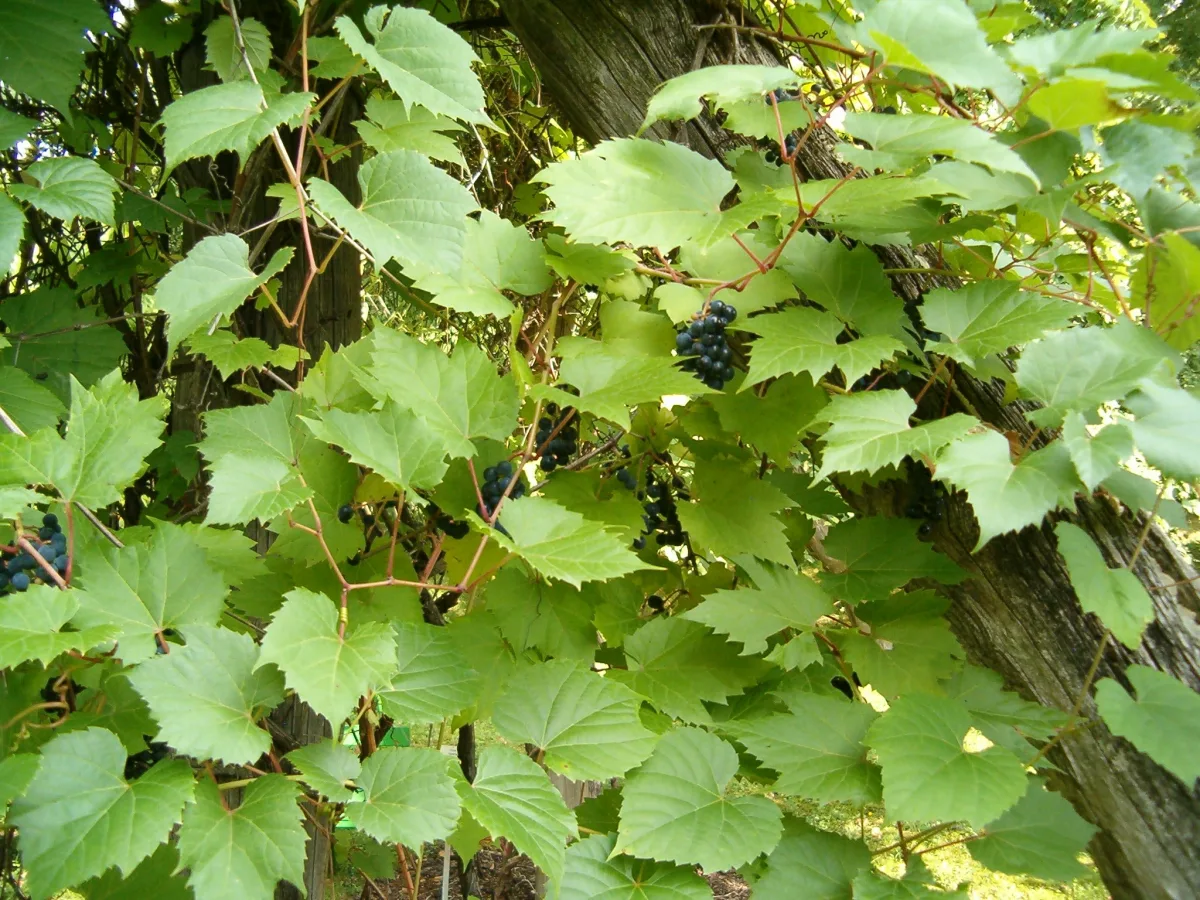
More than 60% of vineyards in key cultivation regions are located in zones with total or partial phylloxera infestation. The only reliable method of protecting plantings remains the grafting of high-quality European-Asian cultivars onto resistant American rootstocks or their hybrids. The establishment of new vineyards and the reconstruction of existing ones in these zones are carried out exclusively with grafted nursery plants.
In addition to phylloxera protection, grafting onto cold-resistant rootstocks is necessary in northern and eastern regions, where the soil freezes deeply and the root system dies. On salt-tolerant rootstocks, grapes are grown on highly saline soils. However, in industrial viticulture, it is specifically phylloxera resistance that has key practical significance.
Criteria for selecting rootstock cultivars
The longevity and productivity of a future vineyard depend directly on the correct choice of rootstock. Rootstock cultivars must be resistant to phylloxera and a high content of active lime in the soil, and also possess good affinity (compatibility) with scions. High rooting ability of cuttings, frost and drought resistance, a short growing season, vigorous bush growth, and weak lateral shoot formation are important.
There is no universal rootstock. For example, the absolutely phylloxera-resistant Vitis rotundifolia species does not graft with European-Asian cultivars. At the same time, the lime-resistant V. berlandieri species is not used in its pure form due to the poor rooting ability of its cuttings.
Most modern rootstock cultivars were obtained by crossing the American species V. vulpina, V. rupestris, and V. berlandieri with each other or with the European-Asian V. vinifera grape. Pure American V. vulpina and V. rupestris species are rarely suitable for European conditions in their pure form. Hybridization allows for combining their best properties and compensating for their shortcomings.
Pay attention to the soil type. Even frost- and phylloxera-resistant hybrid rootstocks may grow poorly on soils with an increased content of active lime, where ordinary European-Asian cultivars otherwise fruit excellently.
Rootstock cultivars for industrial cultivation
The cultivation of grafted planting material is a complex, multi-stage process. The productivity of future plantings depends on the timely execution of all technological operations in the nursery. Below is a list of phylloxera-resistant rootstock cultivars accepted for state variety testing.
- Berlandieri X Riparia Kober 5BB (Austrian)
- Berlandieri X Riparia Teleki 5C
- Berlandieri X Riparia Teleki 8B (Hungarian)
- Berlandieri X Riparia Teleki Vazisubani
- Berlandieri X Riparia Richter 99
- Berlandieri X Riparia Richter 110 (French)
- Berlandieri X Riparia SO 4 (FRG)
- Berlandieri X Riparia 420A (French)
- Vierul 2, Vierul 3
- Dragosani 37, Dragosani 57 (Romanian)
- Cabernet X Berlandieri 333 EM
- Cabernet X Rupestris 33A
- Castel 196–17 (French)
- Korna Nyagra X Riparia Gloire 16–3
- Krechunnel 2 (Romanian)
- Poulsen 2203
- Riparia X Berlandieri 161–49C
- Riparia Gloire de Montpellier
- Riparia X Rupestris 101–14
- Riparia X Rupestris 3309 (French)
- Rkatsiteli X Riparia Gloire 14
- Rupestris du Lot (French)
- Seedling (Mourvedre X Rupestris 1202) 20–43
- Seedling Riparia Gloire 6–3
- Seedling (Riparia X Rupestris 101–14) 10–1
- Chasselas X Berlandieri 41B (French)
- 140 Ruggeri (Italian)
- 4453 Malegue (French)
- (Mourvedre X Rupestris 1202) X Riparia pubescent Klosterneuburg (GDR)
- (Riparia X Rupestris 101–14) X Amurensis 19–1
Agronomic properties of grapevine rootstock cultivars
The choice of rootstock determines the longevity of the vineyard and the stability of its fruiting under specific soil and climatic conditions. When selecting a rootstock cultivar, its resistance to active lime, drought, frost, and compatibility (affinity) with scion European-Asian cultivars are of key importance. To simplify the choice of the optimal option for soil type and the level of phylloxera threat, the main parameters of the rootstocks are grouped into a table.
| Rootstock cultivar | Lime limit in soil (by Galet) | Phylloxera resistance | Optimal soil type and humidity |
|---|---|---|---|
| Riparia X Rupestris 101–14 | up to 9% soluble forms | high to root form, low to leaf form | sufficiently fertile of all types, heavy wet |
| Riparia X Rupestris 3309 | up to 11% soluble forms | high to root form, low to leaf form | skeletal, dry, loose with a deep tilled layer |
| Berlandieri X Riparia Kober 5BB | up to 20% soluble forms | high to root form, high to leaf form | of all types, especially light gravelly |
| Berlandieri X Riparia Teleki 8B | up to 60% soluble carbonates | high | highly calcareous soils |
| Berlandieri X Riparia SO 4 | up to 17% active lime | very high to root form, low to leaf form | of all types, moderately fertile wet |
| Berlandieri X Riparia Krechunnel 2 | up to 20% active lime | high to root form, high to leaf form | relatively light wet soils |
| Solonis X Riparia 1616 | up to 14% soluble forms | low | wet, slightly saline, clay |
| Chasselas X Berlandieri 41 B | up to 40% soluble forms | reduced | highly calcareous soils of all types |
| Riparia Gloire de Montpellier | no more than 6% soluble forms | high to root form, low to leaf form | deep moistened soils of river valleys |
Rootstocks tolerate soil moisture deficit in the field in different ways. High drought resistance is characteristic of Chasselas X Berlandieri 41 B and Berlandieri X Riparia Teleki 8B, the latter also being resistant to waterlogging. Conversely, rootstocks of the Riparia X Rupestris group (101-14 and 3309) and Riparia Gloire de Montpellier are sensitive to drought. Moreover, the Riparia X Rupestris 3309 cultivar exhibits short-internode shoots when there is a lack of moisture.
Rootstock cultivars have a strong influence on the growth vigor and maturation of the scion vine. Berlandieri X Riparia SO 4 notably stimulates the growth of bushes and fruiting, and its shoots mature significantly earlier than those of other rootstocks. Riparia Gloire de Montpellier also accelerates the ripening of scion berries and shoots, but it requires control over the development of the trunk, as the stem of this rootstock thickens faster than the scion. For Kober 5BB and Solonis X Riparia 1616 cultivars, shoots may not mature along the entire length of the growth during unfavorable years.
The Solonis X Riparia 1616 cultivar is the primary phylloxera-resistant rootstock for partially saline soils. It increases yield and accelerates berry ripening, however, it requires prior testing for compatibility with a specific scion due to unequal affinity for European-Asian grapevine cultivars.
Technological aspects of rooting and stratification
Most of the presented rootstocks are characterized by high cutting rooting capacity and good callus formation. However, when preparing grafted nursery plant material, it is important to strictly observe the humidity regime technology. Violation of the conditions at the vine preparation stage leads to the culling of nursery plants.
During the stratification of grafted cuttings in water, Berlandieri X Riparia Kober 5BB, Berlandieri X Riparia SO 4, and Berlandieri X Riparia Crăciunel 2 rootstocks exhibit massive death of the basal end. This completely blocks root formation.
For areas where phylloxera has appeared relatively recently, new selection forms of rootstocks are of practical interest, requiring study under specific soil and climatic conditions. As a reliable frost-resistant rootstock in such regions, the following Michurin grapevine cultivars are recommended:
- Bujtur;
- Korinka Michurina;
- Arctic.
Key indicators of the growing season and survival rate of individual rootstock cultivars:
- Rooting capacity of Crăciunel 2 cuttings — up to 56%
- Shoot maturation of Crăciunel 2 — 75–80% of length
- Growing season of Kober 5BB — 170–180 days
- Growing season of Riparia Gloire — up to 250 days
- Lime limit for Teleki 8B — up to 60% carbonates
Establishing a nursery of rootstock vines: from site selection to planting
The quality of grafted grapes directly depends on the physiological state of the rootstock vine. For cuttings to successfully graft with the scion and root quickly, they must be well-matured and standard in length and thickness. The basis for obtaining such material is specialized nursery plantations of phylloxera-resistant cultivars.
Do not establish nurseries on heavy, waterlogged soils. Under such conditions, the growing season of rootstock cultivars is prolonged, shoots do not mature well, which sharply reduces the yield and quality of cuttings.
For nurseries, choose open, sun-warmed sites protected from northern and eastern winds. The soil should be light in mechanical composition, fertile, and with deep groundwater levels. Before planting, perform deep autumn ploughing, simultaneously applying fertilizer to create a reserve of nutrients.
- Depth of ploughing — 65–70 cm
- Organic fertilizer — 40–60 t/ha
- Superphosphate — 120–150 kg/ha
- Potassium salt — 70–80 kg/ha
The prepared site is divided into blocks with an area of 25–50 ha each, with rectangular plots measuring 100 by 500 meters. Between them, roads 5–10 meters wide are designed for the passage of tractors and special machinery. Planting is carried out in spring or autumn strictly by cultivar, using one-year-old nursery plants. The planting scheme depends on the soil and the type of bush training: inter-row spacing is 3–3.5 meters, and the distance between plants in a row is 1.5–1.75–2 meters.
The nursery area is planned for the specific production tasks of the farm. The main guideline is the planned output volume of grafted nursery plants. Expected yield is calculated based on the type of plantation.
| Type of nursery | Output of 8-bud cuttings per 1 ha |
|---|---|
| Average | 50–60 thousand units |
| Most intensive | up to 200 thousand, sometimes up to 360 thousand units |
Before planting, nursery plants are necessarily prepared to stimulate survival and reduce transplanting stress. Proper preparation prevents tissue drying and stimulates rapid root formation. The technological process of preparation and planting includes five consecutive steps.
- Shorten the nursery plant roots to 7–8 cm, and leave no more than 2–3 lower buds on the shoots.
- Place the nursery plants in water for 1–2 days, submerged to 2/3 of their length, to saturate with moisture.
- Dip the root system in a clay slurry with the addition of manure.
- Plant the plants using mechanized methods in a permanent location at a depth of 45–50 cm.
- Hill up the plantings, forming a wide mound of soil over each plant (this step is skipped for paraffined nursery plants).
Nursery care and choice of bush training system
During the first growing season, care is focused on developing a deep root system and keeping the planting area clean. The soil is regularly loosened whenever weeds appear or a crust forms. In autumn, a mandatory inventory and inspection of the plantings are carried out: off-type plants are removed, and mature nursery plants of the main cultivar are planted in place of any losses.
Be sure to perform 2–3 root pruning operations during the summer. During this operation, the bush's surface roots are removed to a depth of up to 25 cm, which stimulates the development of a strong, deep root system.
Plant training begins in the second year. Historically, farms used the head training system, where a thickening with a diameter of 30–40 cm forms at the top of the trunk due to annual heavy pruning. With this method, bushes are grown on the ground (without a trellis), leaving 6–8 spurs with 2–3 buds each during pruning. When the young shoots reach a length of 10–12 cm, they are thinned, leaving 10 to 20 shoots on the bush depending on the vigor of the plant's growth.
Modern nursery management is moving away from the head training system due to the short lifespan of the bushes, high density, and the impossibility of mechanizing care. It is being replaced by a short-arm fan training system on a trellis. It ensures excellent shoot maturation and increases the yield of cuttings.
The short-arm fan system consists of a trunk 20–25 cm high and 3–4 perennial arms. During annual pruning, 2–3 shoots shortened to 2–3 buds are left on each arm. To establish this structure, work begins in the first year by leaving only 2–3 buds on the nursery plant at the time of planting.
Training rootstock bushes and choosing a trellis
The short-arm fan bush training system is the optimal choice for rootstock nurseries. It allows for the full mechanization of tillage and facilitates pruning, tying, and shoot thinning. With this training method, the bushes are evenly illuminated and ventilated, live longer, and provide the maximum yield of well-matured vines.
- First year: select the strongest shoot, and when it reaches a length of 20–25 cm, pinch it back and tie it to a stake. Regularly remove the lateral shoots growing on the future trunk, leaving only the top two.
- Second year: prune the remaining shoots back to 3–4 buds each. By the end of the growing season, 2–3 spurs with 4–6 shoots should form on the bush.
- Third year: in spring, prune the developed shoots back to spurs with 2–3 buds each. By autumn, the bushes will have reached their final shape with 4–6 short arms.
After spring shoot thinning, an average of 15–18 shoots are left on a mature bush. A vertical 5- or 6-wire trellis with a height of 1.6 to 3 meters and wire spacing of 40–50 cm is best for supporting them. The shoots are tied to it at an incline of 30–45° in groups of 3–4, which ensures good aeration and light exposure.
With horizontal vine management on T-shaped trellises, the wire is attached at a height of 0.6 m from the soil, with growing shoots tied horizontally. However, a vertical 4-wire trellis provides the highest yield of matured vines. Trials have also shown excellent results when growing nursery stock on the ground using herbicides — this method allows for an annual yield of 160,000–200,000 eight-bud cuttings per hectare.
- Load per mature bush — 15–18 shoots
- Trellis height — 1.6–3 m
- Shoot tying angle — 30–45°
- Yield of cuttings grown on the ground — 160–200 thousand units/ha
The type of support is selected based on the specific biological characteristics of the grape rootstock cultivars:
- T-shaped trellis: Riparia x Rupestris 101-14, Riparia x Rupestris 3309.
- Vertical 4-wire trellis: Berlandieri x Riparia Kober 5BB, Berlandieri x Riparia Teleki 8B, Riparia Gloire de Montpellier, Chasselas x Berlandieri 41B.
Nursery care, pest protection, and nutrition
Regular shoot thinning is a mandatory practice, without which it is impossible to obtain high-quality matured vines. This procedure is carried out 4 to 6 times or more during the summer. In addition to lateral shoots, it is essential to remove overwintering buds (eyes), tendrils, and inflorescences so that the bush does not waste nutrients on them.
Remove lateral shoots on time, before they exceed 8–12 cm and are still in a herbaceous state — this way, the wounds heal quickly. Delaying thinning sharply reduces the quality of the vines and the yield of cuttings suitable for grafting.
Before the start of the growing season, a preventive eradication spraying of the bushes against diseases is carried out using a 1% DNOC solution. Most rootstock cultivars are resistant to downy mildew, so preventive treatments against this disease are applied selectively. Protective measures are necessary only for the Chasselas x Berlandieri 41B cultivar — these are sprayed 1–3 times per season depending on the weather.
Against the leaf form of phylloxera, nurseries of susceptible cultivars are treated with a 16% mineral-oil emulsion of the gamma isomer of HCH. Immediately after spraying, deep tillage of the soil is carried out to a depth of up to 12 cm. Throughout the summer, the ground in the nursery is kept in a loose state and free of weeds.
| Stage of phylloxera treatment | Timing |
|---|---|
| First spraying | Immediately after bud break |
| Second spraying | When 9–12 leaves have developed on the shoots |
Topping of shoot tips is carried out once at the end of the growing season, when shoot growth is maximally slowed down. This redirects the flow of nutrients and accelerates the maturation of the vine along its entire length.
To increase the yield of cuttings, NPK base fertilizer is applied every 3–4 years. In early spring or before irrigation, the granules are incorporated to a depth of 30–35 cm, when there is sufficient soil moisture. Regular irrigation, as well as root and foliar top dressing, help to further increase the yield of rootstock cuttings.
| Soil type | Application rate of NPK (kg/ha) |
|---|---|
| Ordinary chernozems | 60 |
| Loamy and sandy loam chernozems | 90 |
Organic top dressing is carried out three times per season. For this, liquid manure (6–8 t/ha) or poultry manure (60 kg/ha) is used, which must be diluted with water 6–10 times before application. Liquid fertilizers are applied at strictly defined developmental phases of the bush for growth stimulation and subsequent maturation of shoots.
- First top dressing: immediately after bud break.
- Second top dressing: during the period of most intensive shoot growth.
- Third top dressing: at the end of summer.
- NPK application depth — 30–35 cm
- DNOC dosage (40% WP) — 20 kg/ha
- Gamma isomer of HCH dosage — 2–2.5 kg/ha
- Tillage depth after spraying — up to 12 cm
Foliar top dressing with phosphorus and potassium in combination with boron and zinc micronutrient fertilizers is applied 2–3 times during the growing season.
It is recommended to irrigate nursery plantations 2–3 times depending on the amount of precipitation, and especially in dry years. The irrigation rate is 600–700 m3/ha. Irrigation is finished 2 weeks before shoot maturation. In November–December, after pruning the bushes and harvesting cuttings from them, a moisture-recharge irrigation at a rate of 800–1000 m3/ha is advisable.
The cultivation of scion material is carried out in intensive-type nurseries established with elite nursery plants of regionalized cultivars in accordance with the specialization of the nursery enterprise. The cultivation technology for scion material is similar to that for own-rooted plants (see p. 112–115).
Read next
Viticulture For agronomists
Biological characteristics and history of breeding of American grapevine species
Viticulture For agronomists
Influence of soil conditions on grape yield and quality
Viticulture For agronomists