
Botanical characteristics and classification of plants of the genus Vitis
8 min read
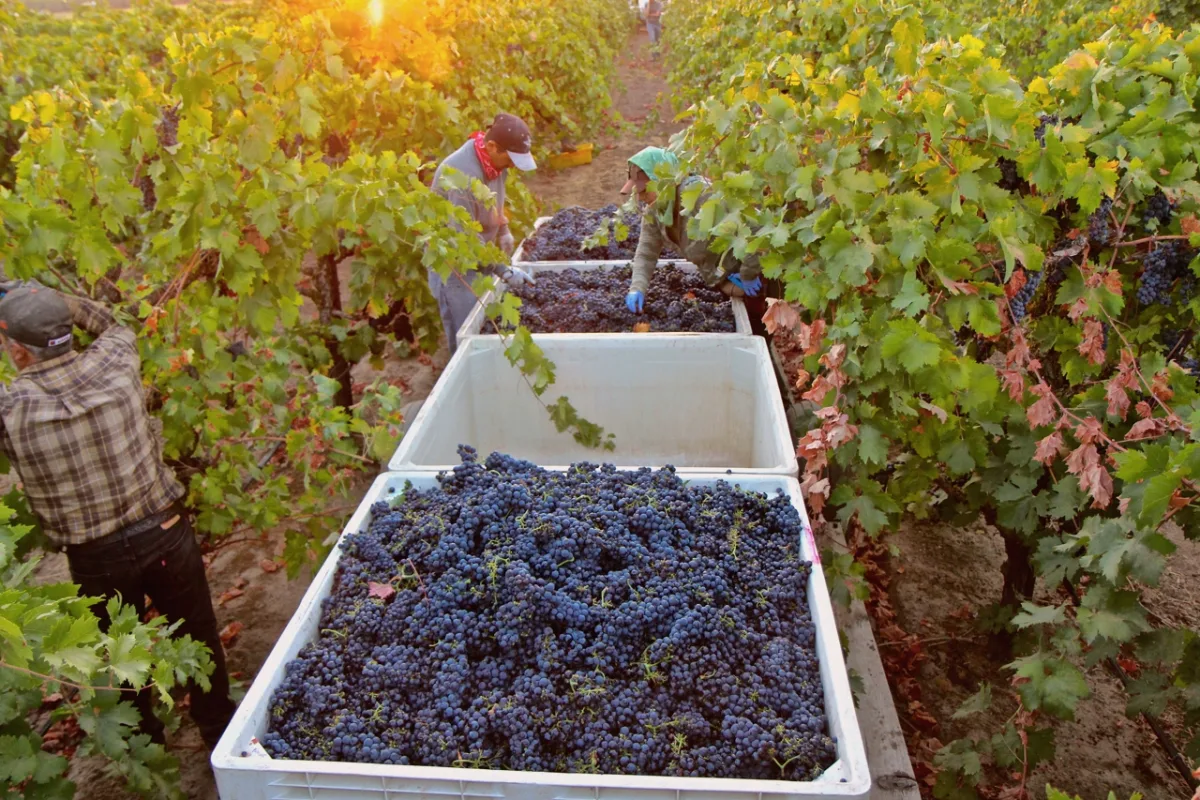
Botanical characteristics and structure of plants of the genus Vitis
The genus Vitis is of the greatest practical importance in viticulture and unites 70 species, to which all existing cultivars of cultivated grape belong. Plants of this genus are distributed in the temperate and subtropical zones of the Northern Hemisphere. In the wild, they grow in moist forests, along river valleys, and on mountain slopes. In terms of their life form, they are perennial woody vines or climbing shrubs with long internodes.
- Number of species in the genus — 70
- Chromosome number — 2n = 38, 40
- Number of seed per berry — 1–4 units
- Number of stamens in a flower — 5 (rarely 7)
Simple leaves are located on the nodes of the shoots — from entire to 3-, 5-, and 7-lobed. On the side opposite to the leaf, branched tendrils or inflorescences are formed. Most species are characterized by an intermittent arrangement of tendrils: a tendril or inflorescence is set on two consecutive nodes, while the next node remains free. However, in some representatives, starting from the second node from the base, tendrils are located continuously at each node.
The flowers are small and green. The calyx is fused and consists of 5 sepals; the corolla consists of 5 petals fused at the tips, which are shed as a cap during flowering. The pistil is formed by two carpels with a superior 2-locular ovary, where each locule contains 2 ovules. At the base of the ovary, there are 5 connected nectaries. All wild-growing species are dioecious, whereas cultivated cultivars and some feral forms have bisexual flowers with fertile pollen.
The main anatomical difference of the genus Vitis from other representatives of the family is the yellow-brown wood of biennial shoots and bark that separates from the vine in long strips.
Subgenera, immunity to phylloxera, and hybridization
The genus Vitis is divided into two subgenera. The first unites 68 species (with a chromosome number of 2n = 38 and 40), the second — more ancient — includes only 2 species with 2n = 40. Representatives of the ancient subgenus grow in the subtropical and tropical forests of North America. They are distinguished by hard wood, the absence of a diaphragm in the shoots, unbranched tendrils, lenticels on annual shoots, small inflorescences, and flat transversely wrinkled seed.
About 180 years ago, one of the species of the 40-chromosome subgenus was introduced into culture, which gave rise to more than 20 cultivars. The most famous of them is the Scuppernong cultivar. It has powerful growth vigor: one bush is capable of occupying up to 0.4 ha and producing about 1 t of berries without maintenance. Green-bronze berries the size of a cherry ripen simultaneously and grow in clusters. Due to their rapid shattering, the harvest is not picked by hand, but shaken onto spread-out sheets.
Scuppernong grape cultivars and their hybrids are not grown in Europe or on other continents: the crop is extremely heat-loving and suffers even from a slight content of soluble forms of lime in the soil.
The main value of the 40-chromosome species for breeding is total immunity to phylloxera, as well as high resistance to nematodes and fungal diseases. For a long time, interspecific crosses aimed at transferring these properties to cultivated cultivars did not yield results due to the sterility of the first-generation hybrids. Only in 1962, using the backcrossing method, were fertile hybrids of the DRX series (DRX 24, DRX 5, DRX-55, etc.) obtained for the first time.
In 1974, DRX hybrids were imported for breeding trials. In the early 1980s, by backcrossing DRX-55 forms with cultivated cultivars, it was possible to obtain distant hybrids with a chromosome number of 2n = 38 and 2n = 39. When crossing DRX-55 with the tetraploid cultivar Shabash, allotriploid (2n = 57) and allotetraploid (2n = 76) hybrids were bred for the first time.
- Distant F3 hybrids — more than 400
- Chromosome number of hybrids — 2n = 57 and 2n = 76
- Species in the subgenus with 2n = 38 — 68 (in culture — 20)
- Species of practical importance — about 20 out of 1000
In breeding practice, more than 400 distant F3 hybrids with chromosome sets of 2n = 57 and 2n = 76 have been created. This breeding material serves as a donor of genes for resistance to a complex of diseases and pests. Based on it, new cultivars with high taste qualities are bred, as well as rootstock vines possessing absolute immunity to phylloxera.
The subgenus with a chromosome number of 2n = 38 includes 68 species, of which 20 have been introduced into culture. Plants of this subgenus form large inflorescences and firmly attached berries that ripen simultaneously. Among the characteristic anatomical features are branched tendrils, a dense diaphragm at the nodes of lignified shoots, and bark that easily separates in strips. The harvest is used for fresh consumption, as well as for processing into juices, jams, preserves, dried products, and wine.
All species of the genus Vitis, despite deep geographical and ecological separation, have retained a common ancestor. This ensures their high biological compatibility: they cross-breed freely and graft well together.
Geographical distribution and characteristics of the main groups
Under the influence of glaciation and continental drift, the ancient range of the genus split into three isolated groups: European-Asian, East Asian, and North American. The changing climate destroyed some wild forms, while the remaining species retreated to the south and acquired distinct morphological and biological differences.
- European-Asian group: represented by a single species, Vitis vinifera, covering the basins of the Mediterranean, Black, and Caspian Seas. Growing in diverse conditions, the species has formed many varieties, the berries of which are distinguished by high flesh quality and the ability to accumulate sugar rapidly.
- East Asian group: includes 42 species that have survived in regions with a harsh climate (Northern China, Japan, Korea, India). These are the most winter-hardy representatives of the genus.
- North American group: numbers 28 species distributed from Mexico to Canada. The mild glaciation of the continent allowed for the preservation of ancient forms, which are used today as phylloxera-resistant rootstocks.
In-depth study of the biological and economic properties of cultivated species allows for the construction of precise cultivation technologies in production. Out of approximately 1000 species of the genus Vitis, only about 20 have direct practical significance as table and wine cultivars, phylloxera-resistant rootstocks, or ornamental crops.
Read next
Viticulture For agronomists
Characteristics, taxonomy, and origin history of the Vitaceae family
Viticulture For agronomists
Biological characteristics and history of breeding of American grapevine species
Viticulture For agronomists