
Characteristics, taxonomy, and origin history of the Vitaceae family
8 min read
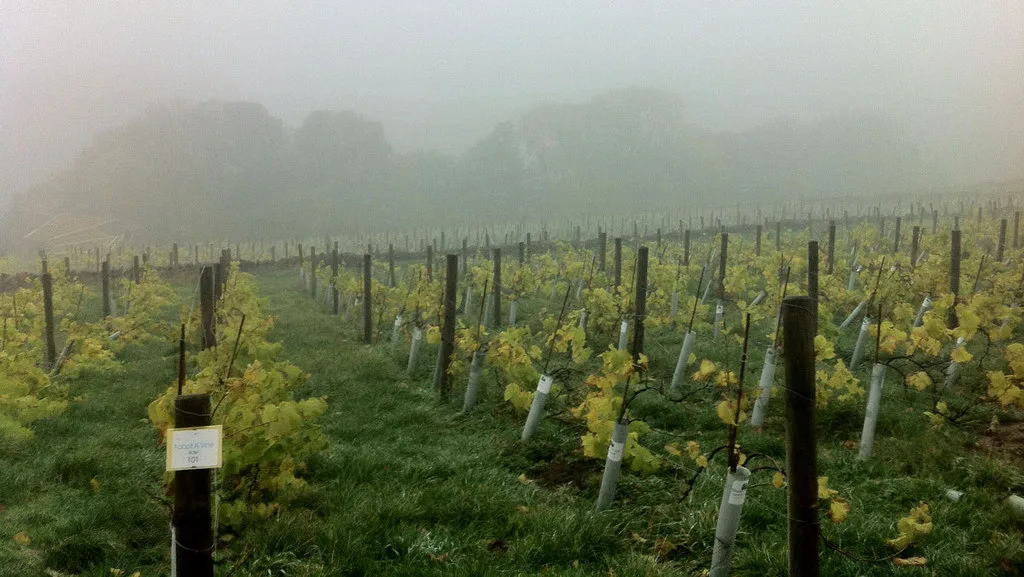
According to modern plant taxonomy, the grapevine belongs to the relatively small family Vitaceae Juss., which unites 14 genera and 968 species. The family Vitaceae belongs to the division of flowering plants Magnoliophyta (Angiospermae), the class Dicotyledons Magnoliatae (Dicotyledones), and the order Rhamnales Lindley. The order Rhamnales also includes the families Rhamnaceae and Leeaceae, with which the Vitaceae have evolutionary ties.
According to paleontologists, the first representatives of the Vitaceae family appeared at the boundary of the Jurassic and Cretaceous periods; however, the most active speciation process occurred in the Tertiary period, and by the end of the Pliocene and in the post-Pliocene, a great diversity of forms within this family had developed. In its historical development, plants of the Vitaceae family initially spread in the tropical and subtropical zones of Africa and Asia, where a great variety of grape species are still preserved today. From the primary center of speciation, even before the separation of the continents, species migrated to the tropical and subtropical zones of America, Australia, and Europe.
Previously, the family Vitaceae Juss. included the subfamily Leeoideae Clarke; however, at the suggestion of taxonomists, this subfamily was excluded and classified as an independent family — Leeaceae Dumortier.
Currently, representatives of the Vitaceae family grow in the wild in moist areas along valleys and mountain slopes in regions with tropical, subtropical, and moderately warm climates between 52° N and 43° S. These are perennial climbing woody vines with a powerful trunk, more rarely upright shrubs and small trees with fleshy, elongated, fibrous, or sometimes thickened roots, and with either deciduous foliage, as in the genera Vitis, Ampelopsis, or Parthenocissus, or evergreen foliage, as in the genera Cissus, Tetrastigma, and others. Annual shoots have long internodes, somewhat thickened at the nodes, on which leaves are arranged in an opposite-alternate order. The leaves are mostly simple, more rarely compound, of diverse shapes, entire, incised-lobed, palmately-cleft, or pinnate, with two deciduous stipules. Some species exhibit distinct heterophylly on a single plant and shoot. In most species of the Vitaceae family, shoots develop annually from buds that form in the leaf axils, and in some, from buds on the underground thickened stem.
Representatives of the Vitaceae family are characterized by 4 types of shoot branching, which reflects the evolutionary degree of this family: monopodial with a spiral leaf arrangement; monopodial with an alternate two-ranked leaf arrangement; sympodial without tendrils, forming lateral inflorescences; sympodial with tendrils.
All 4 types of branching are found in species of the genus Cissus; Ampelopsis, Rhoicissus, and Ampelocissus exhibit only the third and fourth, while the remaining genera exhibit only the fourth type of branching.
The plants attach themselves to a support by twining around it or by adhering to it using suckers, which are found in some species at the ends of the tendrils.
The inflorescences are many-flowered, resembling a false umbel or an elongated panicle, more rarely a raceme. The flowers are small, inconspicuous, greenish, bisexual, male, female, functionally female, polygamo-monoecious, or dioecious, most often with a four- or five-part structure.
The calyx is small, with three to four or six to seven barely visible teeth along the edges. The corolla is epigynous and consists of four to five, rarely three or six to seven petals. During flowering, in all genera except Vitis, it opens from the top like a star. In species of the Vitis genus, the corolla detaches from the calyx at the base during flowering and falls off in the form of a cap.
The stamens are positioned opposite the petals of the corolla. They are usually four to five, more rarely six to seven. The pistil is formed by two carpels. The style is short or long, filiform, and the stigma is cup-shaped or capitate. The ovary is superior, two-celled, but can also be three- to six-celled, with two, more rarely one, anatropous (inverted) ovules in each cell. Nectaries, which may be fused or distinct, are located under the ovary.
The fruit is a fleshy, succulent, or nearly dry berry with one to four or more seeds. The seed coat is very hard; on the ventral side of the seed, there is a distinct raphe and two shallow grooves, while on the dorsal side, the raphe ends in a chalaza. The embryo is located in the beak—the tip—of the seed. The internal cavity of the seed is filled with endosperm.
Cissus L. (Cissus, Fig. 2). The most ancient, extensive, but still poorly studied genus, uniting about 319 species. It is distributed in tropical and subtropical regions of Asia, Africa, America, and Australia. These are climbing, twining shrubs with tendrils, more rarely upright shrubs without tendrils, with thick, fleshy, tuber-like roots. Plants of this genus exhibit highly pronounced heterophylly.
Leaves are simple, undivided or deeply dissected:
- palmate;
- pinnate;
- bipinnate, etc.
Inflorescences have the appearance of an umbel. During flowering, the flowers open as a rosette or fall off in the form of a cap. The berries are mainly small, as in C. japonica Wild., or large and edible, as in C. quadrangularis Planch and C. poissoni Vialla, yet are unsuitable for wine processing. Many species of this genus are used for ornamental purposes.
The most important are: C. japonica Wild., widespread in Japan, Australia, and the island of Java; C. oligocarpa Lev. et Van. — in the USA (Florida, Arkansas, Texas) under the name sea ivy; C. antarctica Venth. (kangaroo vine) — in Australia.
| Chromosome number 2n |
| 24, 26, 28, 36, 40, 48, 50, 96 |
Phylloxera resistance of wild relatives and breeding barriers
Wild relatives of the grapevine possess valuable properties that could protect cultivated plantings from dangerous pathogens and pests. Members of the genera Ampelocissus, Ampelopsis, and Parthenocissus are completely immune to phylloxera and are also resistant to fungal diseases. However, it is impossible to directly utilize this genetic potential in practical viticulture.
Despite their phylloxera resistance, the genera Ampelocissus, Ampelopsis, and Parthenocissus are biologically incompatible with the cultivated grapevine (genus Vitis). They do not cross-breed with it for breeding purposes, and attempts to graft Vitis onto these plants end in failure due to a lack of tissue union.
The genus Ampelopsis Michx. consists of deciduous lianas or shrubs with long, thin shoots without adhesive discs. The wood of their two-year-old shoots is white without a diaphragm, and the bark does not separate in strips. Leaves vary from entire to complex-palmate and pinnate. In the territory of the former USSR, four representatives of this genus grow in the wild: A. aegirophylla Planch. in the mountainous regions of Tajikistan (including the Western Pamirs), as well as A. brevipedunculata Koehne, A. heterophylla Sieb. et Zucc, and A. japonica C. K. Schneider in the Primorsky Territory. They propagate well by cuttings, but due to their small, inedible berries, they are used only as ornamental plants.
The genus Parthenocissus Planch. is characterized by high viability. Thin, ribbed, light-red or green shoots have white wood, and their bark does not separate in strips. The plants attach firmly to supports using branched tendrils (from 2 to 12 branches) with adhesive discs. In the wild flora of the Primorsky Territory, there are two species: P. quinquefolia Planch. and P. tricuspidata Planch., growing on rocky seashores. They are not affected by phylloxera and fungal diseases, and they propagate easily by cuttings and seed in all types of soil, except for highly calcareous ones.
Agro-ecological characteristics and economic significance of the genera
For practical application, it is important not only to have resistance to diseases, but also the ability to withstand extreme climates, as well as the nutritional value of the fruits. Some species of wild Vitaceae are capable of withstanding harsh conditions and producing a high-quality harvest. For example, Parthenocissus tolerates severe temperature fluctuations perfectly, and species of the genus Ampelocissus produce berries suitable for winemaking.
- Frost resistance of Parthenocissus — down to -30 °C
- Heat resistance of Parthenocissus — up to 40 °C
- Growing season of Ampelocissus — no more than 3 months
- Weight of clusters of A. Chantinii and A. Martini — 1–2 kg
- Berry size of A. Chantinii and A. Martini — up to 12–13 mm
The genus Ampelocissus Planch. is represented by climbing or upright shrubs growing in the tropics of Asia, Africa, America, and Australia. They have a powerful underground stem with tuberous swellings, on which herbaceous shoots with simple or complex leaves develop. The flowers are gathered in whorled inflorescences and open like a star. In terms of berry quality, this genus is second only to Vitis: the high-sugar fruits are eaten fresh and used for wine production. Particularly notable are the species A. Chantinii Planch. and A. Martini Planch., which form large berries and long clusters.
The genus Tetrastigma Miq. consists of climbing lianas from hot and moderately warm climates in Asia and Australia. The plants have long, unbranched tendrils, a flat ribbon-like trunk, palmate three-lobed leaves, and axillary whorled inflorescences. They are dioecious: some specimens form bisexual flowers, others form male ones. The species T. oliviforme Planch., with edible berries, has been introduced into cultivation. Other genera of the Vitaceae family (except Vitis) have been little studied and have no practical significance.
| Genus of the Vitaceae family | Number of species, pcs. | Chromosome number (2n) | Economic use |
|---|---|---|---|
| Ampelocissus Planch. | 90 | 40, 80 | Food use (berries, wine) |
| Ampelopsis Michx. | 23 | 40 | Ornamental landscaping |
| Parthenocissus Planch. | 19 | 40 | Ornamental landscaping |
| Tetrastigma Miq. | 120 | 22, 44, 52 | Ornamental landscaping, food (T. oliviforme Planch.) |
Read next
Viticulture For agronomists
Biological characteristics of growth and regeneration of the grapevine
Viticulture For agronomists
Characteristics and classification of the grapevine species Vitis vinifera L.
Greenhouses and covers For gardeners