
Quality requirements and specific features of table grape production
10 min read
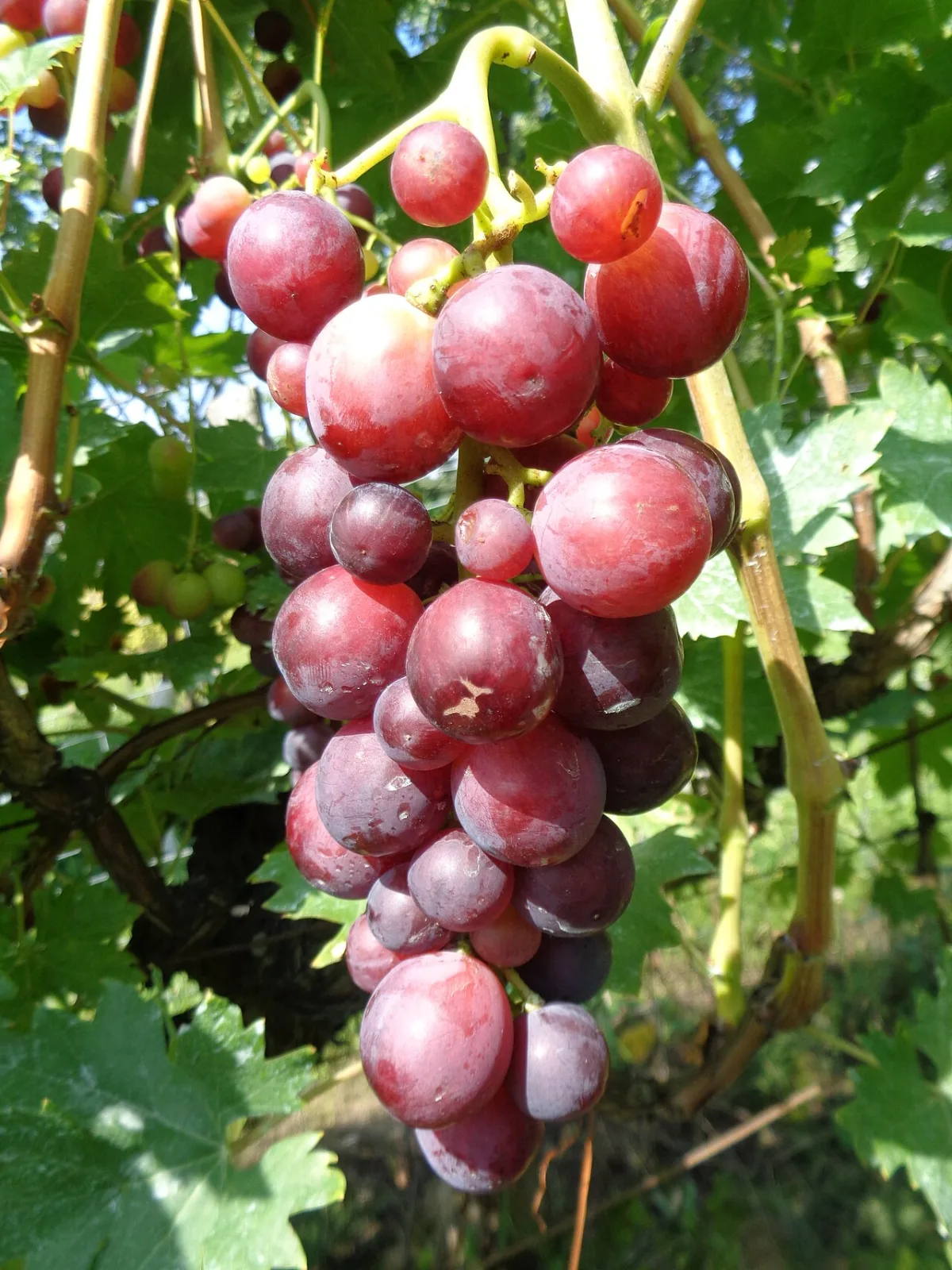
According to the international definition, table grapes are fruit intended specifically for fresh consumption and obtained from cultivars grown expressly for this purpose. In terms of total production volume and consumption, table grapes rank fifth in the world after apples, pears, peaches, and citrus fruits.
High requirements are imposed on the appearance of the clusters and berries, as well as the sensory qualities of table grape cultivars. It is no coincidence that the Italians have a catchphrase: "grapes are eaten with the eyes first."
The main requirements for table grape cultivars are: an attractive appearance of the clusters and berries combined with their large size; the structure of the clusters must be medium-dense to ensure the berries are loosely arranged in the container during packaging; the texture of the berry pulp should be fleshy or firm; a juicy texture is permitted, but not excessively liquid; for cultivars intended for long-distance transport, important indicators are high transportability and a firm attachment of the berries to the pedicel; cultivars whose harvest is intended for winter storage must have high keeping quality and be well-stored in refrigerators; all these requirements must necessarily be combined with high sensory qualities of the berries; to extend the period of grape consumption from the vine, the farm must have a set of cultivars with different ripening times: from ultra-early to very late;
(desirable traits of table cultivars include the absence of seeds in the berries and the presence of a muscat aroma. Table grapes are intended for: consumption at the place of production; export to regions that do not produce grapes; winter storage in refrigerators. An important national economic task, stemming organically from the Food Program of the USSR and subsequent directive decisions of the party and government, is the supply of fresh grapes to the population over a long period. It must be solved by:
1 — extending the consumption period of grapes from the vine, which can be achieved by: placing plantations of table cultivars in zones with different ecological conditions — from the southernmost regions of Central Asia to the more northern zones of industrial viticulture (creation of a geographical, natural conveyor); cultivating in one farm a set of cultivars of different ripening times — from ultra-early to late (creation of a green conveyor);
2 — increasing the volume of grape produce stored during the winter in refrigerators;
3 — expanding the area of grape cultivation in greenhouses, which will compensate for the vacuum in the supply of fresh grapes in May–June, when the winter storage period of grapes is ending and there is no supply of fresh grapes from the vine.
A guaranteed and high-quality solution to these tasks is possible only with the proper organization of specialized farms for the production of table grapes, which must have a closed cycle of agro-industrial integration — from the cultivation of table grape cultivars to their commercial processing, transportation, temporary and winter storage, and sale. Thus, table viticulture is a specialized agro-industrial branch of viticulture.
Many years of practice by leading farms engaged in the production of table cultivars of grapes in various republics of our country with developed industrial viticulture convincingly testify to the sufficiently high profitability of table grape production with proper organization and interaction of all links of agro-industrial integration.
The best ecological zones for cultivating table grape cultivars are characterized by the following parameters:
| Active temperatures | above 3500°C |
| Growing season | more than 150 days |
These include:
- The Central Asian republics;
- in the Transcaucasian region — Azerbaijan, Armenia, and certain eastern districts of Georgia;
- in the European region: in the RSFSR — the Black Sea coast of the Krasnodar Territory and the Caspian Sea coast in the Dagestan ASSR; in Ukraine — the Black Sea coast of the Crimean Peninsula from Sevastopol to Feodosia and certain districts of the Odessa Region;
- in Moldova — the southern and southeastern districts of the republic.
This is the main industrial base for table grape production. It is designed to provide fresh grapes to the population of these regions, the health resorts located there, and to supply high-quality products to the population of regions that do not produce grapes.
In connection with the Resolution of the Council of Ministers of the USSR "On measures to overcome drunkenness and alcoholism, and to eradicate home brewing" of May 7, 1985, the share of table grapes in the total volume of gross production will increase annually, especially shipments of table grapes to the public fund.
The organizational structural unit of table grape production should be a specialized farm, in which table cultivars, depending on ecological and economic conditions, should occupy 30–60% of the vineyard area. It is advisable to use the rest of the area for technical cultivars. In the zone of dried grape product production, kishmish (seedless) and raisin cultivars should also be grown on such farms. This will allow for more rational use of the labor force and provide centers for primary processing of the harvest of kishmish and technical cultivars, where inevitable waste from the table grape harvest can be processed.
It is important that the table grape assortment in such farms is represented by four to six cultivars with different ripening dates, which will ensure a steady supply of fresh grapes to the consumer throughout the season, will not create pressure during harvesting, transportation, and marketing of the gathered produce, and will allow for the development of a specific cultivation technology for each cultivar that most fully meets its biological potential.
Such farms should be located near railway stations and highways, have good access roads, and have refrigerators where fresh produce will be concentrated and cooled before being loaded into vehicles. An essential condition for the successful operation of such farms is the availability of refrigerators intended for long-term winter storage of grapes.
Only coordinated and uninterrupted work of all links can ensure the successful solution to the task of table grape production:
- Zonal placement;
- Selection of cultivars;
- Cultivar-specific agrotechnics;
- Sorting and packaging of grapes;
- Temporary and winter storage in a refrigerator;
- Transportation and marketing.
Assortment. In the USSR, 102 table, 28 table-wine, and 12 table-kishmish (seedless) grape cultivars have been regionalized. Currently, 266 table, 42 table-wine, 20 table-kishmish, and 7 table-raisin cultivars are undergoing state testing.
For each ecological-geographical region, a specific assortment is regionalized, which most fully meets the production demands based on agrobiological and economic-technological indicators.
The main table grape cultivars occupying the largest areas include:
- in the republics of Central Asia and the south of Kazakhstan — Khusaine lyunda, Taifi pink, Nimrang, Sultani, Katta-Kurgan, Dzhandzhal kara, Andizhanskiy cherniy, Oktyabrskiy, Muscat uzbekistanskiy, Rizamat, Dzhura uzum, Surkhak kitabskiy;
- in the European region (Moldova, Ukraine, RSFSR) — Chasselas blanc and Chasselas rose, Muscat Hamburg, Pearl of Csaba, Queen of the Vineyards, and in southern regions — Karaburnu;
- among new cultivars in Moldova, Moldova, Dekabrskiy, Surucenskiy alb, and Liana are gaining popularity;
- in Ukraine, areas under introduced cultivars Cardinal and Queen of the Vineyards are expanding, as well as new ones — Ranniy Magaracha, Dnestrovskiy rozoviy;
- in Azerbaijan, the leading table cultivars are Kirovabadskiy stoloviy, Karaburnu, Ak shani, Agadai, Muscat Hamburg;
- in Armenia — Ararati, Shaumyani, Kirovabadskiy stoloviy, and a large group of new table cultivars bred by the Armenian Research Institute of Viticulture, Winemaking and Fruit Growing and the Department of Viticulture of the Armenian Agricultural Institute;
- in Georgia — Kirovabadskiy stoloviy, Gorula, Kartuli saadres, Tbilisuri, Sakartvelo, Vardzia.
In the republics of Central Asia, in the south of Kazakhstan, in Azerbaijan, and in Armenia, grapes of kishmish cultivars, primarily Kishmish cherniy, are widely consumed fresh.
According to GOST 25896—83 "Fresh table grapes," all ampelographic cultivars are divided into 3 groups based on their market quality:
| Group | Number of cultivars | Representatives |
| First | 70 | Nimrang, Taifi pink, Kirovabadskiy stoloviy, Cardinal, Karaburnu, Italia, Kishmish cherniy, Kishmish beliy krugliy, Kishmish beliy ovalniy, Kishmish rozoviy, Kishmish Khishrau, Queen of the Vineyards, Muscat uzbekistanskiy, Khusaine beliy, Shani beliy, Shani cherniy, Ranniy Magaracha |
| Second | 49 | Agadai, Askeri, Galan, Dzhandzhal kara, Dnestrovskiy rozoviy, Kara uzum ashkhabadskiy, Pozdniy VIRa, Pukhlyakovskiy, Cinsaut, Sultani, Violetoviy ranniy, Shabash, Chasselas group (blanc, rose, muscat), etc. |
| Third | Others | All other table, table-wine cultivars, as well as large-berried wine cultivars suitable for fresh consumption |
Taking into account the affiliation of a cultivar to a particular group, a corresponding price for its produce is set, which changes according to the periods of grape arrival on the market.
High heat availability, relief, and soil are of great importance when choosing a site for table grape cultivars. The best quality of table grape berries is observed when grown on warm slopes (southern, south-eastern, and south-western) and light, well-aerated, and water-permeable soils with a low (1.2–1.5%) humus content.
Grapes grown on humus-rich, waterlogged soils are characterized by low transportability and poor shelf life during winter storage. Given this, nitrogen fertilizers in high doses should not be applied to table cultivars.
In the zone of irrigated viticulture, it is necessary to strictly follow irrigation rules:
- do not allow soil waterlogging during the berry ripening period;
- stop irrigation at least 15–20 days before the start of harvesting.
Otherwise, the transportability and shelf life of the harvested grapes are reduced.
The marketability of table grapes significantly depends on the bush training system. The greatest quantity of large, attractive, well-developed bunches is formed on training systems that have a horizontal plane (alleys, pergola, high horizontal trellis, vertical trellis for high-trunk forms with free arrangement of shoots).
On a horizontal plane, clusters are formed in more favorable phytoclimatic conditions; under their own weight, they are released from the canopy of leaves and hang downwards. All this has a positive effect on increasing the overall yield and, what is especially important, on the marketability of table cultivars. These patterns are noticeably manifested in the conditions of Central Asia in the group of oriental cultivars.
The market appearance and quality of table grapes are established at the stage of vine training. On a vertical trellis, it is best to form clusters at a distance of 30–60 cm from the soil surface. In regions with a heat deficit, a higher trellising will lead to a loss of berry sugar content, while one that is too low will trigger the development of diseases and pests. It is also important to strictly dose the load of the vines with buds and yield so as not to overload the vine.
Optimal harvesting times are determined by the chemical indicators of the juice. The best balance of flavor is achieved at a glucose to fructose ratio of 1:1. An important guideline is the glucoacidometric index — the ratio of sugar content to juice acidity, the value of which should be no lower than 2.5.
For ultra-early and early cultivars of the oriental group, this standard does not apply: due to the naturally low acidity of the juice, the ratio of indicators in them will be different.
The degree of berry maturity during harvesting depends directly on future plans. Grapes for long-distance transport are harvested slightly before full consumer maturity. If the produce is intended for winter storage, the berries are harvested strictly at the stage of full consumer maturity, preventing them from overripening. Any deviations in ripeness lead to a sharp increase in losses.
Transportation and winter storage regimes for the harvest
For transport within the farm, automobiles are used, as well as tractor-drawn and horse-drawn carts on rubber tires. Long-distance transport is carried out by road, rail, and air. To preserve the quality of the clusters, it is important to pre-cool the grapes in stationary chambers before loading and transport them in refrigerated units.
- Transportation temperature — from 2 to 5 °C
- Pre-cooling before loading — down to 12–2 °C
- Potassium metabisulfite consumption — 10 g per crate
- Winter storage temperature — 1–2 °C
- Air humidity in the storage facility — 90–95%
- Sulfur consumption for disinfection — 1.5–2 g per 1 m³
When delivering by rail, the berries must be protected from gray mold. For this purpose, potassium metabisulfite tablets are added to the packaging crates. The sulfur dioxide released from them reliably protects the produce from fungal infection during transit.
Not all table grape cultivars are suitable for long-term storage. The best storage life is shown by Shabash, Nimrang, Tayfi Pink, Agadai, Asma, Kirovabad Table, Karaburnu, and Moldova. The harvest is placed in specialized refrigerators, the rooms of which are disinfected before loading by fumigation with sulfur dioxide. During storage, gas treatment is repeated every week.
To maximize the storage period of grapes, farms use controlled atmosphere technology. The percentage ratio of gases in the chamber is adjusted individually, focusing on the cultivar-specific characteristics of the harvest.
| Gas atmosphere component | Recommended concentration, % |
|---|---|
| Oxygen | 3–5 |
| Carbon dioxide | 5–8 |
| Nitrogen | 87–92 |
After the end of winter storage, grapes are allowed to be transported exclusively by isothermal transport — rail or road.
Read next
Viticulture For agronomists
Technological requirements for grape cultivars for dried fruit production
Viticulture For agronomists
The role and tasks of breeding in modern viticulture and cultivar renewal
Viticulture For agronomists