
Cultivar zoning as the basis for productive viticulture and farm efficiency.
4 min read
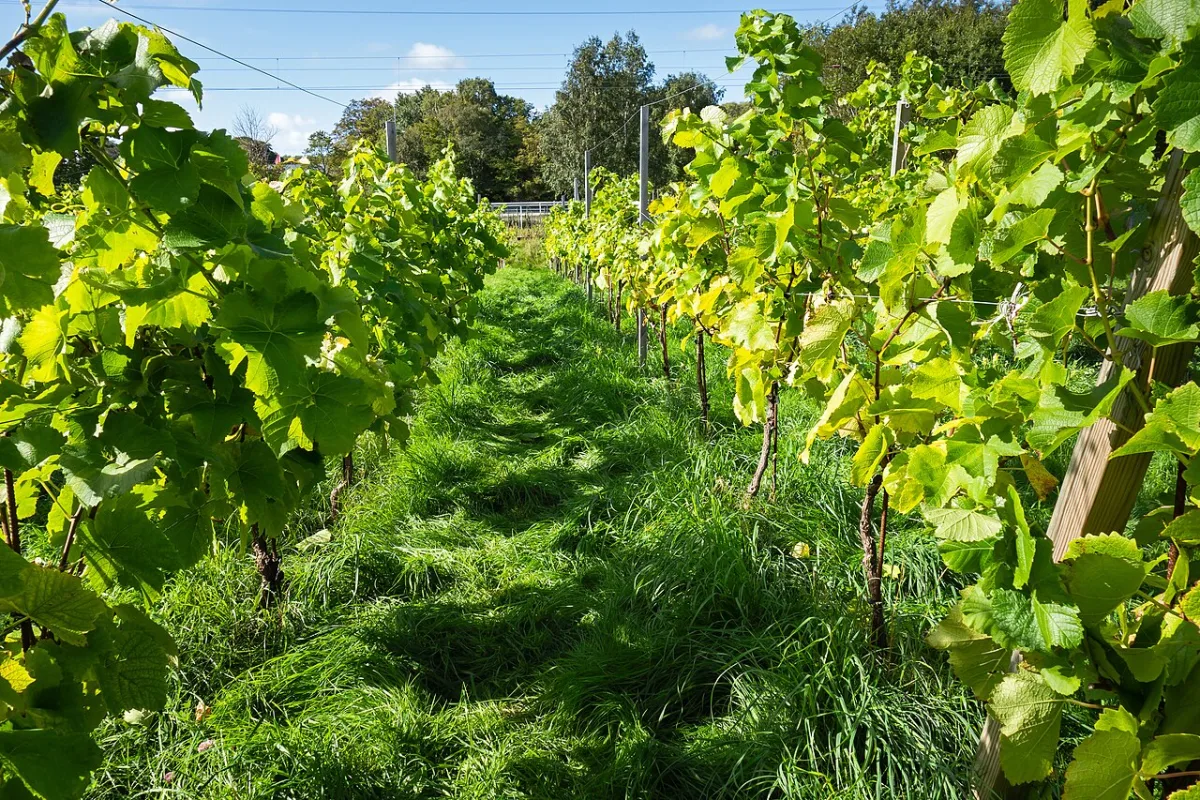
Cultivar zoning is the foundation of productive viticulture. Proper selection of cultivars tailored to the specialization of a specific region allows for stable, high yields of good quality. New industrial vineyards should be established exclusively with zoned cultivars that have undergone testing at state plots and local farms. The zoned cultivar list is regularly reviewed as the industry develops and requirements for the vine change.
Errors in the selection and placement of cultivars are costly for a farm. Rectifying them requires significant expenditure and time for grubbing, establishing new plantings, or top-grafting the bushes.
How to optimize vineyard structure
Modern viticulture is oriented towards full mechanization of operations, efficient chemical application, and irrigation. The transition to non-covering, high-trunk, wide-row cultivation in large specialized farms imposes special requirements on the vine. To operate successfully in such vineyards, it is necessary to introduce frost-resistant cultivars for growing without cover, reduce the total number of zoned cultivars, and increase the share of table, table-raisin, and seedless (kishmish) groups.
Currently, many farms have an unjustifiably high number of cultivars — more than 20–30. This reduces economic efficiency and hinders mechanization and standardization of care. Pure-cultivar plantings are economically much more profitable than cultivar mixtures. For effective work, an agronomist should adhere to an optimal planting structure.
| Cultivar type | Quantity |
|---|---|
| Table | 5–6 |
| Wine (technical) | 4–5 |
- Recommended for cultivation (as of 1.01.87) — 263 cultivars
- Table and table-seedless cultivars in the register — 114
- Wine cultivars in the register — 121
- Universal cultivars in the register — 28
- Share of new valuable cultivars in vineyards — 2%
High-yielding new cultivars still occupy only 2% of the total vineyard area. Expanding their planting is a direct reserve for increasing labor productivity and product quality.
Geographic distribution and origin of cultivars
The ratio of table and wine cultivars depends heavily on the climatic conditions of the region. In the RSFSR and Kyrgyzstan, their numbers are practically equal. In Azerbaijan, Turkmenia, Tajikistan, Uzbekistan, and Kazakhstan, table cultivars predominate. In Georgia, Moldavia, Ukraine, and Armenia, the focus is on the wine direction — here, there are 1.5–3 times more zoned wine cultivars than table ones.
The cultivar pool is formed both from local (indigenous) cultivars and through introduction. Of the 263 recommended cultivars, 195 are indigenous (including 39% bred by Soviet scientists), and 68 were imported from abroad. At the same time, imported wine cultivars are more often used in the RSFSR, Moldavia, and Ukraine, while table introductions are used in the republics of Central Asia.
| Republic | Share of indigenous cultivars |
|---|---|
| Kazakhstan | 10% |
| Ukrainian SSR | 25% |
| RSFSR | 45% |
| Georgia | 70% |
In Moldavia, 80% of zoned cultivars are imported from abroad, 14% are brought in from other republics of the country, and only 4 cultivars (6%) are local. In Armenia, the situation is the opposite: 75% are indigenous cultivars, 19 cultivars are introduced from other republics of the country, and 6% are brought from abroad. Such differences are explained by the history of winemaking in each region and the level of local breeding development.
Most cultivars have narrow ecological adaptation and are zoned within the borders of only one republic. Only a few cultivars have achieved widespread distribution due to their ecological plasticity. The statistics of cultivar distribution across republics are as follows:
- In 11 republics, only 1 cultivar is zoned — Saperavi.
- In 10 republics — Rkatsiteli.
- In 9 republics — Riesling.
- In 8 republics — Aligoté and Kishmish Chernyi.
- In 7 republics — 2 wine cultivars (Cabernet Sauvignon, Pinot Noir) and 4 table ones (Taifi Pink, Chasselas Blanc, Chasselas Rose, and Chasselas Musqué).
- In one republic — 189 cultivars (70% of the total assortment), which confirms their local significance.
Read next
Viticulture For agronomists
Methods of preliminary cultivar research and testing of grape cultivars
Viticulture For agronomists
The state and characteristics of modern viticulture in France
Viticulture For agronomists