
Technological requirements for grape cultivars for dried fruit production
6 min read
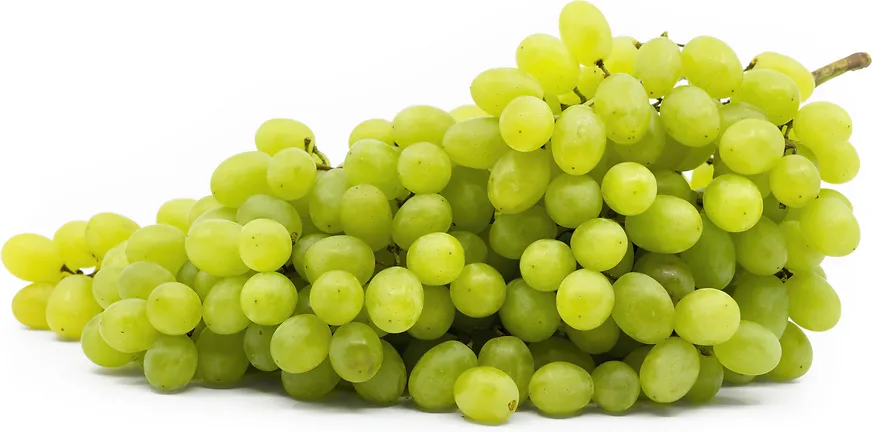
The yield of finished products and their marketability directly depend on the pulp density and sugar content of the fresh grapes. Only specific cultivars with dense, fleshy pulp are suitable for drying. If the berries are watery, the finished raisins will end up shriveled, poorly filled, and lose their marketability. Another critical indicator is the high sugar content in the juice, which directly determines the final volume of the finished product.
Cultivar selection and requirements for raw materials
Seedless cultivars dominate the global production of dried grapes, accounting for about 95% of the production volume, while seeded cultivars account for only 5%. Products obtained from seedless berries are called kishmish and corinth raisins, while those from seeded ones are called raisins. Valuable properties of cultivars for drying are the complete absence of seeds and early maturity, which is characteristic of most cultivars of the Oriental group.
- Share of seedless cultivars in global production — about 95%
- Share of seeded cultivars in global production — about 5%
- Sugar content for kishmish cultivars — not less than 23–25%
- Sugar content for raisin cultivars — not less than 22–23%
Pay attention to the bunch structure: it should be loose, medium-loose, or open. In dense bunches, berries dry slowly and unevenly, which complicates the technological process.
| Type of product | Cultivar group | Minimum sugar content | Main cultivars |
|---|---|---|---|
| Kishmish | Seedless (kishmish) | 23–25% | Kishmish belyi kruglyi, Kishmish belyi ovalnyi, Kishmish chernyi, Kishmish rozovyi, Askeri, Kishmish Khishrau, Kishmish VIRa |
| Corinth | Seedless (corinth) | — | Corinth chernaya, Corinth belaya, Corinth rozovaya |
| Raisins | Seeded | 22–23% | Sultani, Katta-Kurgan, Nimrang, Dzhandzhal kara, Kara kaltak, Muscat of Alexandria, Rizamat, Shtur angur, Ak kaltak, Taifi rozovyi |
Geography of production and drying technology
Industrial drying of grapes is heavily tied to the climatic conditions of the regions. Since more than 90–95% of global production is obtained by natural air-sun drying, only zones with high heat availability are suitable for this. Historically, the main production base in Central Asia is Uzbekistan, which accounted for 80–85% of the Soviet production of kishmish and raisins. It is also promising to develop this direction in Azerbaijan, where grapes can be grown as an uncovered crop.
Successful air-sun drying requires a sum of active temperatures (SAT) of more than 4000–4500 °C, a consistently high temperature during the berry ripening period for sugar accumulation, and a long, warm, and dry autumn.
Depending on logistics and the scale of the farm, grape drying is organized according to one of the following schemes:
- on small sites in close proximity to the vineyard plots;
- directly in the vineyard aisles;
- on specially equipped sites under a plastic cover;
- by transporting the harvest to large specialized drying centers.
Regardless of the chosen location, the technological process includes the following sequential stages:
- Harvesting. Berries of kishmish cultivars are harvested manually strictly after reaching technical maturity.
- Sorting. Raw materials are sorted by maturity and appearance at receiving points, completely removing bunches with diseased and damaged berries.
- Drying. Grapes are dried naturally (in the sun or in the shade under shelters) or artificially in dryers. Depending on the technology, the bunches can be pre-blanched or treated with sulfur dioxide.
- Secondary processing. The dried semi-finished product is sent to kishmish plants, where it is cleaned of impurities, washed, dried further, treated with special emulsions and oils, packaged, and labeled.
Ground drying in aisles and air drying under shelters
The California drying method allows for processing the harvest of kishmish and raisin cultivars right in the field. Before wilting begins, the bunches are sprayed with a special emulsion or the vines are pruned just below the bunches to accelerate moisture evaporation. The entire process takes place directly in the vineyard aisles, which minimizes the cost of transporting raw materials.
- Paper tray size — 60x90 cm
- Interval until turning — 10–14 days
- Target berry humidity — 16–18 %
For high-quality drying, the soil is pre-prepared by creating an even, sloped surface. Harvesting can be carried out both manually and by mechanized means. The humidity of the finished product is checked immediately before being sent to secondary processing plants.
- The soil surface in the aisles is leveled, sloped to the south, and compacted with a roller.
- Using machines, trays made of special paper are laid out along the rows.
- Bunches are cut and placed on the trays in a single layer for uniform wilting.
- After 10–14 days, the bunches are turned over on the trays.
- Upon reaching the target humidity, the paper trays are rolled up by a special machine and taken away for processing.
If necessary, the obtained raw material is dried to the required specifications in artificial dryers before being sent to packaging lines. Trials in Uzbekistan have confirmed the potential of this technology for the conditions of Central Asia. For the Kishmish belyi and Korinka chernaya cultivars, the Greek method of drying under a canopy is also effective.
For the Greek method, a special area is set up in close proximity to the vineyards. The main requirements for the location are maximum sun exposure and good wind circulation. The structure of the area allows for protecting the harvest from precipitation and dust.
| Area parameter | Dimensional value |
|---|---|
| Length of the area | 15–20 m |
| Width of the area | 4–6 m |
| Height of the enclosure | 5–10 cm |
The base of the area is bordered by a wooden or reinforced concrete rim and filled with moisture-permeable material (gravel, coarse sand, or loose soil). The surface is covered with porous paper, onto which the clusters are laid out without any prior treatment. A tent made of polyethylene film, canvas, or lightweight tarpaulin is stretched over the area.
- A wooden ridge for the frame, 60–80 cm high, is installed along the central axis of the area.
- Pegs for tensioning the material are driven around the perimeter every 40–50 cm.
- The bottom edge of the cover material is fixed at a height of 10–15 cm from the ground surface.
- The ends of the tent are left completely open for cross-ventilation.
The cover made of film or tarpaulin increases the air temperature under the canopy, which accelerates the drying of grapes to 2–3 weeks. During this period, the clusters must be turned over several times.
Trials of the Greek method in Uzbekistan have shown its high effectiveness in preserving berry quality. Further implementation of the technology requires the automation of manual labor and the optimization of the cover design for the convenience of personnel.
Read next
Viticulture For agronomists
Global viticulture: status of areas and gross production
Viticulture For agronomists
Application of growth regulators to increase the efficiency of viticulture
Viticulture For agronomists