
Distribution and harmfulness of net blotch in spring barley
28 min read
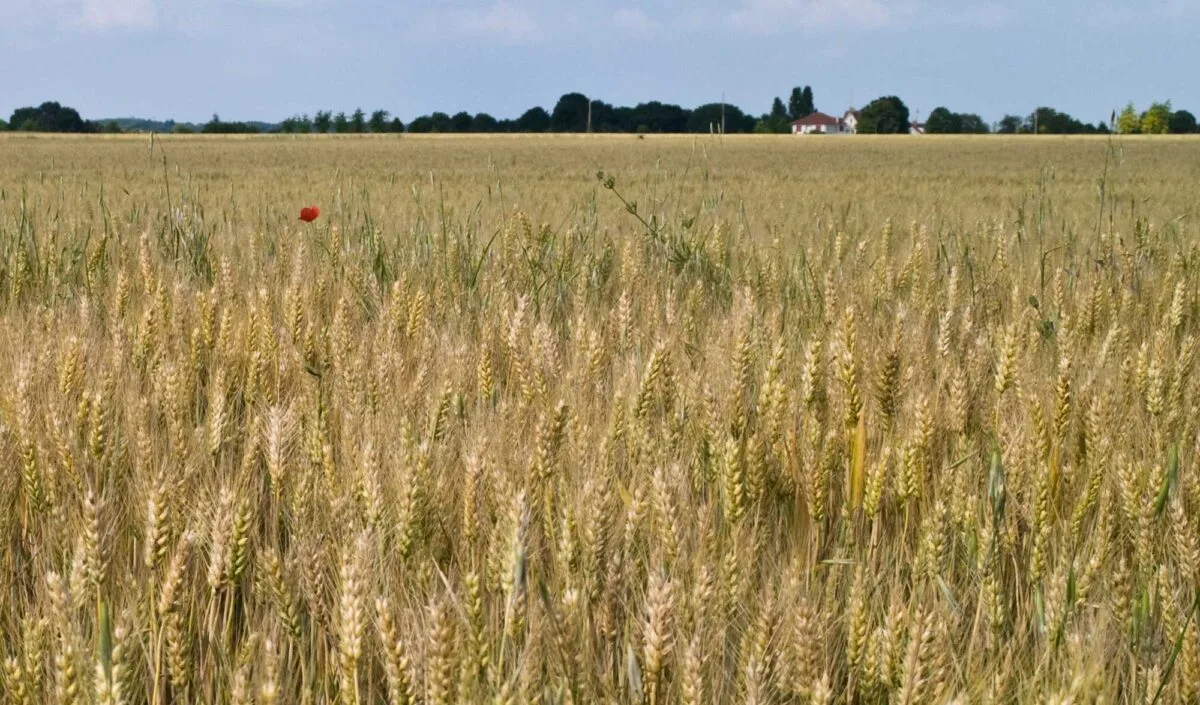
Spring barley (Hordeum vulgare L.) remains one of the main cereal crops, occupying about 60% of the spring sowing area. However, due to changing weather and farming conditions in recent years, there has been a trend toward a decline in its production volume. Failure to follow cultivation technology and sowing susceptible cultivars lead to annual infestation of crops by fungal diseases, among which net blotch dominates. Its causative agent is the pathogen Pyrenophora teres Drechsler, which parasitizes the leaves, stems, and heads of barley.
| Year | Spring barley sowing areas, thousand ha |
|---|---|
| 2012 | 529.1 |
| 2022 | 314.3 |
The damage caused by the disease consists in the destruction of chlorophyll by fungal phytotoxins. This leads to a reduction in the assimilation surface, premature leaf senescence, accelerated ripening, and grain shriveling. In addition to barley, the pathogen can infect grasses from other genera, such as Avena, Triticum, Bromus, and others.
- Average yield of barley — 34 c/ha
- Crop loss from the disease — 21.0–44.0%
- Air humidity for infection — 95–100%
- Infection time at +25 °C — 1 hour
- Infection time at +10 °C — 6 hours
Symptoms of net and spot types of the disease
The disease manifests in two different forms that are similar in fungal morphology but differ genetically and in the way they infect plants. The net-type and spot-type currently have practically the same distribution range in countries with a high share of cereal crops. The spot form was first discovered in 2010 on western cultivars, and by 2014 it was registered in spring and winter barley crops. In some regions, this type has already become dominant. At the same time, the characteristic symptoms of the disease directly depend on the form of the pathogen's manifestation and the resistance of a specific cultivar.
- Net-type manifests as small spots or stripes that grow into longitudinal and transverse brown lines. They form a characteristic net with a zone of chlorosis around the lesion up to 25 mm long. On stems, heads, glumes, and grain, the disease appears as light or dark brown rounded spots.
- Spot-type forms dark brown elliptical necroses on leaves measuring 3×6 mm with a distinct chlorotic margin. On stems, the infection manifests as small brown necroses. In this case, the associated chlorosis causes more harm to the plants than the necrotic lesions themselves.
- On resistant cultivars, the symptoms of both forms appear as small dark brown dots, around which chlorosis practically does not develop.
Differences in symptoms are explained by the nature of infection. The spot-type develops slowly and is localized strictly within the epidermal cells, causing local tissue death. The net-type grows under the epidermis, rapidly spreading to cells distant from the initial site of fungal penetration.
Pathogen life cycle and infection conditions
The pathogen's life cycle is tied to the growth stages of barley and the change of seasons. The main source of infection is crop residues, on which the fungus survives during the winter period. The development and maturation of the overwintering stage occur sequentially in several steps:
- Formation of pseudothecia on infected straw at the end of the barley growing season.
- Maturation of pseudothecia over 1–6 months at a temperature of +10...+15 °C and abundant rainfall.
- Formation of asci in early spring, containing from three to eight (usually eight) ascospores.
- Dispersal of mature ascospores by wind or rain drops for primary infection of seedlings.
Symptoms of primary spring infection by ascospores appear on the leaves as watery stripes running up the blade, or pale grayish spots in its center. The infection rapidly penetrates the tissues of young plants in the presence of liquid moisture. Further disease development depends on the combination of heat and humidity in the crop.
The critical period for barley infection occurs at an air humidity of 95–100%. At the optimal temperature of +25 °C, 1 hour of spore contact with a moist leaf is sufficient for infection, and at +10 °C, this process extends to 6 hours.
Sporulation appears on the spots formed as a result of primary infection. Conidia are dispersed by wind and/or precipitation to neighboring plants or carried over long distances, thus moving to the secondary infection cycle, which occurs 5–20 days (depending on conditions) after the primary one.
Favorable conditions for infection by conidia occur during humid, warm, and sunny weather. Several authors have established that the optimal temperature for conidial germination varies depending on the manifestation type and is +25 °C for the net-type and +20...+25 °C for the spot-type, respectively. Infection requires a leaf wetting period of at least 2 hours at 100% relative humidity of the air. The pathogen develops more strongly during a longer period of high humidity (10–30 hours or more). Several repeat infections by conidia occur per season.
It was found that maximum conidia formation occurs under the following conditions: continuous moderate rain for 6 hours, followed by 10 hours of sunlight and a maximum temperature of +22 °C. The number of conidia is higher on the lower, older leaves.
C.G.J Van den Berg and B.G. Rossnagel (Canada) obtained similar results, showing that the spread of net blotch conidia with peak spore release occurs between 12:00 and 18:00, with 100% germination 6 hours after inoculation (at optimal temperature).
The net form of the disease, in addition to the leaves, also affects the ear and grains of spring barley, which can serve as an additional source of infection. Currently, it is believed that the spot form of the disease does not affect the ear; however, some scientists, under conditions of artificial inoculation, have achieved transmission of this form via seed material.
The development of the fungus concludes with the formation of pseudothecia on stubble, straw residues, or weed plants, where it remains until the next growing season.
Factors influencing disease development. Liquid moisture and temperature are the most important factors influencing the development of the fungus. According to data from Yu.A. Sushchevich in Belarus, the correlation coefficient (r) between total precipitation (in the first ten days of June) and disease development is 0.96–0.99, which indicates a direct correlation, while the correlation between air temperature and development varies from −0.48 to −0.62 (inverse correlation).
Similar results were obtained by T. K. Sheshegova (Russia). Based on her multi-year data, the development of net blotch depended to a greater extent on the weather in June. Thus, an inverse correlation was established between fungus development and temperature (r = −0.48).
In the Republic of Belarus, S. F. Buga studied the influence of hydrothermal conditions on the development of net blotch. In the course of research, it was established that weather conditions have the greatest influence on disease development, specifically cool and rainy weather during the sowing-emergence-jointing stages (hydrothermal coefficient >1.9).
Integrated plant protection system. One of the main elements of modern crop cultivation technology for spring barley is integrated protection against pests, particularly net blotch. It includes organizational-economic, breeding, agrotechnical, chemical, and other measures.
Understanding the life cycle of net blotch, its persistence, and its mode of transmission are decisive in forming a protection system. Thus, the main sources of infection are: seeds (mycelium persists inside, conidia on the surface); plant residues (mycelium and conidia overwinter), pseudothecia on stubble; winter barley and other wild-growing cereal grasses, on which the fungus persists in the form of mycelium.
Influence of tillage. The analyzed data on the influence of tillage on the development of net blotch are contradictory. Research by T. K. Turkington and co-authors indicates that the conventional method of tillage, compared to minimum and no-till, is more effective in reducing disease development. Thus, with conventional tillage, development averaged 3.9%, with minimum tillage — 4.2%, and with no-till — 6.3%.
According to other studies, different methods of tillage do not have a significant impact on the development and spread of P. teres.
Crop placement plays a significant role in limiting the spread and development of the disease. According to A.M. Shpanev, it is undesirable to place commercial barley crops next to fields of the same crop, as well as its winter form, as this can lead to greater spread of the pathogen.
Crop rotation. When placing spring barley in a crop rotation after such crops as peas, corn, oats, sweet clover, etc., the infection of the crop with net blotch is significantly reduced.
In the crop rotation system, the return of barley to its previous place should take place no earlier than 2 years later to reduce the probability of infection.
Sowing date also plays a certain role in the development of net blotch. According to I.N. Shchennikova, slower pathogen development was observed when sowing was delayed (in years with sufficient moisture), whereas with an early sowing date (under the same conditions), barley plants were more severely affected by P. teres.
Seeding rate. According to N.V. Dolgopolova, the least incidence of net blotch was observed in cases where the seed sowing rates were 4.0 and 5.0 million/ha. When increasing the rate to 6.0 million, disease development was twice as high as in the variant where the seeding rate was 5.0 million grains per hectare. The severe development of the pathogen was primarily associated with the thickening of the crops, which led to more intensive infection of the plants.
Cultivar selection. The cultivation of resistant cultivars is the most promising method for protecting a crop from disease. According to N.M. Lashina, long-term monitoring of spring barley diseases has made it possible to identify the cultivars most resistant to net blotch. Thus, the group of resistant plants (development of P. teres was less than 5.0%) included the following cultivars: KVS Asta, Melius, and Fest. The group of slightly susceptible cultivars (up to 20.0%) to barley net blotch included: Avtograf, Danielle, Zu Suren, KVS Tessa, and Izumrud.
In 2012–2021, Yu.A. Suchevich studied the resistance of spring barley cultivars to net blotch. As a result of the research, 6 highly resistant cultivars (Linus, Nutans 3291, Chelyabinsky 95, Mik 1, Berkut, Dziwosny) and 26 relatively resistant ones (Bagan, Berezinsky, Vizit, Viktor, Gastinets, Dobry, Zazersky 85, Zubr, Ideal, Ladny, Prima Belarusi, Taler, Kuznetsky, Natali, Sozh, etc.) were identified. Of all the aforementioned spring barley cultivars, Melius, Fest, Dziwosny, Dobry, Zubr, Ladny, and Zazersky 85 are approved for production use.
Fertilizers. According to a number of authors, various doses of nitrogen fertilizer applications did not have a significant effect on the incidence of barley net blotch, as pathogen development depended mainly on weather conditions.
According to A.M. Shpanev, organic fertilizers are not recommended for application directly to barley, as the percentage of root rot development increases, which leads to plant weakening and, as a consequence, a higher incidence of leaf diseases. Therefore, they should be applied to the preceding crop.
The chemical method of protection includes seed treatment and fungicide spraying and is an important element in an integrated system for protection against net blotch. The effectiveness of this method depends largely on the correct choice of fungicide and the timing of its application.
Since the causative agent of net blotch persists on seed, effective crop protection against the disease begins with the choice of seed treatment, which is advisable based on the results of seed phytosanitary testing. Seed treatment helps reduce the spread of net blotch during the initial stages of plant growth. At the same time, in years with favorable conditions for the disease, it is necessary to apply fungicides.
Research conducted by S.F. Buga made it possible to identify a criterion for applying fungicides with the goal of protecting the crop from disease—the onset of the biological economic threshold.
Today, the main classes of active ingredients in fungicides used worldwide to limit the development of P. teres are carboxamides (SDHI), azoles (DMI), and strobilurins (QoI), among others, as well as their combinations.
Thus, for effective protection of spring barley against net blotch, it is necessary to: observe crop rotation and avoid repeating the sowing of the crop in the same field; carry out plowing of plant residues; perform sowing at the recommended application rate and at optimal times; use regionalized, resistant cultivars; treat seed material; and carry out spraying of crops during the growing season with fungicides based on active ingredients from different chemical classes (carboxamides, azoles, strobilurins, etc.).
Conclusion. As a result of an analysis of foreign and domestic literature, it was established that net blotch, caused by the fungus P. teres, is one of the main leaf diseases of spring barley worldwide. It causes significant grain harvest losses and, at the same time, reduces quality. Net blotch develops rapidly under optimal environmental conditions – prolonged periods of high humidity (100%) and air temperature (+20...+25 °C). To protect crops from the disease, agrotechnical, breeding-genetic, and chemical methods of protection are widely used. The chemical method is one of the most effective and includes both the treatment of seed material and the application of fungicides during the growing season.
Anisimov, A. I. Control of barley net blotch using biological preparations in an organic farming system / A. I. Anisimova, N. V. Chernyavina, S. A. Dobrokhotov // Role of young scientists in solving urgent problems of the agro-industrial complex: coll. of scientific works of the International scientific-practical conf. of young scientists and students, Saint Petersburg-Pushkin, Feb. 25-27, 2016 / Ministry of Agriculture of the Russian Federation, St. Petersburg State Agrarian University; ed. S. N. Shirokov. – SPb: SPbGAU, 2016. – P. 3–6.
Anisimova, A. V. First finding of the fungus Pyrenophora teres f. maculata in the Krasnodar Territory / A. V. Anisimova, N. V. Mironenko, S. A. Levshatanov // Bulletin of Plant Protection. – 2011. – No. 3. – P. 53–56.
Astapchuk, I. L. The causative agent of barley net blotch: biology, etiology, virulence, host plant resistance (brief review) / I. L. Astapchuk // Scientific Journal of KubSAU. – 2017. – No. 127 (3). – P. 1–24.
Read next
Plant protection For agronomists
Diagnosis and prevention of rare viral diseases in greenhouse lettuce
Plant protection For agronomists
Methods of protecting carnations from Fusarium wilt and stem rots
Plant protection For agronomists