
Diagnosis of nutrient deficiency and toxicity in tomatoes
5 min read
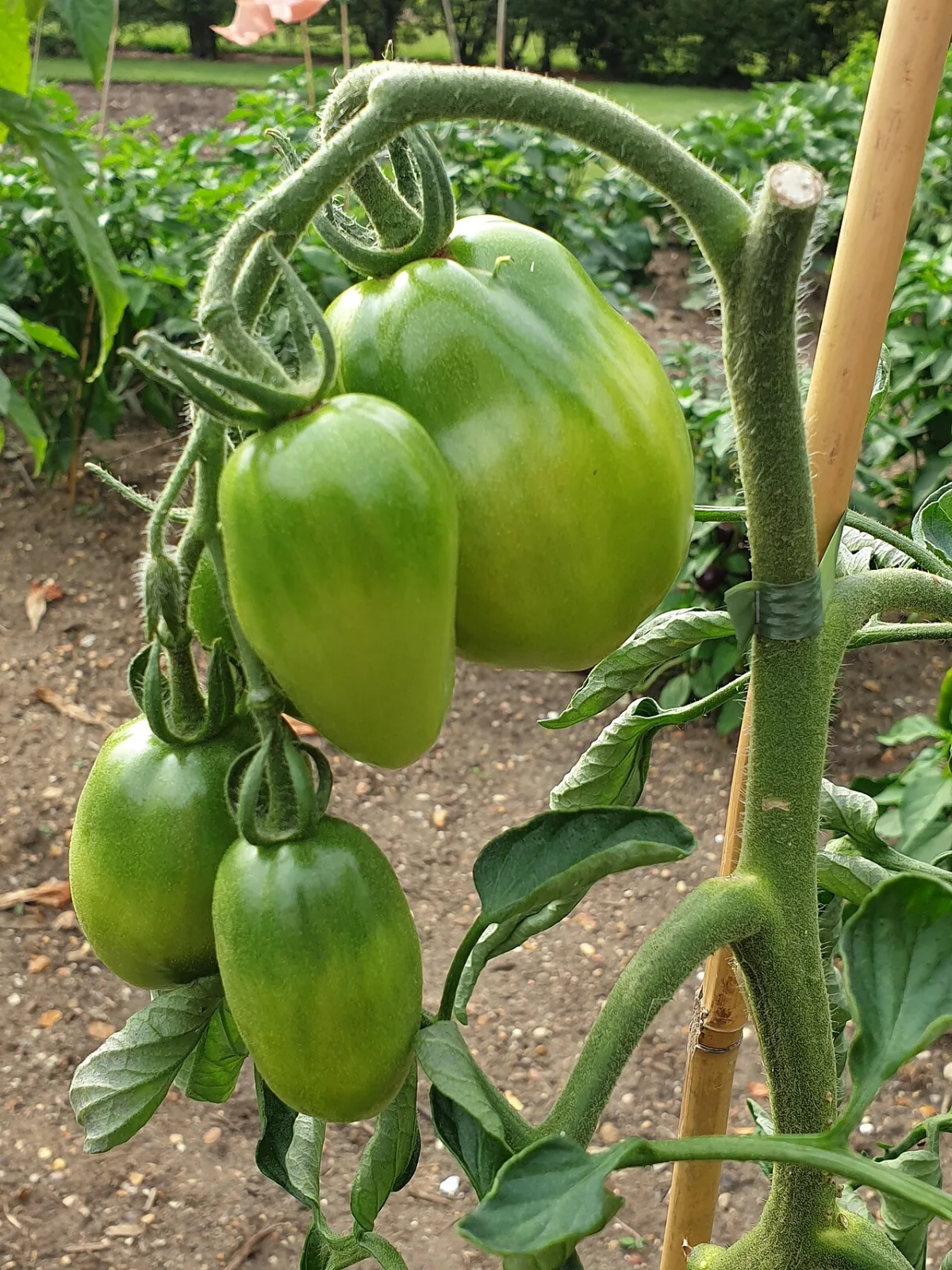
DISTRIBUTION (LOCALIZATION) ON PLANTS TOMATO Element | Symptom | Distribution Nitrogen Growth cessation or retardation | On young leaves, plant coloration is dark green, leaves are small Phosphorus Symptoms of manganese and iron deficiency appear (see Table 2.1) Potassium Growth retardation and slowing, plant | Throughout the plant, but coloration is dark green especially on young leaves Magnesium None Calcium Symptoms of iron and manganese deficiency appear Sulfur None Manganese Necrotic interveinal spotting on mature | On young and mature leaves, brown streaking on petioles leaves, but to varying and stems. Interveinal chlorosis and degrees reduction in size of young leaves Iron None Boron Marginal necrosis, leaf lobe curling, | On mature leaves interveinal necrotic spotting. Affected leaves dry out Zinc Plant stunting, development of thin stems | On the whole plant, and small leaves. On young leaves, especially on young interveinal chlorosis and reddening of the leaves underside of leaf blades. Mature leaves are affected less, but may curl downward Copper Similar to those caused by zinc | On the whole plant Chlorine Similar to those caused by nitrogen and | The same potassium
SYMPTOMS ON LEAVES SYMPTOMS ON AGING LEAVES
Burns, spotting, and discoloration on one or two aging leaves usually indicate a nutrient imbalance. Symptoms of magnesium deficiency develop on older leaves, especially in tomato, cucumber, pepper, and chrysanthemum. Physical leaf damage such as burns, localized independently of the venation type and having various sizes and shapes, can appear only on lower leaves, particularly after irrigation with pesticide solutions or foliar top dressing.
Wilting of aging leaves is often a sign of fungal or bacterial vascular wilt development. It usually progresses, gradually leading to the complete damage of the plant.
This type of localization is characteristic of nutrient deficiency symptoms; typical interveinal or periveinal chlorosis develops on leaves. At very low magnesium concentrations in the soil, up to half of the leaves on a plant can be affected. Similarly, after soil steaming, symptoms of manganese toxicity appear (leaf margin burns), most noticeable on aging leaves.
Symptoms of many fungal and bacterial leaf spots develop very strongly on old leaves. As a rule, they can be distinguished from symptoms caused by other factors by the following signs:
— basically the same shape, size, color, and texture on all aging affected leaves;
— gradation between the size of spots on aging and young leaves: smallest on the youngest leaves and increasing as the leaves age towards the base of the plant; — on the youngest leaves, there is usually an absence of lesions or very small, punctate chloroses and necroses;
— presence of halos of different colors around the spots;
— halos are often diffuse or poorly separated from healthy tissue.
This type of spot localization occurs with nutrient imbalances, development of viral, fungal, and bacterial diseases, as well as physical and chemical burns. Signs of nutrient deficiency appearing in the apical part of the plant indicate a lack of calcium and manganese. With calcium deficiency, the growing point is affected, leaves become light green, and in case of severe deficiency — chlorotic. Periveinal chlorosis on top leaves, where veins appear convex, is an indicator of manganese deficiency. Symptoms of damage by viruses usually appear on young fully unfolded leaves, but they are weakly expressed on aging leaves, and in some diseases, for example, green mottle cucumber mosaic, they do not develop at all; symptoms of the disease are absent on old leaves. The localization of signs of yellow or green mosaic, ring spot, or various types of yellows caused by viruses, as a rule, does not depend on the nature of the venation.
Spotting caused by any fungal or bacterial pathogens spreads throughout the plant. The top leaves are most severely affected, especially if the pathogen has entered the greenhouse with an airflow through a transom or the spread of infection is associated with overhead irrigation (for example, infection of tomatoes with late blight or bacterial leaf spot).
Symptoms of damage by physical or chemical agents can appear on any part of the plant, but are usually observed on the youngest and middle leaves. This can be explained by both the highest sensitivity of such leaves and the fact that the top part of the plants is naturally most exposed to these agents. The localization and appearance of spotting caused by physical or chemical factors have some specific features:
— the localization is directional, with symptoms concentrated mainly on one side of the upper part of the plant; — the damage is often a one-time occurrence and affects only one or two leaves;
— after the initial impact, no further development of symptoms occurs.
When damaged by chemical factors, rounded spots are formed; sometimes they create a typical 'pattern' determined by the movement of contaminated water droplets. The spots are uniform in shape, generally brown in color, and their edges stand out clearly against the background of undamaged tissue. At the same time, the size of such spots varies not only across the entire plant but even on the same leaf, although the spots do not spread.
If the tops and the youngest leaves of tomatoes begin to wilt, the problem should be sought in the root system. Such a condition always indicates a disruption of root functions, which prevents the plant from absorbing soil moisture normally. It is important for the agronomist to quickly determine the nature of the damage in order to adjust care or protect the plantings in time.
Wilting of young leaves and growing points is always a signal that the tomato roots are not coping with their function.
Disruption of the root system and excessive loss of moisture can be caused by several reasons:
- Temporary factors: drought, waterlogging of the soil, or high concentration of water-soluble salts in it.
- Permanent factors: mechanical damage to roots, chemical burns, as well as damage by diseases or pests.
- External factors: critically low relative air humidity or viral infection of plants.
Specific symptoms on young leaves
Damage by herbicides such as growth regulators (e.g., 2,4-D or MCPA) appears primarily on the youngest leaves. They become severely deformed and stop developing.
With a high concentration of readily soluble salts in the soil, the picture changes. Young leaves often acquire a more succulent green color, while the color of the rest of the leaves on the bush does not change. At the same time, the overall growth activity of the plants slows down sharply.
Read next
Plant protection For gardeners
Diagnostics of plant chlorosis based on the localization of nutrient deficiencies
Plant protection For agronomists
Diagnosis and prevention of rare viral diseases in greenhouse lettuce
Agrochemistry For students