
Differential diagnostics of magnesium and iron deficiency in plants
4 min read
Chlorosis in crops always leads to harvest losses due to the disruption of photosynthesis and the destruction of chlorophyll. To quickly rectify the situation, it is important for an agronomist to precisely identify which specific element the plants are lacking. Most often, differential diagnosis must be conducted between magnesium and iron deficiency. The main key to solving the puzzle lies in the mobility of these elements within the plant itself.
Where to look for symptoms: lower leaves versus the canopy
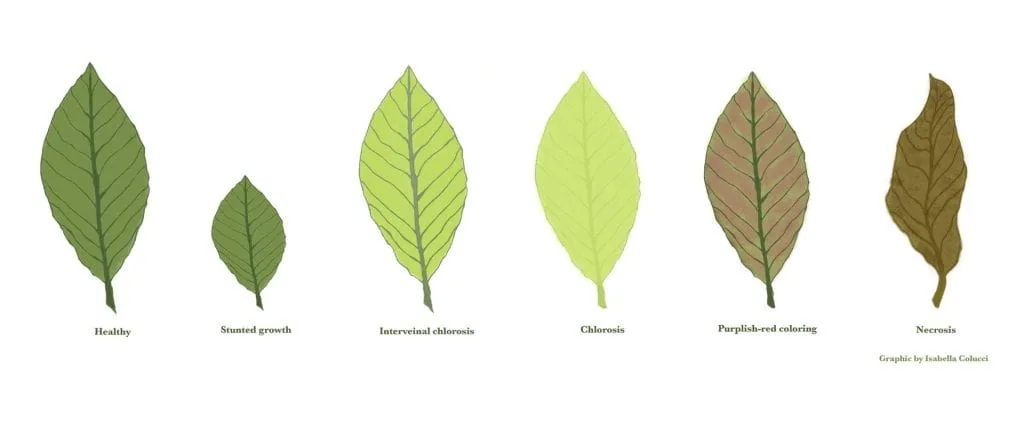
Magnesium is an essential building block for chlorophyll, coordinating pyrrole rings around itself at the center of the porphyrin core. This element has high phloem mobility, so when a deficiency occurs, the plant easily redistributes it from older tissues to young shoots. It is precisely because of this that magnesium chlorosis always begins at the bottom. Symptoms manifest on the lower and middle tiers, progressing from the leaf margins to the interveinal space, and often concluding with tissue necrosis at the edges.
Iron behaves differently — it is characterized by extremely low mobility and is practically unable to move from older leaves to growth points. Although iron is not a component of chlorophyll, it is necessary as an enzyme cofactor for the synthesis of its precursors, the functioning of the mitochondrial respiratory chain, and photosystems. As a result of iron deficiency, only young, growing organs suffer. Leaves at the top turn yellow or white, but their veins remain green for a long time, creating a contrasting network, while the lower tier maintains a healthy appearance.
- Identify the affected tier: chlorosis in the lower and middle tiers indicates a magnesium deficiency, while chlorosis at the canopy and growth points indicates an iron deficiency.
- Examine the pattern of yellowing: with an iron deficiency, a clear green network of veins forms on a pale background on young leaves, while with a magnesium deficiency, yellowing begins at the edges or interveinal spaces of older leaves.
- Inspect the margins of the leaf blades: subsequent tissue necrosis due to membrane destruction is characteristic of magnesium deficiency.
- Track the dynamics of the pathology over time: the spread of yellowing from the bottom up confirms a lack of mobile magnesium.
Soil factors and confirmation of diagnosis
The appearance of plants should always be compared with the soil and climatic conditions in the field. Magnesium deficiency usually appears on light and acidic soils, where this macronutrient is quickly leached from the root zone. In this case, the problem will have to be solved by adjusting the macronutrient nutrition of the crops.
A high pH level and an excess of carbonates in the soil block the uptake of iron by the roots. This causes functional chlorosis, where the element is physically present in the soil but unavailable to the plants.
When suspecting an iron deficiency, it is important to evaluate not only soil moisture but also soil acidity. If the micronutrient is blocked due to soil conditions, the simple application of conventional iron-containing fertilizers to the soil will not be effective. It will require pH regulation or the use of chelated forms for foliar application.
Decisions regarding the application of fertilizers should be based not only on visual signs but also on quantitative indicators of nutrient availability, adjusted in accordance with the regulations for the specific crop.
A laboratory agrochemical analysis of the soil and plant tissue diagnosis of the leaf blade will objectively show the real deficiency. The nutrition system should be corrected based on quantitative indicators, not just visual signs. This will help in choosing the correct strategy for managing the disruption in plant metabolism.
Read next
Plant protection For agronomists
Diagnosis of nutrient deficiency and toxicity in tomatoes
Nutrition and fertilizers For gardeners
Signs of magnesium and calcium deficiency in the mineral nutrition of crops
Agrochemistry For students