
Economic importance of oats as a food and forage crop
14 min read
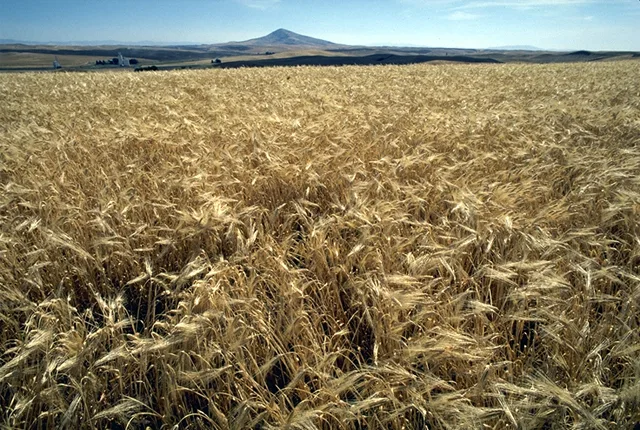
Oats are one of the most valuable food and forage crops, combining high nutritional value with versatility in application. Oat grain surpasses other cereals in lipid content, particularly in the germ, where oleic and linolenic acids predominate. Oat protein is easily digestible and rich in amino acids critical for the body—arginine, histidine, lysine, and tryptophan. Due to the high content of vitamins B1 and B2, as well as compounds of iron, calcium, and phosphorus, oat-based products are essential in dietary and children's nutrition.
- Protein content in grain — 12–15 %
- Starch content — 40–45 %
- Lipid content — 4.0–6.0 %
- Energy value of 1 kg of grain — 1 feed unit
Oat flour is completely devoid of gluten. Because of this, it cannot be used for baking bread on its own — for baking, it is only mixed in small quantities with wheat or rye flour.
Oats in feed production and the food industry
Top-quality oat grain is in demand in the food industry. It is processed to obtain various food products. It is used to produce:
- groats;
- oatmeal (tolokno);
- flakes and rolled oats;
- baby food;
- biscuits.
In livestock farming, oats are valued as an indispensable, easily digestible concentrated feed for horses, poultry, and breeding young stock. The grain is also routinely included in the composition of complete compound feeds. Using hulless oats allows for a significant increase in the productivity of poultry and a reduction in feed costs.
Including up to 40% hulless oats in the diet of laying hens increases their egg production, which yields up to 250 USD in additional profit for every 1000 birds. With the addition of enzymes, hulless oats can serve as an effective mono-feed for broiler fattening.
For the harvesting of succulent and roughage, oats are sown both in pure stands and in mixtures with annual legume crops — spring vetch, peas, fodder peas, and grass peas. Such vetch-oat and pea-oat mixtures form the basis of the green conveyor, providing livestock with green fodder, silage, and hay. In regions with sufficient moisture, mixed crops are used as fallow-occupying crops and as the best precursors for winter crops. Oat straw and chaff are distinguished by the highest nutritional value among all cereal crops and are fully consumed by livestock.
Yield potential and varietal composition
In global agriculture, oats firmly hold fifth place in sown area (about 13 million hectares), second only to wheat, rice, corn, and barley. The main production areas are concentrated in the temperate zone of the Northern Hemisphere. Farmers prefer spring forms, as semi-winter, winter, and facultative varieties, despite their higher yield potential, cannot withstand winter conditions due to low winter hardiness. In Russia, 3.72 million hectares were allocated to the crop in 2003, mainly in the non-chernozem zone and Siberia.
| Regional coverage | Average yield, dt/ha |
|---|---|
| Worldwide | 20.2 |
In Belarus, between 2003 and 2006, between 200 and 250 thousand hectares were allocated to oats, with a gross harvest of 550–700 thousand tons and an average yield of 25–29 dt/ha. However, the crop's potential is significantly higher: with strict adherence to cultivation technology at the republic's experimental stations, yields of over 50 dt/ha are achieved. On individual trial plots, figures reached 83.2 dt/ha, 79.4 dt/ha, and 74.7 dt/ha. High productivity is demonstrated by both traditional hulled varieties and new promising domestic cultivars.
| Oat cultivar | Share in the cropping structure in Belarus (2005), % |
|---|---|
| Erbgraf | 23.3 |
| Polonez | 15.7 |
| Alf | 13 |
| Stralets | 12 |
Hulless oats are of particular value for food and feed purposes. They surpass hulled oats in protein content, fat, and starch. The selection registry highlights new promising cultivars:
- Hulled: Asilak, Bogach, Bug, Zapavet, Zolak, Polonez, Yubilyar;
- Hulless: Belorussky golozerny, Vandrounik, Gosha.
They demonstrate high stability and responsiveness to mineral nutrition. Such cultivars are excellent for intensive cultivation technologies. Their introduction into production allows for a significant increase in the harvest of high-quality grain.
| Promising cultivar | Yield in trials, dt/ha |
|---|---|
| Stralets | 93.0 |
| Zapavet | 87.5 |
| Sinelnikovskiy-68 | 88.0 |
| Sinelnikovskiy-59 | 84.0 |
| Krepysh | 77.0 |
Oats are among the oldest crops, although their cultivation began significantly later than that of wheat and barley — approximately 1500–1700 years BC in Eastern or Southern Europe. Initially, oats grew as a weed in other cereal crops, but as agriculture moved into northern and mountainous areas, they displaced them due to their high hardiness. Archaeological findings confirm their cultivation in northwestern Russia from the 7th century AD, and they have been widespread in Belarus since ancient times. Written references to the crop date back to the works of ancient Greek physicians, and the modern genus Avena includes more than 76 species, including both cultivated varieties and wild weeds — wild oats (Avena fatua).
Classification and morphological differences: how to identify weeds
For an agronomist, it is important to clearly distinguish cultivated oats from weeds even at the stage of assessing field weediness. The main diagnostic feature of wild oats is the presence of a "horseshoe" at the base of the grain, which causes the seed to shatter quickly. Cultivated species lack this horseshoe.
When analyzing weediness, rely on the following morphological characteristics of wild species:
- Common wild oat (Avena fatua L.): a horseshoe is present on every grain in the spikelet. The lemma is covered with dense hairs.
- Ludo wild oat (A. ludoviciana Dur.): the horseshoe is present only on the lowest grain of the spikelet. The pubescence of the glumes is very dense (especially on the dorsal part); the awn is geniculate and spirally twisted at the base. Depending on the humidity, it twists or untwists, helping the seed to bury itself into the soil.
- Bristle oat (A. strigosa Schreb.): small grain, with a geniculate awn on each. The apex of the outer lemma is split into two awn-like points (strigae). When the spikelet detaches, the fracture surface is dot-like and barely noticeable, and the rachilla remains attached to the first grain when the grains are separated.
Cultivated oats are represented by two main species:
Common oat (A. sativa L.) has a straight fracture surface when the spikelet detaches, and the rachilla of the second floret remains with the first grain when the grains are separated. The species is divided into three main groups of varieties:
- Spreading common oat (A. sativa patula Al., or A. sativa diffusae Al.) — with hulled grain (2–3, rarely 4 florets per spikelet) and a spreading panicle.
- Oriental (side) common oat (A. sativa orientalis Schreb.) — with hulled grain and a one-sided panicle, the branches of which are compressed and turned to one side.
- Naked common oat (A. sativa nuda Al.) — there are 7 or more florets in the spikelet; the naked grains fall out of the glumes upon ripening. In Belarus, they are not widely grown due to low yield and high requirements for moisture.
Other varieties of common oat — A. sativa mutica AL, A. sativa aristata Kg., and A. sativa aurea Korn. — currently have no practical significance.
Byzantine oat (A. byzanthina Thell. / A. byzantina C. Koch) is cultivated primarily in the Mediterranean and the southern states of the USA. It has large 2–4-floret spikelets, where both lower florets bear thin, straight awns. It is characterized by an oblique fracture surface, and the rachilla breaks when the grains are separated, remaining partially with the first and partially with the second grain. The species possesses high drought resistance and immunity to crown rust, loose and covered smut, and powdery mildew.
Temperature regime and moisture supply
Oats belong to temperate climate and long-day crops. Their growing season lasts from 70 to 130 days, decreasing as one moves north. For sowing planning, it is important to consider the speed of emergence depending on soil warming.
| Soil temperature, °С | Time of emergence, days |
|---|---|
| 2–3 | 18–24 |
| 10 | 8–10 |
- Optimum for vegetative growth — 10–15 °С
- Optimum for panicle emergence — 16–22 °С
- Optimum for grain filling and ripening — 18–25 °С
- Root hair surface — more than 90 %
Temperature risks: oat seedlings can withstand short-term frosts down to −6...−8 °С, but at the flowering stage, a temperature of −1,5...−2 °С already damages the plants. The crop poorly tolerates extreme heat: stomatal paralysis at 38–40 °С occurs in just 4–5 hours (for comparison, in barley — in 25–30 hours).
Due to rapid root development, oats tolerate spring drought better than barley and wheat. Its secondary roots are established 6–8 days earlier than in barley, and the root system has a high absorption capacity due to developed active root hairs. However, the crop is extremely sensitive to summer drought.
The critical period for moisture and nutrient consumption in oats is extended and occurs during the booting, heading, and flowering phases. The lack of precipitation during this time drastically reduces yield. Moisture deficiency in the tillering to early heading phase, combined with high temperatures, limits oat cultivation in the arid regions of Polesie.
Place in crop rotation and soil preparation
Oats are undemanding to soil: they can be successfully grown on sandy loams, loams, clayey, and waterlogged areas. The crop tolerates increased acidity within the range of pH 5–6, which is why it is well-suited for reclaiming peatlands and new podzolic lands. The fibrous root system of oats has a high absorption capacity and easily extracts poorly soluble nutrients from the soil, for example, phosphorus from phosphorites. Oats tolerate shading well, which allows them to compete with weeds in moderately weed-infested fields and produce high yields in mixtures with annual grain legumes.
Do not plant oats for two consecutive years in the same field after beets — this leads to a massive outbreak of a common pest, the oat nematode. In addition, oats do not develop well in saline soils.
The productive tillering of oats is higher than that of wheat but lower than that of barley. In crop rotation, it is usually sown as the final crop after other cereals. The best predecessors are considered to be corn, potatoes, grain legumes, as well as winter and spring wheat after bare fallow. In flax-growing regions, excellent results are obtained by sowing oats after flax green manure. Acceptable predecessors include buckwheat, small grain cereals, and forage grasses.
With a high saturation of the crop rotation with grain crops (up to 65–70%), oats act as a "sanitizer" for the field. It is resistant to root rot, and is also significantly less affected by Hessian and frit flies than wheat and barley.
Soil preparation for oats begins immediately after the predecessor's harvest. To clean the field and conserve soil moisture, strictly follow the sequence of tillage operations:
- Post-harvest stubble tillage. Performed immediately after harvesting the cereal predecessor. The depth is adjusted according to the type of weed infestation: 5–7 cm in the presence of abundant annual weeds, 10–12 cm in the presence of rhizomatous and root-suckering species.
- Autumn ploughing. Performed to the depth of the arable layer 2–3 weeks after stubble tillage, once weed seedlings emerge. The optimal timing is late August or autumn before September 15.
- Autumn cultivation with harrowing. Conducted after the mass emergence of weed seedlings in the ploughed field.
- First spring cultivation. Performed to a depth of 5–7 cm to conserve moisture and prevent its rapid evaporation.
- Second spring cultivation. Conducted to a depth of 5–8 cm for final seedbed preparation and incorporation of applied mineral fertilizers.
Seed treatment and fertilization system
Oats are self-pollinating plants with a closed type of flowering, although warm sunny weather with short-term rains stimulates open flowering. Flowering and ripening of the panicle occur unevenly — from the upper spikelets to the lower ones. Because of this, grains of the upper tier ripen earlier; they are 1.5–2.0 times larger and heavier than the lower ones and possess better sowing qualities. For sowing, use only thoroughly sorted and calibrated large seed material.
Before sowing, seeds are strictly treated with registered products to protect against fungal and bacterial diseases. The treatment method is chosen based on the moisture content of the seed material:
- Dry seed treatment is carried out 2–3 months before sowing if seed moisture does not exceed 14%.
- Semi-dry seed treatment is performed 2–3 days before sowing if grain moisture is above 17%. For this, the dose of the product is diluted in 10 l of water, adding a sticker (NaCMC at a rate of 0.2 kg per 1 t of seed). The application rate of the working suspension is 10 l/t.
In case of a deficiency of micronutrients in the soil (boron — less than 0.3 mg/kg, copper — less than 1.5 mg/kg, zinc — less than 1.0 mg/kg), seeds are treated with metal salts and a growth regulator during seed treatment to increase plant immunity.
- Boric acid — 100 g/t
- Copper sulfate — 300 g/t
- Zinc sulfate — 180 g/t
- Manganese sulfate — 120 g/t
- Growth regulator Agat-25 K — 55 g/t
The crop is responsive to liming of acidic soils and the application of mineral fertilizers. Organic fertilizers are not applied directly under oats — they are distributed for the predecessor. An exception is made only for seed plots, as well as when working on very poor and acidic lands. Below are the average application rates of mineral nutrients for the conditions of Belarus.
| Fertilizer group | Application rate |
|---|---|
| Phosphate fertilizers | 50–60 kg active ingredient/ha |
| Potash fertilizers | 80–120 kg/ha |
| Nitrogen fertilizers | 60–90 kg/ha |
The entire volume of nitrogen fertilizers is applied at once before pre-sowing cultivation. Split application of nitrogen as top dressing on oat crops is ineffective.
Oats are an early-sown crop, so they are sown immediately upon reaching the physical maturity of the soil. Early timing allows for increased field emergence and plant tillering. They also significantly reduce the degree of crop infestation by fusarium, rust, and frit and Hessian flies. It is especially important not to delay sowing operations on sandy loam and peat-boggy soils.
Sowing dates depend directly on the region. In the southern part of Belarus, oats are sown in early April, in the central part — in the middle, and in the north — at the end of April. The crop is sown using solid row or narrow-row methods.
- Seeding rate for husked cultivars — 5.0–5.5 million viable seeds per 1 ha
- Seeding rate for hulless cultivars — 5–6 million viable seeds per 1 ha
- Row spacing for sowing — 7.5; 12.5; 15 cm
Sowing depth">Sowing depth depends on the soil texture in a specific field. Sowing too deep in heavy soils will delay emergence, while shallow sowing in light soils will lead to seed desiccation. Optimal sowing parameters are shown in the table.
| Soil type | Sowing depth, cm |
|---|---|
| Heavy soils | 2–3 |
| Light loams | 3–4 |
| Sandy loam soils | 4–5 |
The first technological operations for crop care are aimed at controlling weeds and breaking the soil crust. Both mechanical methods and chemical treatments are used for this purpose. All work is carried out sequentially depending on the crop development stage.
- Perform pre-emergence harrowing 3–5 days after sowing.
- Perform post-emergence harrowing at the 3–4 leaf stage if the field is heavily infested with weeds.
- Perform chemical weeding during the tillering stage against annual dicotyledonous weeds, sow thistle, chamomile, and knotweed using appropriate herbicide products.
Nutrition, plant protection, and harvesting
Oats are characterized by a prolonged period of nutrient uptake compared to barley, which is why they respond more strongly to mineral fertilizers, especially nitrogen. Phosphorus and potassium fertilizers are applied during primary tillage. Nitrogen fertilizers are distributed as follows: 50–60% is applied during pre-sowing cultivation, and the remainder is applied as top dressing. The greatest effect is achieved by nitrogen fertilizers during the tillering stage or the beginning of stem elongation at a rate of 30–50% of the calculated nitrogen dose.
Protective treatments are carried out at the first signs of pests and diseases. If there is a threat of infestation by cereal flies and cereal aphids, crops at the 2–3 leaf stage (tillering) are treated with insecticides, such as Decis Extra, Karate, Sumi-Alpha, etc. The main pest remains the frit fly, the spring generation of which develops on stems, and the summer generation in panicles. To control fungal diseases (crown rust, red-brown spot, powdery mildew), fungicides such as Impact, Folicur, Ferazim, etc., are used.
When cultivating oats for baby food, pesticides and high rates of fertilizers are not used.
Oat ripening begins from the upper spikelets of the panicle and from the periphery, spreading downwards and towards the center. Because of this, the grain ripens unevenly along the entire length of the inflorescence. Harvesting is carried out by combine at the full maturity of the grain in the top of the panicle, without waiting for it to ripen in the lower part.
Oat harvesting must be completed within 4–5 calendar days to avoid shattering of the ripest grains from the upper part of the panicle.
Read next
Crop production For students
Biological characteristics and morphological structure of cereal crops
Crop production For students
Economic importance and agrotechnical potential of winter rye
Crop production For students