
Economic significance and feed quality of spring barley in crop production
14 min read
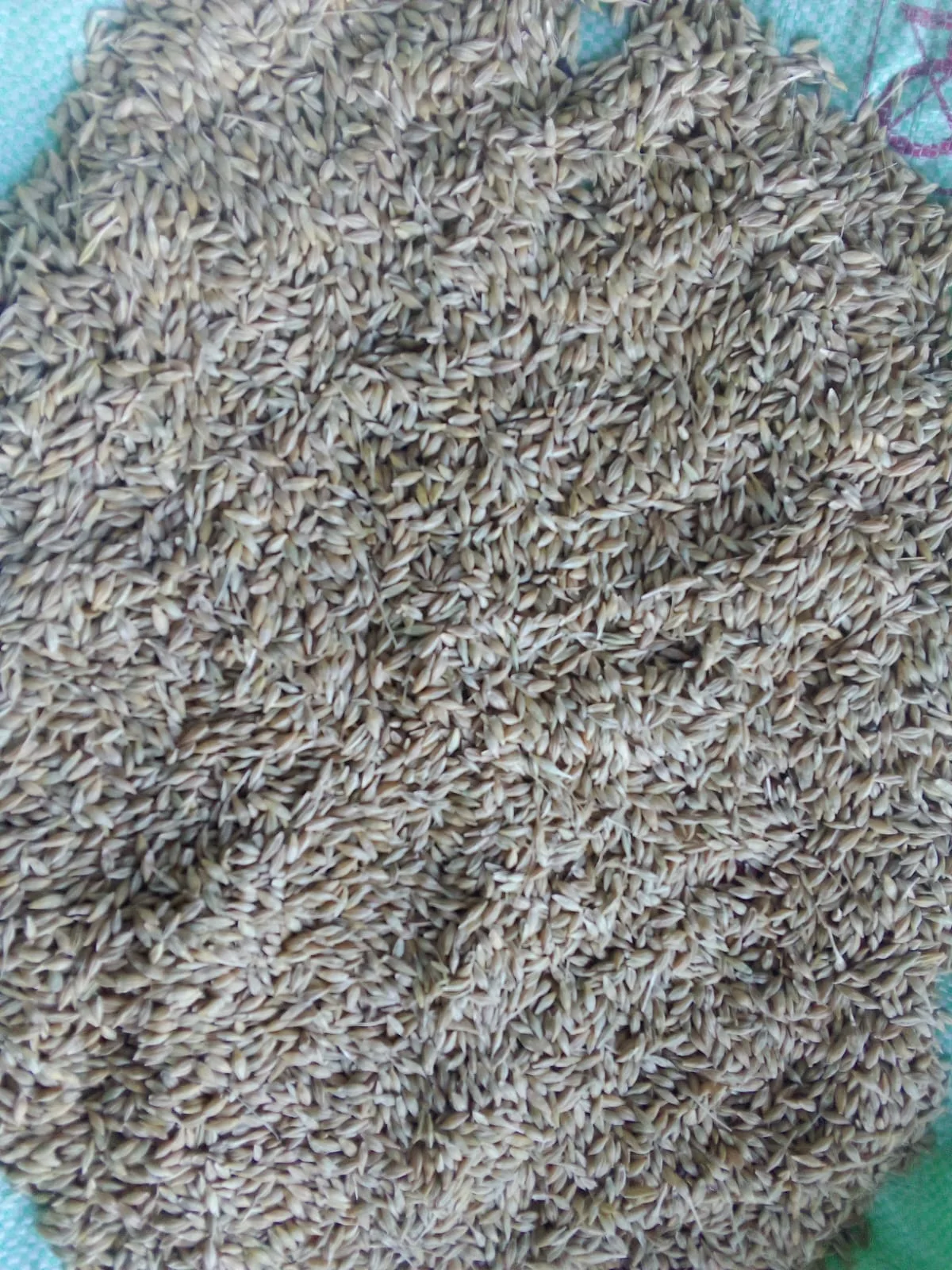
Spring barley, wheat">spring wheat and oats belong to the group of early spring cereals. In many regions, spring cereals yield less than winter crops, but they provide high-quality food and feed grain and rank first in terms of gross harvest.
In Belarus, spring barley is cultivated mainly as:
• a food crop. Barley grains are used to produce pearl barley and barley groats, coffee substitutes, and sometimes bread. Pure barley flour is poorly suited for baking; if necessary, barley flour is added to rye or wheat flour in amounts of 20—25%. In China and Japan, barley is of particularly great importance as a food product in regions where it is cool and rice does not ripen; barley is convenient here because it can grow during the winter period (hence the high percentage of winter forms);
• a grain feed crop. Barley is given as feed to horses instead of oats. In ground form, it is used as feed for cattle. Barley grain provides concentrated feed (100 kg of grain equals 120 feed units) for livestock animals, especially for fattening pigs and poultry;
• industrial crop. Barley is used in the brewing, distilling, and confectionery industries. Its grain contains little protein (10—11%), so it is used by brewers as a raw material for producing beer. For the preparation of beer malt, two-row barley varieties are particularly valuable raw materials, as they possess large and uniform grain with reduced husk content and high germination energy.
The composition of barley grain includes (in percent of dry matter): protein — 12%, fat — 2.1%, nitrogen-free extractives — 64.6%, fiber — 5.5%, ash — 2.8%. Barley protein contains all essential amino acids, including those that are particularly deficient and most valuable — tryptophan and lysine. Some cultivars contain 4.5—5.0% lysine in the protein fraction.
The height and leafiness of the plants (number and width of leaves) are important when using barley for green feed in its pure form. Using the green mass of barley as a vitamin top dressing or hay is extremely effective for feeding livestock — when growing barley in a mixture with grain legumes (soybean, field pea, lentil, grass pea, spring and winter vetch). Straw and chaff of barley, after preliminary preparation (steaming, especially with ammonia), are widely used as feed for livestock. In terms of nutritional value, barley straw is inferior to oat straw, but it is not inferior to wheat straw. Barley straw contains 4.4% protein, and chaff contains 6.2%.
In the CIS, three main barley zones can be conditionally identified: n o r t h e r n — for food crops; s o u t h e r n — mainly for feed barley; w e s t e r n — for brewing barley.
In Belarus, significant areas are sown with barley, predominantly brewing cultivars (in 2004 — 416.6 thousand ha, 2008 — 612.6 thousand ha, which accounts for up to 15—20% of all cereals). In 2005, the following barley cultivars prevailed: Tyuringia (20% of the area under the crop), Gonar (15%), Ataman (13%), Baronessa (12%); among brewing cultivars — Gastinets, Ataman, Syabra, Brovar; among the feed-oriented cultivars — Yakub, Gonar, Burshtyn.
Among the promising barley cultivars in 2007, high yields (centners/ha) were recorded at the Grodno variety testing site: Brovar — 110.7, Dzivosny — 109.5, Syabra — 107.9, Philadelphia — 105.0, Pasadena — 102.5, Gonar — 100.4, Ataman — 99.2, Gastinets — 98.2, Fontaine — 97.1, FDO 96007-505 — 97.0, Sylphide — 96.0, Zubr — 95.0, Yakub — 94.0.
Barley belongs to the oldest crops and was known to humans as early as the Stone Age. The origin of cultivated barley is linked to the Near Eastern center, which includes the following regions:
- the Caucasus;
- Turkey;
- Syria;
- Palestine;
- Iraq;
- Iran;
- Afghanistan;
- Central Asia.
Apparently, from these countries, barley spread further east and west, forming secondary centers of origin there — in China and Ethiopia, which are characterized by an exceptionally large variety of forms. The wild barley (Hordeum spontaneum L.) closest to cultivated barley possesses the same main characteristics as its cultivated forms, but differs by the strong hairiness of the spike elements and its high brittleness.
The very first evidence of the use of barley as a cultivated plant dates back to the Neolithic era. It is described in Ancient Egypt, Assyria, Babylonia, Transcaucasia, and Central Asia. In 1953, during excavations in Anau near Ashgabat, among the fragments of dwellings of ancient tribes that inhabited these areas, fossilized grains of multi-row cultivated barley were discovered. These finds date back approximately to the 5th—4th millennium BC. Excavation materials in the southern part of Turkmenistan testify to the widespread cultivation of barley there even later — under irrigation farming 3 thousand years BC. Barley cultivation was known to the peoples of Transcaucasia since prehistoric times as well. In Armenia, barley was cultivated in the 3rd—2nd millennium BC. In the ruins of ancient dugouts of Trypillian settlements (Ukraine), imprints of barley grain were found, also dating back to approximately the 3rd—2nd millennium BC.
Barley can be winter or spring.
Spring and winter barley: biological features and economic importance
Spring barley is one of the most plastic and early-maturing crops, outperforming other early spring crops in terms of yield stability. In the structure of grain crops, it firmly holds first place in terms of sowing area and second in total grain harvest, second only to winter wheat. Due to its short growing season and low heat requirements, it is successfully cultivated from the southern borders to the Arctic Circle, and is also used as a reliable insurance crop for reseeding winter crops that have perished.
Winter barley outperforms spring barley in yield, matures earlier, and makes more efficient use of spring moisture reserves. Its growing season is two weeks shorter than that of spring barley and one week shorter than that of winter wheat. The very early harvesting of winter barley frees up machinery and allows for the sowing of stubble crops (millet, corn, annual grasses) or other winter crops. Winter barley accounts for only 4% of all barley crops in the CIS, and in Belarus it is cultivated only sporadically in the southern regions.
| Crop type | Growing season duration, days |
|---|---|
| Winter barley | 80—110 |
Winter barley is less winter-hardy than winter wheat and rye. Prolonged frosts below −12…−15 °C are fatal to it, so crops are concentrated in regions with mild winters: in Central Asia, Crimea, and the North Caucasus.
The genus Hordeum includes 28 species divided into 6 sections. Cultural species, in addition to common barley Hordeum vulgare (H. sativum), also include H. humile and H. aethiopicum, which are used only in breeding in Belarus. Agronomists divide the main species into three subspecies: multi-row or six-row (ssp. vulgare), two-row (ssp. distichum), and intermediate (ssp. intermedium). The latter subspecies has no industrial importance.
Cultivated barley is an annual self-pollinating plant, in which flowering is often completed even before heading. The inflorescence is an ear with a strong rachis, on the notches of which single-flowered spikelets are arranged in triads. In two-row barley, only the middle spikelet in the triad produces fruit, whereas in six-row barley, all three do. There are also hulled forms (glumes fuse with the caryopsis) and hulless forms. The outer floral glume can extend into an awn (smooth or serrated, long or short) or bear lobed appendages (furca); awnless forms also occur.
Sowing technology: seed preparation, timing, and temperature regime
To obtain uniform emergence, use large, selected seed. To protect crops from pathogens, seed material must be treated with registered seed treatment products. For this purpose, products such as "Granosan", "Baytan-Universal", "Fundazol", "Vitavax", or their analogs are used.
For hulled barley cultivars, wet or semi-dry seed treatment with 1:300 formalin concentration is used.
Spring barley is sown as early as possible when the soil warms up to +5 °C. This is usually the first 5–7 days from the start of spring field work, simultaneously with or immediately after spring wheat. An early start in cool, moist conditions helps to form a powerful root system. Plants have time to tiller before the mass flight of the Swedish fly, suffer less from summer drought and fungal diseases, and harvesting takes place in favorable weather. Grain begins to germinate at a temperature of +2…+4 °C, but in this case, the process is slow.
- Seed vigor — at least 80 %
- Seed mass — about 50 g
- Soil temperature for sowing — +5 °C
- Optimum for germination — +6…+12 °C
- Limit frost for seedlings — down to −8…−9 °C
Despite the high cold resistance of seedlings, a decrease in air temperature to −2…−3 °C during the flowering and grain maturation phases poses a serious threat to plants.
Soil and climatic requirements and predecessors
Spring barley tillers more intensively than oats and spring wheat. Tillering nodes are activated 18–20 days after emergence, forming 4–5 stems per plant. Crops rapidly increase vegetative mass and effectively suppress first-group weeds. However, due to weak root system development in the initial stages, barley is acutely sensitive to spring drought and nutrient deficiency.
When the air temperature rises to 38–40 °C, stomatal paralysis occurs within just 25–35 hours. Leaves rapidly lose moisture and dry out from heat stress.
The crop is demanding regarding soil structure and soil fertility. Medium-textured loamy soils are the optimal choice. On light sandy soils, barley develops worse than rye and oats, and it dies completely in highly saline areas. Acidic soils must be treated with liming before sowing.
In crop rotation, the choice of the preceding crop depends on the intended use of the grain. Malting barley should not be planted after crops that leave a lot of nitrogen in the soil, such as clover or grain legumes. This leads to excessive protein accumulation in the grain and a decline in its quality.
- Best preceding crops: well-fertilized row crops that leave fields free of weeds.
- For food and forage purposes: grain legumes, winter cereals following a fertilized bare or green fallow, and in the Non-Chernozem region — fiber flax or the plowing of a perennial grass sod.
- Undesirable preceding crops: repeated barley sowings, winter cereals (due to the high risk of root rot infection), and perennial grass species.
- Moisture for seed germination — 48–50% of seed mass
- Potassium uptake by the booting stage — 67% of total volume
- Phosphorus uptake by the booting stage — 46% of total volume
- Basic seeding rate — 4.0–4.5 million viable seeds per hectare
- Seeding rate on high-fertility sites — 3.5 million viable seeds per hectare
Fertilization system, sowing parameters, and crop care
Barley is characterized by a short period of active nutrient uptake. The bulk of potassium and phosphorus is absorbed by the plant before flowering begins. For this reason, it is crucial to ensure the crop has access to nutrients from the first days of the growing season. Split application makes no sense — it is impossible to compensate for an initial nutrient deficit with later treatments.
Nutrient deficiency in the first 15–30 days after sowing irreversibly retards barley growth, disrupts carbohydrate metabolism, hinders ear formation, and reduces lodging resistance.
Potassium and phosphorus fertilizers are applied primarily during tillage">primary tillage of the soil. Nitrogen fertilizers are applied during pre-sowing cultivation, and it is advisable to apply organic fertilizers under the preceding crop. The application rates for mineral fertilizers and microelements are provided in the tables below.
| Fertilizer type and application conditions | Dosage and method of application |
|---|---|
| Potash fertilizers (primary application) | 70–120 kg a.i./ha during primary tillage |
| Phosphorus fertilizers (primary application) | 60–80 kg/ha during primary tillage |
| Phosphorus fertilizers (at sowing) | 10–15 kg/ha in rows |
| Nitrogen fertilizers (in Belarus conditions) | 60–110 kg/ha during pre-sowing cultivation |
| Phosphorus for malting barley | 50–60 kg of phosphoric acid per 1 ha |
| Potash for malting barley | 35–45 kg of potassium oxide per 1 ha |
| Urea for forage barley (late top dressing) | 20–25 kg/ha at the heading stage (solution consumption — 300 l/ha) |
For balanced development, seeds are coated with microelements before sowing or they are applied directly into the soil. The application rates for microelements are as follows:
- boron — 10 g/t;
- copper — 30 g/t;
- manganese — 18 g/t;
- zinc — 12 g/t.
Sowing is carried out by continuous drilling (row spacing of 15 cm) or narrow-row drilling (7.5–10 cm spacing). Seeding depth of seeds">Depth of seed placement directly depends on the soil type.
| Soil conditions | Seeding depth |
|---|---|
| Standard seeding depth | 3–4 cm |
| Medium and heavy loams | 2–3 cm |
| Light soils | 5–6 cm |
Crop care includes mandatory mechanical operations and chemical treatments against harmful objects.
- Pre-emergence harrowing — carried out 3–5 days after sowing to preserve soil moisture and destroy weed seedlings.
- Chemical weeding — in case of high weed infestation, crops are treated with herbicides at the 2–3 leaf stage (start of tillering).
- Post-emergence harrowing — performed at the 3–4 leaf stage of barley for soil aeration and destruction of weed seedlings.
- Insecticide treatment — carried out in the event of a threat from cereal flies (Swedish and Hessian flies) or cereal aphids, to which late crops are particularly sensitive.
To protect crops from fungal infections (rust, powdery mildew, helminthosporiosis), treatment with fungicides is carried out at the heading-flowering stage.
To control lodging, plant growth regulators are used at the end of the booting stage.
In turn, barley is a good preceding crop for many spring crops, and in some regions, for winter crops as well. Due to its short growing season, barley is a valuable cover crop for perennial legumes and grasses.
Barley ripens uniformly. Upon reaching full maturity, the ears droop and become brittle. Spring barley is harvested at the full maturity stage.
The harvesting method is determined by the condition of the crops and weather conditions. In fields with an even stand and grain moisture not exceeding 22%, harvesting is carried out by direct combining. In case of heavy weed infestation or lodging of the crops, two-stage harvesting is used. In this process, the duration of the mass remaining in windrows should not exceed five days.
Read next
Crop production For students
Economic importance and geography of winter and spring wheat cultivation
Crop production For students
Economic importance and agrotechnical features of millet cultivation
Crop production For students