
Morphological features and characteristics of common wild oat seed
2 min read
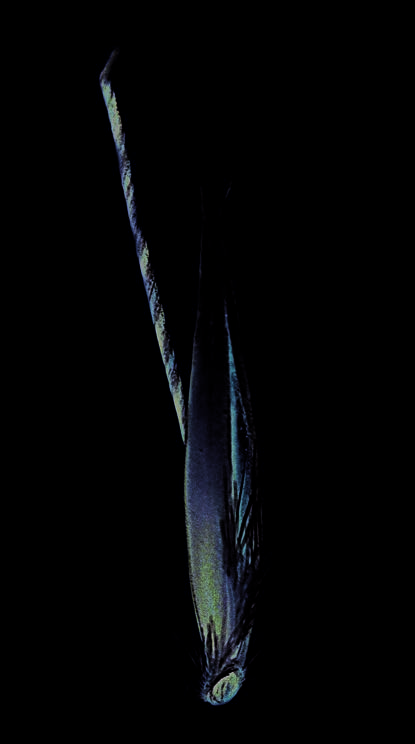
Common wild oat (Poaceae family) is one of the most common and pernicious weeds in spring and winter cereal crops, especially oats. It infests fields almost everywhere: in the European part of the country (especially in the central region), in the Caucasus, Western Siberia, the Far East, and Central Asia. The weed often grows along roads and leads among impurities in harvested plant products.
Wild oat spikelets are two- to three-flowered. Upon ripening, they easily break apart into individual seeds, as each grain has a deep egg-shaped-rounded or oval abscission scar. Upon reaching the ground, the weed rapidly colonizes the soil due to its unique ability to self-bury.
Self-burying occurs with the help of a strong geniculate awn. When wetted and dried, it spirally twists and untwists, causing the grain to move and penetrate into the soil.
Morphological features of wild oat seeds
The fusiform membranous caryopsis has a leathery outer lemma that tightly encloses the inner one. At the apex, the outer lemma is slightly subulate and weakly bifurcated. Its surface is longitudinally ribbed (up to 57), rough, and covered with small prickles that become larger and more frequent toward the apex. The cylindrical rachilla is beveled at the top and spoon-like expanded. The abscission scar and the rachilla are covered with long hairs.
The color of wild oat seeds is very diverse:
- the membranous caryopsis can be dark brown, brown, gray, straw-yellow, or white;
- the awn in the lower part is almost black, and in the upper part, it is dark brown;
- the hairs on the membranous caryopsis can be dark or light brown.
The actual caryopsis is located inside the glumes and does not adhere to them. In cross-section, it is roundly triangular and has a cylindrical shape. Its light gray surface is covered with thin silvery-yellow hairs pointing upward, which turn into a tuft at the apex. The groove on the grain is narrow and shallow.
| Seed element | Parameter | Value, mm |
|---|---|---|
| Membranous caryopsis | Length | 816 |
| Width | 1,752,5 | |
| Thickness | 1,252,25 | |
| Actual caryopsis | Length | 68 |
| Geniculate awn | Length | up to 1220 |
Read next
Seeds and varieties For agronomists
Darnel ryegrass classified as a dangerous weed in flax crops
Seeds and varieties For agronomists
Botanical description and geographical distribution of the barnyard grass weed
Seeds and varieties For agronomists