
Cenchrus pauciflorus is a dangerous quarantine weed of fields and pastures.
1 min read
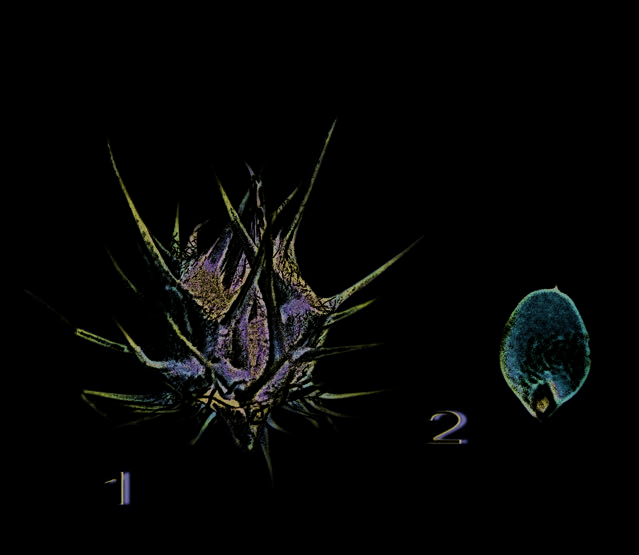
Field sandbur is a dangerous quarantine weed that infests almost all field crops, especially row crops. In addition to arable land, the plant actively displaces crop species in orchards, vineyards, and pastures. This weed also grows abundantly on uncultivated lands: roadsides, wastelands, and the banks of ponds and irrigation canals.
Field sandbur is included in the "List of pests, plant diseases, and weeds of quarantine significance for the Russian Federation." Within the territory of the Russian Federation, its foci are registered in the Krasnodar Territory and the Volgograd Region.
Morphological characteristics of the weed
The pest belongs to the grass family — POACEAE Barnhart. The weed forms one-to-three-flowered rounded spiny spikelets of a straw-yellow or yellow-green color, sometimes with a purple tint. Its glumes are coarse, woody, densely pubescent, and covered with numerous spreading spines that are fused at the base. The light brown caryopsis has a flat oval shape with a fruit scar in the form of a small black spot. The weed’s caryopses germinate directly inside the spikelet.
| Plant part | Parameter | Size, mm |
|---|---|---|
| Spikelet with spines | Length | 89 |
| Width and thickness | 5 6 | |
| Caryopsis | Length | 2,13,5 |
| Width | 1,82,3 | |
| Thickness | 11,4 |
- Number of caryopses in one spikelet — usually two, less often one or three.
- Shape of the caryopsis glumes — membranous, oblong-ovate, pointed at the end.
Read next
Seeds and varieties For agronomists
Botanical description and geographical distribution of the barnyard grass weed
Seeds and varieties For agronomists
Darnel ryegrass classified as a dangerous weed in flax crops
Seeds and varieties For agronomists