
Economic importance and agrotechnical potential of winter rye
17 min read
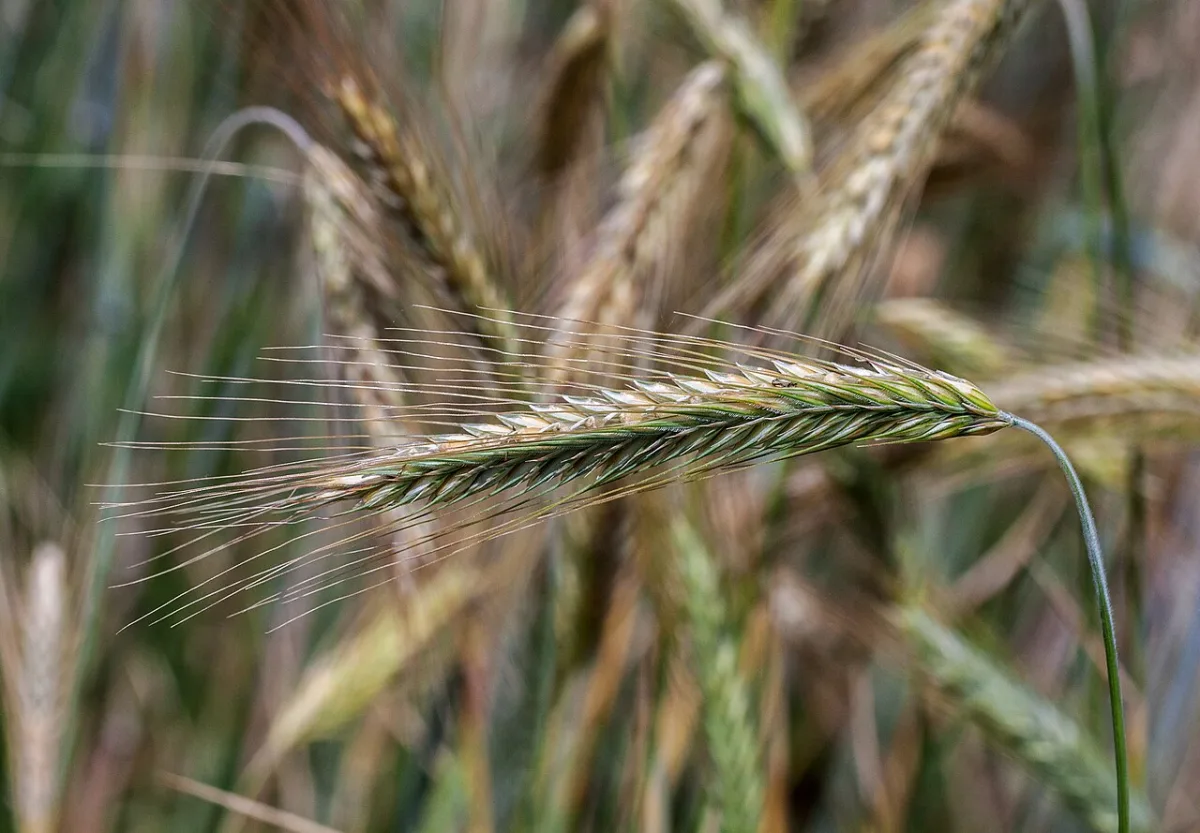
Winter rye ranks fifth among cereal crops in global agriculture, covering an area of about 11 million hectares. In the structure of Belarusian arable land, winter crops occupy about 30% of the area. The gross harvest of rye here remains at the level of 1.1–1.4 million tons, which provides approximately 20% of the total grain harvest of spike crops. Although the yield of the crop is usually lower than that of wheat and triticale, rye remains an essential link in food security.
| Country | 1985, thousand tons | 1995, thousand tons | 2005, thousand tons |
|---|---|---|---|
| Poland | 7600 | 6288 | 3359 |
| Russia | 4098 | 2932 | — |
| Germany | 4326 | 4521 | 2812 |
| Ukraine | 1208 | 1300 | — |
| Belarus | 2143 | 1250 | — |
| China | 1283 | 1200 | 748 |
| Canada | 569 | 310 | 367 |
| Turkey | 360 | 240 | 260 |
| Czech Republic | 262 | 193 | — |
| USA | 518 | 256 | 191 |
Agrotechnical potential and position in crop rotation
Winter rye is an effective field sanitizer. High tillering capacity and a fast spring start allow it to successfully suppress noxious weeds, such as creeping thistle and wild oats. After harvesting rye, the field remains clean, which makes it an excellent predecessor for spring and row crops. In addition, rye provides the earliest green feed in spring, clearing the arable land for the subsequent sowing of corn, millet, buckwheat, or potatoes in the same growing season.
The crop can be sown in various forage mixtures. Good results are obtained from early summer and post-harvest sowings of winter rye with vetch or peas, as well as spring joint sowings with spring wheat as a occupied fallow. Joint spring sowing of winter rye with spring barley is of particular interest for cost reduction. After harvesting the barley, the rye remains in the field, successfully overwinters, and produces a full grain harvest the following year.
Grain and by-products of rye are actively used in livestock farming. Flour, bran, and crushed grain serve as valuable concentrated feed: flour is traditionally used for feeding livestock animals (pigs), and bran — for cattle. Rye straw is fed to livestock animals in a steamed form or treated with ammonia water, and is also used as a preserving additive when ensiling succulent feed — pumpkin, fodder watermelon, and swede. Rye straw is also in demand in straw weaving, paper production, and as bedding material.
- Protein content in grain — 9–17 %
- Starch content in grain — 52–63.5 %
- Fat content in grain — 1.6–1.9 %
- Feed value of grain — 0.34 feed units/kg
- Nutritive value of treated straw — 20–22 feed units/100 kg
- Digestible protein in straw — 0.5–1.0 kg/100 kg
Rye bread is inferior to wheat bread in caloric content and gluten content, but it significantly surpasses it in the biological value of protein. It contains 1.5 times more lysine, as well as an increased amount of threonine and tyrosine. Bread made from rye flour, especially sifted, is rich in vitamins A1, B1, B2, E, PP, stimulates the functioning of the gastrointestinal tract, and enjoys stable demand from customers.
Rye has important technical significance. The grain is processed into alcohol and starch, and crystalline sugar, cellulose, furfural, vinegar, and lignin are obtained from the straw.
Selection of cultivars for targeted use
In 2008, the area under winter rye was 545 thousand hectares, with more than 90% of the crops occupied by cultivars of domestic breeding. Of these, 70% were tetraploid cultivars (Verasen, Igumenskaya, Pukhovchanka, Syabrouka) and 30% were diploid (Yaselda and others). In the registry of cultivars for 2010, out of 27 positions, 19 belonged to local breeding. Today, breeding work is clearly divided by the directions of grain use.
For bread baking, cultivars with high resistance to lodging and pre-harvest sprouting are selected. They must have low activity of amylolytic enzymes and an increased content of pentosans (total and soluble). These criteria are met by diploid cultivars:
- Zarnitsa
- Zubrouka
- Lota
- Yubileynaya
- Yaselda
For the production of compound feed and starch, tetraploid cultivars are preferred. They are distinguished by increased accumulation of protein and starch, resistance to grain sprouting in the ear, but have a low content of pentosans and low water-holding capacity. In this group, the following cultivars perform excellently:
- Verasen
- Igumenskaya
- Spadchyna
- Syabrouka
- Zaveya-2
The alcohol industry requires cultivars with high grain weight, an increased proportion of starch, a high content of total pentosans, and a low content of soluble pentosans. In this area, the most cost-effective diploid cultivars are Biryuza, Kalinka, Niva, Radzima, and Talisman. For obtaining early green feed, as a green manure crop, as well as a donor of resistance to diseases, the perennial cultivar Derzhavinskaya 29 is used.
As the State variety testing has shown, the productivity potential of modern winter rye cultivars is quite high: for the Lobel-103 cultivar, the average yield is 87.4 c/ha (maximum — 108.3 c/ha), for the Lota and Zarnitsa cultivars, the average yield is 67 and 63 c/ha (maximum 100.8 and 100.5 c/ha, respectively). Among diploid rye, the following cultivars also stood out for their high yield (c/ha) at agricultural experimental stations: Picasso — 114.8; among tetraploid ones — the cultivars Polnovesnaya — 90.8, Zaveya — 89.8, Iskra — 88.1, Spadchyna — 85.9, Dubinskaya — 85.7.
However, under production conditions across the country, this potential is realized by less than 50%: the average yield in most farms is still at the level of 30—35 dt/ha.
The susceptibility of diploid rye cultivars (Lobel-103) was: snow mold — approximately 10%, brown rust — 5—10%, ergot — 0.6%. The susceptibility of tetraploid cultivars (Iskra) was: snow mold — 10%, powdery mildew — 5%, brown rust — 3.5%, septoria blight — 2.8%.
A new promising direction in the development of rye breeding programs is the creation of interline F1 heterotic hybrids, which allow for an increase in the yield of this crop by 20—30% compared to the best population cultivars. Heterotic hybrids possess a higher genetic potential for adaptability, disease resistance, grain quality, and stable yield.
There are various points of view regarding the origin of cultivated rye. A. Warming and other scientists assume that rye, Secale cereale L., originates from Secale montanum Guss., which grows wild in Southwest and Central Asia and Southern Europe and is characterized by a brittle rachis, grains that adhere to the glumes, and perennial development. Professor A. F. Batalin also believes that S. cereale originated from a perennial wild species and only became annual due to cultivation. According to his observations, in the south, rye can produce shoots after mowing, i.e., it proves to be a perennial plant. Such rye is similar to the wild species of rye, Secale anatolicum Roshev., growing in the wild in Turkestan.
Most scientists believe that rye is a younger crop than wheat. Although the true place and time of the origin of cultivated rye are unknown, there is evidence that, along with wheat, it was sown in Ancient Egypt as early as 4,000 BC and was cultivated by many peoples of that time. In other ancient states: Assyria, Babylon, China, and India — rye was not cultivated separately. In Iran, Afghanistan, Arabia, Palestine, and in Minor and Central Asia, rye was known as a weed in wheat and other crops. Based on this, the assumption was made that cultivated rye originated from wild weed rye that infested wheat and barley fields in Western Asia and the Transcaucasus and does not morphologically differ from the cultivated species.
Winter rye appeared in cultivation later than wheat — around 2,000 BC.
Historical data indicate that rye was sown in Asia Minor, Greece, the Caucasus, and Crimea as early as the 3rd—4th centuries AD. The Slavic tribes of Ancient Rus' had been cultivating rye (zhito) since ancient times. In the 12th century, rye cultivation was widespread in the Volga region (Bulgar Khanate). From the southern regions, rye in Russia gradually moved to the north and northwest of the country — areas with harsh winters. Winter rye penetrated into Siberia from the European part during the period of Siberia's development by Russian settlers. Currently, winter rye is cultivated from the tundra to the southern regions of Ukraine and from Germany and the western regions of Belarus to Transbaikalia. In the steppe zones of Western and Eastern Siberia, winter rye produces low yields and is replaced by spring rye and wheat. More than 35% of winter crop sowing is concentrated in the non-chernozem belt of the CIS, where winter rye and wheat occupy almost equal areas.
Rye belongs to the genus Secale, which includes 10 species. Only one species is cultivated — Secale cereale L. — common rye, or cultivated rye — a cereal grown in many countries but unknown in a wild state. Common rye is an annual herbaceous plant. As a forage crop, the perennial cultivated rye Secale derzhanovii is also grown, which was obtained by A. I. Derzhavin by crossing the perennial rye Secale montanum Guss. with annual common rye.
The species S. cereale L. includes more than 40 varieties. Rye varieties are distinguished by features: brittleness of the rachis, density of grain enclosure in glumes, ear color, and pubescence of flowering glumes. The rye cultivars common in cultivation belong to one variety — var. vulgare Körn. (ear white, rachis non-brittle, outer flowering glume glabrous, grain open or semi-open). Common rye is the only species of cultivated rye that is widely, group one 153
Fig. 16. Rye: morphological features (a); in a field in July (b); in August (c); its caryopses at wax (d) and full (e) stages of maturity, distributed in world agriculture as an essential food and forage crop.
S. cereale L. as a natural species contains a diploid set of chromosomes (2n = 14). At the end of the 20th century, breeders developed and widely cultivated tetraploid rye (2n = 28), whose cultivars have a robust, lodging-resistant straw and large grain (1000-grain weight reaches 50—55 g).
Soil requirements and climate hardiness
Rye significantly surpasses wheat in its lack of demanding requirements for soil and climatic conditions. It develops successfully at acidic pH 5.3–6.5, which allows it to be sown on podzolic soils that are unsuitable for wheat. The crop grows poorly on heavy clays, waterlogged and saline areas. Because of its ability to develop new lands, rye is called a pioneer crop. Its typical environment is light, sandy, low-moisture-holding soil, where, with systematic fertilizer application, rye can be grown continuously for several years in a row.
Fertile chernozems and gray forest soils of medium and light loamy mechanical composition remain the best for winter rye. The crop responds excellently to any agricultural practices that increase soil fertility. It absorbs phosphoric acid from phosphorites better than most other plants, and it is only slightly inferior to oats in potassium absorption.
Among all cereal crops, winter rye possesses the greatest ecological plasticity. It is successfully cultivated from the subpolar regions of Scandinavia to the southern latitudes of Chile, as well as in the Himalayas at altitudes up to 4300 meters.
- Seed germination temperature — 0.5–2 °C
- Cold hardiness at the tillering node — down to -19...-21 °C
- Growing season activity threshold — 3–4 °C
- Transpiration coefficient — 340–450
- Maximum mountain cultivation altitude — 4300 m
The high drought resistance of rye is due to the powerful development of the root system and the physiological ability to regulate maturation periods depending on soil moisture. Extreme winter hardiness and endurance on low-fertility lands make rye a strategic crop for difficult regions and hard wartime periods. These breeding traits help to overcome the crop's disadvantages when developing new cultivars with improved grain quality.
| Nutrient | Removal per 1 centner of grain, kg |
|---|---|
| Nitrogen (N) | 2.9–3.3 |
| Phosphorus (P) | 1.1–1.4 |
| Potassium (K) | 2.2–3 |
Morphology, development and reproduction features
Winter rye goes through the same phenological phases and stages of organogenesis as winter wheat. The stem of rye is hollow, straight, with 5–6 internodes and pubescence under the spike. The stem height ranges from 70 to 180–200 cm, averaging 80–100 cm. The tillering intensity is high: usually, the plant forms 4–8 shoots, and in favorable conditions — from 50 to 90.
The tillering node in rye is formed at a shallow depth — at a distance of 1.7–2 cm from the soil surface (in wheat — 2–3 cm). If seeds are planted too deep, the plant is forced to form two tillering nodes: the lower one at the seeding depth and the upper one near the surface, which eventually becomes dominant, spending additional resources on this.
The fibrous root system of rye penetrates to a depth of 1.2–2 m. Due to high physiological activity, the roots easily absorb nutrients from insoluble compounds (for example, phosphates). Rye leaves are narrow, linear, with long sheaths; leaves and the stem have a bluish-green tint due to a waxy coating. At the base of the leaf blade, there is a short ligule and short bare or pubescent auricles that clasp the stem.
At the top of the stem, one elongated, slightly drooping complex spike is formed with 2–3-flowered spikelets. The outer floral glume with a keel transitions into a serrated awn 1–5 cm long, which can be appressed or divergent. The ovary has two feathery stigmas, and the flower bears three stamens with long hanging anthers. The caryopsis is elongated, laterally compressed, with a deep groove; upon ripening, it falls out of the spikelet. The grain varies in size and shape, and its color can be white, greenish, gray, yellow, or dark brown.
Rye is a cross-pollinating long-day plant, whose pollen is carried by the wind. To avoid unwanted cross-pollination, observe the spatial isolation standards for seed crops: 200–300 m for diploid cultivars and over 500 m for tetraploid ones.
The rye genus Secale L., along with the genera Triticum L., Aegilops L., Agropyron Gaertn. and Haynaldia Schur., belongs to the subtribe Triticeae of the grass family (Gramineae). The basic haploid chromosome number in representatives of this tribe is seven (n = 7). The rye genome is homeologous to the three wheat genomes, and its chromosomes are designated from 1R to 7R. Based on existing genetic chromosome maps, scientists are decoding the rye genome using molecular genetics methods.
Genetics and breeding potential of rye
To create cultivars with specified quality parameters, breeders use data on the localization of genes in rye chromosomes. It has been established that chromosome 1R is involved in the genetic control of endosperm protein. The influence of other chromosomes on the biochemical indices of the grain is distributed as follows:
| Chromosome | Effect on grain composition |
|---|---|
| 3R, 4R, 6R, 7R | Increase in total protein content by 3—4 % |
| 5R | Increase in lysine content by 9 % and cystine by 11 % |
| 6R | Increase in proline content by 9 % and decrease in aspartic acid level by 9 % |
Rye chromosomes also contain genes that control resistance to dangerous wheat diseases. Resistance to Puccinia striiformis West., Erysiphe graminis DC, Cercosporella herpotrichoides Fron., and Claviceps purpurea (Fr.) Tul. is linked to specific chromosomes. This property is actively used in the breeding of rye, wheat, and triticale.
To obtain rye with high protein content, interspecific hybridization is used. For example, wild rye Secale montanum Guss. contains twice as much protein as cultivated Secale cereale L. Their hybrid is close to the wild parent in terms of protein quality.
Cross-breeding of rye with five other genera of the Triticinae subtribe is difficult: in the first generation (F1), chromosome conjugation almost does not occur, which is why the hybrids are sterile. Crossing Secale cereale L. with wild barley (Hordeum jubatum L.) and Elymus arenarius L. also yields sterile F1 offspring, although fertile amphidiploids can be obtained through natural or artificial chromosome doubling. In practice, only the intergeneric hybrids triticale and secalotriticum, derived from crossing Triticum with Secale, have real significance.
Since rye is a cross-pollinator, work with inbred lines is limited—they develop as weak plants, which prevents linking specific traits to specific chromosomes. Nevertheless, breeders have succeeded in freeing cultivated rye S. cereale from rachis brittleness, which harms the harvest. This dominant trait is controlled by a single gene tightly linked to the perennial growth habit gene. Another trait—spike branching—is controlled by a recessive gene of the 157 group, which is highly sensitive to external factors. To prevent lodging, breeders use dwarfing genes.
Anthocyanin pigments play an important role in plant protection against diseases, accumulating in the aleurone layer of the grain, coleoptile, first leaf, stem base, nodes, upper internode, and anthers.
The main infectious problem for cultivated rye remains ergot (Claviceps purpurea (Fr.) Tul.), for which no source of resistance has yet been found. In addition, monitor the concentration of trypsin inhibitors and alkyl-resorcinols: their excess in feed and grain degrades the taste and nutritional properties of the product.
Cultivation technology, fertilization, and plant protection
High productivity of winter rye is achieved through strict execution of technological operations at all stages of the growing season. Tillage system">A system of tillage for the crop is structured in strict sequence.
- Primary tillage: ploughing and cultivation immediately after harvesting the predecessor to clean the field and conserve soil moisture.
- Pre-sowing tillage: cultivation with simultaneous harrowing to level the soil and create a firm seedbed.
- Post-sowing tillage: rolling the soil for uniform emergence and spring harrowing to break the crust and destroy weeds.
Under primary tillage, 20—30 t/ha of organic fertilizer are applied. The effectiveness of organic matter increases when applied together with mineral phosphorus (60—80 kg/ha of active ingredient) and potassium (90—120 kg/ha of active ingredient). Nitrogen fertilizers at a total dose of 90—100 kg/ha of active ingredient are distributed according to a fractional top dressing scheme:
| Top dressing | Plant development stage | Nitrogen dose (kg/ha active ingredient) |
|---|---|---|
| First top dressing | Spring (resumption of growing season) | 60 |
| Second top dressing | Beginning of stem elongation | 30 |
| Third top dressing | Heading stage | 10 |
For sowing, seeds of at least the third reproduction are used with a purity of at least 98 %, germination from 87 %, and a standard humidity of 15.5 %. Before sowing, seeds are treated (seed treatment) to prevent infections (preparations such as Baytan-Universal, Vitavax, Kinto Duo, Maxim, etc., have proven highly effective in practice). Simultaneously with seed treatment, seeds are treated with micro-fertilizers: copper, molybdenum, manganese, and boron at a dose of 60—90 g per centner of seeds.
Sowing is carried out using a continuous row method (15 cm row spacing) or narrow-row method (7.5—10 cm row spacing). The main sowing parameters for the conditions of Belarus are grouped below:
- Sowing dates — from August 25 to September 20
- Sowing start temperature — 14 °C daily average
- Seeding rate on sandy loams and loams — 4—5 million viable seeds per 1 ha
- Seeding rate on peat-bog soils — 3.0—3.5 million viable seeds per 1 ha
- Sowing depth on light soils — 4.5 cm
- Sowing depth on loams — 2—3 cm
Crop care includes rolling, snow retention, spring harrowing, and an integrated chemical plant protection system. Crop protection work is carried out according to the following schedule:
- Immediately after harvesting the predecessor: herbicide treatment against perennial weeds (creeping wheatgrass, sow thistle).
- At the end of October (before winter dormancy): fungicide treatment against snow mold.
- In the tillering-heading phase: chemical weeding against annual dicotyledonous weeds.
- In the stem elongation phase: treatment of crops with plant growth retardants against lodging (combined with the second nitrogen top dressing).
- During the growing season: insecticide treatment against pests (cereal leaf beetle, cereal aphid) when the economic threshold is exceeded.
Winter rye ripens 8—10 days earlier than winter wheat. Winter rye harvesting is performed using single-phase (direct combining) and two-phase (separate harvesting) methods. Direct combining is carried out at the full maturity stage, at a grain moisture of 18—20 %.
In case of severe weed infestation, uneven ripening, or lodging of crops, two-phase harvesting is required. First, plants are mowed into windrows at the wax maturity stage at a grain moisture of 36—40 %. Then, after 3—5 days, the windrows are threshed by combines with pick-up headers.
Read next
Crop production For students
Economic importance and geography of winter and spring wheat cultivation
Crop production For students
Biology and cultivation features of buckwheat in the Republic of Belarus
Crop production For students