
Economic importance and agronomic features of the triticale crop
9 min read
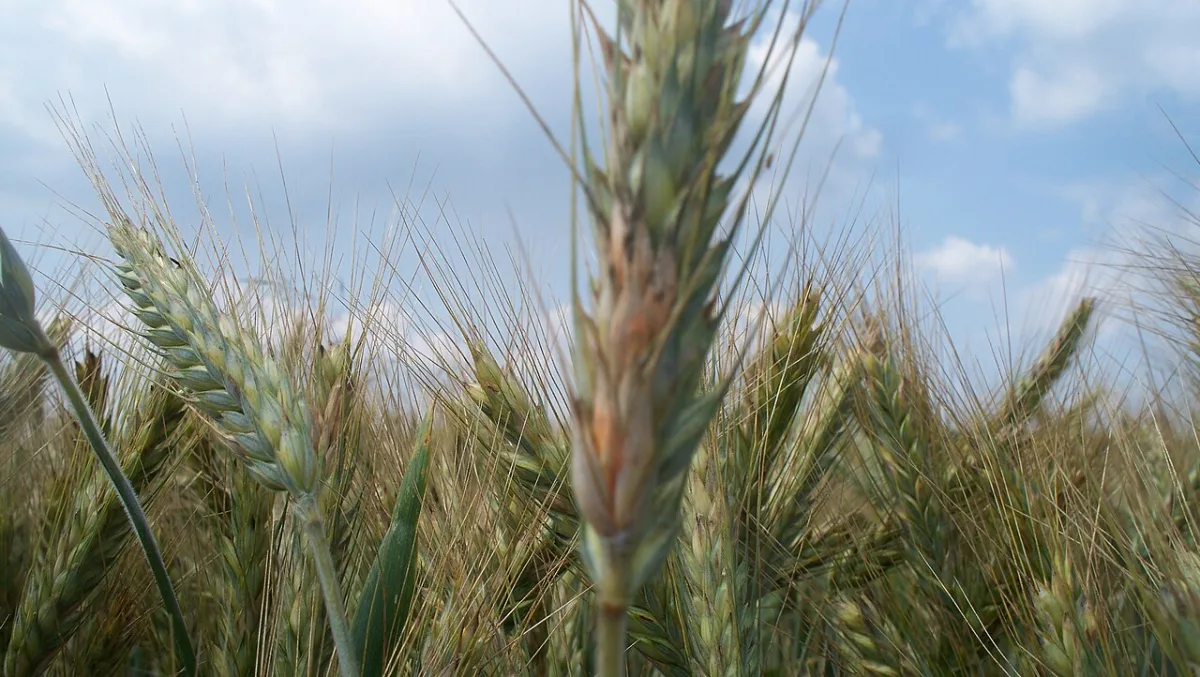
Triticale is a new crop developed by breeders through intergeneric hybridization of wheat (Triticum) and rye (Secale). This plant possesses increased resistance to adverse environmental conditions and diseases.
Triticale is obtained using wheat as the maternal form (it retains its cytoplasm). Based on their origin, triticale is divided into three groups:
- digenomic 56-chromosome, obtained from crossing bread wheat (Tr. aestivum L.) with rye;
- digenomic 42-chromosome, obtained from crossing durum winter wheat (Tr. durum Desf.) with rye;
- trigenomic 42-chromosome, obtained from crossing winter durum wheat, winter bread wheat, and rye.
Triticale cultivars, depending on their biological properties, are divided into three groups: grain, forage, and grain-forage. Their grain contains 1.5% more protein than wheat. The gluten content is the same or 3—4% higher than in wheat, however, its quality is lower. Triticale is characterized by a high content of essential amino acids (lysine, tryptophan). first group 159
Winter triticale grain is used:
- in bread baking. The baking qualities of triticale are slightly lower than those of wheat. Bread has a smaller volume, lower crumb porosity, and higher spreadability. Better quality bread is obtained from a mixture of wheat flour (70—80%) and triticale flour (20—30%);
- in the confectionery industry;
- in the production of beer, alcohol, and starch;
- as concentrated feed for livestock animals.
Forage triticale cultivars are sown for green fodder, early silage, and grass meal. Green mass and silage from triticale contain 0.5—1% more crude protein than those from wheat and rye, and they are well consumed by livestock. Grass meal is richer in proteins, carotenoids (provitamin A), and mineral salts than grass meal from wheat and rye. Straw is used for animal feed and as bedding.
Utilizing the potential of the new grain crop — triticale, which successfully combines the high ecological plasticity of rye with the yield and quality of wheat, is one of the ways to increase the production of high-quality feed grain in the republic. The sown areas of winter triticale in the republic have stabilized in recent years at an optimal level of 350—400 thousand hectares. According to this indicator, based on FAO data, Belarus has reached third place in the world, surpassed only by Poland and Germany, where 1195 and 480 thousand hectares are cultivated respectively (2005).
The winter triticale crop has made a significant contribution to the feed grain balance of the Republic of Belarus; its sowings over the last decade have increased from 12 to 400 thousand hectares and are 95% represented by Belarusian cultivars (Mikhas — 48% of the crop area, Dubrava — 17%, Mara — 6%, Run — 4%, and on smaller areas Zhytsen, Ideya, Modul, Sokol, Yanko), as well as spring triticale — Vanad, Lana, Kastus. The gross harvest of triticale in 2005 amounted to 1.12 million tons, with an average yield of 31.4 centners/ha.
| Cultivar | Average yield, centners/ha | Maximum yield, centners/ha |
| Kastus | 76.3 | 109.9 |
| Viton | 83.4 | 114.1 |
| Voltario | 80.2 | 111.5 |
| Meshko | 72.9 | 96 |
By analogy with winter, spring triticale, created through the hybridization of spring wheat with spring rye, is widely cultivated in Mexico, China, Australia, Canada, and Poland. Hexaploid triticales (2n = 42) have become widespread. Over the last 3 years, the sown areas of spring triticale in the Republic of Belarus have increased from 2.7 to 13.1 thousand hectares, with prospects for further expansion to 100 thousand hectares. In terms of grain yield, spring triticale significantly exceeds spring wheat and oats and is at the level of barley [8, Vol. 2].
Spring triticale grain, like winter, can be used for flour production and confectionery baking, starch production, and in the fermentation industry; however, its main use is as feed grain, since spring triticale significantly exceeds other spring crops in feed qualities. In terms of the content of essential amino acids (lysine, methionine, and cysteine), triticale grain surpasses other cereals.
The grain cultivar of triticale Amfidiploid 206 was bred by the Ukrainian Research Institute of Plant Industry. It is mid-season, resistant to lodging, and withstands common and loose smut, root rots, and powdery mildew. In the Russian Federation, this cultivar is zoned in the Rostov Region, the North Caucasus, and the Republic of Mari El. The cultivar Amfiploid 201 is zoned in Ukraine. Among forage cultivars, Amfidiploid 1 and Odesskaya kormovaya have proven themselves well. In Belarus, Polish-bred triticale cultivars are also sown: Bogo, Viton, Voltario, Marko, Meshko, Prado, Tornado.
The Triticale Laboratory operates at the Scientific and Practical Center of the National Academy of Sciences of Belarus for Agriculture, with the following research directions: breeding of winter and spring triticale cultivars resistant to adverse environmental factors, pre-harvest grain sprouting on the vine, and the most harmful diseases (leaf rust, root rots, and septoria leaf blotch), with high feed and technological grain qualities; creation of new source material using distant hybridization methods; primary seed production of zoned and promising cultivars; and development of cultivar-specific agrotechnics allowing the realization of the cultivar's productivity potential.
Biological features and predecessors of triticale
Triticale is a promising crop under conditions of a shortage of intensification resources. This self-pollinating hybrid of rye and wheat forms larger grain than its parental forms and outperforms wheat in yield on poor soil. The first hybrids between wheat and rye were identified in 1881 in Germany, but they did not gain practical significance at that time. In 1918, at an experimental station, the formation of such hybrids was observed during spontaneous hybridization of rye with wheat, and in 1925, natural rye-wheat hybrids were found at a breeding station.
In the Non-Chernozem zone, octoploid 56-chromosome triticale was experimentally obtained by crossing winter or spring soft wheat with rye. In 1933, the first amphidiploid was obtained from crossing durum wheat with rye. Intensive work with the crop began after the creation of hexaploid triticale, which became suitable for cultivation on sandy soil. Interest in the hybrids arose in Russia, Germany, Hungary, Spain, Bulgaria, Poland, the USA, Canada, Mexico, and other countries.
- Minimum germination temperature — 1–3 °C
- Optimal germination temperature — 20 °C
- Seedling emergence — on the 5th–7th day
- Growing season — 250–325 days
- Optimal soil pH — 5.5–7.0
- Seed purity for sowing — at least 97%
There is also a variety of rye-wheat amphidiploids — secalotriticum. It combines high winter hardiness and resistance to disease with productivity at the level of winter wheat. However, field studies of alloplasmic forms have shown that plants with rye cytoplasm (secalotriticum and alloplasmic rye) are inferior in their qualities to forms with wheat cytoplasm.
Spring triticale, with optimally early sowing dates, matures 7–10 days later than other spring cereal crops. This biological property reduces the peak workload of harvesting and reduces harvest losses from grain shedding. The crop experiences maximum demand for moisture during the period of intensive growth — from stem elongation to grain formation and filling.
Do not sow triticale after stubble predecessors — barley and winter wheat. After these, the crop is highly susceptible to disease that destroys the roots and the base of the stem.
The best predecessors for triticale in crop rotation are:
- black fallow, grain legumes, and grain legume mixtures for green fodder;
- early-maturing diploid cultivar of buckwheat, early potato;
- annual grasses, maize for green fodder, rapeseed.
Cultivation technology: from soil tillage to nutrition
Tillage for winter triticale is similar to the technology for winter rye and wheat. The predecessor must be harvested no later than a month before sowing the main crop. Immediately after harvesting, stubble breaking is carried out to a depth of 6–8 cm, and 2–3 weeks before sowing — ploughing to the depth of the plough layer.
- Harvest the predecessor a month before sowing winter triticale.
- Perform stubble breaking to a depth of 6–8 cm after harvesting the predecessor.
- Perform ploughing to the depth of the plough layer 2–3 weeks before sowing.
Triticale is sown using the drill method with row spacing of 7.5–10 or 15 cm in the middle or end of the winter wheat sowing period. Sowing dates depend on the geographic zone: in the northern part of Belarus it is the last ten days of August, in the central part — the first ten days of September, in the southern part — from September 10 to 20.
Large, graded seed is used for sowing. Plants grown from such seed set their tillering node deeper, grow faster, tolerate drought better, are less affected by disease, and form a powerful root system.
Seed treatment with growth regulators increases the resistance of triticale to lodging and adverse wintering conditions, which ensures a yield increase of 2–5 c/ha.
The seeding rate is 0.35–0.75 kg/m² depending on the cultivation zone. The seeding depth is selected based on the mechanical composition of the soil.
| Soil type | Seeding depth |
|---|---|
| Light soil | 4–6 cm |
| Loamy soil | 2–3 cm |
To obtain a high harvest, organic and mineral fertilizers are applied for triticale. The nutrition system includes base application and split nitrogen top dressing during the growing season:
- organic fertilizers: 20–30 t/ha of semi-rotted manure or 30–40 t/ha of peat-manure compost under base tillage;
- mineral fertilizers: phosphorus (60–70 kg/ha active ingredient) and potassium (70–90 kg/ha active ingredient);
- at-sowing fertilizer: 10–15 kg/ha of P₂O₅ in rows (included in the total phosphorus rate);
- first nitrogen top dressing: in spring during the period of active growing season (60–70 kg active ingredient/ha);
- second nitrogen top dressing: at the beginning of stem elongation (30–40 kg active ingredient/ha).
The main measures for crop care include:
- rolling;
- snow retention;
- spring harrowing;
- top dressing;
- control of weeds, pests, and diseases.
Immediately after harvesting the predecessor, tillage with herbicides (Roundup or others) is carried out. This eliminates perennial weeds (couch grass, sow thistle, field thistle). If triticale crops are infested with annual dicotyledonous weeds, they must be treated in the spring during the tillering phase with herbicides (Agritox, Cowboy, Dialen-Super) against snow mold (third ten-day period of October).
During the growing season, to control diseases (septoria, fusarium head blight), triticale crops must be treated with fungicides (Impact, etc.). The preparation Ferazim protects against root rots, powdery mildew, eyespot, and net blotch. Plant growth retardants prevent lodging.
Harvesting using single-phase and two-phase methods. The experience of advanced farms shows that with the correct cultivation technology, triticale yields an average of 50 c/ha annually.
Read next
Crop production For students
Economic importance and agrotechnical potential of winter rye
Crop production For students
The role of the cultivar and the fundamentals of the breeding process in modern crop production
Crop production For students