
Agrotechnical specifics for soils contaminated with radionuclides
10 min read
Radioactive contamination of fields following the Chernobyl accident is distributed extremely unevenly. Due to dust transport by wind and precipitation, the concentration of radionuclides can differ by tens or hundreds of times even on adjacent plots within the same farm. In the Republic of Belarus, agricultural production is carried out on 1.3 million hectares of land contaminated with cesium-137, with 0.46 million hectares of that land also contaminated with strontium-90. The law permits crop production at a soil contamination level of cesium-137 up to 40 Ci/km², but the safety of the produced harvest directly depends on protective measures.
| Region | Share of the total area of contaminated land, % |
|---|---|
| Gomel Region | 57 |
| Mogilev Region | 27 |
| Brest Region | 7 |
| Minsk Region | 5 |
| Grodno Region | 4 |
Reducing radionuclide accumulation in crop production: soil management
When soil contamination is up to 5 Ci/km², radiation does not have a significant negative impact on plants and livestock, so work can be carried out without restrictions. If the contamination level is higher, additional protective measures are required. On acidic soils (pH 3.8–4.8) with contamination from 15 to 40 Ci/km², radionuclides are absorbed by plants most actively. Liming helps to block the uptake of strontium-90: the application of calcium shifts the soil pH to a safe 6.5–6.8. Lime is applied in autumn after ploughing for deep cultivation.
Do not use 40% potassium salt to reduce acidity. Excess chlorine anions leach the divalent calcium cation into the subsoil horizon and additionally acidify the soil. Apply chloride-free forms of potassium fertilizers.
To block the accumulation of cesium-137, it is necessary to saturate the soil with potassium. Increasing the content of exchangeable potassium (K2O) from 5–6 to 14–16 mg/100 g of soil reduces the uptake of the radionuclide into plants by 8–10 times. To achieve this on medium-loam low-humus soils, it is necessary to apply increased doses of potassium fertilizers in two stages over two years. Calcium and potassium act as natural antagonists to strontium and cesium, blocking their path into crop products.
- Maximum contamination for crop production — 40 Ci/km²
- Target soil acidity level — pH 6.5–6.8
- CaCO3 application rate to shift pH by 0.1 — 1 t/ha
- Potassium increase by 1 mg/100 g of soil — 60 kg K2O/ha
- Two-year K2O application rate against cesium — 480–600 kg/ha
Rehabilitative feeding: how to cleanse livestock products
If cattle were kept on contaminated natural pastures and the concentration of radionuclides in the meat exceeded the standard, the animals are prescribed rehabilitative feeding. In this case, strontium-90 poses an increased danger to body cells, so the temporary permissible levels for it are set an order of magnitude lower than for cesium. Depending on the farm's conditions, one of two organizational methods for cleansing animals is chosen. Both methods require the collection of manure in special isolated storage facilities.
- Transition to clean feed in unaffected areas. Livestock animals are moved from the contaminated territory. After 2–3 months on a clean diet, the organism is completely cleared of radionuclides.
- Fattening on-site with imported clean feed. Livestock animals are kept on the farm but fed with imported feed. This method is ecologically effective but requires high logistics costs.
Antagonist elements help accelerate the removal of radionuclides. In case of strontium contamination, feed with a high calcium content (alfalfa, calcium premixes) is introduced into the diet — Ca2+ replaces and removes Sr2+. In case of cesium contamination, the potassium share is increased, since K+ replaces Cs+. Farms in zones with neutral or alkaline soil (for example, the south of Belarus or the steppe zone of Ukraine) are ideal for such fattening, as the grown crops are naturally rich in calcium and potassium.
Agrotechnics of grain legumes and mapping of contaminated lands
Average and increased application rates of nitrogen fertilizer accelerate the uptake of cesium and strontium cations by plants. It is possible to reduce these risks and obtain a high crop yield without the use of nitrogen by using grain legumes. For this, the soil must be well limed and provided with potassium. The phosphorus content must be raised to the lower limit of optimal supply.
For successful cultivation of legumes and active nitrogen fixation during a sharp shift in pH and nutrition level, be sure to use micro-fertilizers. First of all, boron is used, and if necessary, molybdenum. Boron fertilizers are applied to the soil in the form of borated superphosphate or other forms. Seeds are treated with molybdenum immediately before sowing.
- Lower limit of P2O5 for grain legumes — 12–14 mg/100 g of soil
- Application rate of boron — 2–3 kg/ha
- Frequency of manure application — once every 3–4 years
- Depth of plough pan destruction — 35–45 cm
- Depth of special ploughing — 30–40 cm
- Thickness of the clean layer on shallow peatlands — 20–22 cm
A mandatory practice when cultivating grain legumes on contaminated soil is pre-sowing seed inoculation with a specific virulent active strain of rhizobia. Local strains of rhizobia formed on acidic soil adapt poorly to new conditions and possess reduced symbiotic properties.
To ensure the production of crops with radionuclide content below temporary permissible levels, farms need an accurate planning model. It allows for predicting the cleanliness of the future harvest even before the start of field work. Preparation includes three mandatory stages:
- Surveying the territory and forecasting the radionuclide content in the future harvest.
- Inventory of land by contamination density and preparation of cartograms.
- Comparison of the contamination cartogram with cartograms of soil solution pH, exchangeable potassium and calcium content.
Tillage: from deep ploughing to minimal loosening
The tillage system of contaminated soil must simultaneously solve three tasks. It is intended to reduce the accumulation of radionuclides in plants, suppress wind erosion with dust transport of particles, and reduce the gamma background for machinery operators. This can be achieved by combining traditional mouldboard ploughing, non-mouldboard technologies, and periodic minimal tillage.
Traditional ploughing on light soils is harmful when used consistently, as it mixes radionuclides within the arable root zone, destroys the soil structure, and triggers dust formation. To eliminate these effects, combine conservation tillage methods using chisel ploughs or cultivators with smooth ploughing using reversible ploughs. On eroded, compacted, and temporarily waterlogged lands, apply deep loosening and slotting. This will allow for the mechanical displacement of radionuclides below the arable horizon and the destruction of the plough pan.
Specialized tillage technologies are selected according to the land type. On mineral soils and deep peatlands, swamp ploughs are used for deep ploughing. In this process, the upper contaminated layer of 5–7 cm is placed as a thin interlayer at the bottom of a furrow 30–40 cm deep, while the clean underlying soil is moved to the surface without furrow slice inversion. On shallow peatlands with a peat depth of 30–60 cm, ploughing should create an inclined-layered profile consisting of alternating layers of sand and peat with a clean top layer.
Conventional mouldboard ploughing with sod inversion is used only on medium- and heavy-loamy, slaking gleyed and moist soils with low contamination levels. The same technique is applied for the radical improvement of meadows and pastures. For pre-sowing soil preparation, be sure to use high-performance combined implements that perform several operations in a single pass.
If deep ploughing was already carried out in previous years, use conservation or minimum tillage in subsequent seasons. Otherwise, you will again bring radionuclides from the lower part of the arable layer to the field surface.
To prevent radionuclides from entering plants along with dust, completely eliminate inter-row tillage of crops, replacing it with herbicide application. When harvesting, use only those methods that prevent secondary contamination of produce with dust particles. When planting and harvesting crops on previously ploughed plots, also use combined implements.
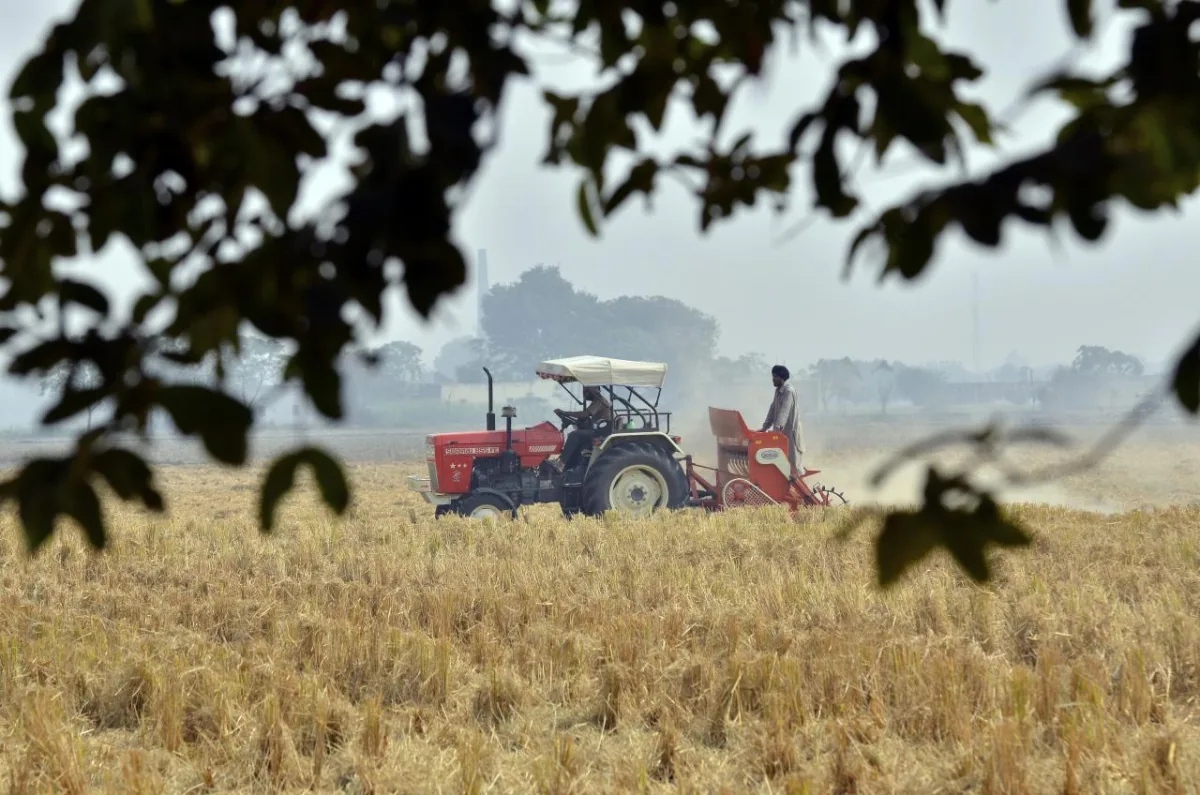
With such a system, maximum integration of soil tillage and sowing operations is achieved with an appropriate set of machinery (a plough for smooth ploughing, as well as a trailed machine attached to it; the unit simultaneously performs pre-sowing soil tillage and sowing of cereals, grasses, and other crops along with ploughing). This reduces processing times and the duration of radiation exposure for equipment operators.
Conservation Tillage system soil">tillage system can be used on light sandy and sandy-loam soils with low contamination levels.
| Soil type | Pollution level (Ci/km2) |
| Light sandy and sandy loam | up to 4 |
Thanks to a set of specialized machinery and interchangeable implements for non-inversion soil loosening and sowing, the destruction of the hardpan is ensured, the depth of the root-inhabited soil layer is increased, and the stability of agricultural production under adverse conditions is enhanced. As a result, erosion processes are reduced, and thus the aerial migration of radionuclides is also diminished.
Such a tillage system can be implemented using the following soil-tilling machines:
- chisel ploughs;
- interchangeable flat-cutting sweeps for general-purpose ploughs;
- disk needle cultivators;
- deep rippers-subsoilers;
- implements for combining pre-sowing tillage and crop sowing.
Minimum and zero tillage and sowing systems should be applied on light sandy and sandy loam soils with high levels of radioactive contamination. These are based on tillage techniques without a mouldboard plough, involving a small number of passes and shallow soil loosening, using herbicides to control weeds or grass stands. A variation of the minimum system can be direct sowing of crops into stubble or sod. Such a tillage system allows for execution in the shortest possible time and fully meets the requirements for the cultivation of light soils contaminated with radionuclides.
Minimum-tier mouldboard tillage system involves alternating minimum tillage with tier mouldboard ploughing several times during the crop rotation, while simultaneously incorporating large doses of organic fertilizers, as well as green manures and shredded mass of any other plant residues or moisture-shielding substances into the arable layers deeper than 20 cm using milling units. Such tillage is effective on light sandy and degraded peat soils, which are poor in humus and characterized by an unstable water regime. It contributes to deepening the arable horizon, accumulating humus within it, increasing soil fertility, and gradually moving radioactive substances into deeper layers.
Read next
Crop production For students
The role and natural foundations of crop production development in Belarus
Agrochemistry For students
The effect of phosphorus fertilizer on soil properties and water bodies
Crop production For students