
The role and natural foundations of crop production development in Belarus
16 min read
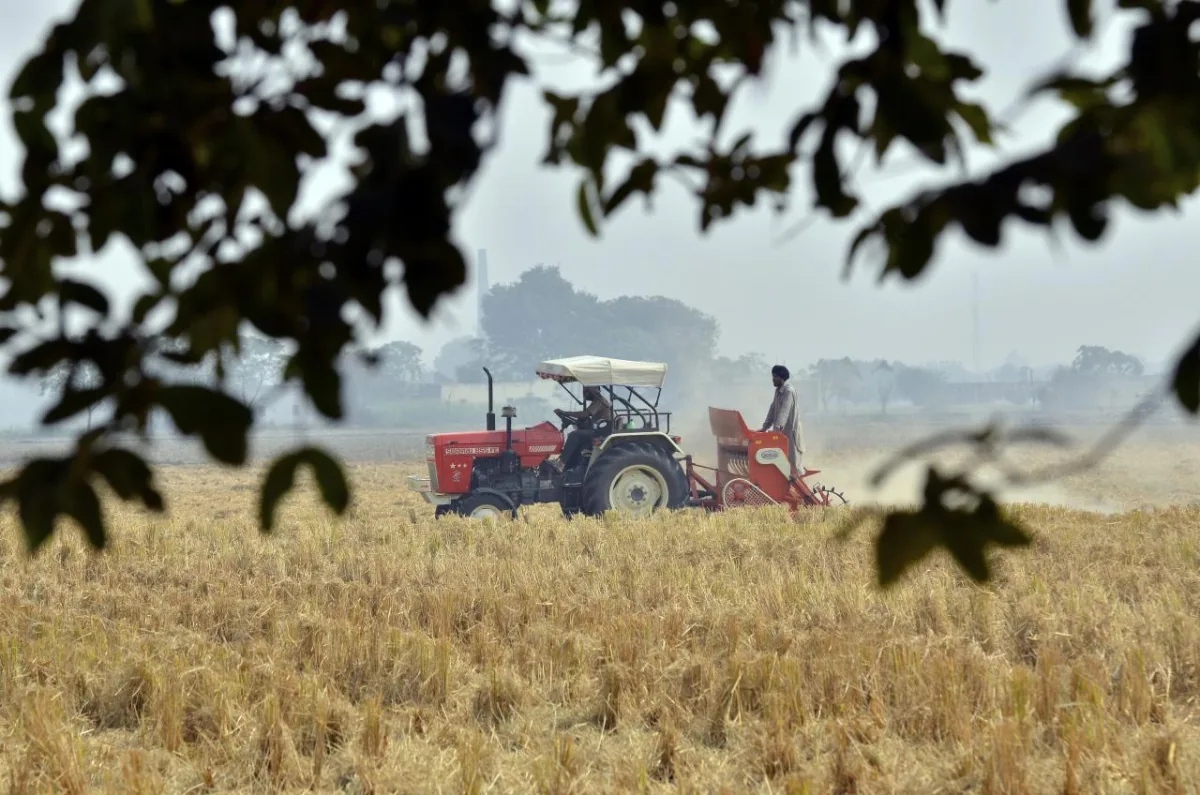
Agriculture of the Republic of Belarus is the oldest and most important sector of the national economy, having vital, strategic significance for the country’s economy: it provides food for the population, feed for livestock animals, and raw materials for many industrial sectors — primarily, the food and light industries. Moreover, the importance of agricultural production only increases over time.
The production of crop production products as a biological process is based on the use of its three natural resources:
- living plants;
- soil;
- climate.
Agricultural plants are the direct and only producers of organic products, creating them through photosynthetic activity during the growing season.
Soil is the main source of plant supply with nutrients and moisture.
Climatic resources of the environment surrounding the plants have a direct impact on photosynthesis, the absorption of water and nutrients from the soil, determine the nature and intensity of biochemical processes occurring in growing plants, and, consequently, the quality and quantity of the harvest.
Humans influence plant productivity by selecting the best species and cultivars for cultivation and creating new productive forms, as well as through agronomic methods aimed at adapting existing forms and creating better external conditions for plant life, taking into account the factors of photosynthesis, mineral nutrition, and protection against adverse external phenomena.
Agronomic measures are particularly widely implemented for Improving soil fertility" improving soil fertility, and creating more favorable water and nutritional (mineral) soil regimes for plants. Humans have less access to means of transforming and regulating climatic conditions, although the very possibility of cultivation and the geographical distribution of crop plants in the country's territory is determined primarily by the presence of the necessary thermal and other climatic conditions for these plants.
Crop production is a sector of agricultural production and a science. The task of obtaining high, stable harvests of crop plants is solved by bringing the aforementioned crop production conditions into the most effective interaction.
In light of agrobiological science, the harvest of crop plants is the result of their development under certain conditions, the result of the interaction of plants with the environment under the influence of human activity. The productivity and properties of agricultural plants (in particular, growth and development) are conditioned by both heredity and the environment. Therefore, to obtain the highest productivity of crops, it is necessary to improve the nature of the plants themselves (breeding better cultivars) and create optimal conditions for plant growth and development.
Agricultural crop production did not originate yesterday, and the population of Belarus has traditionally engaged in this activity for many hundreds and thousands of years. Over time, lifestyles, tools, farming systems, and even the main crops changed: instead of the dominant cereals — rye, wheat, barley, oats, millet, legumes, cabbage, turnips, rutabaga — there appeared potatoes, tomatoes, beet, maize, sunflower, and others. The greatest stress and devastation of agricultural production were observed during periods of wars, of which there were many on the territory of Belarus. But it was precisely thanks to agriculture that the people survived in difficult times, and the economy was restored and developed further.
Of great importance for Belarus in its new history was the October Revolution of 1917, which caused unprecedented transformations in the field of agricultural production. It is known that as a result of the collectivization of small peasant farms carried out in the Soviet Union — a socially painful process — our republic became one of the leaders in agricultural production with highly mechanized agricultural enterprises, which form the base of livestock, processing, and light industries. Also important for the development of agricultural production in Belarus was-
agricultural production 13 the drainage of swamps (land reclamation), road construction, and electrification, thanks to which the patriarchal way of village life changed significantly; teachers and doctors appeared in rural areas, and new specialists became in demand: machine operators, electricians, agronomists, etc.
The strongest blow to the agriculture of Belarus was dealt by the accident at the Chernobyl NPP in April 1986, as a result of which a third of the agricultural land in the southeast of the republic was contaminated with radionuclides.
After the collapse of the USSR, the established basic structure of agricultural production in Belarus was preserved. At the same time, private, family farms appeared, and collective and state farms in their Soviet form were transformed into communities, partnerships, and cooperatives. There has been a development of specialization of enterprises in the production of the most effective, profitable, and lucrative agricultural products, which also engage in their partial processing.
Unfortunately, in the post-Soviet period, new negative trends began to appear, often reinforced by pseudoscientific recommendations. As an example, one can cite the recommendations not to spend expensive fuel for tractors and combines in fields for growing wheat and maize for grain in Belarus, because the necessary amount of grain for the republic can be purchased in Ukraine, Moldova, or the Krasnodar Territory of Russia, which specialize in growing these crops. However, such "good advice," which does not take into account possible natural cataclysms in grain-growing regions and the rapidly changing economic and political situations in the global food market, undermines the development of one’s own agro-industrial complex.
Today, the revival and sustainable development of agriculture is inconceivable without the formation of an efficient and competitive agro-industrial production that ensures the country's food security and integration into global agricultural production and food markets.
Agricultural products must be obtained within tight timeframes while adhering to all technological parameters. Comprehensive mechanization of technological operations must be combined with the use of microprocessor technology and automated control systems. The efficiency and stability (sustainability) of agricultural production can be enhanced through further improvement of cultivar properties and the realization of the potential of agricultural plants in combination with energy- and resource-saving of all 14 agricultural production and science technological processes, which will allow for an increase in the return on investment. These components of modern agricultural technologies, as well as the introduction of the latest achievements in breeding, biotechnology, and agronomy, will allow agricultural production to be transformed into a highly developed industrial sector.
In the current situation of a sharp rise in hydrocarbon fuel prices, it seems important and timely to once again "take inventory" and identify reserves for savings in plant growing and farming. One of the realistic ways to reduce costs in agriculture is the development and active implementation of modern resource-saving and environmentally friendly technologies for the production of crop products. The existing farming system in the state provides for the optimization of land use; the structure of sown areas organized into crop rotation; the development of zonal farming systems, which should be based on cost-effective cultivation technologies for specific crops; and innovative crop cultivation technologies, including new cultivars, seed, tillage, fertilizer, and plant protection against the effects of adverse environmental factors, weeds, pests, and diseases.
With proper organization of the farming system, the "output" (as a result) can achieve the expanded reproduction of soil fertility, the harvesting of the required quantity and quality of products, and environmental benefits. And at the "input," the efficiency of this system is determined by such factors as soil and climatic, material and technical, organizational and economic, financial and price-related, social, and moral-psychological.
The state program for the revival and development of rural areas provides for a significant increase in the volume of agricultural production. Therefore, the primary task of the state leadership and all local management bodies is to ensure stable and high yields of basic food, forage, and industrial crops annually, as well as the further development of highly productive agriculture and its branches — plant growing and livestock farming. The main priorities — increasing the yield of all crops and increasing output per hectare with the lowest labor and resource costs — have been complemented in recent years by the need for energy and resource saving and the greening of agricultural production.
Solving the grain problem in the Republic of Belarus is practically the same as it is globally: intensification of agricultural production. It is achieved through conventional breeding methods, high standards of farming with the widespread use of mechanization, automation, and computerization of agrotechnological processes, as well as various effective chemical agents and the increasingly broad application of molecular
agricultural production 15 genetics, biotechnology, and the breeding of genetically modified crops. Providing the population not only with bread but also with milk and other livestock products depends on the resolution of these issues; therefore, increasing grain production remains a key problem in plant growing.
This same problem is equally important from another perspective — the ecological one. It is precisely by increasing yields that we must move toward increasing the gross grain harvest, as there is no possibility of expanding arable land; there are no such undeveloped lands left. First and foremost, an increase in the area under high-yielding crops and a reduction under low-yielding ones is required. This is especially important because the land area used for agricultural needs per capita is gradually decreasing, while the demand for agricultural products is growing. In this regard, the effective use of intensification factors related to the main directions of scientific and technological progress in agriculture is of paramount importance. This includes complex mechanization and electrification of production, chemization — widespread mineral fertilizer application, plant protection products, land reclamation, and the use of scientific achievements and global experience.
By increasing grain production, it is possible to successfully provide the population with a variety of food products, increase the productivity of livestock farming, create the necessary state grain reserve, and ensure the food security of the country.
Agricultural production has a pronounced seasonal character and is strictly tied to climatic zones. The success of work in the field depends on a multitude of factors: from the selection of crops and adherence to crop rotation to the weather conditions of the current season. The main task of an agronomist is to create controlled, optimal conditions for plant nutrition and development, reducing the influence of adverse natural factors.
Weather and climate always pose a threat of natural disasters or crop failure. An agronomist cannot cancel frosts or drought, but is obliged to minimize risks through strict adherence to agricultural technologies.
The link between crop production and livestock farming: how to balance farm economics
For the stable operation of an enterprise, it is necessary to integrate crop production and livestock farming into a single system. In the structure of agricultural commodity products in Belarus, livestock farming accounts for two-thirds, and crop production for one-third. A rational combination of these sectors allows for the effective processing of waste and increases overall profitability.
Livestock farming consumes the products of agriculture and their processing waste as feed. In return, crop production receives organic fertilizer to restore soil fertility. Modern methods make it possible to accurately calculate the nutritional value of feed, as well as to evaluate the trophic qualities of manure for its effective application before the sowing of specific crops.
Such a cycle of substances not only increases yield and milk production, but also solves an economic problem: it ensures year-round employment for farm workers and guarantees a rhythmic inflow of funds.
- Market share of livestock farming in Belarus — 2/3
- Market share of crop production in Belarus — 1/3
- Number of field crop species in crop production — about 90
Crop production as a science: focus on field crops
Modern agronomy combines a whole complex of sciences: from plant physiology and breeding to meteorology, soil science, and plant protection. In practical production, the concept of crop production is interpreted broadly. It covers all areas of working with plants:
- field cropping;
- grassland management;
- vegetable growing;
- fruit growing;
- viticulture;
- forestry;
- floriculture;
- landscape and ornamental gardening.
However, the academic discipline "Crop Production" concentrates exclusively on field cropping — the cultivation of crops on arable land. Its subject of study is about 90 biological plant species, including Poaceae cereals, Fabaceae cereals, tuber, root, and leaf crops, oilseeds, fiber plants, perennial and annual grasses, as well as essential oil crops. The main attention here is paid to the biological requirements of plants, while environmental influences are regulated through the soil and technology.
For successful harvest management, it is necessary to study the features of each field crop in detail. Scientific crop production helps to find optimal solutions for practical field cropping. It solves three key tasks:
- study of the biology of cultivated plants and their requirements for environmental conditions;
- development of methods for managing environmental factors to create optimal conditions;
- study and targeted modification of the hereditary properties of plants in the interests of humans.
Crop production touches upon such topics as the economic value and significance of a plant, the comparative productivity and cost-effectiveness of crops under established agricultural practices, principles of geographical distribution and regionalization, botanical and eco-physiological characteristics of crops, relationships between cultivars and their cultivation techniques, methods of protection against weeds, diseases, and pests, ways to improve the quality of the resulting products, and issues of storage and primary processing of the harvest. An important part of crop production is seed production — the study of seeds, their properties and sowing qualities, and methods of determining them. 20 agricultural production and science
Crop production as an independent discipline integrates knowledge from fundamental and applied related sciences: mathematics, chemistry, physics, botany, physiology, biochemistry, genetics, breeding, biotechnology, seed production, ecology, phytopathology, entomology, chemical plant protection, microbiology, livestock farming, soil science, agrochemistry, geology, geodesy, meteorology, storage and processing technology of the harvest, mechanization of technological processes, marketing, management, economics, computer programming, etc.
To know the biology of a plant, it is necessary to study botany, anatomy, physiology, biochemistry, genetics, breeding, and seed production. To achieve the optimal growth regime for a crop, it is necessary to have complete information about the soil, data on agrochemistry, microbiology, hydrology, meteorology, and ecology, and to clearly understand the main needs of the plant at different stages of development in terms of mineral nutrition, water supply, photo-insolation, and thermal regime. To protect cultivated plants from weeds, diseases, and pests, it is necessary to know phytopathology, entomology, the biological characteristics of weeds, and the metabolic sites of action and range of biological effects of herbicides. Growth conditions are regulated using technological methods. At the same time, economic aspects of production, production organization, and management, as well as technical support, are taken into account. Finally, the harvest must be collected, stored, processed, and delivered to the consumer in accordance with required quality standards, which is impossible without knowledge of mathematics, physics, chemistry, and other sciences. Currently, computer modeling helps in solving various tasks in the field of crop production.
Drawing on data from many other sciences (botany, biochemistry, plant physiology, plant anatomy, cytology, genetics, biophysics, biotechnology, ecology, etc.), crop production widely uses their methods in its research. But it also has its own research methods, such as laboratory, vegetation, field, and production trials.
Initially, experiments are usually conducted in the laboratory. Vegetative experiments are experimental checks of the influence of individual or multiple factors on the growth and development of plants of a laboratory type; they are set up both in open soil and in closed conditions (greenhouses, growth chambers, phytotrons, climate chambers), and sometimes under conditions of water-mineral culture (hydroponics). Next, vegetative-field experiments, carried out over several growing seasons, are set up on small plots and with low replication. Sometimes mass field experiments are conducted — on different testing sites in several replications with the goal of obtaining statistically reliable results. Finally, a production experiment is planned — this is the final stage of research; it is conducted either on agricultural plots or on specially allocated areas in farms, etc. Conducting production trials is a necessary stage before the introduction of new cultivars or a new crop into wide-scale production.
The development of plant growing, like all agronomic science, is closely interconnected with the practice of agricultural production. The findings of science must be verified by practice and utilized as quickly as possible. Only in this case can gross errors and miscalculations be avoided. In turn, production practice must also be analyzed, generalized, and improved by science.
In modern conditions, the research of scientists in the field of agriculture is aimed primarily at solving issues of rational use of arable land, increasing soil fertility, improving the efficiency of mineral nutrition and water regime of individual crops and agrophytocenoses, strengthening the biological productivity of plants and phytocenoses, creating and applying cultivation technologies for individual crops, protecting soils from water and wind erosion, chemical and radiation pollution, and economically efficient and environmentally safe control of weeds, pests, and diseases of agricultural crops. Special importance is attached to the landscape-ecological direction, which involves the biologization and ecologization of processes in agriculture, methods of primary tillage and the minimization of this tillage, as well as increasing the productivity of crop rotations with different saturation of grain, grain legumes, industrial, and forage crops, and the principles of designing crop rotations in connection with the specialization and zonal differentiation of agricultural enterprises. These tasks require the coordinated efforts of many scientific teams.
Modern technologies in plant growing rely on a large-scale scientific base. For a practicing agronomist, this means access to verified plant protection schemes, regionalized cultivars, and effective tillage technologies. Leading specialized universities, scientific and practical centers, and 22 specialized research institutes are involved in this work.
Scientific research is being conducted in all areas of agricultural production. Practical recommendations and new technologies are developed in the following fields:
- agriculture, soil science, agrochemistry, and land reclamation;
- potato growing, fruit and vegetable growing, and plant protection;
- genetics, cytology, and bioresources;
- flax growing and forestry;
- mechanization of agriculture;
- livestock farming, veterinary medicine, and food production.
The connection between science and production allows for the prompt introduction of new cultivars in farms and the adjustment of plant nutrition technologies to a changing climate.
History of agronomy: from traditions to scientific treatises
The practical methods that are applied today in the fields were formed over thousands of years. The first centers of agriculture emerged in the valleys of the Nile, Euphrates, and Tigris rivers, where flooding provided natural soil fertility. Over time, farmers transitioned from simple gathering to targeted tillage and the selection of the first crops.
- First mentions of agriculture — 10th–9th millennium BC.
- Emergence of agriculture in Western Asia — 7th–3rd millennium BC.
- Agriculture in ancient India and China — 3rd millennium BC.
- Agricultural regions in Europe — 5th century BC – 5th century AD.
- First treatises on plant growing — 5th–3rd centuries BC.
In Europe, the development of agriculture followed a different path than in the East: here, plant growing was initially integrated with livestock farming. In the Iron Age, full-fledged farms with fertilized arable land and fenced pastures already existed on the continent. Parallel to this, in different parts of the world, people mastered the slash-and-burn system, which combined complex technological processes for preparing and using land.
With the development of writing, scattered oral rules of traditional agriculture were replaced by the first scientific works. In Ancient Greece, the first treatises on plant cultivation appeared, and later, a full-fledged doctrine of soil was formed. Ancient Roman researchers also contributed to agronomy, but since the 2nd century AD, scientific activity began to decline. The subsequent period of feudalism, which lasted from the 5th to the 12th century AD, was characterized by the concentration of all agricultural property.
Read next
Soil and tillage For students
Influence of soil structure and composition on capillary moisture transfer
Soil and tillage For students
Diagnosis of soil profile compaction types: plough pan and natural overcompaction
Soil and tillage For students