
Influence of soil structure and composition on capillary moisture transfer
4 min read
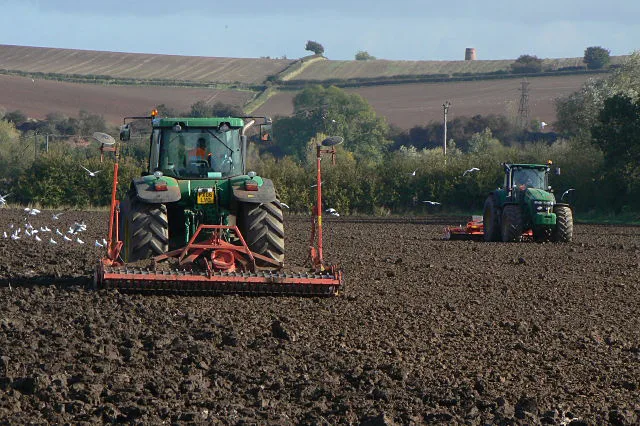
Capillary rise is a natural pump that draws moisture from groundwater or perched water tables up through soil pores under the action of surface tension. This process saves crops during dry periods when plants lack sufficient rainwater. However, the exact way moisture moves toward the roots depends on the mechanical composition and soil structure in a specific field.
How soil mechanical composition and structure affect moisture movement
The height and speed of water rise are directly related to the diameter of soil pores. According to Jurin's law, the height of liquid rise is inversely proportional to the radius of the capillary: the narrower the pore, the higher the water rises, but the slower it moves due to wall resistance. In practice, moisture behavior in different soils shows qualitative differences:
- Sandy soils consist of large pores. Water rises through them quickly but to an insignificant height. During a drought, capillary connection with lower horizons in sand breaks very early, leaving the arable layer without recharge.
- Clay soils are permeated with micropores. They are capable of raising water to a great height and holding it in suspension for a long time. However, due to high hydraulic resistance, the speed of moisture movement here is extremely low.
Soil structure radically changes this process. In soil crumbs (intra-aggregate micropores), water is held firmly and consumed sparingly, creating a local moisture reserve. The inter-aggregate space consists of large voids where capillary rise is almost absent, but these channels ensure excellent aeration and rapid absorption of rainwater.
When structure is lost (due to soil dusting or compaction), macropores disappear. The dominance of micropores increases capillary conductivity but blocks air access to the roots, creating conditions for waterlogging in the lower part of the profile.
Agrotechnical practices: how to manage capillaries in the field
Tillage allows the agronomist to regulate the continuity of capillary paths depending on current objectives. Mechanical action can both stop moisture loss and direct it toward the seed. Practical management of the water regime comes down to two main operations:
- Loosening: breaks the capillaries in the top layer of soil. This creates a dry mulching layer where the distance between particles is too great for capillary rise. As a result, moisture is "locked" in the underlying root zone and does not evaporate into the atmosphere.
- Compaction (rolling): brings soil particles closer together and restores capillary channels. It is used when there is a lack of moisture in the seedbed to draw water up from the depths to the seed for its fast and uniform germination.
It is important to remember that as the soil dries, the capillary system begins to collapse. When some pores break, moisture transfer switches to a film regime, in which water moves in very thin films around soil particles.
The speed of film water movement is several orders of magnitude lower than capillary movement. Under such conditions, moisture availability for plants depends entirely on the density of the root system, which must be able to physically reach the remaining water films.
Read next
Soil and tillage For agronomists
Moisture-conserving tillage of the arable layer to prevent soil desiccation
Soil and tillage For agronomists
The effect of arable layer density on soil fertility and yield
Veterinary medicine For students