
The effect of arable layer density on soil fertility and yield
10 min read
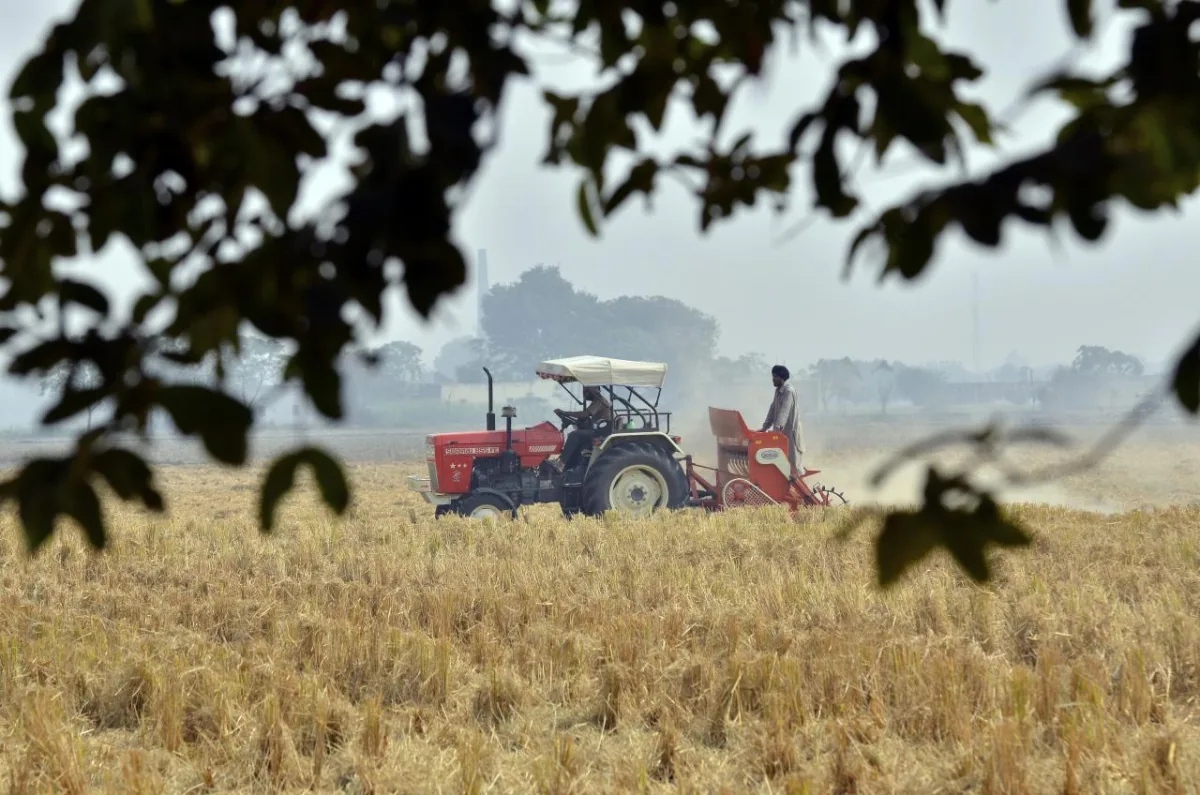
Water and air: how tillage density regulates respiration and moisture exchange
The physical structure of the arable layer determines whether potential soil fertility will translate into an actual harvest. For the rich but demanding chernozems of the Kuban region, density is the primary controllable factor. By regulating this parameter, an agronomist adjusts the water, air, and nutrient regimes of the field, which is especially important in arid steppe zones.
The water properties of the soil depend on total porosity and the ratio of capillary to non-capillary pores. Soil that is too loose loses moisture intensively due to evaporation during dry periods. In excessively dense soil, small capillaries predominate, holding water too tightly and making it unavailable to root hairs. Additionally, plugs of sorbed moisture form in thin pores, blocking plant access to water.
Low total porosity combined with high capillary porosity sharply reduces water permeability. By spring, this leads to moisture stagnation in the upper layers, causing winter crops to waterlog and perish.
Density also directly regulates the air regime, balancing water and air content. In loamy and clayey soils, overcompaction blocks oxygen access to the roots. Practice shows that the harvest depends directly on maintaining a balance between the density of the arable layer and its aeration.
- Optimal soil density — about 1.25 g/cm³
- Aeration for normal growth — 15% of soil volume
- Critical soil density — more than 1.35 g/cm³
- Dangerous aeration level — 10% or less
Nutrition and heat: why microbes "starve" in overcompacted soil
The accumulation of available nutrients depends on the activity of microorganisms, which require optimal humidity and air. Moderate compaction of farmland with rollers during dry periods helps save water from evaporation. This activates the work of beneficial bacteria and accelerates the processes of nitrogen accumulation in the soil.
The effect of soil rolling is especially noticeable in a dry autumn when preparing a field for winter crops following a cereal predecessor. Retaining moisture in the top layer through the use of rollers sharply increases the concentration of available nitrates. Results of field measurements taken before sowing winter crops clearly illustrate the benefits of this practice.
| Treatment method | Nitrate content per 1 kg of absolutely dry soil, mg |
|---|---|
| With the use of rollers | 89.9 |
| Without rollers | 26.1 |
On ordinary chernozems, rolling fallow land increases the amount of nitrates by 13.9–27.9 mg per 1 kg of absolutely dry soil. However, this practice is effective only at a sufficient humidity level. For example, in a fused chernozem at 20.4% humidity (with a wilting point of about 19%), nitrification proceeds weakly regardless of soil density.
In moist soil, excessive compaction harms the microbiota. At a density of 1.5 g/cm³ in fused chernozem, aeration drops to a critical 7%, and water becomes unavailable to both plant roots and soil microorganisms.
On leached chernozems, nitrogen accumulation is sharply inhibited at a total porosity of 47–48% if the share of capillary pores is about 90% of the total. Under such conditions, microbiological processes fade because the pore diameter becomes too small for the development of microorganisms. Furthermore, density affects soil temperature: compacted moist ground has a high heat capacity and warms up more slowly in spring.
How soil density affects temperature and root development
The density of the arable horizon directly determines the temperature regime of the field. The loose structure of the top part of the plow layer acts as a thermal insulator: in summer, the temperature here is 3–5 °C lower than in compacted areas. High total and especially non-capillary porosity reduce the depth of both summer heating and winter freezing of the soil. Conversely, overcompaction increases thermal conductivity — heat is transferred faster, especially as humidity rises from the dead reserve level to a point slightly above the capillary moisture break point, where the water film improves contact between soil particles.
For the root system, soil density is a physical barrier. The deeper the roots grow, the more stably the plant withstands drought during critical growth phases, when the top layer dries out. In heavy clay and loamy soils (in the southern foothill and western zones), overcompaction blocks roots more severely than in ordinary chernozems. High humidity partially compensates for this effect: water provides a wedging action and reduces the mechanical resistance of the soil, which is why the harm from high density is less noticeable in rainy years or under irrigation.
The critical density threshold for corn roots in chernozems is about 1.3 g/cm³, and for winter wheat it is 1.35–1.4 g/cm³. Exceeding these values sharply halts the development of the root system into the deeper layers.
Field trials show that at a soil moisture of 20–22%, compaction up to 1.25 g/cm³ does not hinder the roots of corn and winter wheat—they grow at a rate of up to 6 cm per day. However, a dense layer just 3 cm thick (with a density of 1.4–1.45 g/cm³) delays root progression for three days. Wheat roots are more resistant to compaction than corn, but their downward growth also stops when total porosity drops to approximately 42%. On vertisol (slit) chernozem at 26% soil moisture, the difference is even more noticeable: at a density of 0.8 g/cm³, wheat roots reach a depth of 25.7 cm on the 18th day; at 1.2 g/cm³, they reach only 17 cm; and at 1.4 and 1.5 g/cm³, growth practically stops, with roots penetrating only 0.9 and 0.2 cm, respectively.
Optimal density parameters for field crops
Requirements for the structure of arable land depend on the biology of the crop. Row crops require looser soil, while small grains tolerate increased density more easily. On leached chernozems, the maximum yield of winter wheat is obtained at a density of no more than 1.3 g/cm³ — excessive loosening reduces grain harvest. For spring barley, the optimal range is wider — from 1.1 to 1.24 g/cm³, while for sugar beet, the limits are stricter — strictly from 1.1 to 1.2 g/cm³ during the growing season.
- Optimum for sugar beet — 1.1–1.2 g/cm³
- Optimum for spring barley — 1.1–1.24 g/cm³
- Limit for winter wheat — 1.3 g/cm³
- Optimum for corn in the dry zone — 1.3 g/cm³
In arid conditions, excessive looseness is harmful, as it accelerates the loss of moisture. On ordinary chernozems in the northern zone, corn provides the highest yield at a density of about 1.3 g/cm³. Alfalfa reacts similarly: under conditions of insufficient moisture, it produces the lowest yields on overly loose soil, although, in general, its reaction to compaction on both leached and ordinary chernozems is relatively small.
| Soil density, g/cm³ | Corn yield, centners/ha | |
|---|---|---|
| before sowing | before harvesting | |
| 0.99 | 1.09 | 35.6 |
| 1.17 | 1.20 | 48.8 |
| 1.25 | 1.23 | 56.3 |
| 1.32 | 1.25 | 61.3 |
| 1.43 | 1.36 | 20.8 |
A systematic approach to tillage
No single tillage operation solves all problems in the field. To regulate the density of arable land, conserve moisture, and eliminate weeds, equipment passes must be organized into a single technological chain. The choice of specific implements always depends on soil and climatic conditions and the current situation in the field at any given moment.
System of tillage">A system of tillage is a set of scientifically grounded techniques for cultivating soil for crops in a crop rotation, which are alternated with each other in a predetermined and adjustable order.
The choice of a tillage system is always tied to a specific field. An agronomist considers the biological characteristics of the sown crop, its requirements for environmental conditions, and the quality of the predecessor. Of particular importance here are long-acting tillage techniques and the sowing depth of base fertilizer.
In addition to plant biology, the choice of technology is influenced by the external conditions of the current season and the technical capabilities of a specific farm. An agronomist must correlate the phytosanitary state of the field with the fleet of available equipment. When planning operations, the following key factors are necessarily evaluated:
- soil and climatic features of the zone and the weather in a specific year;
- weed infestation of fields, presence of pests and disease pathogens;
- technical equipment of the enterprise — the quantity, quality, and specialization of tractors and tillage machines.
In the conditions of the Kuban, tillage technology is traditionally tied to sowing dates. Here, in practice, two main system of tillage">systems of tillage are distinguished, each of which depends on the predecessor and the time remaining until sowing. They allow for the preparation of arable land for a specific group of crops:
- For winter crops (summer-autumn and pre-sowing). Conducted after small grain, grain legume, and row crop predecessors, as well as after perennial grasses.
- For spring crops (autumn, winter, and pre-sowing). Performed after annual broadcast-seeded crops, row crops, perennial grasses, and also for second-harvest crops and after their harvesting.
Read next
Soil and tillage For agronomists
Moisture-conserving tillage of the arable layer to prevent soil desiccation
Soil and tillage For agronomists
Impact of minimum tillage on agrophysical indicators of chernozem
Soil and tillage For agronomists