
Moisture-conserving tillage of the arable layer to prevent soil desiccation
11 min read
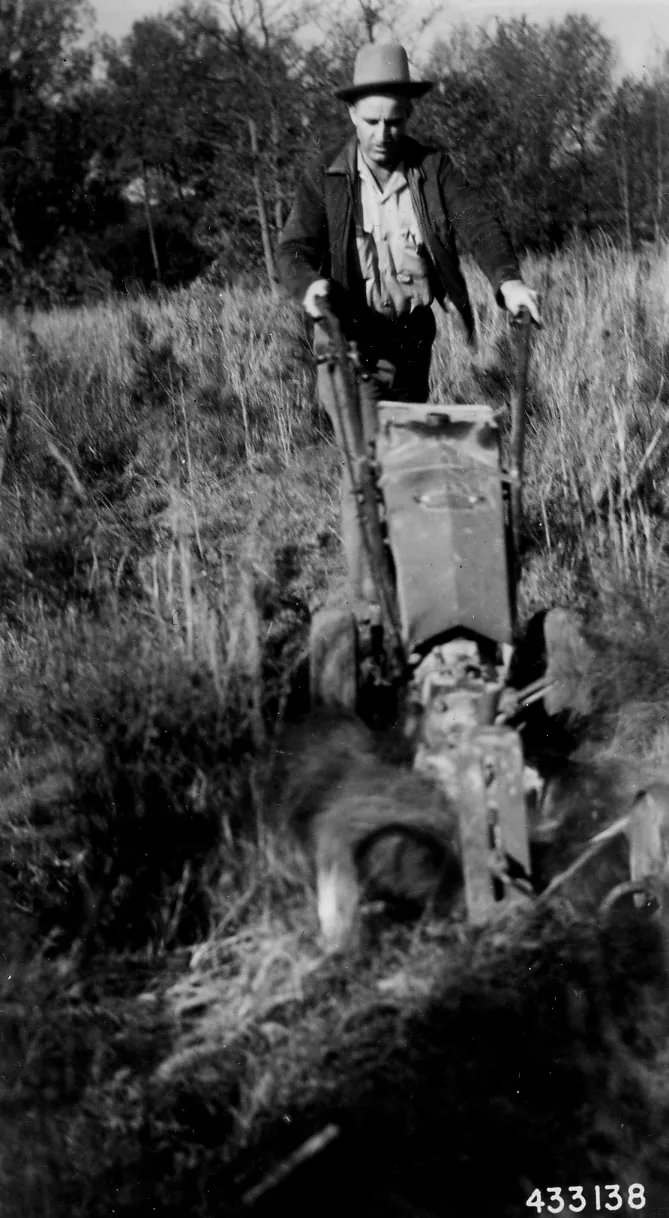
Physical soil drying: how moisture escapes
Tillage shapes the structure of the top layer, which directly determines its water regime. By altering the structure of the cultivated land, the agronomist regulates water capacity, permeability, and capillary water rise. In arid regions, proper tillage prevents physical soil drying — the loss of moisture due to external factors.
The intensity of physical drying depends on several factors:
- initial soil moisture content;
- temperature of the surface air and soil;
- wind speed and humidity;
- physical properties of the soil itself.
In the chernozems of the Kuban region, the largest reserve of available moisture is associated with field capacity (FC). During this period, water is weakly held by the soil and is highly mobile. This state of the soil is characteristic of winter and early spring throughout the entire wetting depth, and during the growing season — in the top ploughed layer after heavy rains.
- Field capacity (FC) — 32–37 % of weight moisture
- Suction pressure at FC — about 0.3 atm
- Mobility of capillary moisture — 20 cm/h or more
- Daily moisture losses at FC — 8–10 mm
At field capacity, evaporation occurs mainly due to capillary inflow. When the cultivated land is waterlogged, the evaporation zone is on its surface. As soon as moisture drops to the FC, the evaporation horizon shifts to a depth of 2–5 cm. The rate of drying depends on the soil texture.
| Soil type | Drying characteristics |
|---|---|
| Relatively light chernozems (northern districts) | The drying front reaches the depth of the ploughed layer in a few days during spring. |
| Heavy clay and silty soils (western and southern foothill districts) | The drying front descends by 5–6 cm, while the soil beneath it remains waterlogged for a long time. |
Practical methods for moisture conservation
To protect the soil from drying, it is important to keep the surface of the cultivated land level. Leveling reduces the evaporating area, helping to retain water in the ploughed layer. From April to October, a level surface state is maintained in all districts, except for cases where the top layer needs to be forcibly dried.
During the moisture accumulation period (from November to March), tactics depend on the climatic features of the region. In arid areas, level cultivated land helps to accumulate moisture by spring if there is no guarantee of its natural replenishment. In foothill and mountain areas, on the contrary, cloddy tillage is used in winter to reduce soil waterlogging.
In snowless winters during dust storms, daily moisture losses from the soil can reach spring levels — up to 8–10 mm.
To interrupt the capillary flow of water to the surface, a loose mulching layer is created. The top few centimeters of this layer may dry out more than the wilting point (WP), but the underlying soil will remain protected. This technique is effective in the moisture range from FC to the capillary rupture moisture (CRM).
A loose mulching layer solves several problems at once:
- reduces soil heating by the sun;
- interrupts the capillary movement of moisture to the evaporation zone;
- increases vapor pressure within the loose layer, reducing evaporation losses from depth.
As water reserves decrease, its mobility drops sharply due to the increase in sorption forces. This effect becomes critical upon reaching the capillary rupture moisture (CRM). In ordinary chernozem, the soil suction pressure at CRM rises to 3 atm, and liquid moisture virtually stops moving.
The formation of cracks during deep drying sharply accelerates water loss. Cracks spread deep downwards almost simultaneously with the advancement of the drying front.
| Condition | Rate of moisture movement in leached chernozem |
|---|---|
| In the CRM–WP range | No more than 20 cm in 30 days |
Influence of soil density on evaporation and crack formation
When soil dries and moisture approaches the wilting point (WP), water moves mainly in the form of vapor. During this period, evaporation occurs from the surface of each soil clod directly into the inter-structural space, and from there — into the atmosphere. Although total moisture losses at low humidity are ten times lower than at field capacity (FC), they remain critical for the harvest.
Evaporation can be slowed down by shifting the moment of reaching the capillary rupture moisture (CRM) to higher moisture values. The earlier capillary bonds break, the more firmly the soil retains the remaining water and the slower it evaporates. Regulating the density of the ploughed layer helps to achieve this.
In leached chernozems, CRM indicators directly depend on soil density. At low density, the capillary bond breaks earlier, which protects the moisture from evaporation. Over-compaction of the soil, on the contrary, prolongs the capillary movement of moisture to the surface, increasing its unproductive losses.
- CRC at a density of 1.08 g/cm³ — 23.6%
- CRC at a density of 1.57 g/cm³ — 19.37%
- Porosity at the onset of cracking — 50% or less
- Soil moisture at the onset of cracking — 15–16%
- Mulching layer thickness in the south — 6–8 cm
Soil cracking poses a major threat to soil moisture reserves, as it allows dry air to reach the deeper layers. In leached chernozem, this process accelerates sharply when the total porosity drops to 50% or less and soil moisture falls to 15–16%.
Creating a two-layer shield to block evaporation
Loose, dry mulch on the surface acts as a reliable shield for the underlying layers. Its optimal depth depends on weather conditions: the higher the temperature and the drier the air, the deeper the loosening should be. On heavy soils (compacted chernozems, grey and dark grey forest soils, clay soils of floodplains and depressions), the risk of cracking is higher, which is why deeper tillage is required there compared to ordinary chernozems.
In arid southern regions, the depth of the protective mulching layer during the summer-autumn period should be at least 6–8 cm.
Light compaction of the subsurface part of the tilled layer also helps to reduce vapor losses by decreasing non-capillary porosity. The effectiveness of this method is confirmed by experiments on leached chernozem, where the tilled layer (0–25 cm) with an initial density of about 1 g/cm³ was compacted with a load of 250 g/cm³. As soil moisture decreases, total water losses also decline.
| Initial soil moisture, % | Moisture with compaction, % | Moisture without compaction, % |
|---|---|---|
| 24,3 | 21,8 | 18,8 |
| 20,7 | 20,2 | 17,9 |
| 17,1 | 16,6 | 15,1 |
Tests have shown that soil compacted from the surface evaporates less moisture in all cases. The maximum moisture-saving effect is achieved by creating a compacted sub-layer in the upper part of the field, covered on top with a loose mulching layer at least 6 cm thick. Such a barrier acts as a shield, retaining moisture in vapor form.
In field experiments, this technology was tested at an initial soil moisture of 23.1%. Three variants of stubble tillage to a depth of 20 cm were compared on the test plot. The best results for moisture conservation after 32 days were shown by the combined scheme, which formed a two-layer shield.
- Ploughing of stubble to a depth of 20 cm.
- Rolling to create a dense subsurface sub-layer.
- Surface loosening by harrowing to form a mulching layer at least 6 cm thick.
The size of soil aggregates plays a significant role in soil drying when moisture is in the range between CRC and PWP (from capillary rupture capacity to permanent wilting point). An increase in the proportion of cloddy fractions expands the volume of non-capillary pores, which leads to a sharp increase in diffusive water losses. In conditions of high summer and autumn temperatures, a cloddy tilled layer with high initial moisture can lose all its productive moisture in less than a week.
The efficiency of various methods of tillage during a dry period is clearly demonstrated by the results of soil moisture measurements across the horizons of the plough layer:
| Layer depth, cm | With harrowing, % | With packing, % | With packing and loosening, % |
|---|---|---|---|
| 0–5 | 6.2 | 9.3 | 10.1 |
| 5–10 | 9.8 | 16.3 | 19.8 |
| 10–15 | 21.8 | 22.5 | 26.4 |
| 15–20 | 22.8 | 24.5 | 25.8 |
In field trials on leached chernozem in spring, 20 days after tillage, the moisture of the plough layer containing about 50% cloddy aggregates dropped to 18.1%. In plots where the amount of clods did not exceed 18–21.1%, moisture losses were significantly lower. In summer during dry, hot weather, the difference becomes even more pronounced: on soil not tilled after ploughing in a field previously used for silage corn, the moisture of the plough layer dropped from 22.7% to 16.8% in just 8 days.
Rules for tillage during a dry period
When moisture in the upper part of the arable land falls below the capillary rupture moisture (CRM), loose soil with porosity of more than 55–58% loses water significantly faster than moderately compacted soil with porosity of 50–55%. Any technological operations for loosening during this period require special caution. Without subsequent packing of the loosened layer, moisture losses due to evaporation increase sharply.
If it is necessary to increase the depth of tillage during a dry period, be sure to perform it with simultaneous or subsequent packing. Compacting the tilled layer at moisture levels at or below CRM helps to reduce water losses.
Creating a fine-crumbly protective layer on the surface of the arable land prevents the underlying layers from drying out. On chernozems in summer, such a screen begins to work effectively if the depth of the loose layer is more than 6–8 cm. Ideally, the upper part of the plough horizon should consist of aggregates 1–3 mm in size — this minimizes evaporation.
After Harvesting of small grains">harvesting small grain predecessors, flat-cutting soil-protective tillage shows high efficiency. Stubble left on the field, together with the loosened top layer, acts as mulch and contributes to snow retention. On ordinary chernozem in dry years, this technology allows for the accumulation of 20–30 mm more productive moisture in the root zone by the time of sowing spring crops compared to autumn ploughing.
- Size of structural aggregates for protection against evaporation — 1–3 mm
- Moisture-saving porosity of the plough layer — 50–55%
- Critical porosity (high moisture loss) — more than 55–58%
- Depth of the loose protective layer on chernozems — more than 6–8 cm
- Additional moisture after flat-cutting tillage — 20–30 mm
Read next
Soil and tillage For agronomists
Specific features of primary tillage for spring crops in the Kuban region
Soil and tillage For agronomists
Impact of minimum tillage on agrophysical indicators of chernozem
Soil and tillage For agronomists