
Diagnosis of soil profile compaction types: plough pan and natural overcompaction
4 min read
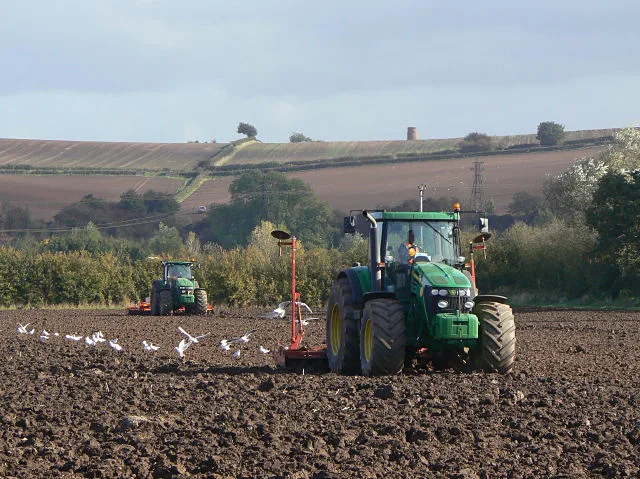
Soil compaction blocks plant access to moisture and air, halting root growth into deeper layers. To solve this problem with minimal costs, it is essential for an agronomist to accurately determine the origin of the dense layer. Mechanical deep loosening effectively breaks up a man-made plough pan, but will prove practically useless in the case of natural, genetic compaction of the profile.
To determine the nature of the compaction, create a soil pit and perform a morphological description. This method allows you to correlate the depth of the dense layer with the field's tillage history and evaluate the horizon structure. Differences between man-made and natural compaction are determined by several key features.
How to distinguish a plough pan from natural compaction
| Feature | Plough pan (man-made) | Genetic horizon (natural) |
|---|---|---|
| Horizon transition | Sharp, distinct | Smooth, gradual |
| Breakage pattern | Flat, platy | Nutty or prismatic |
| Continuity | Irregular, following equipment paths | Consistent across the entire site |
The plough pan is formed strictly below the depth of ploughing or disking due to pressure from equipment implements and running gear. In this layer, soil particles are compressed horizontally, and the contact surface can be smooth, "glazed" from the friction of ploughshares or discs. A sharp reduction in non-capillary porosity stops vertical water drainage and prevents roots from developing downwards.
Natural compaction forms in illuvial horizons as a result of natural weathering and the leaching of fine earth through the profile. Here, clay particles, iron oxides, or humus substances gradually accumulate. Signs of this process include a strong prismatic structure, traces of gleying, and iron concretions, which indicate water stagnation over a long period.
Do not perform tillage when soil moisture is high, close to the plastic limit. Under such conditions, deformation under equipment pressure becomes irreversible: the structure is destroyed, and pores close completely.
The strategy for combating compaction depends directly on its nature. A diagnostic error will lead to a waste of resources and a rapid return of the soil to its initial dense state. Understanding the causes of compaction allows for a correct assessment of the effectiveness of planned measures.
- Perform a morphological description of the soil pit to identify the nature of the compaction.
- Apply deep mechanical loosening when a man-made plough pan is detected.
- Reduce equipment pressure on the soil and optimize tillage depth to prevent new compaction.
- Use biological methods and water regime regulation in cases of natural compaction.
In the case of natural compaction, mechanical loosening provides only a short-term result, as the horizon structure quickly restores itself under the influence of natural processes. In this case, it is necessary to improve the physical and chemical properties of the soil: stimulate the biological activity of the horizon and regulate its water regime. Treat a genetically compacted horizon as a natural component of the soil profile, rather than as a defect in operator performance — this will protect the farm from unnecessary expenses on useless mechanical tillage.
Read next
Farm machinery For agronomists
Efficiency of chisel ploughs for deep soil loosening
Crop production For students
Abandonment of mouldboard ploughing and fundamentals of minimum tillage
Soil and tillage For students