
Abandonment of mouldboard ploughing and fundamentals of minimum tillage
8 min read
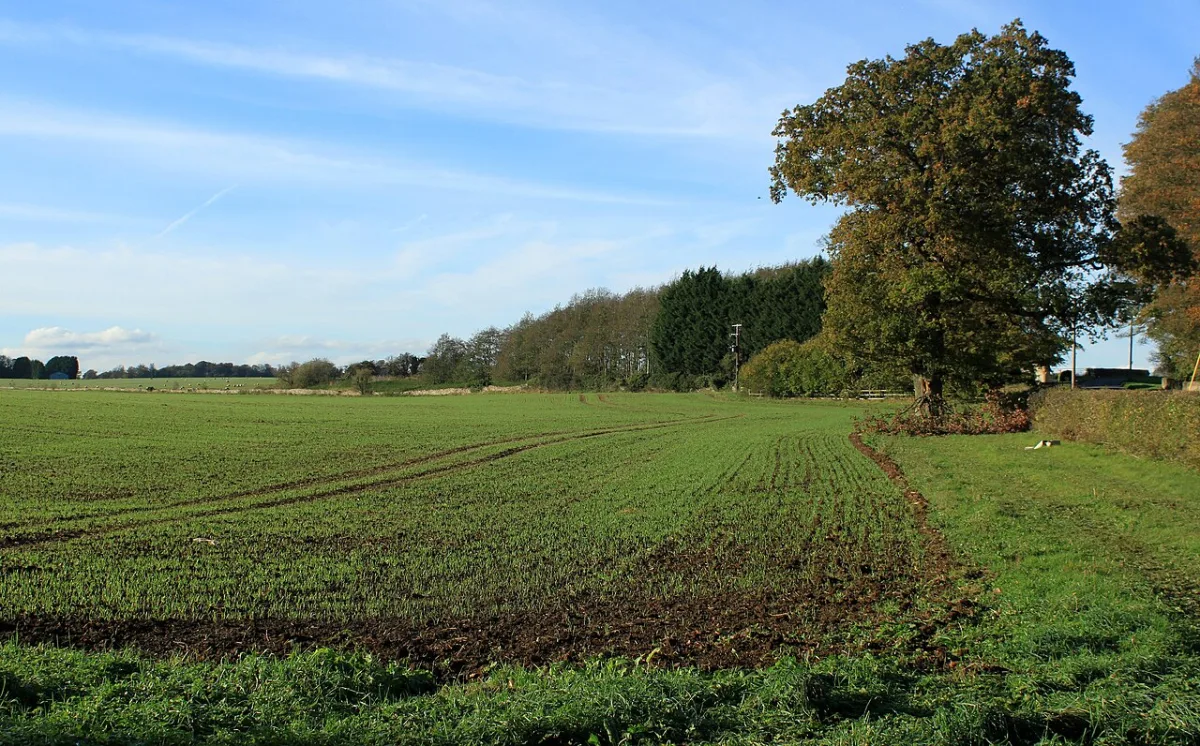
Abandoning the classic mouldboard plough and switching to minimal tillage is a way to protect the field from erosion and maintain its natural soil fertility. Repeated passes of heavy machinery destroy the structure of the arable land, reducing the returns from fertilizers and moisture. Minimizing tillage allows for reducing fuel costs, conserving equipment life, and stabilizing yield.
- Number of field operations per year — 10–15
- Yield reduction due to compaction — up to 30%
- Depth of basic ploughing — 20–22 cm
- Substitution of ploughing on light loams — 10–12 cm
Why classic ploughing destroys the soil
Regular soil inversion deprives the soil of its natural protective layer — mulch and sod. As a result, the top layer is pulverized, which leads to the development of wind and water erosion. Soil ecosystems are destroyed: worms die, root channels disappear, and the earth loses its capacity for biological self-loosening.
Ploughing disrupts the balance of the microflora. Aerobic bacteria are buried to a depth where, due to a lack of oxygen, they cease their activity. Anaerobic microorganisms, conversely, find themselves on the surface in aerobic conditions and perish. This leads to a temporary but sharp decline in biological activity in the arable horizon.
Constant ploughing at a single depth forms a plough pan — a compacted layer directly below the arable horizon. It blocks water movement and does not loosen in winter under the influence of frost. On slopes, this causes soil erosion, on plains — water stagnation in "puddles," and the roots of crop plants cannot penetrate this barrier.
Minimizing tillage protects the soil from compaction by heavy machinery. With the classic approach, tractors make too many passes over the field. According to field trial results, excessive load leads to noticeable harvest losses:
| Soil impact parameter | Value |
|---|---|
| Number of field operations per year | 10–15 |
| Yield reduction due to soil compaction, up to % | 30 |
Practical schemes for switching to minimal tillage
The transition to resource-saving technologies requires a change in the entire farming system. The reduction of tillage must be economically and agrotechnically justified. The following are the main ways to minimize the impact on the soil:
- Using tractors and tillage implements with minimal specific ground pressure.
- Conducting field work strictly during the optimal physical state of the soil.
- Combining several technological operations in a single pass of the unit.
- Alternating deep and surface tillage with a gradual reduction in their depth.
- Reducing the area of mechanical tillage through the use of high-efficiency pesticides.
- Controlling the population of harmful organisms at a level below the economic injury threshold.
Long-term trials in a 9-field crop rotation on sod-podzolic soils have shown that ploughing is not the only method of primary tillage. On light-loamy lands, weakly infested with perennial weeds, the classic soil inversion for winter rye, annual grasses, corn, and potatoes can be replaced by disking. It is also possible to replace ploughing to a depth of 20–22 cm with mouldboard stubble ploughing or milling to 10–12 cm, with preliminary stubble ploughing using cultivators to 7–8 cm. Deep ploughing is successfully replaced by chiselling.
Specific schemes for replacing mouldboard ploughing have been developed for various predecessors in the crop rotation. The choice of method depends on the weediness of the field and the biological characteristics of the crops. In practice, the following recommendations are followed:
- For winter crops (after occupied fallows, grain legumes, and flax) — ploughing is replaced by disking or chisel tillage.
- For spring cereals after potatoes — cultivation without ploughing is sufficient, and after sugar and forage beet — chiselling.
- For row crops (corn, potatoes) in fields free of weeds — when using herbicides, the number of inter-row cultivations is reduced to 1–2 or completely eliminated.
In dry years, mechanical inter-row cultivation of row crops increases moisture evaporation and prunes plant roots. Replacing this operation with herbicide treatment reduces soil compaction, cuts costs, and prevents harvest shortfalls.
soil impact 107
The most important condition for the effective minimization of tillage is a high level of overall farming culture, strict adherence to technological discipline, conducting field work within optimal timeframes and with excellent quality, proper use of effective herbicides, and the application of sufficient fertilizer doses. An indispensable condition for using minimal tillage is the cleanliness of fields from weed vegetation, especially perennial ones (rhizomatous and root-suckering).
Zero tillage. In recent years, agronomic science and practice in a number of countries (Great Britain, Canada, USA, Germany, New Zealand, Hungary, etc.) have also paid great attention to the possibility of direct sowing into stubble or sod with preliminary herbicide application and the formation of small furrows for placing seed (no-till). Advantages of zero tillage: a sharp reduction in labor costs, fuel consumption, and wear of technical equipment due to the lack of need for any operations to create a continuous seedbed; the ability to carry out field work in tight timeframes; improvement of soil conditions for development, as the preceding soil structure formed by the crop is preserved; reduction of water and especially wind erosion (it should be noted that about 70% of Belarus is erosion-prone).
At the same time, negative phenomena of using minimum tillage have been noted:
- the weed infestation of fields increases, especially with perennial weeds;
- frequent surface tillage without soil inversion when placing cereal crops after cereal crops in highly specialized crop rotations increases their susceptibility to root rots;
- when performing tillage without soil inversion, it is difficult to incorporate organic fertilizers, green manure crops, and perennial grass sod to the optimal depth;
- long-term use of surface tillage leads to compaction of the sub-plough layers, which deteriorates their physical properties.
To eliminate the negative phenomena of minimum tillage, it is necessary to skillfully combine mouldboard and non-mouldboard, deep and surface tillage within the crop rotation system.
The biologization and ecologization of agriculture require further improvement of tillage systems in crop rotations based on deepening and expanding complex research on the development of soil-protective, energy- and resource-saving methods and techniques of tillage, eliminating multi-operation tillage, and reducing the negative impact of tractor running systems and tillage implements on soil over-compaction.
Tillage system for winter crops">Tillage system for winter crops — a system that includes tillage after harvesting the predecessor before sowing winter crops in the current year.
Winter crops are sown at the end of summer or the beginning of autumn of one year, and the harvest is collected in the summer of the following year. Unlike spring crops, winter crops are forced to endure unfavorable wintering conditions. This determines the specific features of their cultivation technology compared to spring crops. By the time of sowing winter crops, it is necessary to have a sufficient amount of moisture and mobile forms of nutrients in the plough layer.
Tillage is aimed at creating optimal soil density and conditions for the normal development of plants in the autumn period and their successful overwintering. Before sowing, the soil in the upper part of the plough layer should be thoroughly leveled to avoid water stagnation in depressions. To create better overwintering conditions, the plough layer should be deeply loosened, finely aggregated, and the soil should correspond to the optimal density. The choice of timing, methods, and depth of tillage after various predecessors is of great importance. Through appropriate tillage practices, the soil must be cleared of weed vegetation. The choice of the tillage system for winter crops is determined by the predecessor, the timing of its harvest, the particle-size distribution of the soil, and the level of weed infestation in the fields.
Tillage in fallow land. In the conditions of Belarus, bare fallows can be used only in exceptional cases — on fields heavily infested with perennial vegetation and requiring land reclamation works (clearing of boulders, stones, drainage, etc.). According to the timing of tillage, bare fallows are divided into black and early fallows.
Black fallow. Its primary tillage begins in the summer or autumn of the preceding year. The tillage of black fallow begins with ploughing, similar to autumn ploughing, after the harvest of the predecessor, observing the technology of primary tillage after non-row crops. Organic and mineral fertilizers are applied before ploughing. The following year, during the spring-summer fallowing period, sequentially deepening cultivations are performed to destroy weed plants.
| Rate | 109 |
Mechanical surface tillage can be replaced by the use of herbicides. At the end of summer or the beginning of autumn, deep non-mouldboard tillage of the fallow field is carried out.
A field left for early fallow is not tilled in the autumn; tillage begins in the spring. During this period, the following operations are performed:
- harrowing;
- a series of cultivations throughout the spring and summer as weeds regrow, which can be replaced by herbicide application;
- in August, ploughing with the incorporation of organic and mineral fertilizers is practiced.
Why and after which crops to prepare fallow
In crop rotation, fields after cereal crops and fodder grain crops, flax, sunflower, and buckwheat are most often allocated for fallows. When switching to minimum tillage, it is important to prioritize correctly. On sod-podzolic soils, the accumulation of moisture and plant-available nutrients is of secondary importance, so the traditional goals of fallowing shift here.
Please note: for sod-podzolic soils, the accumulation of moisture and the mobilization of nutrients in fallow are not the main tasks. Focus your efforts on soil protection and pathogen control.
The main goal of fallow tillage in this zone is the phytosanitary improvement of the field and the preservation of soil structure. In the process of fallow maintenance, the following tasks must be solved:
- destruction of weed plants;
- prevention of the development of water and wind soil erosion;
- clearing the plough layer of viruses, disease pathogens, and pests of cultivated plants.
Read next
Farm machinery For agronomists
Efficiency of chisel ploughs for deep soil loosening
Soil and tillage For agronomists
Impact of minimum tillage on agrophysical indicators of chernozem
Soil and tillage For agronomists