
Efficiency of chisel ploughs for deep soil loosening
4 min read
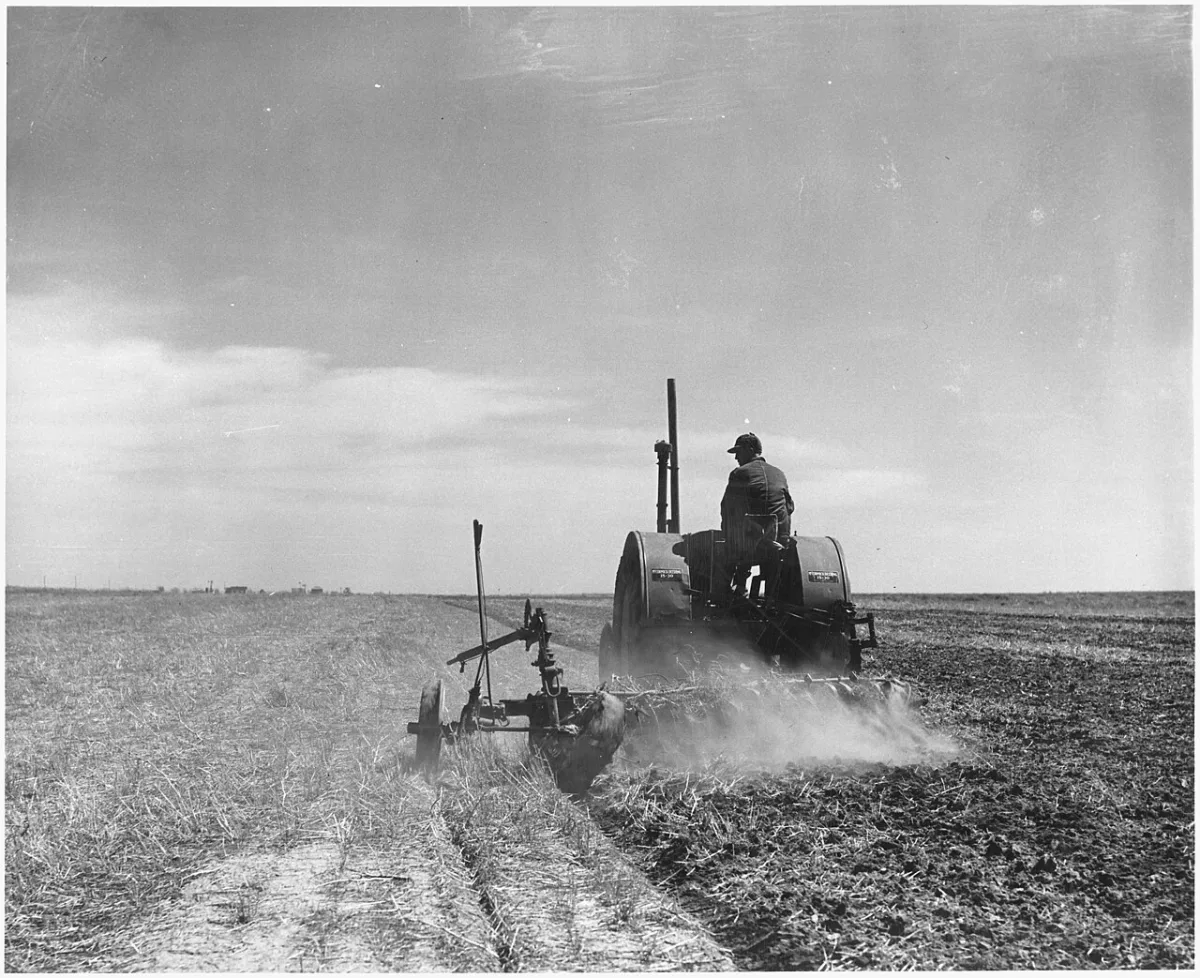
Regular traffic of heavy machinery across a field inevitably compacts the topsoil and subsoil layers. Annual ploughing to the same depth leads to the formation of a dense plough pan 12–15 cm thick. This barrier prevents the roots of crops from penetrating into the lower soil layers, impairing their nutrition and development. An effective solution to the problem of over-compaction is deep chisel tillage.
Agronomic effect of deep loosening
Chiseling breaks up the plough pan without inversion of the soil layer, maintaining the soil structure. During dry periods, this allows crop roots to draw moisture from deep horizons, and during heavy rainfall, it accelerates drainage from the surface, preventing waterlogging. Unlike mouldboard ploughs, the narrow working tools of chisel machines do not create a compacted layer beneath them, even after many years of operation at the same depth.
- Plough pan thickness — 12–15 cm
- Chisel working depth — up to 45 cm
- Sweep share working depth — up to 30 cm
- Chisel width — 70 mm
- Sweep share width — 270 mm
Deep chiseling outperforms traditional ploughing in several respects:
- it reduces total energy intensity of tillage and increases machinery productivity;
- it reduces labor costs and diesel fuel consumption per hectare;
- it improves the soil's water-air regime and prevents water and wind erosion.
Due to deep loosening, moisture evaporation from the upper soil layers is sharply reduced, which creates an optimal air-water balance for crop growth.
Machinery selection and adjustment of working tools
For deep tillage, two types of implements are used. The first group includes ploughs with vertical shanks: PCh-4.5, PCh-2.5, PChK-4.5, and PChK-2.5. The second group consists of ripper ploughs with shanks inclined in the transverse plane: PRPV-5-50 and PRPV-8-50. Mounted ploughs of the PCh and PChK families are suitable for field preparation instead of autumn and spring ploughing, deepening the plough horizon, as well as for work on slopes and fallow fields.
Standard PCh-2.5 and PCh-4.5 ploughs are not suitable for rocky soils due to the risk of breakage. On such fields, it is necessary to use PChK-2.5 and PChK-4.5 modifications, whose working tools are equipped with special safety devices.
All chisel ploughs are equipped with interchangeable shares of two types: chisel-type for loosening and flat-cutting sweep shares. Chisel-type shares 70 mm wide break up the plough pan to a depth of up to 45 cm. Sweep shares 270 mm wide are used on heavy soils for loosening to a depth of up to 30 cm while simultaneously cutting weeds. The distance between working tools on the frame is adjusted depending on the chosen tillage depth:
| Type of interchangeable shares | Tillage depth, cm | Spacing width, mm |
|---|---|---|
| Loosening chisel-type | 20–30 | 400 |
| Loosening chisel-type | 30–45 | 500 |
| Flat-cutting sweep | up to 30 | 500 |
For additional soil crumbling, field leveling, and shredding of long-stem residues, PCh-4.5 and PCh-2.5 ploughs are fitted with PST-4.5 and PST-2.5 detachable attachments. Each attachment consists of two rollers with knife-like teeth, a cleaning comb, depth regulators, and a hydraulic system. Built-in hydraulic cylinders on the PST-4.5 allow the implement width to be reduced to 4 m for safe transport on public roads.
Read next
Crop production For students
Peculiarities of mouldboard and non-mouldboard tillage using agricultural implements
Crop production For students
Abandonment of mouldboard ploughing and fundamentals of minimum tillage
Farm machinery For agronomists