
Influence of storage pests on the sowing qualities of cereal crop seeds
25 min read
How stored-product pests reduce seed sowing quality
Under optimal conditions, stored-product pests reproduce rapidly and cause direct damage to the seed stock. They do not merely reduce grain weight but also destroy the embryo, reducing germination. For example, the granary weevil consumes up to 50% of the kernel mass during feeding, while the rice weevil consumes between 35% and 75%. The confused flour beetle, the larder beetle, and the spider beetle purposefully consume the embryo first, then move on to the endosperm. The sawtoothed grain beetle and the foreign grain beetle damage the grain from the outside but are also capable of penetrating the germ zone.
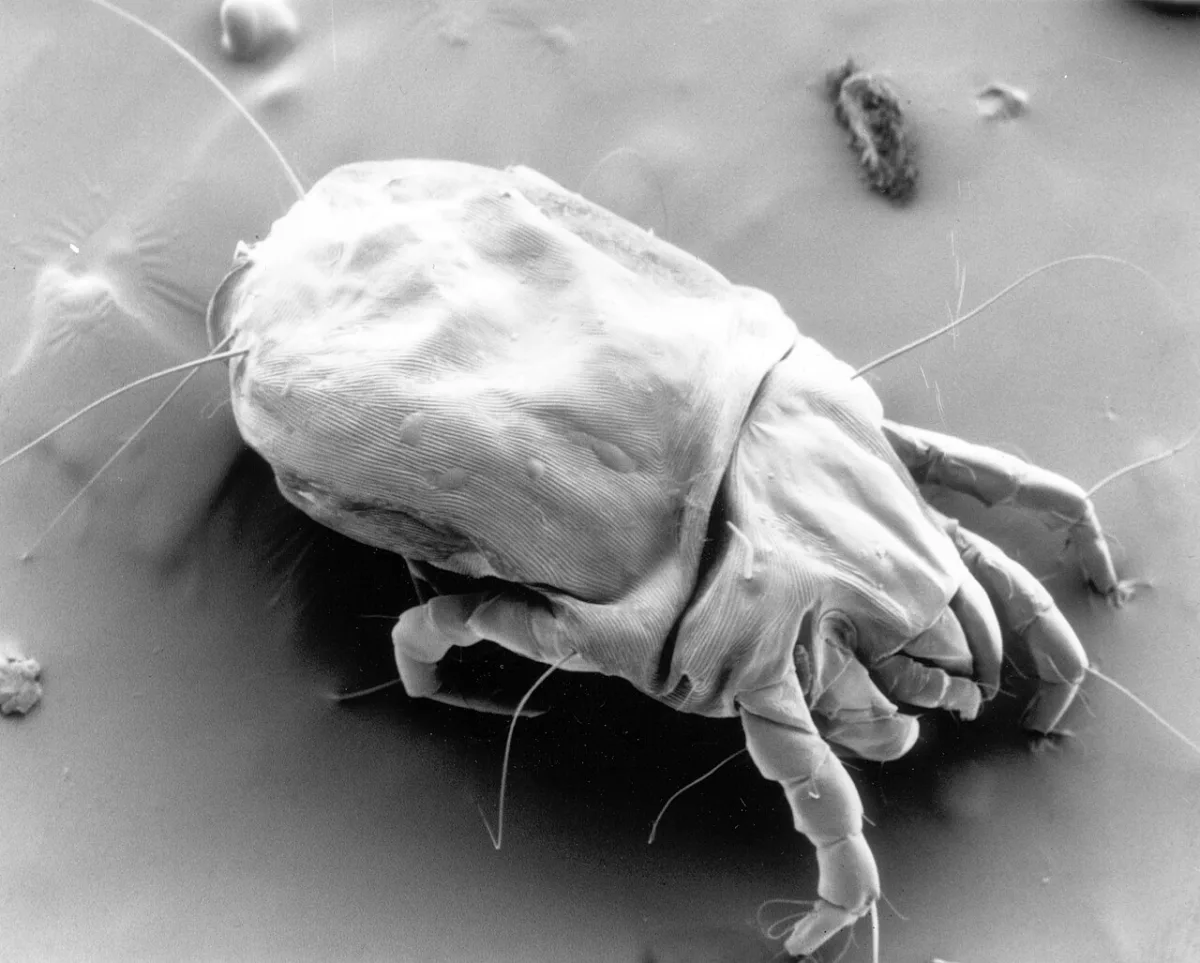
Acaroid mites (flour, long-bodied, and common hair mites) penetrate inside the embryo, creating a hidden form of infestation. The flour mite can reduce the mass of the embryo by 2.0–3.0%, which makes the seed unsuitable for sowing.
- Reduction in germination due to granary weevil — by 92.0%
- Reduction in germination due to rice weevil — by 75.0%
- Reduction in germination due to confused flour beetle — by 53.0%
- Reduction in germination due to sawtoothed grain beetle — by 25.0%
- Reduction in germination due to acaroid mites — by 6.0–19.0%
Even individual pests pose a danger at low temperatures. According to research, at a flour mite density of only 15.0–20.0 specimens/kg, 8.0% of oat embryos are damaged. As a result, in just 7 days, germination decreases by 3.0% even at a temperature of +5 °C.
Control standards and decision-making on treatment
Seed sowing quality is strictly regulated by standards. Depending on the category, the germination of seed grain must be at least 82.0–92.0%. If a batch does not meet at least one regulatory indicator, it is downgraded to a lower class or recognized as substandard. Infestation by pests is checked at all stages of handling grain — from harvesting to storage.
| Name of seed sowing quality indicators | Unit of measurement | Original | Elite | Reproduction I | Reproduction II–III | Subsequent |
| Infestation by live pests and their larvae, excluding mites | pcs/kg | 0 | 0 | 0 | 0 | 0 |
| Presence of mites, no more than | pcs/kg | 0 | 0 | 20.0 | 20.0 | 20.0 |
Live insects and their larvae completely disqualify seeds from sowing. For mites, an exception is made only for reproductive seeds (I, II, and subsequent reproductions) — here, a density of no more than 20.0 specimens/kg is permitted. For original and elite seeds, the presence of mites is unacceptable.
When pests are detected, chemical disinfestation is carried out. The expediency of treatment is determined by the degree of infestation. However, in practice, a contradiction arises: regulatory documents suggest using the total infestation density indicator (TID), which divides grain into 5 degrees, while technical instructions recommend relying on the economic threshold of harmfulness (ETH), expressed as the number of imagines per 1 kg of grain.
To substantiate optimal disinfestation timing and choose effective insecticides, it is necessary to evaluate the impact of specific pests on seed indicators in detail and compare the TID and ETH data for each batch.
Infestation monitoring and calculation of harmfulness thresholds
According to the results of monitoring storage facilities in 2021–2022, stored-product pests pose a serious threat to the seed stock. The experiments tested batches of spring barley and wheat, as well as winter wheat and triticale, which were stored on the floor, in bins, or in arch-type structures (in bags, big-bags, and bulk). Out of 23 examined batches of grain from the 2019–2021 harvest, 8 batches (34.8%) were found to be infested in the first year. In the second year, insects and mites were found in 15 (37.5%) of 40 analyzed batches.
- Share of infested seed batches — up to 37.5%
- Application rate of pesticide working solution — 500 ml/t
- Temperature during treatment and storage — +22…+26 °C
- Dosage of Faskord and Actellic — 16 ml/t
To monitor the quality of the planting material, the key physical and biological indicators of the batch are evaluated sequentially:
- Sampling of the grain mass according to GOST 13586.6-2015.
- Determination of humidity with a Grain Moisture Tester PM-650 and laboratory germination according to GOST 12038-84.
- Detection of visible infestation by manually sieving average samples according to GOST 13586.6-93 and GOST 12045-97.
- Determination of the hidden form of seed infestation using the staining method.
The hidden form of seed infestation is the most dangerous, as the grain appears clean visually, but pest development continues inside it.
To calculate the total infestation density of grain (TID, specimens/kg), the following formula is used: TID = ∑ Sc × Kv. Here, Sc is the average infestation density by a specific pest species (specimens/kg), and Kv is its coefficient of harmfulness. The obtained result is compared with the economic thresholds of harmfulness (ETH) and the overall degree of batch infestation is assessed.
| Pest (common name / scientific name) | Coefficient of harmfulness (Kv) | Economic threshold of harmfulness (ETH), specimens/kg |
|---|---|---|
| Lesser grain borer (Rhyzopertha dominica F.) | 1.7 | 1.8 |
| Granary weevil (Sitophilus granarius L.) | 1.5 | 2.0 |
| Angoumois grain moth (Sitotroga cerealella Oliv.), Indianmeal moth (Plodia interpunctella Hbn.), grain moths (Ephestia spp.) (caterpillars) | 1.1 | 2.7 |
| Rice weevil (Sitophilus oryzae L.) | 1.0 | 3.0 |
| Confused flour beetles (Tribolium spp.), spider beetles (Ptinus spp.), larder beetles (fam. Dermestidae) | 0.4 | 7.5 |
| Grain beetles (Oryzaephilus spp., Laemophloeus spp.) | 0.3 | 10.0 |
| Dried fruit beetle (Carpophilus hemipterus L.), fungus beetles (fam. Latridiidae), silken fungus beetles (fam. Cryptophagidae) | 0.2 | 15.0 |
| Booklice (fam. Atropidae) | 0.1 | 30.0 |
| Grain mites (fam. Acaridae, Tyroglyphidae) | 0.05 | 60.0 |
The infestation level of seed material by pests is classified according to the PDI (Pest Density Index) scale:
- I degree — PDI value up to 1 ind./kg inclusive;
- II degree — from 1 to 3 ind./kg;
- III degree — from 3 to 15 ind./kg;
- IV degree — from 15 to 90 ind./kg;
- V degree — over 90 ind./kg.
Efficacy of insecto-acaricides on seed grain
To protect seeds from insects and mites in 2023, trials were conducted using the preparations Faskord, EC (alpha-cypermethrin, 100 g/l) and Actellic, EC (pirimiphos-methyl, 500 g/l). The experiment was set up on winter wheat seeds of the Elegiya cultivar, elite reproduction. Treatment was carried out using the wet method with an "Inter eco 1.5" hand sprayer with a working solution consumption of 500 ml/t. The dosage for both preparations was 16 ml/t.
The trials were conducted on grain infested with mites (adults, larvae, nymphs), as well as adults of granary and rice weevils and the sawtoothed grain beetle. Treated and control (treated with clean water) grain was stored in bags at a temperature of +22…+26 °С.
To evaluate biological efficacy (BE, %), 100 g samples were taken in four replicates. The number of live, dead, and paralyzed individuals was counted before treatment, as well as on the 3rd, 7th, 14th, and 28th days after it. The calculation was performed using the formula: BE = ((A - B) / A) * 100, where A is the initial infestation density (ind./kg), and B is the density after treatment (ind./kg).
Seed safety during storage is influenced by a whole complex of factors. The life activity of insects and mites is closely related to the temperature and relative humidity of the air in the warehouse. Only constant monitoring of these indicators allows for timely detection of threats and preservation of the sowing quality of grain.
This pattern was clearly observed by us during the years of research. For example, in the Minsk region in March 2021, the average daily air temperature was –1.6…+2.8 °С, the grain heap temperature was +5.0…+6.0 °С, and the relative air humidity was up to 84.0%, which contributed to the fact that in batches of grain crops, the number of acaroid mites reached up to 560.0 ind./kg. In March 2022, at an average daily air temperature of –0.6…+3.7 °С and a relative air humidity of 62.0–69.0%, the mites did not develop. The results we obtained confirm literature data, according to which 80.0–90.0% is the optimal relative humidity for mite development.
This indicator should be monitored and taken into account when storing seeds, as according to regulatory documents, seeds must be stored at a relative air humidity not exceeding 70%, in order to prevent sorption (absorption) of water vapor from the air and the moistening of grain products, since this significantly reduces their stability during storage.
Figure 2 – Influence of relative air humidity on the number of mites during the storage of spring grain crop seed batches (seed granary, Minsk region)
When conducting laboratory experiments (2021–2022), we established that acaroid mites – flour mite (Acarus siro L.), common hairy mite (Glycyphagus destructor Ouds.), mold mite (Tyrophagus putrescentiae Schr.), and predatory mite (Cheyletus eruditus Schr.) had a negative impact on the sowing quality of grain crop seeds.
During the research years, with a mite density from 266.7 to 560.0 ind./kg, the laboratory germination of grain crop seeds (spring barley, spring winter triticale) decreased by 29.0–62.0%, depending on the batch examined, compared to the regulated values of STB 1073-97 (table 3, figure 4).
At the same time, a mite density of 50.0 ind./kg had no negative impact on laboratory germination, which was 88.5%, which is 1.5% higher than the regulated germination rate.
Flour mite Common hairy mite (Acarus siro L.) (Glycyphagus destructor Ouds.)
Mold mite Predatory mite (Tyrophagus putrescentiae Schr.) (Cheyletus eruditus Schr.)
Figure 3 – Species of acaroid mites found in grain crop seeds (Altami SMO 745-T stereomicroscope)
Table 3 – Influence of acaroid mites on the germination of spring and winter grain crop seeds (laboratory experiments, RUE "Institute for Plant Protection")
Mite density, ind./kg Germination, % Crop, cultivar, before regulation laboratoryregulated deviation reproduction sowing STB 1073-97 STB 1073-97
March, 2021* Spring barley,
266.7 63.0 92.0 29.0 Brovar, elite Spring barley, 560.0 30.0 92.0 62.0 Avans, elite 390.1 43.0 92.0 49.0
August, 2022** Winter wheat,
50.0 88.5 87.0 – Markiza, I repr. up to 20.0 Winter triticale,
280.0 52.0 85.0 33.0 Grenada, I repr. * Seed batches from granaries in the Minsk region; ** Seed batches from granaries in the Dzerzhinsky region.
Figure 4 – Decrease in the germination of winter triticale seeds under the influence of acaroid mites (laboratory experiment, Grenada cultivar, rolled towel method, 2022)
In the collected samples, grain humidity ranged from 10.8 to 12.7% (the minimum required for mite development is 13.0–14.0%). However, the presence of live mites at low humidity can be explained by the fact that the moisture content of the grain embryo is usually slightly higher than the average grain moisture; in dry grain, mites can penetrate the embryo and form colonies under the hull, which is particularly dangerous for seed grain.
Based on the statistical analysis of infestation data in batches, we calculated regression equations characterizing the dependence of laboratory seed germination of grain crops (spring barley, winter wheat, and winter triticale) on mite density. Table 5 – Harmfulness of mites in grain crop seeds (laboratory experiments, RUE "Institute of Plant Protection")
Equation of linear re- Coefficient of Year gression correlation, r determination, d 2021 y = 92.202–0.120 x -0.953 0.907 2022 y = 99.515–0.130 x -0.998 0.997 Note. y – laboratory seed germination, %, x – mite density, individuals/kg.
The high correlation coefficients (r = − 0.95–0.99) of the provided equations indicate a strong inverse relationship between the variables (y – laboratory germination) and (x – mite density). As mite density increases, the laboratory germination of grain crop seeds decreases.
To determine the criteria for the feasibility of implementing plant protection measures, we conducted an analysis of seed batches sampled from the republic's grain storage facilities for infestation (presence of live) by stored-product pests.
Table 6 shows the degree of infestation of spring and winter grain crops, using individual batches as an example. According to the existing classification, these batches can be categorized into different degrees of infestation (from I to IV). Thus, batches of spring barley, cultivar Avans (elite, 23.5 t) and cultivar Batka (elite, 285.0 t), were not infested with pests before sowing and were cleared for planting.
In the batches of spring barley, cultivar Raider (elite, 40.0 t) and winter triticale, cultivar Dynamo (elite, 30.0 t), mite density reached 5.0 and 15.0 individuals/kg, respectively, with a combined infestation density (CID) of 0.3 and 0.8 individuals/kg, which corresponded to degree I of infestation, where further monitoring is recommended. Table 6 – Feasibility of using products for protecting grain crop seeds from pests (production experiments, seed grain storage facilities, Minsk and Brest regions, 2021–2022)
How to assess the complex infestation of seed grain
Monitoring of the seed stock reveals the scale of the threat: during the examination of 63 batches of spring barley and wheat, as well as winter wheat and triticale, 34.8% to 37.5% of the seeds were found to be infested. To preserve the quality of such batches, an agronomist must accurately assess the degree of infestation. If the grain is colonized by only one pest, one can rely on individual economic injury levels (EIL). However, in practice, warehouses are usually attacked by a complex of species, and in this case, the decision on protection is made based on the combined infestation density (CID).
A telling example is the batch of winter wheat, cultivar Markiza (batch 152.7 t). Mites were discovered in it (Acarus siro, Tyrophagus putrescentiae, and Cheyletus eruditus) with a density of 30 individuals/kg against an individual threshold of 60 individuals/kg, as well as the merchant grain beetle — 5.0 individuals/kg against a threshold of 10 individuals/kg. Individually, the thresholds were not exceeded, but the CID calculation showed 3.0 individuals/kg, which corresponds to degree II of infestation. With such indicators, the cost of grain losses is commensurate with the costs of disinfestation, and treatment becomes economically feasible.
| Crop, cultivar, reproduction | Harvest year | Mites, ind./kg | Insects, ind./kg | CID, ind./kg | Degree of infestation | Decision on seed batch |
|---|---|---|---|---|---|---|
| Spring barley, Avans, elite | — | 0 | 0 | 0 | Not infested | Cleared for sowing |
| Spring barley, Batka, elite | 2021 | 0 | 0 | 0 | Not infested | Cleared for sowing |
| Spring barley, Raider, elite | 2020 | 5.0 | 0 | 0.3 | Degree I (up to 1.0 ind./kg) | Cost of losses less than cost of disinfestation. Monitoring recommended. |
| Winter triticale, Dynamo, elite | 2020 | 15.0 | 0 | 0.8 | Degree I (up to 1.0 ind./kg) | Cost of losses less than cost of disinfestation. Monitoring recommended. |
| Winter wheat, Suita, I repr. | — | 55.0 | 0 | 2.8 | Degree II (1.0–3.0 ind./kg) | Cost of losses commensurate with disinfestation. Treatment is feasible. |
| Winter wheat, Bogatka, I repr. | 2020 | 60.0 | 0 | 3.0 | Degree II (1.0–3.0 ind./kg) | Cost of losses commensurate with disinfestation. Treatment is feasible. |
| Winter triticale, Prometey, I repr. | 2020 | 65.0 | 0 | 3.3 | Degree III (3.0–15.0 ind./kg) | Cost of losses higher than cost of disinfestation. Grain permitted only for food use. |
| Winter triticale, Grenado, I repr. | 2021 | 75.0 | 35.0 | 14.3 | Degree III (3.0–15.0 ind./kg) | Cost of losses higher than cost of disinfestation. Grain permitted only for food use. |
| Spring barley, Avans, elite | 2020 | 560.0 | 0 | 28.0 | Degree IV (15.0–90.0 ind./kg) | Use for food purposes only after mixing with clean grain. |
Grade IV infestation makes seed unsuitable for sowing. In experiments with a batch of Avans barley (121.0 t) with a pest contamination index (PCI) of 28.0 ind./kg, laboratory germination dropped to 30%. The seeds completely lost their sowing quality and ceased to meet the requirements of STB 1073-97.
Comparison of the efficacy of Faskord and Actellic insecticides
The most reliable method for protecting seed grain from storage pests is wet treatment with contact preparations during storage intake. In experiments using simulation models, the efficacy of Faskord, EC and Actellic, EC insecticides was evaluated at the same application rate. The preparations were tested on seeds of winter wheat, cultivar Elegiya, with a high initial pest infestation.
- Faskord, EC application rate — 16 ml/t
- Actellic, EC application rate — 16 ml/t
- Initial beetle density — 92.5 ind./kg
- Initial mite density — 30.0 ind./kg
To evaluate efficacy against coleopteran insects, we used adults of the rice weevil (Sitophilus oryzae L.) and the granary weevil (S. granarius L.), which cause hidden infestation, as well as the sawtoothed grain beetle (Oryzaephilus surinamensis L.). In the control batch without treatment, the number of pests remained high throughout the entire observation period. Application of the preparations showed the following results:
| Treatment variant | Initial population, ind./kg | 3rd day (pop., ind./kg / BE, %) | 7th day (pop., ind./kg / BE, %) | 14th day (pop., ind./kg / BE, %) | 28th day (pop., ind./kg / BE, %) |
|---|---|---|---|---|---|
| No treatment (control) | 92.5 | 70.0 / — | 107.5 / — | 65.0 / — | 10.0 / — |
| Faskord, EC | 92.5 | 5.0 / 94.6% | 0 / 100% | 0 / 100% | 0 / 100% |
| Actellic, EC | 92.5 | 0 / 100% | 0 / 100% | 0 / 100% | 0 / 100% |
Against acarid mites — the flour mite (Acarus siro L.), the common hairy mite (Glycyphagus destructor Ouds.), and the common predatory mite (Cheyletus eruditus Schr.) — the insecto-acaricide Actellic worked faster. On the third day after treatment, its biological efficacy was higher than that of Faskord. However, by the seventh day, both preparations provided complete eradication of the mites.
| Treatment variant | Initial mite population, ind./kg | 3rd day (pop., ind./kg / BE, %) | 7th, 14th, and 28th days (pop., ind./kg / BE, %) |
|---|---|---|---|
| Faskord, EC | 30.0 | 10.0 / 66.7% | 0 / 100% |
| Actellic, EC | 30.0 | 5.0 / 83.3% | 0 / 100% |
Both preparations completely clear seed material of beetles and mites within a week after treatment. During short-term grain storage (up to 1 month), Faskord and Actellic provide absolute protection against rice and granary weevils, the sawtoothed grain beetle, and acarid mites.
It has been established that the level of seed infestation by acarid mites is related to abiotic factors: at a relative humidity of up to 84.0% in batches of spring grain crops, the number of mites can reach up to 560.0 ind./kg. Table 8 – Effect of insecticides on reducing the population of acarid mites for the protection of seed grain during storage (experiment on simulation models, winter wheat, cultivar Elegiya, RUE "Institute of Plant Protection", 2023)
Population 3rd 7th 14th 28th (12.06.) (16.06.) (23.06.) (07.07.) Variant, applica- before popu- BE, popu- BE, popu- BE, popu- BE, tion rate treatment, lation, % lation, % lation, % lation, % ind./kg ind./kg ind./kg ind./kg Without
17.5 – 10.0 – 5.0 – 2.5 – insecticide* Faskord, EC,
30.0 10.0 66.7 0 100 0 100 0 100 16 ml/t Actellic, EC,
5.0 83.3 0 100 0 100 0 100 16 ml/t Notes: Treatment date – June 9, 2023; * In the variant without insecticide, the total population of mites is indicated, ind./kg; BE – biological efficacy.
It was revealed that acarid mites (families Acaridae and Glycyphagidae) had a negative impact on one of the indicators of grain seed sowing quality – laboratory germination. At a mite population of 266.7–560.0 ind./kg, the laboratory germination of grain crop seeds (spring barley, winter triticale) decreased by 29.0–62.0% compared to the regulated STB 1073-97 values. A strong inverse correlation was established between these indicators, as evidenced by the correlation coefficients (r = −0.95–0.99).
It was determined that at the optimal time for applying preparations, when the cost of grain losses is comparable to the cost of disinfestation (Degree II, PCI – 1.0–3.0 ind./kg), the actual population of mites in batches ranged from 30.0 to 60.0 ind./kg (economic threshold – 60 ind./kg), and the sawtoothed grain beetle – 5.0 ind./kg (economic threshold – 10 ind./kg). Therefore, to take into account the complex harmfulness of storage pests when deciding on the feasibility of disinfestation, it is necessary to rely on the PCI.
For the protection of grain intended for seed purposes during short-term storage (1 month), it is effective to use the preparations Faskord, EC (alpha-cypermethrin, 100 g/l) and Actellic, EC (pirimiphos-methyl, 500 g/l) at an application rate of 16 ml/t. Thus, on the 3rd day after seed treatment of winter wheat with the insecticide Faskord, EC, the population of coleopteran pests decreased by 94.6%, and mites by 66.7%; with the insecto-acaricide Actellic, EC – by 100% and
83.3 % respectively. On the 7th, 14th, and 28th day after seed treatment with the studied preparations, the biological effectiveness against coleopteran insects and mites reached 100 %.
- Ereshko, A. S. Workshop on Seed Science and Seed Production of Agricultural Crops: textbook / A. S. Ereshko, R. G. Bershanskiy, V. B. Khronyuk; Ministry of Agriculture of the Russian Federation, Don State Agrarian University. – Zernograd: Azov-Black Sea Engineering Institute of Don State Agrarian University, 2015. – 112 p.
- Zakladnoy, G. A. Helping those who want to know the losses from insects / G. A. Zakladnoy // Khleboprodukty. – 2018. – No. 6. – P. 26–27.
- Zakladnoy, G. A. Pests of Grain Stocks / G. A. Zakladnoy. – Moscow: [s. n.], 2006. – 24 p. – (Supplement to the journal "Plant Protection and Quarantine"; No. 6).
- Zakladnoy, G. A. Protection of Grain and Its Processed Products from Pests: monograph / G. A. Zakladnoy. – Moscow: Kolos, 1983. – 215 p.
- Grain. Methods for determining infestation with pests: GOST 13586.6-93. – Replacing GOST 13586.4-93; introduced 02.06.1994. – Minsk: Gosstandart, 2010. – 8 p.
- Grain. Acceptance rules and sampling methods: GOST 13586.3-2015. – Replacing GOST 13586.3-83; introduced in the Russian Federation 01.07.16. – Moscow: Standartinform, 2019. – 15 p.
- Instructions for the control of pests of grain stocks: approved by the Committee on Grain Products under the Ministry of Agriculture and Food of the Republic of Belarus; under the general editorship of A. I. Bykhovets. – Minsk: [s. n.], 2000. – 414 p.
- Kozich, I. A. Justification of measures for the protection of grain and its processed products from storage pests: diss. … cand. of agric. sci.: 06.01.07 / I. A. Kozich. – Priluki, 2014. – 166 p.
- On establishing requirements for varietal and sowing qualities of seeds of agricultural plants [Electronic resource]: Resolution of the Ministry of Agriculture and Food of the Republic of Belarus, Oct. 29, 2015, No. 37 // National Legal Internet Portal of the Republic of Belarus. – Access mode: https://gogiskzr.by/semenovodstvo/normative-base/Doc-51-Postanovlenie-37-06012023.pdf. – Access date: 23.02.2023.
- Organizational and technological standards for the cultivation of cereals, grain legumes, and buckwheat crops: collection of industry regulations / Scientific and Practical Center of the NAS of Belarus for Arable Farming; led by F. I. Privalov [et al.]. – Minsk: IVTs Minfina, 2022. – 532 p.
- Sowing qualities and yielding properties of seeds: educational and methodological manual / V. G. Taranukho [et al.]; Ministry of Agriculture and Food of the Republic of Belarus, Main Directorate for Education, Science and Personnel, Belarusian State Agricultural Academy. – Gorki: [s. n.], 2009. – 64 p.
- Guide to pests of grain stocks and "Prostor" as a means of controlling them / G. A. Zakladnoy [et al.]; under the general editorship of G. A. Zakladnoy. – Moscow: MGOU Publishing House, 2003. – 106 p.
- Ravkov, E. V. Seed Control: laboratory workshop / E. V. Ravkov, N. G. Taranukho, V. I. Bushueva; Ministry of Agriculture and Food of the Republic of Belarus, Main Directorate for Education, Science and Personnel, Belarusian State Agricultural Academy. – Gorki: BSAA, 2013. – 100 p.
- Livshits, I. Z. Agricultural acarology: monograph / I. Z. Livshits, V. I. Mitrofanov, A. Z. Petrushov; Russian Academy of Agricultural Sciences, State Scientific Institution All-Russian Selection and Technological Institute of Horticulture and Nursery Breeding of the Russian Academy of Agricultural Sciences. – Moscow: GNU VSTISP Rosselkhozakademii, 2011. – 351 p.
- Seeds of grain crops. Varietal and sowing qualities. Technical specifications: STB 1073-97. – Minsk: Gosstandart, 2010. – 17 p.
- Seeds of agricultural crops. Methods for determining germination: GOST 12038-84. – Introduced 01.07.1986. – Moscow: Standartinform, 2011. – 65 p.
- Seeds of agricultural crops. Methods for determining infestation with pests: GOST 12045-97. – Introduced 01.07.1998. – Moscow: Standartinform, 2011. – 6 p.
Tsyk, V. V. Technology of storage and processing of crop production: course of lectures / V. V. Tsyk. – Gorki: BSAA, 2013. – 195 p.
25. Atlas szkodników roślin rolniczych dla praktyków / M. Mrówczyński [et al.]. – Poznan: Polskie Wydawnictwo Rolnicze Sp. z o. o., 2017. – 368 s.
E. V. Brechko, V. O. Trubacheva RUE «Institute of Plant Protection», Priluki, Minsk region
INFLUENCE OF STORAGE PESTS ON THE QUALITY
OF SEED MATERIAL OF GRAIN CROPS
Annotation. The article presents an analysis of the contamination of seed material of spring and winter grain crops for the 2019–2021 harvest of storage pests. There is 34,8–37,5 % of infected (the presence of live arthropods) of the 63 surveyed batches of barley and spring wheat, winter wheat and triticale. A strong inverse correlation has been established between the number of acaroid mites and laboratory germination, as evidenced by the correlation coefficients (r = -0,95–0,99). The degree of contamination of seed batches was calculated taking into account the number and harmfulness of arthropods. A comparative analysis of the total infestation density (TID) of batches of grain seeds showed that when determining the optimal period for using product when a batch is infected with a complex of pest species, one should focus on the TID indicator, and not on the economic threshold of harmfulness (EPT). Attention is paid to the results of clarifying the biological effectiveness of preparations for protecting seed grains. When using the insecticide Fascord, EC (alpha-cypermethrin, 100 g/l), the number of coleopteran insects decreased by 94,6–100 %, mites – 66,7–100 %; insectoacaricide Actellik, EC (pirimiphos-methyl, 500 g/l) – 100 % and 83,3–100 %, respectively.
Key words: storage pests, grain seeds, grain storage facilities, sowing qualities, infestation, biological effectiveness, insecticide, insectoacaricide.
Read next

Crop production For students
Biological characteristics and morphological structure of cereal crops
Storage and processing For students
Physiological and biochemical processes and effective storage regimes for grain mass
Crop production For students