
Biological plant protection of vegetable crops against diseases and nematodes
18 min read
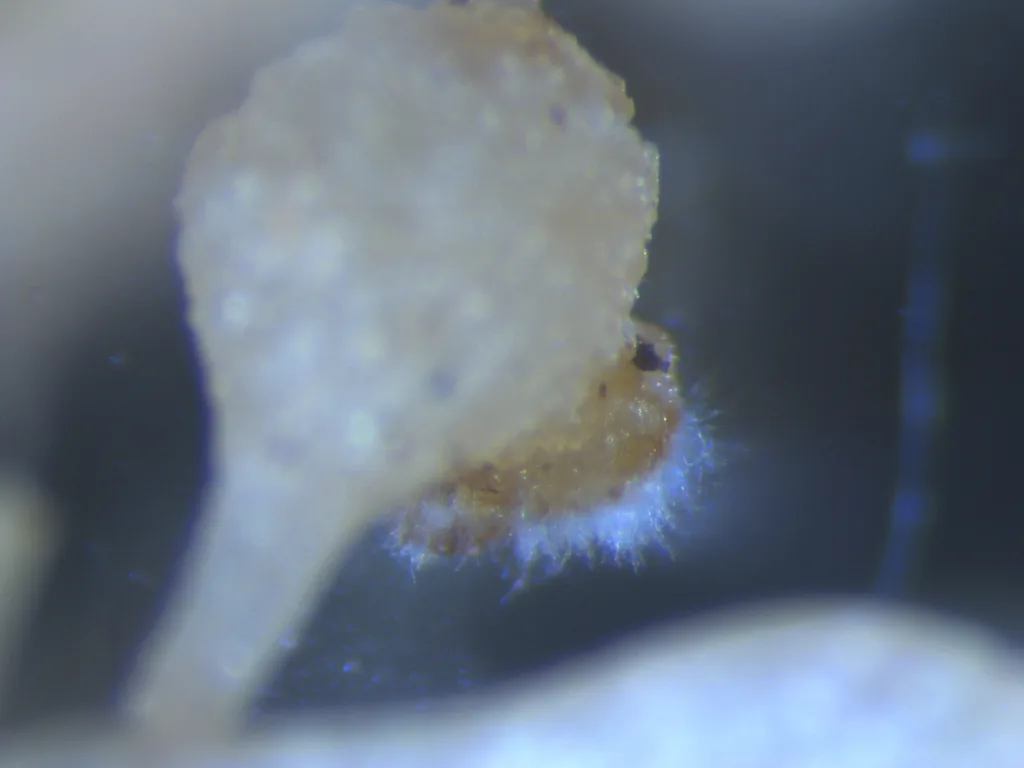
Biological protection of vegetables in greenhouse cultivation
To control diseases and pests in greenhouses, agronomists use biological methods. The liquid form of trichothecin is produced in the biolaboratories of greenhouse complexes by deep cultivation of the fungus . The preparation shows high efficiency in protecting cucumbers from powdery mildew. Two-fold spraying at an initial leaf infestation of 1–2 points curbs disease development by 75–76 %.
| Treatment parameter | Trichothecin application regulations |
|---|---|
| Application rate | 100–130 l/ha |
| Working solution consumption | 2000–3500 l/ha |
| Working suspension concentration | 5 × 10⁹ conidia/ml |
The consumption of working solution is adjusted depending on the density and height of the plant canopy. Treatments are carried out at intervals of 8–10 days. The preparation belongs to the IV hazard class, and its application volumes are scalable — 400–450 thousand m² of area are treated with it annually.
Against root-knot nematodes on tomatoes, dry powder preparations Agravertin SP and Fitoverm SP from CJSC "Agravetservice" and LLC "Pharmbiomed" are used. Their active ingredient is abamectin and the associated natural avermectin complex at a concentration of 2 g/kg. In the soil, these components undergo microbial metabolism, and the breakdown products block the head receptors of nematode larvae. Pests lose rhizotropism (repellent effect) and die within 2–3 weeks, without being able to penetrate the plant roots.
Avermectin preparations work only in the application zone, bind firmly to soil particles, and are not washed out by irrigation water. The protective effect lasts from 30 to 40 days.
- Active ingredient content — 2 g/kg
- Application depth — 20–25 cm
- Treatment timing — 1–3 days before planting
- Hazard class — PU
The preparation is applied to infected soil 1–3 days before planting transplants. To ensure even distribution to a depth of 20–25 cm, rotary tillers are used. In practice, three main application methods are used:
- Row method: the most economical option, protecting only the root zone within the row. The preparation is applied manually immediately before planting transplants under a rotary tiller with a working width of 0.9–1.0 m at a rate of 0.4–0.5 kg per 1 m² (about 2.0–2.5 t/ha).
- Broadcast method: a highly effective, but less economical method. The preparation is distributed over the entire area of the greenhouse under mounted rotary tillers at a dose of 4–5 t/ha. The duration of the protective effect is similar to the row method.
- Spot method: used during the growing season when replacing new plants in place of those lost to meloidogynosis. A minimum of 150 g of the preparation is added to a planting hole with a diameter of about 0.5 m and a depth of at least 20 cm and mixed thoroughly with the soil. Transplants can be planted immediately or the next day. This method is less effective because the focus is surrounded by heavily infected soil.
Avermectin powders can be applied together with mineral fertilizers, loosening agents (sawdust, perlite), as well as with Trichodermin and other biological preparations — antagonists of Fusarium rots.
In experiments, the treatment yielded positive results on both sensitive and resistant tomato cultivars. However, a truly high disinfection effect was recorded on the resistant cultivar E. Resiset. Plants of this cultivar realized their protective potential almost completely, which was confirmed by the sterility of the few female nematodes that formed on them (second variant).
The preparations show no phytotoxicity and are safe for humans, earthworms, and soil arthropods. There is no waiting period after their application. The hazard class of the preparations is PU.
Growth regulators: managing the growing season and fruit ripening
Plant growth regulators (PGRs) are organic compounds that stimulate growth and morphogenesis in microdoses. Their use allows for modifying plant morphology by redistributing nutrient flows between organs. This gives the agronomist the opportunity to flexibly manage the growing season depending on the developmental phase of the crop.
Natural regulators include phytohormones (auxins, gibberellins, cytokinins, ethylene, abscisic acid) and non-hormonal inhibitors such as phenols and urea derivatives. Synthetic analogues include substances of auxin nature (indolebutyric, indoleacetic, naphthaleneacetic acids) and artificial inhibitors — morphactins, retardants, and defoliants. For example, treating transplants with the retardant chlormequat chloride prevents them from becoming leggy.
To accelerate the ripening of tomatoes directly on the bushes, ethephon containing 2-chlorophenoxyacetic acid is used. Such ethylene-producing preparations are indispensable in open-field cultivation for single-pass mechanized harvesting by a combine. Spraying is carried out 10–14 days before the start of harvesting.
- Treatment timing — 10–14 days before harvesting
- Maturity phase — 5–30 % red or blanch fruits
- Consumption per a.i. — 0.8–2.0 kg/ha
- Solution consumption — 600–1000 l/ha
- Proportion of ripened fruits — more than 90 %
During critical periods of the growing season, when crops are subjected to temperature or water stress, the application of hormonal preparations accelerates their adaptation to adverse conditions.
It should be noted that one of the most important periods in the life of any plant is the first 15-20 days after sowing. During this period, gene expression creates the plant phenotype, an integral part of which is adaptation to environmental conditions. With specific impacts of growth regulators, one can alter the physiology of the organism.
At the initial stages of plant development, the main indicators are germination energy and emergence. Poor germination energy indicates weak root development, i.e., a low level of hormone synthesis in them, which means that plant diseases in the future are inevitable, as hormones are the main protection against stress. There are other signs of weak root development as well. A purple or light violet color of the stem near the soil surface is evidence of poor root development, because sugars moving into the roots from shoots accumulate at the base of the stem. Weakly developed roots do not fully utilize sugars. To enhance early root growth and disease resistance, seed treatment with growth regulators is recommended.
Many stresses cause fruit set to drop. Under the influence of stress, the formation of ethylene (stress ethylene) in plants increases, and if the use of a growth regulator reduces the amount of stress ethylene, then fruit set drop is reduced. The amount of ethylene in a plant can be reduced through treatment with hormones synthesized in the roots, fungicides of the benzimidazole, triazole, and strobilurin series, a high content of calcium and cobalt in the plant, etc.
A large assortment of growth regulator preparations has been created in Russia, which can serve as a basis for developing an anti-stress strategy for growing crops. Numerous preparations known as plant growth regulators have appeared on the modern market. There are more than 80 names registered in the List alone. In very low application rates, these substances stimulate plant growth, increase their disease resistance, and thereby increase the harvest of many crops.
The application of immunostimulants is based not on the suppression of phytopathogens, as with the use of fungicides, but on increasing the immune potential of plants. This new direction is highly promising in plant protection.
Active ingredient — (indolyl-3)acetic acid (920 g/kg).
Intended mainly for stimulating root formation in cuttings, improving rooting of transplants and adult plants, increasing germination of seed and bulbs, but in addition, it promotes the enhancement of immunity.
Mechanism of action. Heteroauxin is a synthesized analog of natural plant growth hormones produced within plants themselves and exerting a great influence on their growth and development. The tops of growing shoots, young leaves, and embryos in germinating seed are especially rich in them. Acting at the cellular level, heteroauxin breaks the dormancy of seed and cuttings and provides a powerful impulse for root formation. The preparation also prevents the dropping of fruit set and leaves, which is associated with the formation of an abscission layer of cells and the clogging of conducting vessels in petioles. TABLE 22. APPLICATION REGULATIONS FOR HETEROAUXIN PREPARATION LIST OF PESTICIDES AND AGROCHEMICALS...2001 G solution before planting 22°. Irrigation of soil around plants 10 days after planting. o ro GE O
Features of application. The root system is dipped into a sour-cream-like mass consisting of clay, peat humus, and a solution of heteroauxin. In easily rooting crops (grapevine, rose), after treating cuttings with heteroauxin, rooting occurs quickly, thereby ensuring vigorous growth of young shoots. In poorly or non-rooting crops (many ornamental crops, including carnation), soaking cuttings in a solution of the preparation leads to enhanced formation of lateral roots and the formation of a powerful root system, and as a result, the growth and strengthening of the nursery plant.
Advantages of the preparation. Stimulates the formation of a powerful root system of plants, ensuring their good nutrition, strength, and high yield. Reduces the rooting time of cuttings by 1.5-2 times. Increases the survival rate of plants during transplanting. The number and size of additional roots in treated plants increase by 2-3 times compared to untreated ones. Allows for the propagation of flower crops using parts of bulbs. Prevents the dropping of fruit set and leaves. This ensures good survival, accelerated development, early fruiting, and high yield. Hazard class: IV. Manufacturer: TPK Technoexport Mival. KRI A.i. — 1-chloromethylsilatrane. Intended for stimulating the immune system and plant growth. TABLE 23. APPLICATION REGULATIONS FOR MIVAL PREPARATION LIST OF PESTICIDES and AGROCHEMICALS... 2001 G Crop Application rate Mode of action Method and time of treatment Seed soaking before 4-8 g/kg sowing for 30 min. Tomato Stimulates immunity Spray volume 2 l/kg. Spraying at the flowering phase 4-8 g/ha of the 1st truss. Spray volume — 300 l/ha Ambiol. KRI A.i. — 2-methyl-4-dimethylaminomethylbenzimidazol-5-ol-dihydrochloride (980 g/kg). Intended mainly for increasing the immunity of cucumber in open ground and in greenhouses. Hazard class: IV. Manufacturer: IBKhF RAS TABLE 24. APPLICATION REGULATIONS FOR AMBIOL PREPARATION LIST OF PESTICIDES and AGROCHEMICALS...2001 G Preparation rate, g/ha or Time and frequency of Crop Effect g/kg treatments Increasing resistance to peronosporosis Cucumber 10 mg/10 l water (L) Pre-sowing seed soaking for 6 hours. Application rate — 1 l/kg. Agat-25. TIS D-'- — Psewdomonas aureofaciens H 16 and metabolic products. Intended for stimulating the immune system of many plants. Hazard class: IV. Manufacturer: OOO BIO-Bi3Z and Co TABLE 25. APPLICATION REGULATIONS FOR Agat-25 PREPARATION LIST OF PESTICIDES and AGROCHEMICALS...2001 G Crop Application rate Mode of action Method and time of treatment Seed soaking for 4-7 g/kg 3 hours. Application rate — 1 Cucumber, pepper, tomato l/kg 14 iga (L) Immune system stimulation Spraying at 2-3 leaf 0.1-0.6 kiga phase. Spray volume 300 l Spraying plants before budding and after 2 Houseplants 1-3 g/10 l water (L) weeks. Spray volume 500-1000 l/ha Immunocytophyte A.i. — ethyl ester of arachidonic acid (31.2 g/kg) [ethyl ester of cis-5,8,11,14-eicosatetraenoic acid]. Structural formula of the active ingredient: CH3-(CH2)3-CH-CHCH2-(CH2)3 COOC2H5. Empirical formula of the active ingredient: C22H36O2. Obtained from a mixture of higher fatty acids formed during the mixture of ethyl esters of higher fatty acids, including arachidonic acid, antioxidants, various ingredients, and urea. The preparation is produced in the form of tablets or an emulsion concentrate in ampoules. Mechanism of action. Growth-regulating activity consists of stimulating seed germination. Acceleration of emergence occurs, and plant growth and development are activated. It has been shown that after treatment with this elicitor, tillering and leaf surface area increase, processes of root and tuber formation and dry matter accumulation are stimulated, and wound repair, chemical resistance, and drought and frost resistance of plants are activated. TABLE 26. INFLUENCE OF ARACHIDONIC ACID CONCENTRATION ON PHYSIOLOGICAL EFFECTS (ACCORDING TO OZERETSKOVSKAYA, 1994 Physiological effects at concentration Indicators of arachidonic acid.. Local, Characteristic Characteristics of of forming resistance m - specific forming resistance Induction Induction of phytoalexin synthesis Synthesized phytoalexin synthesis Increase Presence of free Presence of free in content sterols sterols Formation Formation of local necrosis Formed r of local necrosis. Duration Duration of action Short-term m of action Immune status.. Enhanced of plants after exiting Immune status of plants after exiting the state of immunization
Ethyl esters of arachidonic acid penetrate the waxy leaf layer within a few hours. In cell membranes, the ethyl esters hydrolyze, and the resulting arachidonic acid and its metabolites act as signaling elicitors (their influence triggers sterol deficiency in cells, thereby forming specific immunity). The concentration of sterols has the greatest impact on the pathogen's reproduction process, while mycelial growth remains independent of these substances.
As a result, non-specific systemic resistance to various pathogenic complexes and specific resistance to sterol-dependent oomycetes are induced in the plant. This primarily applies to the formation of zoospores, which require sterols to form their plasma membrane.
Immunocytophyte and El-1: launching natural plant immunity
The preparation Immunocytophyte activates the enzymatic apparatus of plants and reconfigures their biochemical status. The mechanism is based on the action of arachidonic acid signaling molecules, which break the trophic link between the host plant and the pathogen. The physiological effect directly depends on the solution concentration. At high concentrations, rapid local resistance occurs due to the production of endogenous phytoalexins (e.g., rishitin), while low doses provide long-term systemic protection.
Arachidonic acid in ultra-low doses acts as a signaling factor. It triggers the synthesis of the plant's own defensive compounds before mass infection begins in the greenhouse.
Immunocytophyte protects vegetable crops from a wide range of diseases, including root rots, powdery mildew, brown rust, septoria leaf spot, downy mildew, phoma rot, white rot, ascochyta blight, fusarium wilt, anthracnose, bacteriosis, alternaria blight, scab, and viral diseases. The preparation does not cause phytotoxicity — there are no burns, chlorosis, or growth retardation after treatments. Due to the stimulation of the plants' own defense systems, pathogens do not develop resistance to the preparation.
- Protective action period — from 15 to 90 days
- Maximum effect — 7–10 days after application
- Exit from the immunization state — 2–3 months
- Hazard class of the preparation — IV
Do not treat plants during dew, in the rain, or immediately before precipitation. In case of adverse weather or high infection pressure, the application rate of the preparation must be increased by 1.5 times (up to 1.5 tablets per 1 ha). The preparation is compatible in tank mixtures with most herbicides, insecticides, and fertilizers, with the exception of KMnO₄ solution and alkaline preparations.
Application regulations for the preparation Immunocytophyte on major crops:
| Crop | Target objects (pathogens) | Preparation application rate | Working solution volume | Timing and frequency of treatments |
|---|---|---|---|---|
| Tomato | РБуюорЬгога шЁе<апз, АЦегпача $о]ат1, СамБасеег т:. пс 1апеп$15, Рзеидотопа$ соггиза(а | 0.3–0.45 g/kg (seed); 0.3–0.45 g (spraying) | 2–3 l/kg (seed); 1.5–3 l of water (L) / 300–600 l/ha (spraying) | Seed treatment before sowing. Spraying at the beginning of budding, during flowering of the first and third trusses. |
| Cucumber | ЕгузрЬе с1сБогасеагит, Урпаего®еса УР БаНотпеа, Рзеидорегопозрога сиБеп$15 | 0.3–0.45 g/kg (seed); 0.3–0.45 g (spraying) | 2–3 l/kg (seed); 1.5–2 l of water (L) / 300–600 l/ha (spraying) | Seed treatment before sowing. Spraying at the 2–4 leaf stage, at the beginning of flowering and mass fruit set. |
| Cabbage | Хапюотопа$ сапре$815, Регопозрога рагаз$ са, Егмища сагогоуога | 0.3–0.45 g/kg (seed); 0.3–0.45 g (spraying) | 2–3 l/kg (seed); 1.5–2 l of water (L) / 300–500 l/ha (spraying) | Seed treatment before sowing. Spraying at the rosette and head formation stages. |
| Grape | Опашща песабог, Р|азторага Уисоа, Вой15$ сшегеа | 0.3–0.45 g/kg | 800 l | Spraying before flowering, repeat after 10–12 and 15–20 days. |
| Strawberry | Вой15$ сшегеа? | 0.3–0.45 g (spraying) | 1.5–2 l of water (L) / 3–4 l/100 sq. m | Spraying during the flowering period, repeat after 20–30 days. |
The preparation El-1 contains the same active ingredient — arachidonic acid at a concentration of 0.12 g/l. It is also designed to induce plant immunity but is currently registered only for use on tomatoes. When treating this crop, the application rate of the working solution for stimulating, anti-stress effects and disease protection is 3 l per 100 m².
Crezacin: a universal growth stimulator and adaptogen
Crezacin contains 95% triethanolammonium salt of orthocresoxyacetic acid and is produced in the form of tablets and crystalline powder. It stimulates root formation, accelerates fruit set and ripening, reduces disease incidence, prevents the dropping of fruit set, and increases the carbohydrate content in fruits. The preparation also increases plant resistance to low temperatures and other adverse environmental factors.
In field trials, the use of Crezacin on tomatoes at a dose of 15 g/ha at the beginning of mass flowering showed high efficiency. The preparation belongs to the IV hazard class and has no established waiting period. Treatment helps to significantly optimize crop development and improve yield quality.
- Acceleration of first fruit ripening — by 5–7 days
- Increase in the number of fruit set — by 28%
- Application rate of the preparation — 15 g/ha
The regulations for using the Krezatsin preparation are given below:
| Purpose / Treatment method | Preparation dosage | Working solution rate | Timing and specifics of treatment |
|---|---|---|---|
| Increasing resistance (spraying) | 1 tab / 10 L of water (L) | 10 L / 100 sq. m (L) | Spraying 10 days before planting or at the beginning of flowering/budding |
| Seed soaking | 2–3 g/kg | 1 L/kg | Before sowing |
| Spraying | 1 tab / 3 L of water (L) | 3 L / 100 sq. m (L) | At the beginning of flowering or budding |
| Seed soaking | 1 g/kg | 2 L/kg | Before sowing |
| Spraying | 1 tab / 2 L of water (L) | 2 L / 70 sq. m (L) (or 3 L / 100 sq. m) | During the growing season |
The plant protection system for greenhouse crops can also include preparations of the Narcissus series.
Active ingredient — chitosan obtained by deacetylation of chitin (50%) + succinic (30%) and L-glutamic acids (20%).
Formulations. Two formulations are registered: Narcissus, P (900-979 g/kg) and Narcissus, SL (80 g/L).
In the near future, manufacturers plan to release three more forms: Narcissus-K for pre-sowing seed soaking, Narcissus-N for drenching the potting soil for transplants against root-knot nematodes and root rots, and Narcissus-V for spraying against fungal infections and for inducing plant immunity.
Advantages of the preparation. Preparations of the Narcissus series suppress the development of pests and pathogens, but also contribute to the activation of metabolism, enhance growth processes, and increase plant resistance to adverse environmental factors. Unlike biological plant protection product plant protection products, Narcissus is effective at low temperatures when plant immunity decreases. It acts not only as a growth stimulator, but also as a depressor of pathogenic microbiota. A cumulative effect has also been noted: in greenhouses where Narcissus was used for two or more years, stimulation of plant growth and accelerated cucumber fruit formation were observed against the background of reduced root damage by root-knot nematode and rots.
The extended mechanism of action of the preparation ensures stable plant development throughout the entire growing season due to increased resistance to diseases. The quantity and quality of the harvest are also increased.
Application specifics. Application to the soil has a beneficial effect on the ecological situation, stimulates the development of predatory and parasitic fungi that destroy nematode larvae and their eggs, and also enhances the plant's immunity to the parasite. Narcissus can be applied at any phase of plant development; however, it is most effective to apply the preparation before nematode infestation, i.e., plants should be treated while still in the nursery. When using the preparation on adult plants, 8-10 holes 10 cm deep and 1-2 cm in diameter are made in the soil within a radius of 20 cm around each plant, into which the working solution is then poured. In total, 3 kg of Narcissus per 1 ha is applied over an extended rotation. The two-stage drenching is necessary to completely saturate the soil around the root system to ensure contact with the preparation. It is uneconomical to apply Narcissus by uniform distribution over the entire area of cultivation structures. Localized application allows the application rate to be reduced by 20 times by shrinking the treatment area (from 10,000 to 500 sq. m). For seed soaking before sowing, a 0.25% solution is prepared (5 ml of Narcissus-K per 2 L of water). Seeds are immersed in it for 10-12 hours, then dried until free-flowing and sown.
For drenching transplants, a 0.25% solution is used — at a rate of 150-200 ml per pot. In the nursery, this operation is technically easier to perform than in the greenhouse, and the consumption of the preparation is also reduced. If the transplants were not drenched with the Narcissus-N solution, a 0.5% solution is used for spraying at a rate of 0.25-0.30 L per plant (35-50 L/ha), depending on the degree of infestation. After treatment, the components of Narcissus penetrate the plant and stimulate the production of chitinases and chitosanases, which destroy the shells of root-knot nematodes.
Mechanism of action. The growth-regulating properties of Narcissus are based on the acceleration of mitotic divisions in seedlings during seed soaking; furthermore, it stimulates the synthesis of biologically active substances. The presence of ethylene and easily assimilable forms of nitrogen formed during the decomposition of the preparation also affects plant metabolic processes. Succinic and glutamic acids directly enhance plant growth by participating in metabolic processes. As a result, plants treated with Narcissus form a powerful root system, the stem thickens, the assimilative activity of the leaves increases, and ultimately, productivity is increased and harvest quality is improved.
The basis of plant immunomodulation by Narcissus series preparations lies in their ability to stimulate the synthesis of phytoalexins. They promote the formation of wound periderm and prevent the penetration of infection, and at high concentrations, they directly suppress the development of pathogens.
TABLE 30. APPLICATION REGULATIONS FOR THE PREPARATION NARCISSUS List of PESTICIDES and AGROCHEMICALS... 2001 Time and frequency of seed treatment 1-3 days before NI |1 irrigation | 12h | E Narcissus, AS ml/ plant of planting into soil___ Spraying of plants of transplanting seedlings into the soil
Fungicidal activity is based on mechanical and biochemical effects on pathogenic organisms and on plants:
Read next
Plant protection For agronomists
Methodology for assessing root-knot nematode infestation in greenhouse crops
Agrochemistry For students
The role and physiological effect of phytohormones in the development of crop plants
Plant protection For agronomists