
Economic significance and agrotechnical advantages of sugar beet
20 min read
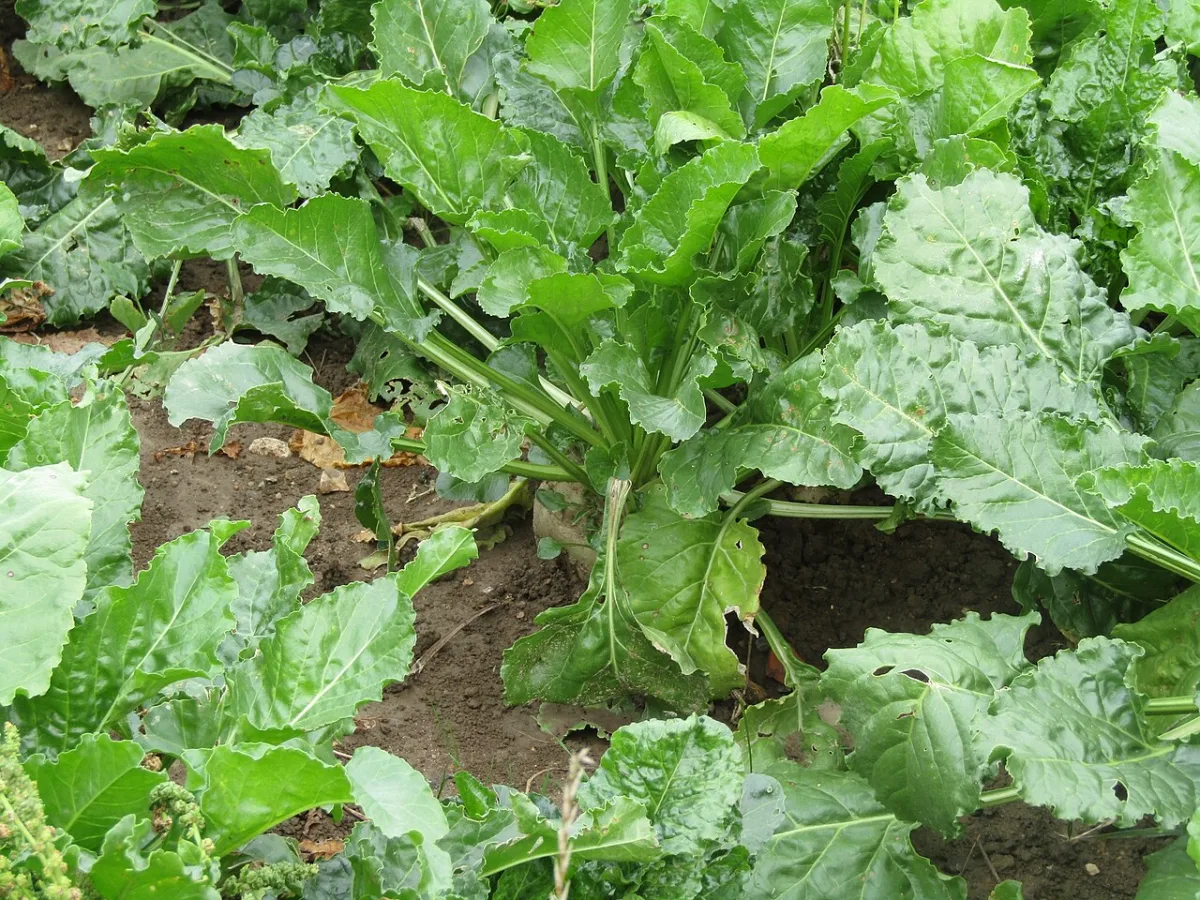
Sugar beet is one of the most important industrial crops. Sugar beet roots contain 16—22% sucrose. With a high beet root yield (400—500 centners per hectare), sugar production can reach 7—8 tons per hectare or more.
Sugar beet roots contain 75% water and 25% dry matter, including: beet sugar — 16—22%, fiber — 4—5%, nitrogenous substances — 1—1.5%, fats — 0.01%, ash elements — 0.5—0.8%.
Sugar beet is a valuable forage crop. During the industrial processing of sugar beet roots, by-products are obtained — pulp and molasses, which are of great economic importance. The dry matter of molasses contains about 60% sugar, about 15% nitrogen-free extractive substances, and 8—9% ash elements.
Molasses is used for the production of alcohol, food yeast, lactic acid, and citric acid.
Pulp (leached and pressed beet shreds) contains about 15% dry matter, including: nitrogen-free extractive substances — 10%, fiber — 3%, ash — 0.7%, fat — 0.1%, crude protein — 1.2%.
Pulp is a valuable feed for livestock animals: 100 kg of dry pulp contains 80 feed units, while the same amount of acidic or fresh pulp contains 10 and 8 feed units, respectively. With a beet yield of 300 centners per hectare, the output of pulp is 24 tons.
A by-product of sugar beet production — lime sludge — is used as a fertilizer. It contains: lime — 40—50%, organic matter — 15%, N — 0.2—1.7%, P2O5 — 0.2—0.8%, K2O — 0.5—0.9%.
Waste products obtained during harvesting of sugar beet (leaves, tops of the heads, tips of the roots) are used as animal feed in fresh, ensiled, or dried form. Leaves make up the majority of the waste — 35—50% of the root mass. The leaves contain up to 20% dry matter, including: protein — 2.5—3.5%, fat — 0.8%; and vitamins. 100 kg of beet tops contains 18—20 feed units.
Sugar beet roots exceed fodder beet in nutritional value by 2.2 times, as they contain twice as much dry matter. With a root harvest of 30 tons/ha, sugar beet along with the tops (15 tons/ha) provides 10,500 feed units per hectare.
Sugar beet serves as a good predecessor for a number of agricultural plants. Including sugar beet in a crop rotation has great agrotechnical importance, as it contributes to an increase in the yield of subsequent crops due to deep tillage of the soil, the application of high rates of fertilizer, and the control of weeds and pests in its sowings.
In global agriculture, sugar beet occupies a significant area — about 8 million hectares.
The largest sowing areas are located in Ukraine, Russia, China, Poland, France, Great Britain, Germany, Italy; it is also cultivated in Belgium, Belarus, Japan, Hungary, Turkey, and Georgia.
European countries produce up to 80% of the world's total beet sugar harvest.
In the Republic of Belarus, sugar beet is a priority crop. The area occupied by sugar beet sowings in Belarus in 2010 amounted to 97 thousand hectares. In the coming years, a decrease to 85 thousand hectares is planned. The gross yield of sugar beet in the republic is more than 3 thousand tons, with a yield of about 400 centners per hectare. The increase in yield is planned to be achieved through the improvement of measures for plant protection of sugar beet against diseases and weeds.
Annual sugar production in the Republic of Belarus is about 400 thousand tons (375 thousand tons are required). Sugar consumption per capita in the Republic of Belarus is approximately 40 kg per year.
Possessing high taste qualities and good digestibility, sugar (sucrose) is of great importance in the energy balance of the human body and serves as the main fuel source for muscular and mental activity. The blood sugar level of a healthy person is characterized by a certain constancy: it is not lower than 0.09% and not higher than 0.12%. Fatigue (physical and mental) is accompanied by a decrease in blood sugar content and an increase in the level of oxalic and other organic acids.
Wild beet has been used for food since time immemorial. In the 2nd–1st millennium BC, it was introduced into cultivation (presumably on the islands of the Mediterranean Sea). Farmers, discovering economically useful properties in the wild weed beet, introduced it into cultivation initially by using only the leaves as food, i.e., as a salad plant — silkva (hence our name "svekla").
As early as 2 thousand years BC, the Assyrians, Babylonians, and Persians knew the beet as a vegetable and medicinal plant. Approximately 500 years BC, when Europeans were still eating "tops," in Asia they were trying "roots," which proved to be both more filling and tastier. Soon, Europeans also began to regard the beet mainly as a root crop. Thus, Theophrastus in his "Enquiry into Plants" writes: "...the beet has a thick and fleshy root, sweet and pleasant to the taste, which is why some eat it even raw." The first root-forming types (according to Theophrastus) were well known by the 4th century BC. By the beginning of our era, cultivated forms of the common root beet had appeared.
In Russia, the beet has been known since approximately the 10th—11th centuries. Information about it can be found in Svyatoslav's "Izbornik" (Collection). It is assumed that the beet began its glorious journey across Rus' from the Kiev Principality. From there, it spread to the Novgorod and Moscow lands, Lithuania, and Poland. By the 14th century, the beet, along with turnips and cabbage, had become widespread in Russia. This is evidenced by numerous entries in the account books of monasteries, shop ledgers, and other sources. In the 16th—17th centuries, the beet became completely Russified, and Russians began to consider it a local plant. Beet sowing moved far to the north. Ukraine has always been a true center for beet cultivation.
In the 13th—14th centuries, the beet was known in Western European countries. In the 16th century, its differentiation into table and forage forms occurred. In the 18th century, sugar beet was obtained from hybrid forms of fodder beet. Since the end of the 19th century, its crop has spread to all continents.
In 1747, the German chemist A. S. Marggraf discovered sucrose in beet tubers and suggested using this vegetable for sugar production. Before this, sugar was produced mainly from sugar cane and was very expensive (although in fairness it should be noted that a hundred years before Marggraf, the Turks knew how to boil beet syrup and made sweets from it).
The purpose of the beet was defined. True, the sucrose contained in ordinary table beet proved clearly insufficient to establish industrial sugar production from it. A special cultivar of beet was needed. It is interesting that politics became the catalyst for the accelerated breeding of sugar beet. Striving to undermine England's profitable trade in cane sugar from its overseas colonies, Napoleon Bonaparte offered a prize of one million francs to anyone who could invent a way to produce cheap sugar from beets. (Sugar beet was developed during Napoleon's lifetime, but he never lived to see the sugar production technologies.)
The possibility of obtaining crystalline sugar from sugar beet was proven by Achard only in 1799, and soon (1801) the first factory for producing sugar from beets was built in Germany.
Research on extracting sugar from beets was also conducted in Russia. In 1798, Bindheim, a lecturer at Moscow University, obtained crystalline sugar from root beet. The cultivation of sugar beet and its processing for sugar production in Russia began in 1802, when the first sugar factory was built in the village of 302 tubers and root crops Alyabyevo, Tula Governorate. In Russia, the first sugar production, according to D. V. Kanshin, was organized by Count Bobrinsky, the son of Catherine II and Grigory Orlov. However, it developed rather slowly, and sugar was very expensive. Even at the beginning of the century, it exceeded honey in cost. Therefore, sugar did not play a significant role in the diet of the common people of Russia for a very long time, and was used more as a treat.
The beet genus Beta of the Amaranth family (Chenopodiaceae) is represented by annual, biennial, and perennial species.
The common beet species (Beta vulgaris L.) includes several subspecies, including ssp. vulgaris L. — a polymorphic collective subspecies that unites all cultivated biennial and annual forms of beet.
In turn, this subspecies is divided into varieties:
• sugar beet (v. saccharifera);
• forage beet (v. crassa);
• table beet (v. esculenta);
• leaf beet, or chard (v. cicla).
Species of the genus Beta exhibit a biological capacity for forming a root crop and accumulating sugar reserves in it.
Cultivated sugar beet is a hybrid plant resulting from the spontaneous crossbreeding of leaf and root forms of beet, improved by long-term selection.
In the ontogeny of sugar beet during the first growing season, three periods can be distinguished: emergence — the "fork" phase, rapid formation of leaf surface (2—4, 6—8 pairs of leaves, etc.), and the growth of the root crop mass with intensive accumulation of sucrose in it. These periods are closely interconnected.
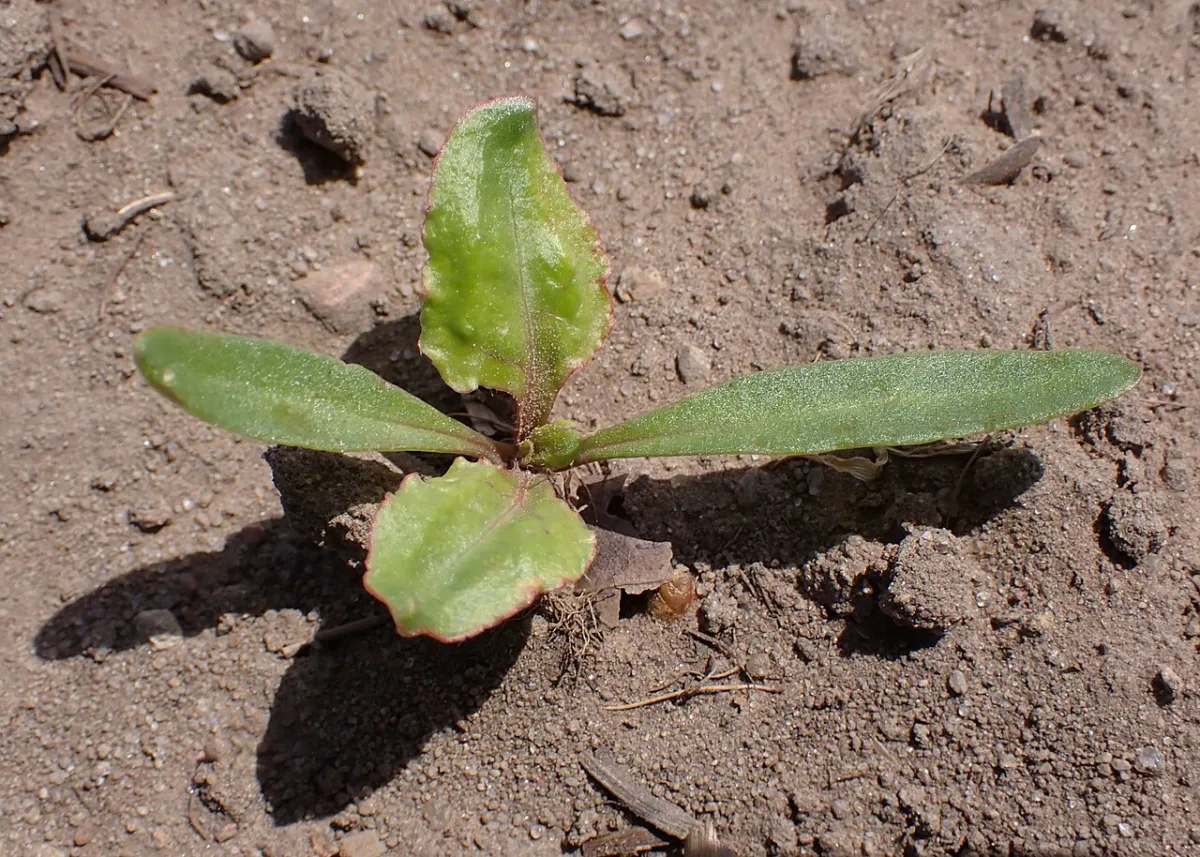
In the "fork" phase (seedlings with cotyledons before the formation of true leaves), the primary root of the sugar beet penetrates to a depth of 12—15 cm, and by the time the first pair of true leaves appears — up to 30 cm.
Basal leaves are simple, entire, heart-shaped, petiolate, with wavy edges, and a smooth or corrugated surface. Stem leaves that develop on the plants in the second year are narrower and smaller than the basal ones.
In the first year of life, sugar beet forms a thickened root (root crop) with a rosette of numerous (50—90) basal leaves, the surface of which on a single plant reaches 3000 cm2.
From this time (approximately from the end of June), the main root begins to thicken as a result of the cell division of the pericycle and phloem parenchyma. The primary cortex of the root at the three-pair-leaf stage cracks and is shed (root molting), being replaced by a secondary cortex covered with a layer of cork tissue. Subsequently, along with an increase in the number of leaves, the thickening and expansion of the main root occur — the formation of a root crop.
The roots of an adult plant in the first year of life have long root hairs (up to 3 mm), reach a depth of 2.5—3 m, and extend sideways for 50—60 cm.
The root crop is formed due to the activity of several (up to 10—12) successively alternating cambial rings and vascular-fibrous bundles. Between these rings, parenchyma tissue grows, in the cells of which the bulk of sugar or other soluble carbohydrates is stored (in table and fodder beet) (fig. 41, d; 42, c).
With a high level of agrotechnology, the parenchyma tissue in beet develops more strongly, which leads to the formation of larger and heavier root crops (weight 300—500 g and more).
Sugar beet is a demanding crop with a two-year development cycle. In the first year, an agronomist obtains root crops for processing, and in the second, seed. Understanding the plant's anatomy and its reaction to external factors allows for avoiding losses in sugar content and preventing premature flowering.
Biology of development and the threat of bolting
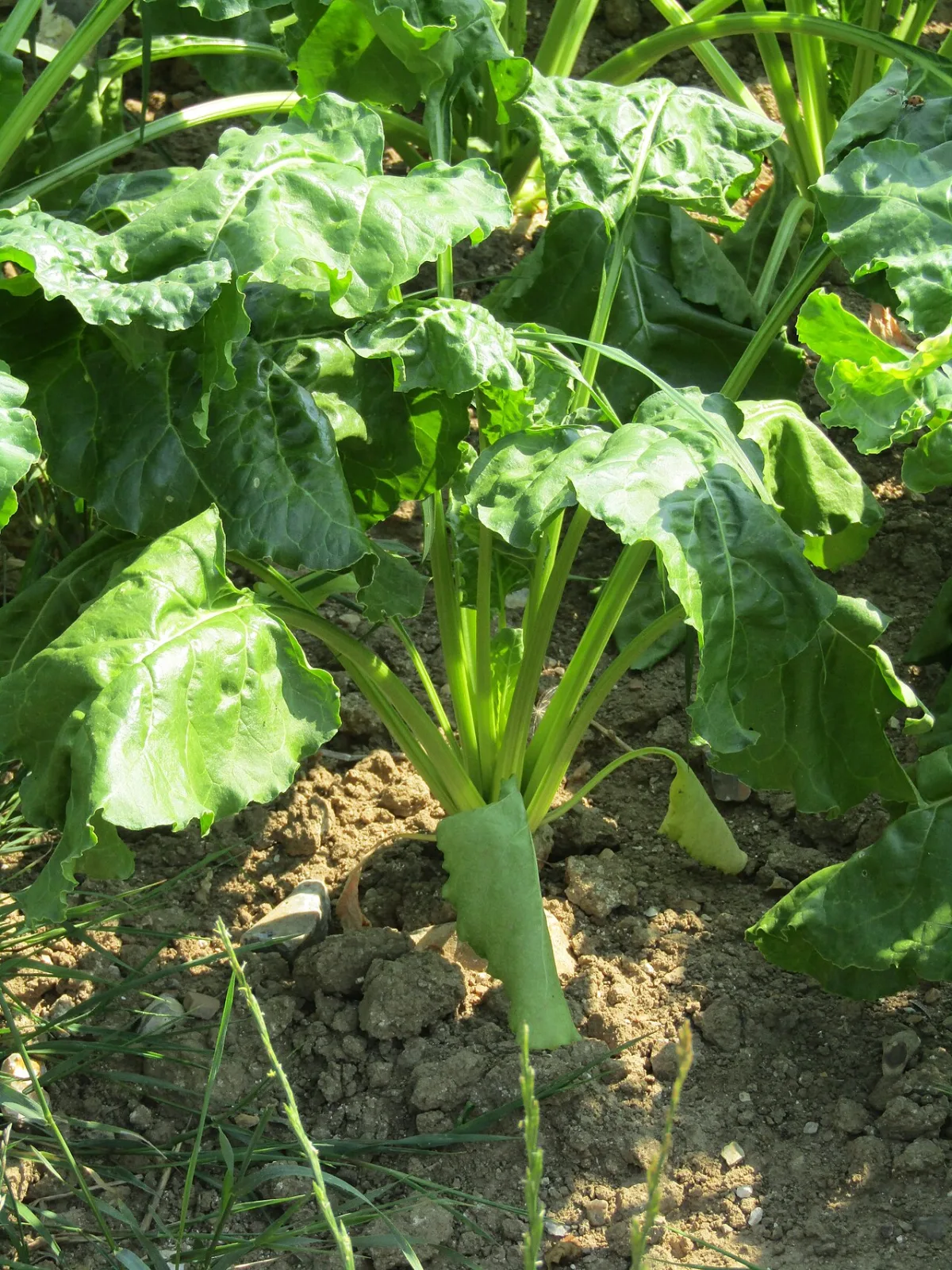
A marketable root crop of an adult plant should have a conical shape, dense white flesh, and a weakly developed crown. Its lateral roots are arranged in two rows in small indentations. Anatomically, the root crop is divided into three key zones:
- Crown (epicotyl) — a shortened modified stem bearing leaves and buds. Its boundary is considered to be the lower line of petiole attachment.
- Neck (hypocotyl) — the enlarged hypocotyl segment between the crown and the root proper. It has a cylindrical shape; it has neither leaves nor lateral roots.
- Root proper — the conical part on which lateral roots are formed, transitioning at the bottom into a thin tail.
To obtain seed, first-year mother root crops are dug up in the autumn, stored in winter, and planted in the spring. From the sprouting buds of the crown, leafy ribbed flowering shoots develop with a height of 1.0–1.5 m. Beet is a plant cross-pollinated by wind and partially by insects.
Seeds mature in nutlet fruits, which in polycarpic cultivars grow together into fruit clusters (glomes) of 2–6 pieces. In monogerm beet, the glome consists of one nutlet. The weight of 1000 glomes of polycarpic beet is 20–50 g, and for monogerm beet — about 20 g. The brown shiny seed coat makes up 25–30% of the glome weight.
Early sowing during a cold, prolonged spring with a long photoperiod provokes bolting — the transition to flowering in the first year of life. Bolted root crops become coarse and low in sugar, and during storage, they are more severely affected by storage rot.
In breeding work, the phenomenon of cytoplasmic male sterility (CMS) is actively used. In some beet biotypes, with normal development of female organs, the anthers do not contain pollen. This biological effect helps breeders obtain high-productivity hybrids.
Climatic requirements: how to get maximum sugar
Temperature regime at the start of the growing season determines the density and uniformity of emergence. In the first days of life, young seedlings are extremely sensitive to late frosts. With the appearance of true leaves, resistance to frost increases, which helps to preserve the crop during a sudden spring cold snap.
- Sum of active temperatures — 2400–2800 °С
- Depth of root penetration — up to 2–3 m
- Minimum soil temperature for germination — 3–4 °С
- Optimal soil temperature for germination — 15–18 °С
Temperature requirements for sugar beet at different stages of cultivation are shown in the table:
| Developmental phase or biological process | Temperature, °C | Effect on the plant |
|---|---|---|
| Minimum seed germination temperature | 3–4 | Seedlings appear only on the 25–28th day |
| Optimal seed germination temperature | 15–18 | Seedlings appear quickly, on the 6–7th day |
| "Cotyledon" phase (emergence) | −3…−4 | Critical frost capable of destroying the plants |
| First pair of leaves phase | −4…−6 | Tolerable frost that plants can withstand |
| Optimal assimilation temperature | 20–23 | Maximum efficient photosynthesis |
| Formation of reproductive buds on crowns | 15–23 | Favorable temperature interval |
| Cessation of autumn growing season | 2–4 | Growth and development stop |
| Storage of mother root crops | 3–4 (1–6 acceptable) | Optimal regime for maintaining raw material quality |
| Start of rosette leaf regrowth in seed plants | 2–3 | Start of spring growing season for planted root crops |
| Growth of rosette leaves and seed plant stems | 15–20 | Most favorable conditions for shoot development |
Sugar beet is a long-day plant. As the day length increases, the plants develop faster, and sugar accumulates more actively in the leaves and root crops. Shading in dense crops leads to a decrease in growth rates. In this case, the sugar content strongly depends on the intensity of solar radiation in the second half of the growing season: sugar accumulation is faster when clear weather alternates with cloudy weather.
Due to a deep root system, beet is relatively drought-resistant and efficiently utilizes autumn-winter soil moisture reserves. However, excess moisture is harmful to the harvest. In years with higher precipitation, the mass of root crops is usually higher, but their sugar content drops.
The crop, especially seed plants, does not tolerate waterlogging well. The groundwater level in the plot should not be closer than 1.5–2.0 m from the soil surface.
The best combination of environmental factors occurs during warm and humid weather in May, and mild and humid weather in June and July. In August, plants require a sufficient amount of precipitation and sunny days, and in September and October, they need warm and moderately humid weather.
Soil requirements, moisture, and stages of crop development
For the normal development of sugar beet, sod-podzolic light and medium loam soils with a depth of the plough layer of at least 20–22 cm are suitable. The soil must be well supplied with mobile forms of nitrogen, phosphorus, and potassium, with a neutral or slightly alkaline reaction of the soil solution. On acidic soils without preliminary liming, beet produces low yields. Heavy clay, waterlogged, poor sandy, and stony plots are not suitable for cultivation, as the crop is extremely demanding regarding aeration.
The demand for moisture changes throughout the season. If we divide the growing season from May 15 to October 15 into three 50-day periods, the ratio of water consumption will be 1:9:3. Drought is most dangerous in July-August — at this time, the moisture deficit most significantly reduces the mass of root crops and sugar content. For seed plants, the period from flower stalk emergence to the end of flowering (starting in mid-June and lasting 20–40 days) is critically important.
- Growing season (1st year) — 150–170 days
- Growing season (2nd year) — 100–130 days
- Moisture for seed swelling — 120–160% of their mass
- Ratio of root mass to leaves at technical maturity — 3:1
In the first year of life, beet passes through 8 phases: seed germination, "fork" stage (lasts 6–8 days), appearance of the 1st pair of leaves, 2–3 pairs of leaves, 7th leaf, row closure, inter-row closure, and technical maturity. Development is divided into three 50-day stages. In May-June, leaves and roots grow actively; in July-August, their joint intensive growth occurs; and in September-October, top growth slows down and intensive sugar accumulation takes place.
It is important for an agronomist to distinguish between three types of beet maturity. Botanical maturity occurs at the ripening of seeds at the end of the second year of life. Biological maturity is characterized by the death of old leaves, a decrease in water and ash content in root crops, while the mass and sugar content grow slowly. Technical maturity is determined by the maximum root mass and sugar content with minimal average daily gain. Before it arrives, rows open up, leaves lighten and partially die off.
Predecessors, tillage, and nutrition system
The main condition for the intensification of sugar beet production is the complete exclusion of manual labor in all operations and its replacement by machine labor.
The best predecessors for beet are winter cereals and grain legumes. It is recommended to return beet to the same field no earlier than after 3–4 years. Predecessors must ensure that fields are free of weeds, maintain a good water regime, and allow for timely tillage.
- Autumn loosening of the soil to a depth of 5–8 cm to induce weed germination. The operation is repeated after 7–10 days.
- Winter ploughing in the autumn to the depth of the plough layer.
- Spring cultivation with harrowing when the soil reaches physical maturity to preserve moisture, combat soil crust, and level the surface.
- Soil rolling followed by immediate sowing.
Under autumn ploughing, organic fertilizers are applied: decomposed manure at a rate of 30–40 t/ha or compost (a mixture of peat, straw, and liquid manure) at a rate of 40–50 t/ha. Mineral nutrition is calculated based on the recommended application rates of active ingredients per hectare.
It is undesirable to use fresh manure, liquid manure, and chicken manure for sugar beet. They contribute to the accumulation of nitrates in root crops and are quickly washed out of the soil.
| Nutrient element | Application rate of active ingredient, kg/ha |
|---|---|
| Nitrogen (N) | 140 |
| Phosphorus (P₂O₅) | 155 |
| Potassium (K₂O) | 200 |
More than 50 cultivars and hybrids are used in production. The Experimental Scientific Station for Sugar Beet offers the population cultivar Belorusskaya odnosemyannaya 69 and the hybrid Nesvizhsky 2. Among foreign hybrids, Kristall, Rubin, Kassandra, Alisa, and Traviata are considered sugary and early-ripening. Kobra, Boruta, and Evrika combine high yield with high sugar content. Kazak, Krokodil, and Araksiya belong to high-yielding hybrids.
High-quality seed material is the foundation for uniform emergence of sugar beet seedlings. Beet-growing farms purchase ready-to-use seeds that have undergone a full preparation cycle at specialized plants: sorting, calibration, and, if necessary, polishing and pelleting. There, they are also treated with seed treatment against a complex of diseases and enriched with nutrients, including microelements. Sowing begins immediately after pre-sowing tillage, when the soil at a depth of 5 cm warms up to 5–6 °C. Zoned single-seed cultivars or hybrids are used for the work.
| Seed quality indicator | Standard requirement |
|---|---|
| Purity | not lower than 98 % |
| Calibration | not less than 85 % |
| Germination | not less than 80 % |
| Seed diameter | 3.5—4.5 mm or 4.5—5.5 mm |
- Row spacing — 45 cm
- Distance within a row — 13—18 cm
- Seed planting depth — 2—3 cm (up to 4 cm in light soils during dry years)
- Sowing rate — 4—8 kg/ha
Cultivation of seed beets for seed production has its own technological features. Only healthy root crops typical for a zoned cultivar are selected for planting. Soil for seed beets is prepared in the same way as for commercial crops of the first year of cultivation, but in spring, an additional application of 5—6 t/ha of humus is made. Mother roots are planted in early spring using a 70 × 70 cm scheme.
Care for seed plants includes three main operations:
- regular loosening of row spacing;
- top dressing application before the second loosening of row spacing at a rate of 1.5 c/ha of superphosphate and 3—4 c/ha of ammonium nitrate;
- pinicizing (topping) during flowering — removal of inflorescences on first and second-order branches.
Crop care, pest protection, and harvesting
Work on the care of commercial crops begins shortly after sowing. 4—5 days later, pre-emergence harrowing across the rows is carried out to remove weeds, and the field edges are treated with special chemical preparations. After seedling emergence of beets and until the formation of three pairs of leaves, the crops are thinned twice. The first thinning is performed with an interval of 6—8 cm, and the second — after 6—10 days with an interval of 10—12 cm.
The use of herbicides is unacceptable during a drought. Soil preparations (Pyramin Turbo, Goltix, Dual Gold, etc.) are applied before emergence, and post-emergence herbicides (Betanal Expert OF, Betanal 22, Bicep) are applied in the morning or evening at an air temperature at soil level between 15 and 25 °C.
Young plants are threatened by a complex of pests: flea beetles, grey and common weevils, leaf and root aphids, caterpillars, mining flies, wireworms, and nematodes. To combat them, crops are treated with Furadan, Gaucho, or Montur Forte insecticides. Plants are protected against dangerous diseases — cercosporosis, powdery mildew, ramulariasis, and root rot — using Derosal, Impact, Kharisma, or Alto Super fungicides.
Adherence to crop rotation and high-quality tillage remain the main methods in the system of protecting beets from soil pests.
Mass harvesting of sugar beet root crops is carried out during the period of technical maturity. Optimal terms for performing this work are from October 1 to October 20. The technological process of harvesting includes several sequential stages aimed at preserving the harvest quality.
- 2—3 weeks before harvesting, perform pre-harvest loosening of row spacing to a depth of 10—12 cm.
- Immediately before the start of harvesting, mow the tops.
- Dig out the root crops with beet harvesters.
- If necessary, perform final cleaning of the root crops from remaining tops.
Read next
Agrochemistry For students
Optimal soil conditions and nutrient application rates for sugar beet
Crop production For students
Cultivation characteristics and economic value of sugar-storing and starch-storing crops
Crop production For students