
The role of succulent root crops in feeding high-productivity dairy livestock
3 min read
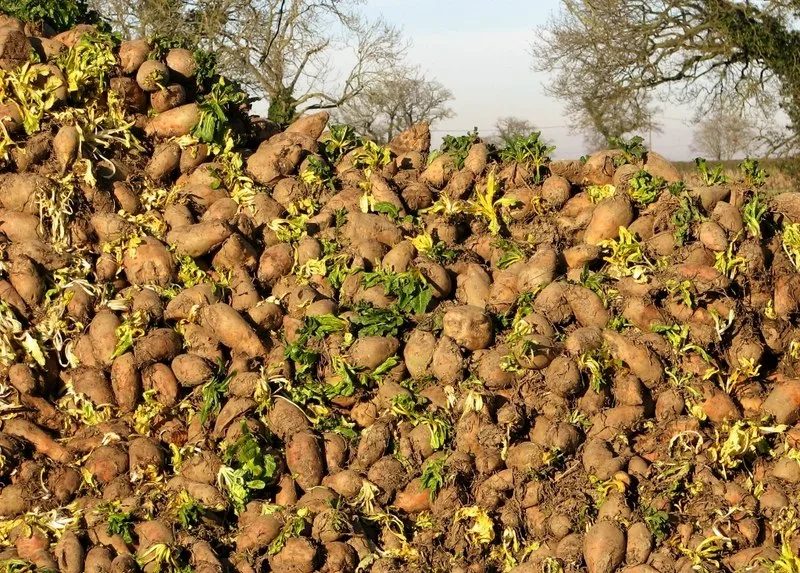
Succulent root crops are an important component of the diet for high-productivity dairy livestock. Fodder beet, swede, turnip, and carrot are readily consumed by animals, stimulate milk production, and improve the digestibility of roughage. In highly productive farms, the share of root crops in the structure of succulent feed reaches half of the total volume.
- Share in succulent feed for high milk yields — 40–50 %
- Carbohydrate rate per 100 g of crude protein — 120–150 g
- Protein content in root crops — 2.0–2.5 %
- Average potassium content in ash — 3.4 %
The sugar-protein ratio in rations is most often disrupted during transition periods — in spring and autumn. During this time, root crops are especially necessary for animals to compensate for the deficiency of easily digestible carbohydrates.
In terms of nutritional value and digestibility, root crops are not inferior to young pasture grass. Introducing them into the diet allows for more economical consumption of expensive concentrates, and also improves the reproductive capacity of cows and the quality of the offspring. It is important to use not only the root crops themselves but also the tops: the leaves are richer in dry matter, protein, and vitamins, and are suitable for feeding fresh, for ensiling, and for the production of grass meal or pellets.
The mineral composition of root crop ash is well balanced:
- potassium — 3.4 %;
- phosphorus — 1.1 %;
- calcium — 0.7 %;
- magnesium — 0.35 %.
The ash also contains vital microelements: cobalt, copper, zinc, and manganese. Although there is little total protein in the roots, it is characterized by high biological value due to essential amino acids — lysine, methionine, and arginine. In terms of vitamin content, root crops and leaves surpass many other feeds. 1 kg of raw swede mass contains 310–470 mg of carotene, and carrot — 104–260 mg. The green mass of swede and turnip leaves contains 1200–1300 mg of vitamin C per 1 kg, carrot — 700 mg, and beet — 500 mg.
| Crop | In 1 ton of root crops | In 1 ton of leaves | ||
|---|---|---|---|---|
| Feed units | Crude protein, kg | Feed units | Crude protein, kg | |
| Fodder beet | 120 | 20–22 | 100 | 40–42 |
| Carrot | 140 | 20–22 | 170 | 50 |
| Swede | 130 | 20–22 | 100 | 32 |
| Turnip | 90 | 15 | 110 | 32 |
Structural features and selection of fodder beet cultivars
Fodder beet (Beta vulgaris L. v. crassa) is biologically close to sugar beet, but has distinct anatomical and morphological differences. In the anatomical structure of its root, there are significantly fewer conductive rings. The color of the neck (hypocotyl) is much more diverse and can be white-green, yellow, pink, carmine, orange, or purple.
When choosing a cultivar, it is important to evaluate the structure of the root. In fodder beet, the actual root is poorly developed, and 25 to 65 % of the mass falls on the head (epicotyl) and the neck (hypocotyl). The more strongly the above-ground part of the plant is developed, the more moisture-loving the cultivar will be and the less dry matter will accumulate in its root crops.
The shape of the root directly affects the yield and quality of the raw material. Conical (elongated and heart-shaped shortened), cylindrical, and sac-shaped root crops are distinguished. Higher yields of mass are obtained from sac-shaped roots, while a higher percentage of sugar content is provided by roots of a conical shape. However, even within the same cultivar, the shape of the root crops can noticeably deviate depending on growing conditions.
Read next
Crop production For students
Cultivation characteristics and economic value of sugar-storing and starch-storing crops
Crop production For students
Biological characteristics and agroclimatic conditions for growing forage beet

Agrochemistry For students