
Biological characteristics and agroclimatic conditions for growing forage beet
4 min read
Biological characteristics and climate requirements
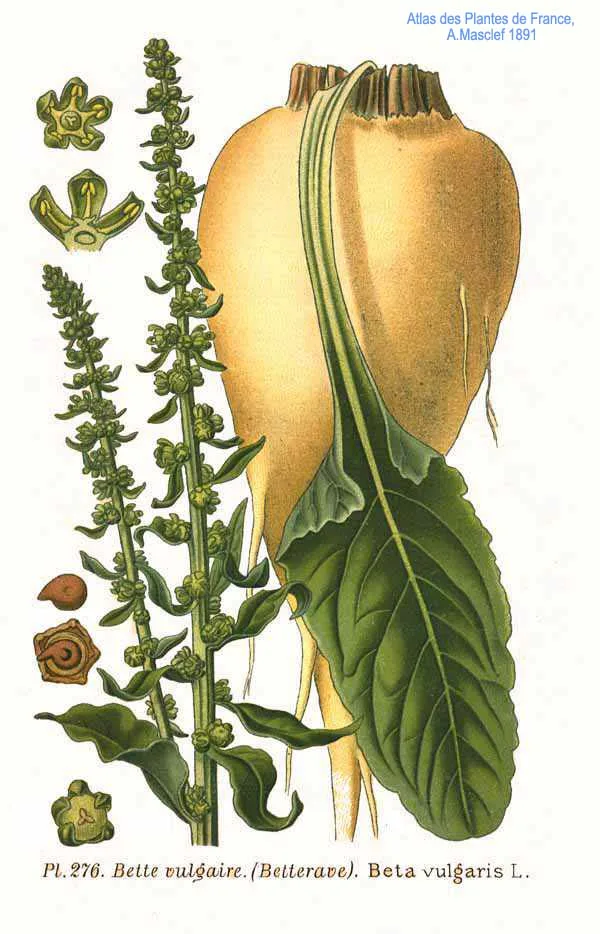
Fodder beet differs from sugar beet in the structure of its root crop and leaf apparatus. Its root crop contains from 5 to 8 vascular-fibrous bundles, between which lies parenchyma with a lower sugar content. The leaves of the crop are smoother, have a heart-shaped-ovate form, and are arranged horizontally. At the same time, the total number of leaves is 20–30% lower, and the infructescences shatter significantly less. The plant is cross-pollinated by wind and insects.
In the first year of the growing season fodder beet goes through the same stages of ontogenesis as sugar beet. The development of the plants proceeds sequentially and requires constant monitoring in the field. It is important for the agronomist to track the passage of three key periods:
- emergence;
- appearance of the "fork";
- intensive formation of the leaf surface, increase in root crop mass, and accumulation of nutrients in it.
These developmental periods are closely interrelated. Functionally, they are completely analogous to the processes in sugar beet. The total growing season in the first year of cultivation is 125–150 days.
- Growing season — 125–150 days
- Sum of active temperatures — 1900–2400 °С
- Optimal soil moisture — 65–70 %
- Minimum germination temperature — 2–5 °С
- Favorable temperature for growth — 15–20 °С
- Cessation of autumn growth — 6 °С
Fodder beet belongs to long-day plants. Thanks to accelerated development under long daylight hours, the crop has successfully spread far to the north. Nutrients are accumulated most actively during sunny days with a gradual reduction in the duration of light. In the second year of development, the reduction of daylight, on the contrary, stimulates the flowering of seed plants.
Fodder beet seedlings appear 18–20 days after sowing, but they are extremely sensitive to spring frosts — temperatures of −3…−4 °С completely kill the young plants. In the autumn, harvested and uncovered root crops are damaged at temperatures as low as −2 °С, losing their storage quality, although the leaves of vegetative plants can withstand morning frosts down to −6 °С.
Special attention must be paid to the water regime of the crops. The peak of water consumption occurs at the end of July – early August. If there is a lack of moisture during this period, the leaf apparatus does not receive full development. As a result, the accumulation of nutrients in the root crops is significantly reduced.
Agrotechnology: from field selection to harvesting
For the cultivation of fodder beet, well-aerated soils rich in nutrients and trace elements are required. The optimal soil reaction should be close to neutral. The best predecessors in crop rotation are winter crops, grain legumes, corn, and other row crops. Beet provides high yields when grown on reclaimed river floodplains.
Obtaining high yields of large beets with an increased dry matter content requires the mandatory application of organic matter. Under autumn ploughing, semi-rotted manure and other local fertilizers (compost, ash) are applied in mixtures with mineral fertilizers. Good results are also obtained by fertilizer application in rows during sowing and subsequent top dressing.
On acidic soils, fodder beet responds excellently to liming. It is most effective to apply the ameliorant together with organic-mineral mixtures during pre-sowing tillage. When growing on peat-bog soils, the application of fertilizers containing boron and copper is effective.
During sowing, a starter dose of complete mineral fertilizer is applied directly into the rows. It is important for the agronomist to balance the nutrients at the initial stage. Nitrogen is vital for beet at the start of the growing season, while phosphorus and potassium are essential in the second half of the summer, when there is an intensive outflow of carbohydrates into the root crop.
| Nutrient | Dose of active ingredient per 1 ha |
| Nitrogen | 8–10 kg |
| Phosphoric acid | 15–20 kg |
| Potassium | 10–12 kg |
The timing, methods, and application rates for sowing fodder beet coincide with similar parameters for sugar beet. Row spacing is set at 50 cm for standard conditions or 60 cm under irrigation. When establishing density, 2–3 plants are left in each nest at a distance of 15–20 cm from each other. Subsequent crop maintenance does not differ practically from the maintenance of sugar beet.
The harvesting campaign must be completed before the onset of frost, as frost damages the parts of the root crops protruding above the soil surface. Frost-damaged tissues rot quickly and become unsuitable for storage. When preparing stecklings, the foliage is pruned to preserve the central bud and leave leaf petioles 1–1.5 cm long.
Modern high-productivity cultivars and hybrids of fodder beet are grown in the fields of Belarus. They show excellent results in both average and maximum yield. In addition to the Milana and Monro hybrids indicated in the table, proven cultivars such as Darinka and Lada are also cultivated on farms.
| Cultivar / Hybrid | Average yield, c/ha | Maximum yield, c/ha |
| Milana | 883 | 1373 |
| Monro | 1056 | 1450 |
Read next
Crop production For students
The role of succulent root crops in feeding high-productivity dairy livestock
Agrochemistry For students
Optimal soil conditions and nutrient application rates for sugar beet
Agrochemistry For students