
Organic and mineral fertilizers for vegetables in a greenhouse
12 min read
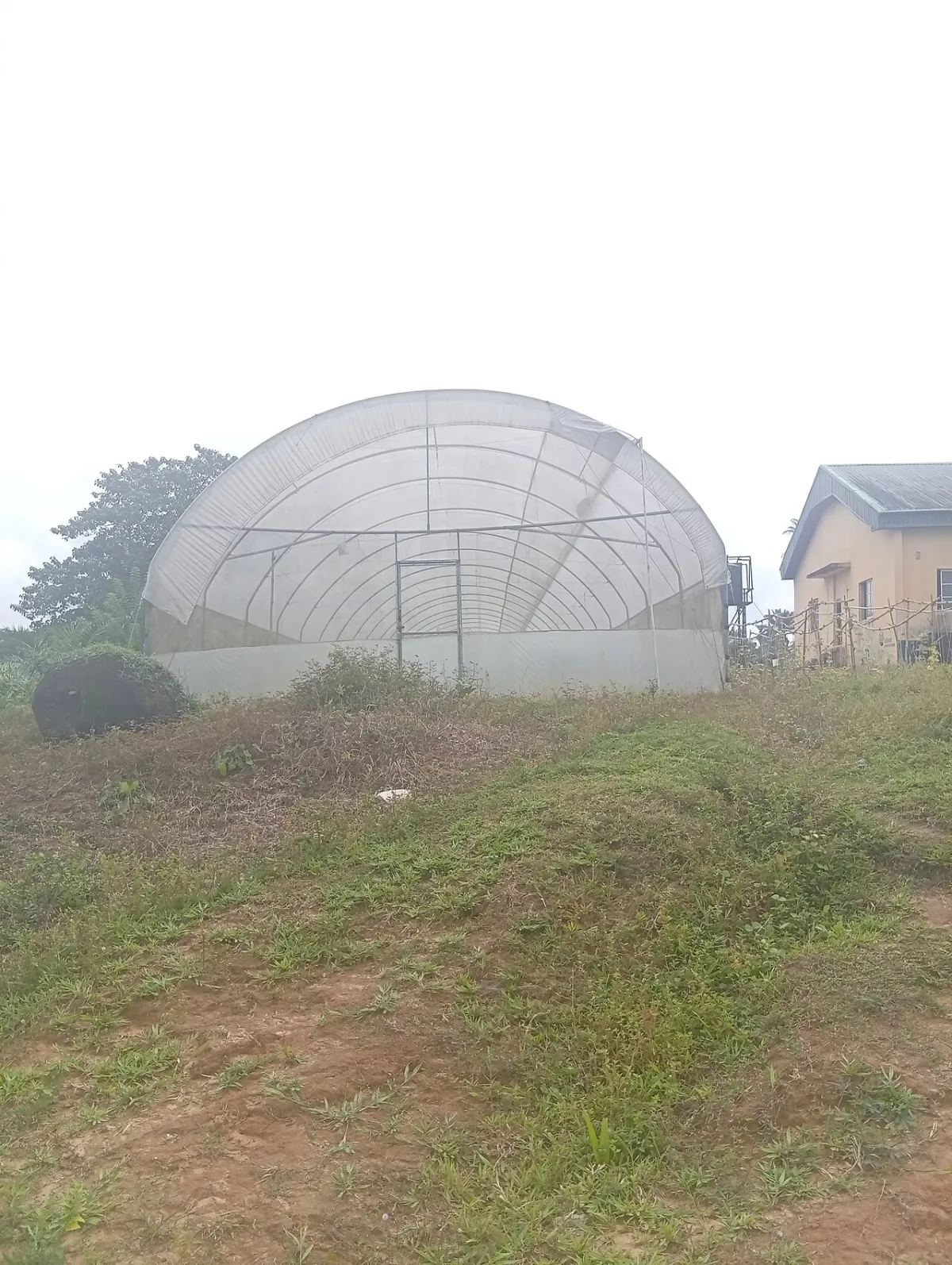
Root nutrition conditions in greenhouses and hotbeds differ significantly from open soil. Due to frequent and abundant irrigation, nutrients are quickly leached from the root zone, and regular top dressing leads to the accumulation of ballast compounds. To obtain high vegetable yields, it is necessary to artificially create a fertile, loose, and moisture-retaining soil with a medium reaction close to neutral (pH = 6).
1. Greenhouse soil preparation and basic nutrition calculation
The basis of greenhouse soil consists of field and sod soil, sand, ash, and organic components. The ingredients are thoroughly mixed together to obtain a homogeneous substrate. Before planting crops, the prepared soil must be enriched with mineral or organic-mineral fertilizers to the depth of digging. For basic bed enrichment, classic mineral fertilizers or organic-mineral mixtures of the Gumi-Omi line are used, distributing them evenly over the surface.
Used greenhouse and hotbed soil can be reused for preparing soil mixtures only two years after its removal from rotation.
- Fertile layer thickness — 25–30 cm
- Soil consumption per 1 m² of bed — 0.25–0.3 m³
- Fertilizer incorporation depth — 20–30 cm
- Optimal soil acidity — pH 6
| Mineral fertilizer | Dosage per 1 m² | Organic-mineral analog | Dosage per 1 m² |
|---|---|---|---|
| Ammonium nitrate | 60–90 g | Gumi-Omi Nitrogen | 90–120 g |
| Superphosphate | 30–40 g | Gumi-Omi Phosphorus | 60–80 g |
| Potassium chloride | 10–15 g | Gumi-Omi Potassium | 30–40 g |
2. Specifics of using organic fertilizers and composts
Organic fertilizers improve the physical properties of the soil and serve as a nutrient source for microflora. Fresh manure is applied for autumn digging, while rotted manure can be incorporated both in autumn and spring at a rate of 4–5 kg/m². In greenhouses, fresh manure is also laid in a layer of 20–30 cm under the soil as a heat source (biofuel).
When performing liquid root top dressing with fresh manure, the infusion is pre-aged for 10–14 days. Before irrigation, 1 liter of the prepared concentrate must be diluted in 10 liters of clean water.
For transplants, improving soil structure, and mulching beds, humus is used at a rate of 20–40 kg/m² for all vegetable crops. An alternative is the universal organic fertilizer Bionex-1, which contains nitrogen, phosphorus, potassium, micronutrients, and beneficial soil microflora. Poultry manure is a highly concentrated organic fertilizer rich in nitrogen, phosphorus, calcium, and magnesium, which is used exclusively in the form of liquid root top dressing.
- Dilute 0.3–0.7 liters of poultry manure in 10 liters of warm water at a temperature of 22–25 °C.
- Infuse the solution for 5–6 days, stirring it periodically.
- Water the plants with the prepared working solution at a rate of 1–2 liters per plant.
Composite composts based on manure, peat, and plant residues mature from 9 to 18 months. The finished fertilizer is a dark, homogeneous mass and is applied for digging at a rate of 10–30 kg/m². To enrich the compost heap with mineral elements, fertilizers or organic-mineral mixtures are added at the laying stage.
| Fertilizing component | Application rate per 1 m³ of raw material |
|---|---|
| Superphosphate (or Gumi-Omi Phosphorus) | 2 kg (or 4 kg) |
| Potassium sulfate (or Gumi-Omi Potassium) | 0.8 kg (or 1.6 kg) |
| Wood ash or lime | 3 kg |
Composts from sawdust, shavings, fine chips, and bark are used as loosening agents. Fresh wood waste must be mixed with soil and nitrogen-phosphorus fertilizers to compensate for nutrient depletion. For one bucket of fresh waste, add urea and superphosphate or Gumi-Omi line mixtures, then mix the mass thoroughly. The mixture is placed in a stack for 2–3 months to mature. Finished wood compost is added to greenhouse soil in an amount of 20–30% of the total mass.
Main mineral fertilizers: application rules and dosages
For nitrogen nutrition in greenhouses, urea is used, as well as ammonium, potassium, and sodium nitrate. These ballast-free forms allow for quick correction of nitrogen deficiency at different stages of plant growing season. The choice of specific fertilizer depends on the development phase of vegetable crops and the current soil acidity.
- Top dressing with urea against powdery mildew — 50 g per 10 l
- Application of double superphosphate for digging — 50–100 g/m²
- Duration of wood ash effect — 2–2.5 years
- Application of potassium sulfate for digging — 20–40 g/m²
Urea is used for root top dressing of all types of vegetables at a rate of 15–20 g per 10 liters of water at intervals of 10–12 days. For foliar spraying, the concentration is increased. A urea solution (50 g per 10 liters of water) is used to treat growing plants, primarily those affected by powdery mildew.
Ammonium nitrate is used during spring soil preparation and for root top dressing. For liquid top dressing, dissolve 5–10 g of ammonium nitrate in 10 l of water, and for dry application to garden beds, use 10–20 g per 1 m². Since this fertilizer acidifies the soil, on acidic sites it is replaced with sodium or potassium nitrate at a rate of 20–30 g per 1 m² applied before digging or as a top dressing.
Double superphosphate provides plants with available phosphorus during spring or autumn digging of garden beds (50–100 g per 1 m²). It is also used for liquid root top dressing, preparing a nutrient solution according to a specific scheme.
- Dissolve 12–25 g of double superphosphate in 10 l of water.
- Let the solution stand for 2–3 days.
- Carefully pour off the top clear portion for plant irrigation, without shaking the container.
- Dispose of the sediment remaining at the bottom in a compost pile.
Never apply superphosphate simultaneously with lime or chalk — this converts phosphorus into a form inaccessible to plants. If it is necessary to perform liming of the soil, first apply superphosphate and dig the site, and then distribute the lime or chalk.
Potassium sulfate (potassium sulfate) is applied for digging in autumn or spring at a dose of 20–40 g per 1 m², and for dry top dressing, use 10–20 g per 1 m². Wood ash is used as a universal source of potassium, calcium, silicon, phosphorus, and sulfur. It is scattered in dry form (50–200 g per 1 m²) in spring or autumn to neutralize soil acidity, and its residual effect lasts for 2–2.5 years.
Complex fertilizers ensure balanced nutrition. Potassium nitrate is recommended for all vegetables during the fruit set phase (especially tomatoes, cucumbers, and peppers). Nitroammophoska is used on any soil for all crops, nitrophoska is incorporated before sowing, and organomineral mixtures are used as a universal solution.
| Fertilizer | Application method | Dosage |
|---|---|---|
| Potassium nitrate | Liquid top dressing | 30–40 g per 10 l of water |
| Nitroammophoska | Dry / root top dressing | 30–40 g per 1 m² |
| Nitrophoska | Dry top dressing | 50–60 g per 1 m² |
| Nitrophoska | Liquid top dressing | 20–30 g per 10 l of water |
Micronutrients and operational control of plant nutrition
Micro-fertilizers containing boron, manganese, zinc, copper, and molybdenum are required by greenhouse crops in minimal quantities. However, a deficiency of even one micronutrient sharply inhibits plant development and reduces product quality.
Applying pure micro-fertilizers in small doses is difficult. For uniform distribution across the greenhouse area, pre-mix them with macro-fertilizers, peat, or sifted ash.
Intensive vegetable growing in protected soil is associated with the application of high doses of nutrients. To recoup costs and avoid harming plants, it is necessary to flexibly manage the nutrition regime based on analyses.
Regularly monitor the composition of greenhouse soils. Perform basic application based on the results of pre-season agrochemical analysis, and adjust ongoing top dressing during the growing season.
The need for additional top dressing is determined by the following methods:
- laboratory analysis of soil for nutrient content;
- visual diagnosis of plant condition;
- chemical analysis of plant tissues.
In winter greenhouses with subsurface heating, soil preparation is carried out as follows. The top fertile soil layer is removed and piled into ridges. For 100 m² of greenhouses, it is necessary to prepare 13–15 m³ of field soil, 10–12 m³ of peat, and 2.5–3.0 tons of manure. This amount is sufficient to create a 25 cm layer in the first year and increase it to 30 cm subsequently.
In greenhouses without subsurface heating, the top soil layer is not removed. After constructing the greenhouse, non-inversion tillage is carried out to a depth of 30–35 cm, 250–300 tons of manure per 1 ha are applied and ploughed in to a depth of 20–25 cm. To improve the agrophysical properties of the soil during milling, loosening materials are added at a rate of 500 m³ per 1 ha.
Acidity of greenhouse soils and its regulation
The reaction of greenhouse soils should be slightly acidic or close to neutral (pHH2O 6–7, table 25). If the initial components and soils are acidic, liming must be carried out. The dose of lime is determined based on the pH of the salt extract or the value of hydrolytic acidity. For liming, dolomite or limestone flour, dolomitized limestone, slaked lime, or Izvest-Gumi are used.
Table 25. Classification of soils by degree of acidity.
            Acidity degree           pH of water extract
       Strongly acidic                           less than 5.5
       Acidic                                   5.5-6.0
       Slightly acidic                          6.1-6.2
       Normal                                   6.3-6.5
       Close to neutral                         6.6-6.8
       Neutral                                  6.9-7.0
       Slightly alkaline                        7.1-7.2
       Alkaline                                more than 7.2
Fertilizing greenhouse crops. Fertilizers used in protected soil vegetable growing should be highly concentrated, ballast-free, and contain no ions not used or rarely used by plants, such as SO₄²⁻, Na⁺, or insoluble impurities (CaSO₄, etc.). All fertilizers containing chlorine (potassium chloride, potassium salts), fluorine, arsenic (simple superphosphate), and urea with a biuret content of more than 1% should not be used in protected soil.
For nitrogen fertilizers in protected soil vegetable production, ammonium nitrate, carbamide (urea), calcium nitrate, calcium ammonium nitrate, as well as complex fertilizers containing nitrogen are used. Among phosphorus fertilizers, double superphosphate, as well as ammophos and diammonphos, are used. The best potassium fertilizer for vegetable crops is potassium nitrate; potassium sulfate and potassium carbonate (potash) are also used.
Based on organic matter content, soil substrates are classified as follows: up to 30% organic matter – low content,
The optimal content of nitrogen, potassium, and magnesium (aqueous extract) in greenhouse soils is established in accordance with the organic matter content. The calculation of the optimal content of nitrogen, potassium, and magnesium in greenhouse soil is carried out using the formulas:
M = (2V + 15) × 2 where: K – optimal potassium content, mg/kg;
A – optimal nitrogen content, mg/kg;
M – optimal magnesium content, mg/kg;
V – organic matter content in the soil, %
Based on the formulas, the nutrient level in the soil is assessed as follows:
Low - 1/3 K (A or M);
Below norm – from 1/3 to 2/3 K;
Normal – from 2/3 K to K;
Above norm – from K to 1.3 K;
High – over 1.3 K.
The phosphorus content in soils is not differentiated based on organic matter content. For all types of soil, the following indicators (P2O5 in mg/kg) are adhered to:
20-40 - below norm
60-80 - above norm over 80 - high
If the phosphorus content in dry soil is greater than 60 mg/kg, this is sufficient for many plants and there is no need to apply phosphorus fertilizers.
Table 26 shows the gradation of soil substrates by the degree of supply with basic nutrients.
Table 26. Greenhouse soil supply with nitrogen, phosphorus, and potassium.
   Groups          Degree of             Content in soil, mg/ kg
 Soil substrates     supply            N         P2O5           K2O
      1         Low                0-100        0-20          0-250
      2         Below norm        100-200      20-40         250-500
      3         Normal            200-300      40-60         500-700
      4         Above norm        300-400      60-80        700-1000
      5         High            Over 400    Over 80     Over 1000
The fertilization system for vegetable crops in protected soil must consist of basal fertilizer application and top dressing. Based on soil analysis, the doses of basal fertilizer (basal soil dressing) are established before planting transplants. Tables 27, 28, and 29 show the doses of nutrients that must be applied to the greenhouse soil during basal dressing for cucumber and tomatoes.
Table 27. Nutrient doses for cucumber that must be applied during basal dressing.
Calculation of doses for basal greenhouse soil dressing
Precise calculation of doses for basal greenhouse soil dressing allows avoiding nutrient deficiency at the start and preventing substrate salinization. Nutrient requirements are determined by the results of agrochemical soil analysis, dividing soils into five supply groups. It is important to consider that the dosage of nitrogen, phosphorus, and potassium directly depends on the organic matter content in the greenhouse soil. The richer the soil is in organic matter, the higher its buffering capacity, and the more elements are required to be applied to achieve the optimal concentration.
The table below allows determining nutrient application rates based on current soil analysis. The doses are calculated separately for three types of soil depending on the percentage of organic matter. These standards are suitable for most standard greenhouse crops.
| Nutrient | Degree of supply | Organic matter ≤ 30% | Organic matter 30–60% | Organic matter > 60% | |||
|---|---|---|---|---|---|---|---|
| Content, mg/kg | Dose, g/m² | Content, mg/kg | Dose, g/m² | Content, mg/kg | Dose, g/m² | ||
| Nitrogen (Namm + Nnitr) | Low | up to 100 | 30–20 | up to 200 | 40–30 | up to 300 | 50–35 |
| Below norm | 100–200 | 20–10 | 200–400 | 30–20 | 300–500 | 35–20 | |
| Normal | 200–300 | 10–5 | 400–600 | 20–10 | 500–700 | 20–5 | |
| Above norm | 300–400 | 5–0 | 600–800 | 10–0 | 700–900 | 5–0 | |
| High | >400 | 0 | >800 | 0 | >900 | 0 | |
| Phosphorus (P2O5) | Low | up to 30 | 50–35 | up to 40 | 60–45 | up to 50 | 70–50 |
| Below norm | 30–60 | 35–20 | 40–70 | 45–50 | 50–80 | 50–30 | |
| Normal | 60–90 | 20–5 | 70–100 | 30–15 | 80–110 | 30–10 | |
| Above norm | 90–120 | 5–0 | 100–130 | 15–0 | 110–140 | 10–0 | |
| High | >120 | 0 | >130 | 0 | >140 | 0 | |
| Potassium (K2O) | Low | up to 250 | 60–40 | up to 450 | 80–55 | up to 650 | 100–70 |
| Below norm | 250–500 | 40–20 | 450–700 | 55–30 | 650–900 | 70–40 | |
| Normal | 500–750 | 20–0 | 700–950 | 30–0 | 900–1150 | 40–0 | |
| Above norm | 750–1000 | 0 | 950–1200 | 0 | 1150–1400 | 0 | |
| High | >1000 | 0 | >1200 | 0 | >1400 | 0 | |
Note: nitrogen doses in the tables are calculated based on the sum of ammonium and nitrate forms. When preparing a nutrient recipe, be sure to add these indicators from the laboratory analysis results.
Tomatoes have specific requirements for mineral nutrition, especially in the early stages of growth. A separate scaling system for basal soil dressing has been developed for this crop. The application of these dosages allows for balancing vegetative mass development and accelerating the onset of fruiting.
| Nutrient | Degree of supply | Element content in soil, mg/kg | Recommended application dose, g/m² |
|---|---|---|---|
| Nitrogen (Namm + Nnitr) | Low | 0–100 | 35–25 |
| Below norm | 101–200 | 25–15 | |
| Normal | 201–300 | 15–5 | |
| Above norm | 301–400 | 5–0 | |
| High | >400 | 0 | |
| Phosphorus (P2O5) | Low | 0–30 | 50–35 |
| Below norm | 31–60 | 35–20 | |
| Normal | 61–90 | 20–5 | |
| Above norm | 91–120 | 5–0 | |
| High | >120 | 0 | |
| Potassium (K2O) | Low | 0–250 | 100–70 |
| Below norm | 251–500 | 70–40 | |
| Normal | 501–700 | 40–10 | |
| Above norm | 701–1000 | 10–0 | |
| High | >1000 | 0 |
If soil analysis shows high availability (5th group), this element should not be applied during the primary dressing. Exceeding safe concentrations will lead to a sharp increase in the osmotic pressure of the soil solution and damage to the root system.
Nutrient Management During the Growing Season
Base dressing provides plants with nutrients only at the beginning of the growing season, after which soil resources begin to gradually deplete. To maintain an optimal nutritional balance during active growth and fruiting, soil diagnostics are performed regularly. The need for additional top dressing and the exact doses of mineral fertilizers are determined solely by the results of these analyses. This allows for avoiding unproductive fertilizer waste and preventing salinization of the root zone.
In addition to macronutrients, greenhouses require precise dosing of micronutrients to produce high-quality crops. A deficiency of iron, boron, manganese, or zinc can completely halt the growth of bushes even with an excess of nitrogen and potassium. To calculate the exact micronutrient requirements of a plantation, a nutrient uptake formula is used, accounting for potential losses.
The calculation of the active ingredient consumption of micro-fertilizers per hectare is carried out using the formula:
P = U · Y · K
Breakdown of the formula indicators:
- P — total requirement for a specific micronutrient (kg or g of active ingredient per hectare);
- U — average uptake of the micronutrient per one ton of planned produce (g/t);
- Y — planned crop yield (t/ha);
- K — coefficient of technological losses of the micronutrient, which is conventionally taken as 1.5 for all calculations.
- Micronutrient loss coefficient — 1.5
- Maximum potassium dose for tomato — 100 g/m²
- Nitrogen application rate for tomatoes — 201–300 mg/kg
    Plant nutrient availability           Fertilizer doses (a.i.), g/m2
        elements, g/m2                      Cucumber             Tomato
                              Nitrogen
 Low                   0-10         16.8-25.2             25.0-31.5
 Below norm           10-20          8.4-16.8             19.0-25.2
 Normal               20-30            0-8.4              13.0-19.0
 Above norm           30-40              0                 6.0-13.0
 High             Over 40                0                   0-6.0
                             Phosphorus
 Low                    0-3         45.0-60.0             45.0-60.0
 Below norm             3-6         23.0-45.0             23.0-45.0
 Normal                 6-9           0-23.0                0-23.0
 Above norm            9-12              0                     0
 High             Over 12                0                     0
                             Potassium
 Low                0-25         26.0-39.0            78.0-100.0
 Below norm           25-50         13.0-26.0             57.0-78.0
 Normal               50-70           0-13.0              39.0-57.0
 Above norm          70-100              0                18.0-39.0
 High             Over 100               0                  0-18.0
                             Magnesium
 Low                               5.0-7.0             15.0-23.0
 Below norm                           3.0-5.0             10.0-15.0
 Normal                            0-3.0               6.0-10.0
 Above norm                              0                  3.0-6.0
 High                                    0                   0-3.0
Table 30. Nutrient levels in greenhouse soil and micronutrient doses for primary dressing for vegetable crops.
               Micronutrient                  Micronutrient
                content,              Dose      content,
                                                                     Micronu-
                    mg/kg           micronu-        mg/kg
 Availability                                                        trient
                Acet-      Wat-      trients               Wat-      dose,
 levels         ate        er        g/m2 a.i.   Acet-     er        g/m2 a.i.
                ext-       ext-                  ate       ext-
                ract       ract                  ract      ract
              Cucumber                                 Tomato
                                  Zinc
 Low            < 2.5      -       3.0          <5.0        -        >3.0
 Below norm    2.5-7.0     -     3.0-1.0      5.0-10.0      -       3.0-1.0
 Normal       7.0-10.0     -      1.0-0      10.0-20.0      -        1.0-0
 Above norm  10.0-20.0     -        0        20.0-40.0      -          0
 High          >20.0       -        0          > 40.0       -          0
                                  Copper
 Low           < 1.0       -       4.0          <2.5        -        >4.0
 Below norm    1.0-3.0     -     4.0-2.0       2.5-5.0      -       4.0-2.0
 Normal        3.0-6.0     -      2.0-0       5.0-10.0      -        2.0-0
 Above norm    6.0-9.0     -        0        10.0-20.0      -          0
 High          > 9.0       -        0           >20.0       -          0
                                   Boron
 Low            -         < 0.8     0.3          -        < 0.8      >0.3
 Below norm     -        0.8-1.5  0.3-0.1        -       0.8-1.5    0.3-0.1
 Normal         -        1.5-2.5   0.1-0         -       1.5-2.5     0.1-0
 Above norm     -        2.5-3.5     0           -       2.5-3.5       0
 High           -         >3.5       0           -         >3.5        0
Read next
Agrochemistry For students
Specifics of the mineral nutrition system for vegetable crops in greenhouses and during seed production
Crop production For students
Fundamentals of effective nitrogen fertilizer application and soil amelioration
Nutrition and fertilizers For gardeners