
Fundamentals of effective nitrogen fertilizer application and soil amelioration
14 min read
Calculation of application rates and working with nitrogen fertilizers
The efficiency of crop production depends directly on the precise management of crop nutrition. To avoid wasting fertilizers and to achieve the planned harvest, agronomists divide the annual field requirement into single applications. The fertilizer rate is the total amount of active ingredient required by a crop per hectare per season. A dose is a portion of the rate applied at one time during a specific plant growth phase.
- Liming frequency — once every 8–10 years
- Single dose of slaked lime — 25–60 kg per 100 m²
- Active ingredient in urea — up to 46% nitrogen
- Active ingredient in potassium chloride — up to 62% potassium
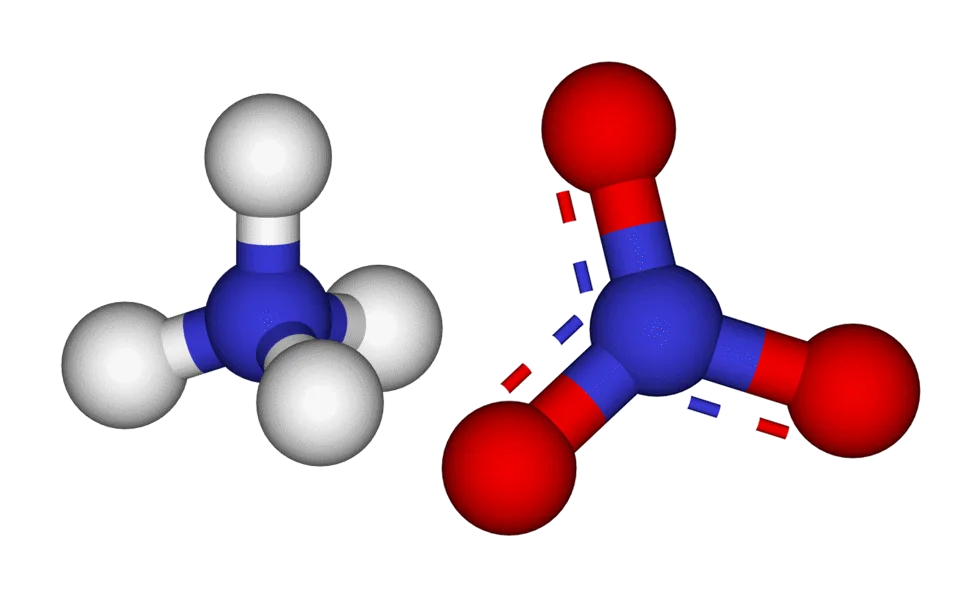
- Active ingredient in ammonium nitrate — up to 35% nitrogen
A classic example of split nutrition is the nitrogen top dressing of winter wheat with a total annual rate of 150 kg/ha. This nitrogen distribution allows for more efficient use of fertilizer resources and directly affects grain quality. The entire rate is applied to the field in three sequential stages.
- Before sowing: apply a starting dose of 30 kg/ha to ensure uniform emergence before the first autumn cold.
- In spring: distribute 90 kg/ha after the cessation of horizontal and vertical water runoff for rapid vegetative mass accumulation.
- At the grain filling phase: perform a foliar top dressing at a dose of 30 kg/ha to significantly increase the protein content of the wheat.
Since the majority of arable land in our country is acidified, liming becomes a mandatory practice. The application of slaked lime (CaCO3) not only normalizes pH but also significantly increases the return from the applied mineral fertilizers.
Mineral nitrogen fertilizers provide plants with nitrogen in ammonium, amide, or nitrate forms. In practice, ammonium nitrate (NH4NO3), ammonium sulfate ((NH4)2SO4), and urea (carbamide) are most commonly used. Calcium and sodium nitrate are used less frequently — primarily as top dressing for seedlings and for application between rows on acidic soil.
Ammonium nitrate is absorbed quickly: its ammonium component is easily volatilized and leached by precipitation, while the nitrate component remains longer in the soil solution before eventually moving to lower horizons. In ammonium sulfate, ammonia transitions into a low-mobility compound, so it is not leached by rains. Urea is excellent for foliar top dressing and standard application with mandatory incorporation into the soil.
Ammonium nitrate and ammonium sulfate significantly acidify the soil. It is recommended to mix nitrate with liming materials upon application, and when using ammonium sulfate continuously, one should regularly perform field liming.
Application of phosphorus, potassium, and compound mixtures
Potassium and phosphorus fertilizers require strict adherence to incorporation rules due to their chemical properties. The main potassium fertilizer remains potassium chloride (KCl). Phosphorus fertilizers are produced from apatites and phosphorites, most often using simple or double superphosphate. Phosphorus acts slowly on plants because its compounds in the soil are low-mobility and take a long time to convert into available forms.
Chlorine from potassium chloride does not bind to the soil and harms plants. Apply KCl only well before sowing — for example, in autumn before deep ploughing. Potatoes, buckwheat, and tobacco are extremely sensitive to chlorine and react to it with a severe reduction in yield.
Superphosphates are produced as powdered grey salts, which are most effective on neutral and alkaline soils. Double superphosphate contains twice as much active ingredient (phosphorus) as the simple type. For the incorporation of phosphorus fertilizers, four main methods are used in practice:
- application directly into rows during seed sowing;
- distribution between rows;
- application in holes around plants (in pure form or mixed with organic matter);
- incorporation before ploughing clean fallow.
To reduce the number of machinery passes through the field and to balance crop nutrition, agronomists use complex compound fertilizers. Their composition and content of active ingredients determine the application rates for specific crops.
| Fertilizer Name | Content of active ingredients and characteristics |
|---|---|
| Ammophos | Nitrogen-phosphorus fertilizer, contains up to 12% nitrogen and up to 52% phosphorus. |
| Nitroammophos | Contains 24% nitrogen and 24% phosphorus. |
| Diammophos | Concentrated fertilizer, contains up to 23% nitrogen and up to 53% phosphorus. |
| Nitrophoska | Triple nitrogen-phosphorus-potassium fertilizer, contains 12% of each element. |
| Flymin | Environmentally friendly balanced fertilizer, contains N, P, and K at 7–13% of each element, as well as humus. |
| Effect-Plus | Liquid nutrient composition with a biostimulating effect. Used for raising transplants and as a main top dressing for all agricultural crops. |
Organic fertilizers: application rules and rates
Application of organic matter is a fundamental method to improve soil structure and increase the humus content. Agronomists have a wide range of materials at their disposal: manure, liquid manure, poultry manure, peat, compost, silt (sapropel), straw, and green manure crops (siderates). The effectiveness of each depends on the correct selection of the dose for a specific crop and adherence to incorporation technology.
The basis of organic fertilizers remains manure, consisting of a mixture of bedding with solid and liquid excreta of livestock. Its composition and value depend on the type of livestock, feed quality, and storage method. For calculations of nutrient requirements, average indicators of the chemical composition of manure are used.
| Nutrient | Average content in manure, % |
|---|---|
| Nitrogen | 0.5 |
| Phosphorus | 0.25 |
| Potassium | 0.6 |
| Calcium | 0.5 |
Of particular value is humus — highly decomposed manure in the form of a dark, loose mass. For demand calculation, consider that 4 tons of fresh manure are required to produce 1 ton of humus. In Belarus, 20 t/ha of litter manure is applied for winter grain crops, while for row crops, vegetables, and industrial crops, the dosage is increased to 60 t/ha.
Liquid manure is usually composted with peat, straw, and plant debris. When using liquid manure for top dressing, application rates are 5–7 kg/m² for winter and row crops, and in orchards, the dose is increased to 12 kg/m². For composts, waste from the leather and food industries is also used, adding 1–2% phosphorites to the manure.
Sphagnum (moss) peat contains more organic matter and absorbs moisture better than fen peat. However, it is poorer in nitrogen and ash elements and is also characterized by higher acidity.
Poultry manure serves as a valuable source of nitrogen and assimilable phosphorus for basal application and top dressing. Pond silt contains 0.2–2% nitrogen, 0.1–0.5% phosphorus, a small amount of potassium and calcium, as well as humic compounds. In swamps, at a depth of 30–50 cm, vivianite (blue phosphorus flour) can be found, containing up to 20% phosphorus.
The optimal time for incorporating organic matter is autumn before winter ploughing. On light and medium soils in areas with sufficient humidity, fertilizers are ploughed to the full depth of the arable horizon, while on heavy clay soils, the incorporation depth is reduced to 15–18 cm. Localized application in bands, furrows, or holes significantly increases the return from the fertilizer.
The time between spreading organic fertilizers and their incorporation into the soil should not exceed 6 hours, otherwise, nutrient losses will sharply reduce the treatment's effectiveness.
As green manure (siderates), cereal, cruciferous, and legume crops are used, ploughed shortly after harvesting the previous crop. The rate for ploughing green mass is up to 45 kg/m². In full green manure fertilization, the entire biomass is ploughed under; in mowing fertilization, mown grass is transferred to another field; in aftermath fertilization, only the regrown aftermath, stubble, and roots are incorporated.
Bacterial fertilizers: biological mobilization of elements
Bacterial preparations allow for the activation of natural plant nutrition processes without excessive chemical load. Beneficial microorganisms multiply in the root rhizosphere, using plant secretions (exudates), and convert inaccessible forms of nitrogen and phosphorus into an assimilable state. Preparations are applied together with seed or organo-mineral mixtures immediately before sowing, or the root system of transplants is treated with them.
- Humus yield — 1 t from 4 t of manure
- Incorporation depth on clays — 15–18 cm
- Nitragin rate — 500 mg per 1 m²
- Phosphorus content in vivianite — up to 20%
Each group of bacterial preparations solves its own task in the field:
- Nitragin (based on bacteria of legume and elaeagnus plants) is applied with seed;
- Azobacterin is used for all crops except legumes;
- Rhizobacterin is developed based on rhizospheric nitrogen fixers for grain crops;
- Phosphobacterin contains bacteria that increase the assimilation of phosphorus fertilizers;
- Kaliplant improves potassium nutrition and increases resistance to root infections.
Microbiological fixation of atmospheric nitrogen (symbiotic and non-symbiotic) is an environmentally friendly and energy-efficient way to supply crops with nitrogen. Using these preparations utilizes the natural potential of plants, developed during evolution in conditions of low availability of mobile soil phosphorus and nitrogen.
Symbiotic nitrogen: potential and limiting environmental factors
The symbiosis of legumes with nodule bacteria is the most productive biological nitrogen source for crop production. Under optimal conditions, the fixation of atmospheric nitrogen by nodules reaches 300 kg/ha per year or more. On a national scale, maximum utilization of this resource could involve over 15 million tons of atmospheric nitrogen in circulation, which is equivalent to saving 90 million tons of ammonium nitrate. In addition to legumes, more than 200 species of non-leguminous plants are capable of fixing nitrogen through associative nitrogen fixation by rhizo- and phyllosphere bacteria, including Arthrobacter, Bacillus, Erwinia, Klebsiella, Azotobacter, and Clostridium. However, the legume-rhizobial symbiosis remains the primary practical tool for the agronomist.
- Nitrogen fixation potential — up to 300 kg/ha per year
- Ammonium nitrate savings — 90 million tons
- Share of pea roots in the tillage layer — 90%
- Temperature for thermophilic species — 20–30 °C
To initiate this mechanism in a specific field, highly active strains of bacteria of the genus Rhizobium (which is divided into 11 species) are required, capable of penetrating the root hairs of the host plant. However, even with active bacteria present, the efficiency of the symbiosis is often hindered by soil and climatic factors. The main barrier for rhizobia in the Non-Chernozem region is high soil acidity. Different crops are divided into 6 groups based on pH requirements: for example, 5.5–6.5 is optimal for lupine, while 6.6–7.5 is optimal for bean.
Avoid excess mineral nitrogen: high doses of nitrogen fertilizer cause antagonism with the biological process. The plant switches to ready-made soil nutrition, which causes the number of nodules on the roots and their nitrogen-fixing activity to drop sharply.
The work of the symbiotic apparatus is also limited by the following environmental factors:
- Soil aeration. In the event of oxygen deficiency, the leghaemoglobin content in the nodules decreases. This protein transports oxygen to mitochondria for energy production and also isolates nitrogen-fixing centers from free oxygen, since nitrogen reduction proceeds strictly under anaerobic conditions.
- Soil moisture. During drought, nitrogen fixation ceases due to a lack of carbohydrates: the plant redirects all energy resources to the growth of new roots to search for water, depriving the nodules of nutrients.
- Temperature. For species with a short-day photoperiod, the optimal range for nitrogen fixation is 20–30 °C.
Phosphorus, potassium, and micronutrients for active nitrogen fixation
The nitrogen fixation process proceeds with the mandatory participation of ATP, therefore providing plants with phosphorus is a basic condition for the symbiosis to work. With a low content of mobile phosphorus in the soil, nodule bacteria penetrate the root hairs, but full-fledged nodules do not form. Phosphorus requirements differ depending on the biological characteristics of the crops.
| Phosphorus requirement | Crops | Lower limit of mobile phosphorus, mg/kg of soil |
|---|---|---|
| Crops of slightly acidic and neutral soils | Wheat, barley, maize, field pea, red clover | 120–150 |
| High-requirement crops | Bean, alfalfa, eastern galega | 180–200 |
The difference in needs is largely related to the structure of the root system and the secretion of exudates. In field peas, up to 90% of the roots are in the tillage layer, whereas yellow lupine has a deep taproot and absorbs phosphorus from lower horizons. Furthermore, acid-tolerant crops release more exudates (organic acids, carbon compounds, exoenzymes) through their roots, which helps them dissolve hard-to-reach phosphorus and adapt to acidic soils.
Important support elements: for normal symbiosis, potassium (regulates nutrient uptake and carbohydrate transport to nodules), molybdenum (part of the nitrogen-fixing enzyme complex), and boron (ensures the development of the nodule's vascular system) are necessary.
Parasitic nematodes and weevil larvae can completely destroy nodule tissue, depriving legumes of nitrogen. Pests penetrate inside the nodules and eat their cellular contents.
To control the work of rhizobial symbiosis on the roots of crops, it is necessary to regularly carry out diagnostics. This allows for the timely detection of nutrient deficiency and the adjustment of the top dressing scheme before the critical seed filling phase.
- Determine monitoring dates. Assess twice per growing season: 20–25 days after seedling emergence and again at the flowering phase, when the leghaemoglobin content in tissues is at its maximum.
- Assess the depth. Dig up a 15 cm tillage layer of soil. It is in this horizon that 90–95% of the plant's active root system is concentrated.
- Prepare samples. Carefully wash 40–60 roots with water for subsequent visual analysis.
- Check the color of the nodule cross-section. Cut the formed nodules crosswise to assess their viability.
- First diagnosis — 20–25 days after seedlings emerge
- Root excavation depth — 15 cm
- Share of roots in the tillage layer — 90–95 %
- Sample size for washing — 40–60 roots
Large pink or red nodules on a cross-section confirm active nitrogen fixation and sufficient nitrogen supply to the plants. If there are few nodules, they are absent, or they have a gray-green shade, this indicates the absence of leghaemoglobin. In the seed filling phase, such crops will face nitrogen starvation.
If inactive (gray-green) nodules are found, compensate for the nitrogen deficiency by applying top dressing. This technique is effective only if normal soil moisture is maintained.
Soil formation: how parent rock transforms into a fertile layer
Soil is a key resource in plant production, distinguished from barren rock by soil fertility. This is the ability to continuously provide the crop with available water and nutrients throughout the entire growing season. The quality of this resource directly determines the yield and overall productivity of the fields.
The formation of the soil cover begins with the physical and chemical weathering of rocks under the influence of temperature fluctuations, wind, and precipitation. Moisture penetrates into the forming cracks, accelerating the destruction of the structure. As a result of the rock's contact with water and air, a weathering crust is formed, ranging in thickness from a few millimeters on cliffs to tens of meters in lowlands.
Particles destroyed by wind and water are transported and deposited in new locations, forming secondary (sedimentary) rocks. Currently, most arable land is formed on quaternary cover deposits. Among these, traces of ancient glaciers — moraines — predominate, as well as glaciolacustrine and fluvioglacial deposits, which serve as parent materials.
Depending on the conditions of transport and deposition, sedimentary rocks have different granulometric compositions:
| Fraction size | Type of soil-forming deposits |
|---|---|
| Large | Boulders |
| Finest | Clay and silty deposits of various chemical compositions |
The transformation of the initial sedimentary rock into fertile soil occurs under the continuous influence of biological factors. Vegetation, microorganisms, and animals process the mineral base, forming a humus horizon. Systematic and competent agricultural land use by humans accelerates these natural processes, increasing soil fertility and ensuring stable harvests.
Read next
Nutrition and fertilizers For gardeners
Organic and mineral fertilizers for vegetables in a greenhouse
Agrochemistry For students
Technology and rules for the mixing of mineral fertilizers in agricultural production
Agrochemistry For students