
Specifics of the mineral nutrition system for vegetable crops in greenhouses and during seed production
3 min read
Fertilizer application when growing vegetable crops for seed. Storage of cabbage mother plants is improved by avoiding nitrogen excess and ensuring good potassium supply. In the second year, seed plants are given increased doses of phosphorus-potassium fertilizers. No top dressing is performed on onion crops for sets. For onion seed plants, base fertilizer and one or two top dressings are applied.
In protected ground, prepared soil mixtures of various compositions are used. In southern regions, the following composition is used: 77–80% topsoil of chernozem, 18–19% humus, 1–5% sand; 60–70% topsoil of chernozem, 15–30% humus, 10–15% loosening materials. Other compositions are also possible.
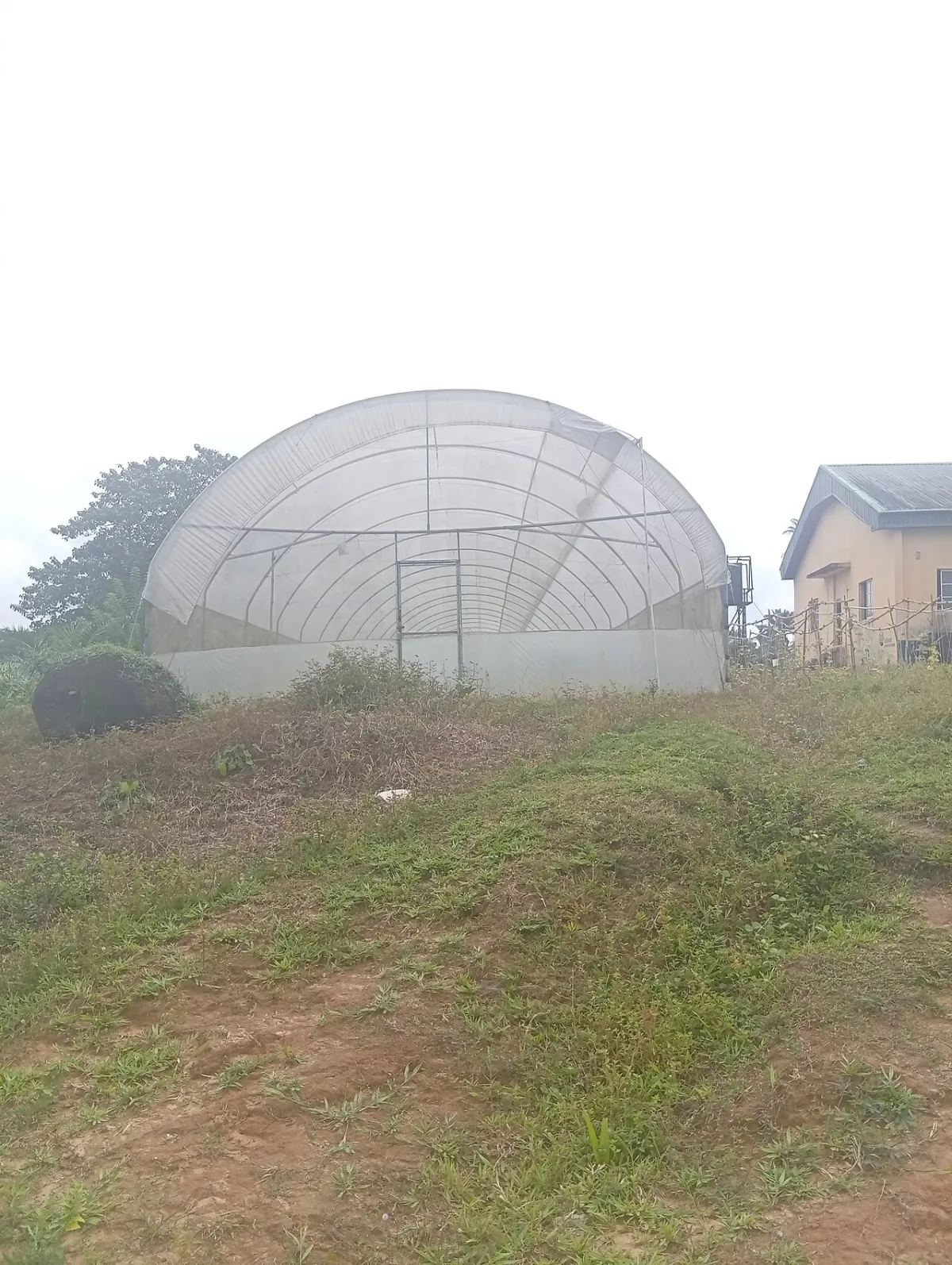
Compared to open ground, higher doses of mineral fertilizers are used in protected ground. This can lead to salinization of greenhouse soils. Therefore, it is necessary to use highly concentrated fertilizers – ammonium nitrate, potassium nitrate, urea, double superphosphate, ammophos, and specialized fertilizers for greenhouses.
The fertilizer system for vegetable crops in protected ground conditions in winter greenhouses consists of a base fertilizer and top dressing. Highly soluble fertilizers are used for top dressing. The need for top dressing is determined by soil analysis or plant condition.
For cucumber, depending on the soil nutrient supply, the following base fertilizer is applied: nitrogen 5–50 g/m2, phosphorus (P2O5) 5–70 g/m2, potassium (K2O) 20–100 g/m2. Micronutrients are applied periodically as base fertilizer: boron 1 kg/ha, cobalt 1.0–1.5, copper 3, zinc 2, manganese 3, molybdenum 0.2–0.3 kg/ha.
For tomato, nitrogen 5–35 g/m2, phosphorus (P2O5) 5–50, and potassium (K2O) 10–100 g/m2 are applied. Nitrogen excess must be avoided. Micronutrients are applied in the same doses as for cucumber, but the boron dose is increased to 1.5 kg/ha.
In plastic greenhouses, fertilizer doses close to those indicated are used.
When growing transplants, fertilizers are applied during soil preparation. For example, for white cabbage: sod soil 1 part, humus 1.5 parts by volume; fertilizers in kg/m3 – nitrogen 0.27, phosphorus (P2O5) 0.68, potassium (K2O) 0.37. The following is applied as top dressing, g/10 l:
Top dressing N P2O5 K2O
1st 6.8 9.0 11.2
2nd 10.2 18.0 14.0
For tomato, field soil 1 part and humus 1 part are used. Fertilizer in kg/m3 — nitrogen 0.27, phosphorus (P2O5) 0.68, potassium (K2O) 0.37. The following is applied as top dressing, g/10 l:
Top dressing N P2O5 K2O
1st 1.7 13.5 2.8
2nd 1.7 13.5 8.4
When sowing seeds or pricking out seedlings into the soil for cabbage, 2–4 kg of humus, 5 g of nitrogen, 18 g of phosphorus, and 7 g of potassium are applied per 1 m2. The following is applied as top dressing, g/10 l:
Top dressing N P2O5 K2O
1st 6.8 18.0 4.6
2nd 10.0 27.0 7.2
3rd 6.8 18.0 27.6
For tomato, the soil is prepared in the same way as for cabbage. The following is applied as top dressing, g/10 l:
Top dressing N P2O5 K2O
1st 1.7 18.0 8.5
2nd 3.5 36.0 11.0
3rd 3.5 36.0 11.0
Read next
Greenhouses and covers For gardeners
Specifics of fertilizer application in greenhouse operations
Nutrition and fertilizers For gardeners
Organic and mineral fertilizers for vegetables in a greenhouse
Nutrition and fertilizers For gardeners