
Nutritional characteristics and fertilizer system for open-field vegetable crops
16 min read
All vegetable crops provide maximum yield on cultivated, sufficiently humus-rich soils. Sites with a slightly acidic or neutral pH are optimal for them. Proper nutrition allows the plants to fully reach their potential.
Competent application of fertilizers, taking into account the biology of vegetable crops and soil conditions, allows their yield to be increased by 3–4 times compared to the farm's average performance.
Nutrient and soil acidity requirements for cole crops
Cabbage leads among vegetable crops in terms of nutrient removal from the soil. Transplants primarily need phosphorus, while during the period of intensive growth, plants require maximum nitrogen and potassium. Fertilizers, especially nitrogen-based ones, are necessary for all types of cabbage:
- white cabbage (early, mid-season, mid-late, and late cultivars);
- red cabbage;
- cauliflower;
- broccoli;
- Brussels sprouts;
- savoy cabbage;
- kohlrabi.
The need for specific elements depends on the type and maturation period of the crop. Phosphorus is most needed by cauliflower, broccoli, and late cultivars of white cabbage. Maximum potassium consumption is characteristic of mid-late and late cultivars of white and red cabbage. A biological feature of cabbage is its high consumption of sodium, chlorine, and sulfates, which is linked to its origins from the Mediterranean coast.
Cabbage is also a valuable source of vitamins and minerals. 100 g of fresh leaves contains up to 50 mg of vitamin C, as well as vitamins A, B1, B2, B3, B6, K, and anti-ulcer vitamin U. In fermented form, the concentration of vitamin C increases, and the content of vitamin P increases up to 20 times. The accumulation of potassium, calcium, phosphorus, and sulfur depends directly on balanced mineral nutrition.
The crop is extremely sensitive to soil acidity. Due to the risk of clubroot infection, cabbage is placed in areas with a neutral reaction, or liming is carried out. Optimal acidity parameters for white cabbage are presented in the table.
| Soil type | pH range (KCl) |
|---|---|
| Mineral soils | 6,2 – 7,5 |
| Peat soils | 5,5 – 6,0 |
Acidic soils provoke mass clubroot infection in cabbage. Lime fertilizers are applied strictly in the fall before ploughing or in the spring no later than 2–3 weeks before planting transplants into the soil.
Fertilizer application schedule for white cabbage
Mid-season and late cultivars of white cabbage on all types of soils, except for lowland peat soils, require organic matter. However, manure alone cannot meet the crop's peak nutritional requirements, as the elements from it are released more slowly than the cabbage grows. The best result is obtained by the combined application of organic, organomineral, and mineral (primarily nitrogen) fertilizers.
Specific doses are adjusted based on the field's soil fertility level and moisture conditions. The higher the natural soil fertility, the lower the application rate. If irrigation is organized on the site, the recommended fertilizer doses can be increased by 1/3.
- Organic fertilizers for primary application — 4–6 kg/m²
- Phosphorus fertilizers for primary application — 15–20 g/m²
- Potassium fertilizers for primary application — 30–40 g/m²
- Lime on acidic soils for autumn ploughing — 150–200 g/m²
- Application rate for the "Izvest-Gumi" preparation — 2 kg per 6–10 m²
- Complex fertilizer when planting into the hole — 3–5 g/m²
During the primary application, ash, organic matter, and 2/3 of the full dose of phosphorus and potassium fertilizers are incorporated into the soil. Both simple fertilizers and complex nitrogen-phosphorus-potassium mixtures can be used. Nitrophoska, nitroammophoska, or the specialized "Gumi-Omi Osenniy" with an increased content of phosphorus and potassium (1 kg per 10 m² for ploughing) show good effectiveness.
If organic matter could not be applied in the fall, nutrients are provided locally during planting. This technique allows for fertilizer savings and delivers them directly to the roots. The technology of local application includes several mandatory steps:
- Preparation of planting holes immediately before transplanting.
- Application of 200–300 g of humus or compost (or 50–100 g of the Bionex preparation) into each hole.
- Simultaneous addition of mineral nitrogen-phosphorus-potassium fertilizer into the hole.
- Mixing the applied components with the soil to prevent root burn.
After planting the transplants into the soil, cabbage grows slowly during the first month and consumes few nutrients. It begins to absorb nutrients most intensively after head formation, when dry matter is rapidly accumulated. Nitrogen is absorbed intensively by cabbage until head formation; the more nitrogen there is in the soil compared to potassium during this period, the faster the heads form. Then, intensive potassium absorption begins. At the end of the growing season, nitrogen absorption increases again.
10–15 days after planting transplants in a permanent location, white cabbage is top dressed with nitrogen fertilizers (urea – 6–10 g/m² or Gumi-Omi Nitrogen – 0.5 kg per 10 m²). The fertilizers are spread around the plants, followed by loosening. For top dressing in dry weather, 20–25 g of urea is dissolved in 10 l of water and applied at a rate of 1–2 l per plant, or 50 g of Gumi-Omi Nitrogen is dissolved in 10 l and applied to the plants on 10 m². Watering with a solution of manure or poultry manure yields good results.
Two weeks after the first top dressing, a second one is performed using complex fertilizers, a fertilizer mixture with micronutrients (15–20 g per 10 l of water), or a liquid complex bioactivated fertilizer Bogatyi Ovoshchi, Yagody, Zelen – 0.5 l per 40 m². Top dressing can be repeated after 2 weeks.
4 weeks after planting the transplants, a foliar top dressing of cabbage is carried out with a solution of macro- and micronutrients. For this purpose, 30 g of urea, 15 g of potassium sulfate, 15 g of magnesium sulfate, 1 g of ammonium molybdate, 1 g of zinc sulfate, 1 g of copper sulfate, and 1 g of iron sulfate are dissolved in 10 l of water. Foliar application of Gumi-K OLYMPIC, enriched with NPK and micronutrients (5 g in 10 l of water for spraying plants on 10 m²), as well as Gumi-Omi Nitrogen and Bogatyi Ovoshchi, Yagody, Zelen, is effective.
Early cultivars of cabbage are more susceptible to clubroot compared to late ones, so they must be grown on soils with a pH of 6.5–7.2. Fertilizer application rates should be 1.5–2 times lower than for late cultivars.
Natural microbiological preparations Fitosporin and Fitosporin ReanimatoR provide good protection against both clubroot and many other fungal and bacterial diseases.
Red cabbage is characterized by high yield and high nutrient consumption. For example, at the same yield level, red cabbage consumes twice as many nutrients as white cabbage; therefore, red cabbage is fertilized in approximately the same way as white cabbage, increasing the rates of mineral and organo-mineral fertilizers by 1.5–2 times. On light, low-humus soils, red cabbage responds well to the application of organic and potassium-magnesium fertilizers. The greatest yield increases are obtained from increased doses of nitrogen fertilizers. It is advisable to apply a portion of nitrogen fertilizers in 1–2 top dressings with irrigation water at a rate of 4–6 g/m².
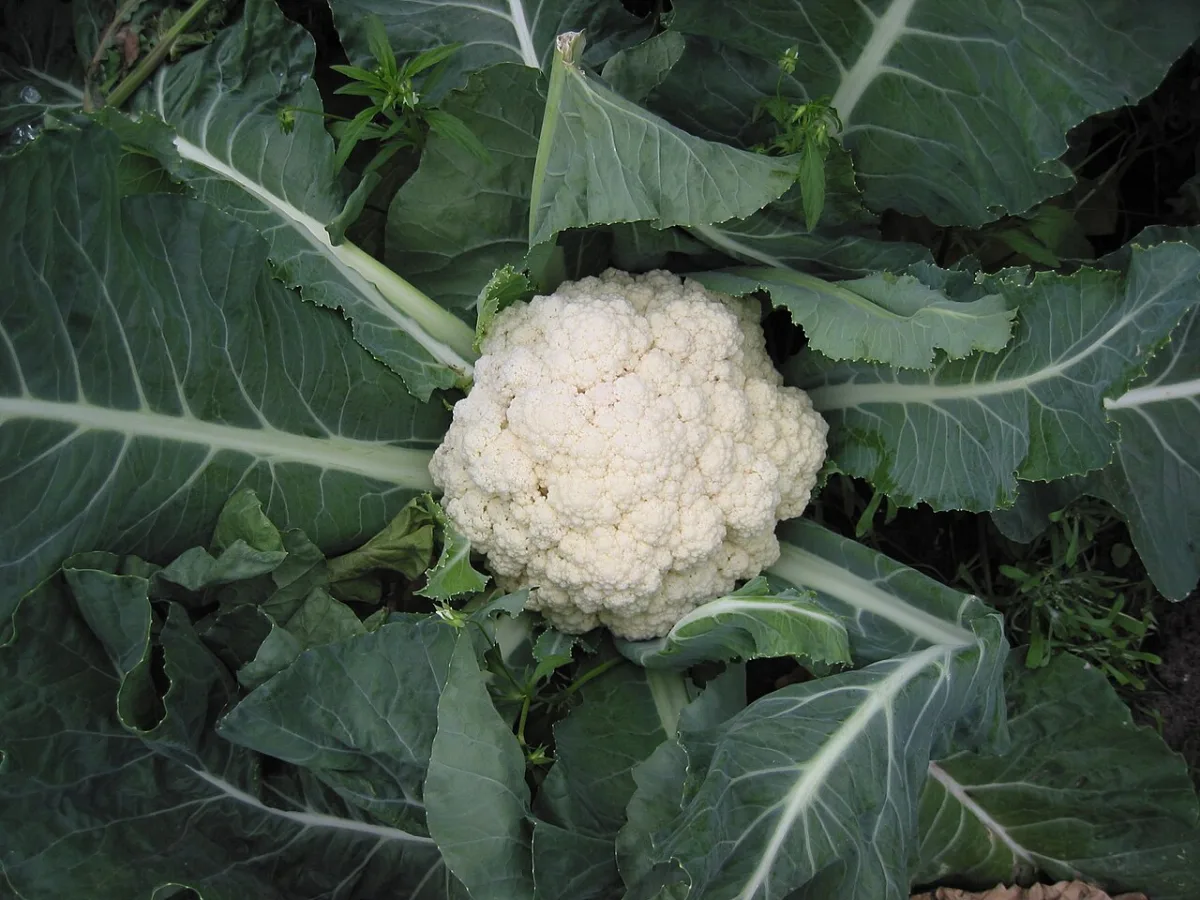
Cauliflower is even more demanding regarding soil fertility and mineral nutrition conditions than white cabbage. It is more severely affected by cabbage clubroot, and it must be grown on limed soil using Fitosporin series biopreparations. It is better to apply lime or Lime-Gumi under the predecessor crop or in the fall. Direct application of large doses of lime under cauliflower can cause an acute shortage of boron, thereby reducing yield and produce quality. Fertile, cultivated plots, preferably of light mechanical composition (sandy loams and light loams) with high organic matter content, should be allocated for cauliflower. On nitrogen-rich lowland peat and heavy clay soils, cauliflower suffers from a lack of molybdenum, forms heads poorly, and develops excessive green mass. To increase the yield of cauliflower and its quality, it is necessary to apply molybdenum fertilizers. Therefore, when growing cauliflower transplants, in the 3–4 leaf stage, they are sprayed with ammonium molybdate at a rate of 1 g per 10 l of water.
On poorly to moderately cultivated soils, cauliflower responds well to the application of organic fertilizers, which must be incorporated in the fall or under the preceding crop. The rates of organic and mineral fertilizers for this crop depend on the planned yield level and the soil's supply of mobile nutrients; on average, they are: humus – 6 kg/m², nitrogen – 20–30 g/m², phosphorus – 20–25 g/m², potassium – 20–30 g/m². Cauliflower reacts poorly to potassium chloride, so it is better to use potassium sulfate or Gumi-Omi Potassium, or potassium magnesia (dissolve 20 g each of urea and potassium sulfate and 50 g of simple or 25 g of double superphosphate in 10 l of water). Chlorine-free complex fertilizers NPK = 20–16–10 and NPKMg 10–5–20–3 (25 g of each fertilizer per 10 l of water), "Stimul-1", Gumi-Omi Nitrogen, Gumi-Omi Phosphorus, and Gumi-Omi Potassium at 0.2–0.3 kg of each fertilizer per 10 m² are very effective.
Young cauliflower plants are sensitive to insufficient phosphorus nutrition. With a lack of phosphorus and a simultaneous excess of nitrogen and potassium, their apical growth point dies off, and the leaves become blistered and shoestring-shaped.
The first top dressing for cauliflower is carried out in the same way as for cabbage, using nitrogen fertilizers; the second is performed with a complete mineral fertilizer at the beginning of head formation. The most effective fertilizer for root top dressing for all types of cabbage is Gumi-Omi Spring, with an application rate of 1 kg per 10 m². At the 10–12 leaf stage, top dressing with micronutrients is carried out (one micronutrient tablet per 1 liter of water, or make a solution: 1–2 g of boric acid and 2 g of ammonium molybdate per 10 liters of water). Borogum and Gumi-Omi Rich with a full range of macro- and micronutrients are effective.
Nutritional features of broccoli, Brussels sprouts, and kohlrabi
In terms of nutrient consumption, broccoli is similar to cauliflower. The application rates and methods of application of mineral and organic fertilizers, as well as lime for these crops, are analogous. At the same time, broccoli produces a 20–40% higher yield, which requires strict adherence to nutrition regulations to prevent soil depletion.
Brussels sprouts have high requirements for soil fertility and nutritional quality. The crop develops best on light and medium loams. Organic matter, as well as the organomineral fertilizer "Gumi-Omi Autumn," is applied under autumn ploughing or under the predecessor crop.
- Broccoli yield is 20–40% higher than that of cauliflower
- Soil pH for Brussels sprouts — 6.5–7.5
- Consumption of "Gumi-Omi Autumn" in autumn — 1 kg per 10 m²
- Application rate of magnesium on light soils — 5 g/m²
In the spring, only humus is applied directly for Brussels sprouts. The use of fresh organic fertilizer is inexpedient: it prolongs the growing season and impairs the quality of the small heads.
On moderately cultivated soils, mineral or organomineral mixtures are used for Brussels sprouts. On light soils, it is mandatory to add magnesium fertilizers to compensate for the leaching of the element. Kohlrabi, unlike other brassicas, practically does not respond to organic matter — it is more rational to plant it as a second or third crop after the application of manure.
| Crop and soil type | Mineral fertilizers, g/m² | Organomineral fertilizers (OMF), g/m² |
|---|---|---|
| Brussels sprouts (moderately cultivated soils) | Urea — 30–35 Superphosphate — 10–15 Potassium chloride — 40 |
Gumi-Omi Nitrogen — 60–70 Gumi-Omi Phosphorus — 20–30 Gumi-Omi Potassium — 80 |
| Kohlrabi (2nd–3rd year after manure) | Urea — 20–25 Superphosphate — 15–20 Potassium chloride — 25–30 |
Gumi-Omi Nitrogen, Phosphorus, Potassium in equivalent doses |
Foliar top dressing with micronutrients increases the yield of Brussels sprouts, as well as the content of sugars and vitamins. Plants also respond excellently to root top dressing. For this, most of the nitrogen and half the dose of potassium are applied in 2–3 doses with irrigation at a rate of 0.5–1 liter of solution per plant.
For foliar treatments of Brussels sprouts, the following are used:
- Boron: boric acid (1.2–1.5 g/l per 10 m²) or Borogum-M.
- Molybdenum: ammonium molybdate (0.4–0.6 g/l per 20 m²).
- Manganese: manganese sulfate (0.2–0.4 g/l per 20 m²).
For root top dressing, urea and potassium chloride are best, or specialized formulations: "Gumi-Omi Universal," "Gumi-Omi Nitrogen," and "Gumi-Omi Potassium."
Fertilization system for cucumber in open ground
The cucumber is an early-ripening crop demanding in nutrition with a growing season of 3 to 5 months. Due to intensive growth, the plant extracts a large volume of nutrients from the soil. To obtain a high yield of cucumbers rich in alkaline salts and enzymes, it is necessary to create an optimal nutritional regime from the first days of the growing season.
The root system of the cucumber is weakly developed and is located in the upper soil layer. It absorbs nutrients poorly from deep layers, so the plant requires a constant presence of available elements in the root zone.
With a low content of mobile nutrients in the soil, it is extremely difficult to obtain a high cucumber yield. In such areas, it is better to refrain from growing this demanding crop.
The optimal pH(KCl) level for cucumbers is 6.5–7.0. In case of increased soil acidity, liming is carried out. Lime or "Lime-Gumi" at a dose of 300–500 g/m² is applied in autumn under ploughing, preferably under the preceding crop.
The cucumber leads among vegetable crops in its responsiveness to fresh manure. The effectiveness of organic matter depends on the soil type. In experiments on sod-podzolic soils, pure manure produced higher yields than mineral fertilizers, while on chernozems, the opposite was true. Maximum productivity on any soil type is ensured by the combined application of manure, organomineral, and mineral fertilizers.
Manure is applied in autumn or spring under ploughing in a volume of 6–8 to 20 kg/m². In its absence, compost, humus, or well-decomposed peat is used in the spring. In the initial period of growth, the cucumber requires mainly nitrogen to build up leaves and stems, and during mass flowering, the need for phosphorus and potassium increases.
| Soil P and K content | Recommended fertilization system (doses per 1 m²) |
|---|---|
| Medium | One of the following mineral mixture options is added to the organic matter: • Nitrophoska — 40 g • Nitroammophoska — 30 g • Urea (20 g) + double superphosphate or ammophos (20 g) + potassium sulfate (20 g) or potassium magnesium sulfate (30 g) • OMU (Organo-mineral fertilizer): Gumi-Omi Nitrogen (40 g) + Gumi-Omi Phosphorus (40 g) + Gumi-Omi Potassium (40 g) |
| High and very high | Minimize autumn application: • In autumn before digging: organic matter or OMU "Gumi-Omi Autumn" (1 kg per 10 m²) • In early spring: nitrogen fertilizer only |
Cucumber top dressing: from emergence to fruiting
In any soil, the application of granulated superphosphate or "Gumi-Omi Phosphorus" in rows during sowing (5 g/m²) significantly accelerates the early cucumber harvest. Subsequent crop care is based on regular top dressing, which is carried out every 10–15 days and must be combined with irrigation. This allows for maintaining a constant level of nutrients in the root zone.
Before flowering begins, plants are top-dressed with nitrogen solutions: either 1 L of manure slurry, 10 g of urea, or 20 g of "Gumi-Omi Nitrogen" is dissolved in 10 L of water. From the moment of budding and flowering, nutrition is increased. To 10 L of manure slurry solution, 40 g of superphosphate (or 80 g of "Gumi-Omi Phosphorus") and potassium components are added: 10 g of potassium sulfate (or 20 g of "Gumi-Omi Potassium") or 20 g of potassium magnesium sulfate. 200–250 ml of the resulting mixture is used per plant.
Manure slurry can be replaced with complex mineral fertilizers. To 10 L of manure slurry solution, 25 g of nitroammophoska or 30 g of a mixture with trace elements is added. The best practical results are shown by soluble chlorine-free NPK complexes 20–16–10 and 10–5–20–3 (NPK–Mg), as well as a mixture of "Gumi-Omi Nitrogen", "Gumi-Omi Phosphorus", and "Gumi-Omi Potassium" (10 g of each per 10 L of water). One liter of such solution is used to irrigate 4–5 plants. If manure slurry is not available on the farm, the dosage of mineral fertilizers is increased by 1.5 times.
Visual control: if the shoots and leaf apparatus are poorly developed, increase the dose of nitrogen fertilizer. If cucumbers are setting few female flowers, increase the phosphorus application rate.
At the beginning of flowering, when applying liquid top dressing, it is beneficial to add trace elements: one tablet per 1 L, or add 0.5 g of boric acid, 0.4 g of manganese sulfate, and 0.1 g of zinc sulfate per 10 L of water. If a complex fertilizer with trace elements was already used in the program, a separate micro-top dressing is not required. During prolonged cloudy weather, the roots work less effectively, so switch to foliar top dressing: use urea (20 g per 10 L of water) or "Gumi-Omi Nitrogen" (40 g per 10 L of water).
Cucumbers absorb the main part of their nutrients (70–80%) during the fruiting period, when they are particularly responsive to nitrogen-potassium top dressing. At the beginning of mass flowering, spraying the plants with "Borogum-M" fertilizer is effective — boron promotes fruit set, and the full set of macro- and micro-elements ensures vigorous root development. During this period, "Gumi-Omi Spring" or "Gumi-Omi Cucumber, Squash, Melon" (0.7 kg per 10 m²) is applied to the root zone. On light soils where plants experience magnesium deficiency, use the 10–5–20–3 (NPK–Mg) complex at a dose of 20 g/m², or a mixture of urea (10 g/m²) with potassium sulfate (10 g/m²) or potassium magnesium sulfate (20 g/m²).
To obtain early harvests, cucumbers are grown from transplants in nutrient pots. Transplants are top-dressed 1–2 times at intervals of 10–12 days using one of two recipes per 10 liters of water. When planting transplants directly into the holes, "Gumi-Omi Universal" is applied.
- Mineral option: 10 g of ammonium nitrate, 30 g of superphosphate, and 15 g of potassium sulfate.
- Organo-mineral option: 15 g of "Gumi-Omi Nitrogen", 60 g of "Gumi-Omi Phosphorus", and 30 g of "Gumi-Omi Potassium".
Tomatoes: biological requirements and nutrient balance
Tomatoes are the second most important crop after cabbage. Their fruits have high taste, nutritional, and dietary properties due to a significant amount of sugars, carotene, and vitamins C, PP, B1, and B2. Being a crop of tropical origin, the tomato has strict requirements for temperature and humidity conditions.
At temperatures below +15 °C, tomato flowering stops, and at +8 °C, growth completely halts. High air humidity hinders pollination and provokes brown leaf spot and late blight of the fruit. Sudden fluctuations in air humidity lead to blossom-end rot. Use biological preparations "Fitosporin" and "ReanimatoR" for plant protection.
The crop rapidly forms a powerful root system and a large above-ground apparatus, so it is very demanding regarding soil moisture. In the event of a moisture deficit, plants stop growing and drop their fruits, and sudden fluctuations in humidity during the ripening period cause mass cracking. Optimal relative air humidity for tomatoes is 45–60 %.
The best soil for tomatoes is light, humus-rich chernozem with a neutral reaction. However, the crop tolerates soil acidity better than other vegetables and grows consistently within a pH KCl range of 5.6 to 7.0. On highly acidic soil, plants respond positively to liming.
Tomatoes have a high demand for nutrients, consuming significant amounts of NPK to produce 10 kg of marketable harvest. In terms of absolute nutrient uptake, potassium ranks first, followed by nitrogen, while phosphorus uptake is 5.2 times lower than nitrogen and 5 times lower than potassium. Nevertheless, the tomato is one of the crops most demanding of readily available phosphorus.
| Nutrient | Uptake per 10 kg of marketable harvest (including vegetative mass), g |
|---|---|
| Potassium (K) | 35–50 |
| Nitrogen (N) | 25–35 |
| Phosphorus (P) | 10–15 |
Due to the high demand for phosphorus during the initial stage of growing transplants, it is applied in a readily available form into the rows during the sowing of seed as a base fertilizer. Subsequently, the transplants are given top dressing twice: 10 days after pricking out and 10 days after the first top dressing. For this, "Gumi-Omi Phosphorus" and "Gumi-Omi Tomato, Eggplant" products are used.
- NPK consumption during cucumber fruiting — 70–80%
- Optimal air humidity for tomato — 45–60%
- Interval between cucumber transplant top dressings — 10–12 days
- Solution application rate per plant — 200–250 ml
Read next
Agrochemistry For students
Specifics of the mineral nutrition system for vegetable crops in greenhouses and during seed production
Vegetable growing For students
Specifics of mineral nutrition and fertilizer application rates for vegetable crops
Greenhouses and covers For gardeners