
The evolution of technologies and scientific basis of tillage in agriculture
8 min read
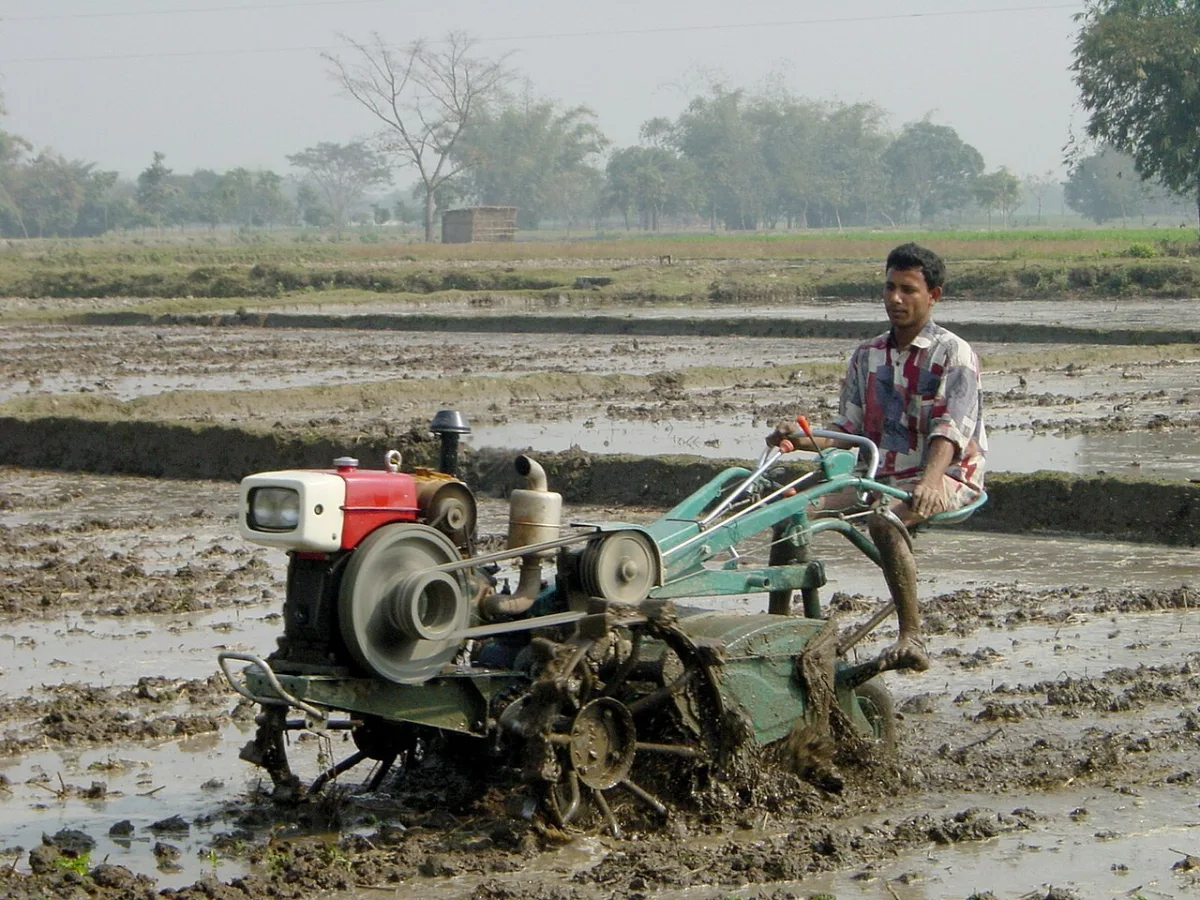
In the process of changing socio-economic formations, the development of natural sciences, and the technical re-equipment of agriculture tillage has undergone significant changes.
At the dawn of agriculture, when humans transitioned from simple foraging and hunting to a sedentary lifestyle and permanent plant cultivation, they learned that the latter grow better in previously cultivated soil. Primitive man, while loosening the soil, aimed only at one goal he understood — to cover the seeds. He did not know what was happening to the cultivated soil and the plants he was growing, but the need for loosening the soil was driven by necessity, confirmed by experience and observation. But over time, he realized that by cultivating the land, one could destroy unwanted plants, bury their seeds, sod, crop residues, level the field surface, and thereby increase the harvest. And so, man began to consciously cultivate the soil. For better loosening and greater labor productivity, he constantly improved tillage implements.
Initially, the farmer developed the land being mastered manually. This was the period of hoe tillage. Primitive tillage tools provided shallow loosening of the topsoil without inversion and partial cutting of weeds. The use of livestock animals in agriculture contributed to the improvement of tillage implements. The primitive hoe tillage system was gradually replaced by a plow-based one.
Scientific foundations
and tasks of tillage 89 However, the implements remained primitive, affecting mainly only the top layer of the soil. Weeds continued to be a serious obstacle in obtaining harvests that met the farmer's needs.
A huge progress in the field of tillage was caused by the appearance of the metal plow in the second half of the 18th century in England, Belgium, Holland, the USA, and somewhat later in Germany. The creation by R. Sack (1863) of a plow with a front carriage and a jointer, and the use of horse-oxen traction already in the 19th century allowed many farmers to realize the advantage of deep tillage. In subsequent years, its techniques were improved mainly as a result of changing the shape of the plow moldboard, as well as creating implements to complement plow-based ploughing.
The tillage system developed empirically until almost the end of the 19th century. The development of the theory of tillage until the first half of the 20th century was mainly directed towards substantiating deep ploughing with jointers and creating a deep fertile arable layer. In the recommendations of scientists A. V. Sovetov, V. V. Dokuchaev, V. R. Williams, and others, instructions were given for the maximum deep loosening of the soil with mandatory furrow inversion. The need for annual moldboard tillage was explained by V. R. Williams by the expediency of burying crop residues at the bottom of the furrow under anaerobic conditions (this led to their inevitable transformation into humus), as well as the need to restore the structure of the upper part of the soil. This position remained unquestioned for a long time, but as practice has shown, the conclusions turned out to be erroneous.
However, excessively intensive tillage leads to the decomposition of humus, loss of nutrients, destruction of soil structure, intensification of erosion processes, soil compaction, and increased energy consumption.
Fig. 12. Horse-drawn iron plow:
1 — share; 2 — moldboard; 3 — coulter for cutting sod; 4 — frame;
5 — handles for the plowman to control the plow
Currently, under conditions of agricultural intensification, tillage plays a leading role in the complex of measures for growing a harvest, as this agrotechnical method is a universal means of influencing many physical, chemical, and biological properties of the soil. Only by mechanical action on the soil with the working parts of machines and implements is it possible to create optimal conditions for the growth of the root system of cultivated crops, and to achieve high efficiency of fertilizers and plant protection products.
Poor-quality tillage can negate all costs associated with using high-yielding cultivars, fertilizers, herbicides, and other agrotechnical methods of crop cultivation.
Tillage is one of the main links in the modern farming system. It accounts for 35% of energy costs and 25% of labor costs in field crop production. Therefore, ways to reduce them are constantly being sought, and energy-intensive techniques are being replaced by less energy-intensive ones. But it is not only economic reasons that force the development and introduction of energy-saving tillage techniques. It is equally important to protect the soil from compaction resulting from numerous passes of heavy machinery and transport vehicles across the field, to reduce the negative impact of intensive tillage on the agronomic properties of the soil, to protect it from erosion, and to preserve and increase soil fertility. Consequently, tillage should have a soil-protective orientation.
The role of proper tillage in preventing water and wind erosion is significant. Tillage has a substantial influence on the temperature regime of the soil. Tillage fundamentally improves soil conditions for agricultural crops. Therefore, it is considered one of the factors for increasing soil fertility and soil cultivation level.
Mechanical tillage of the soil alters the structure of the arable layer, resulting in the most favorable conditions for biological, physico-chemical, and physical processes in the soil.
Through mechanical tillage, plant residues, organic and mineral fertilizers are incorporated into the soil, green manures are ploughed in, and conditions are created for the proper placement of seed of agricultural crops at an optimal depth.
Tillage is an important tool in the fight against weeds. As is known, the arable layer of the soil contains a huge number of seeds and organs of vegetative reproduction of weeds capable of forming new plants. All of them must be destroyed by various tillage methods. The greatest effect is provided by appropriate Tillage system systems of soil tillage, which represent a set of interdependent practices performed in a specific sequence.
The role of tillage in controlling diseases, crop pests, and soil disinfection is significant. Deep winter ploughing with preliminary stubble breaking and semi-fallow tillage ensure the suppression of many stem-boring pests and a number of soil-borne diseases.
Scientific foundations
and tasks of tillage 91 and preliminary stubble breaking and semi-fallow tillage ensure the suppression of many stem-boring pests and a number of soil-borne diseases.
Influence of agrotechnical measures on soil processes
The transition to intensive cultivation technologies for agricultural crops has required the heavy application of mineral fertilizers and the use of pesticides. In addition, industrial and household wastewater, as well as waste from large livestock farms, can enter the soil. Most of them belong to synthetic compounds. Accumulating in the soil, they negatively affect its soil fertility. Tillage promotes the activation of saprotrophic microorganisms in breaking down these compounds.
Mechanical tillage is not only about creating the most favorable conditions for plant development but also a powerful means of actively influencing many inherent soil properties. First and foremost, this applies to sod-podzolic soils, where the humus horizon is thin, and a low-fertility podzolic layer lies beneath it. Only through tillage, and primarily ploughing with the incorporation and sub-surface loosening of the podzolic layer in combination with the application of fertilizers and liming materials, is it possible to bring these layers into cultivation and increase the depth of the accumulative horizon. As a result of gradual deepening, it is possible to create a deep, highly fertile, and weed-free arable layer for a long time.
Thus, the main tasks of mechanical tillage are:
- conservation and increase of soil fertility with the goal of obtaining high and stable crop yields;
- alteration of the structure and aggregate composition of the tilled soil layer to create favorable water, air, heat, and nutrient regimes for plants, ensuring the activation of microbiological processes and more vigorous development of crop root systems;
- enhancement of the nutrient cycle by drawing them from deeper soil horizons;
- cleansing the soil of weeds, their seeds, and vegetative reproductive organs, as well as pathogens of diseases and pests of agricultural crops;
- incorporation of plant residues and fertilizers into the soil;
- prevention of erosion processes and related losses of water and nutrients;
- devitalization of perennial vegetation when cultivating fields formerly under perennial grasses, virgin, or fallow lands;
- modification of the soil surface shape in order to regulate water and heat regimes; creating optimal conditions for sowing seeds at the optimal depth, crop care, and harvesting.
Consequently, tillage addresses a complex of mechanical (physical), chemical, and biological tasks. It must be differentiated depending on the biological characteristics of the specific crop and the subsequent crop in the crop rotation, as well as the goals of the tillage: incorporation of manure, mineral and lime fertilizers, green manures, weed control, anti-erosion measures, soil texture, etc.
Methods, practices, and systems of soil tillage
The tasks that arise during tillage in order to create optimal conditions for plant life are solved through various methods, practices, and systems.
A mechanical tillage method is the nature and degree of impact by the working mechanisms of tillage implements and machines on the alteration of the profile (structure) and the natural heterogeneity of the tilled soil layer in the vertical direction. Distinctions are made between mouldboard, non-mouldboard, rotary, and combined methods.
Mouldboard tillage method and its purpose
Ploughing is the action of soil-tilling implements and machines on the soil, involving full or partial inversion of the tilled layer to change the position of heterogeneous layers or soil genetic horizons in a vertical direction, combined with intensive loosening and mixing of the soil, as well as cutting and incorporation of above-ground plant parts and fertilizers into the soil.
All types of tillage for virgin lands, fallows, perennial grass sod, meadows, etc., are performed using various types of ploughs with mouldboards.
Classification and application of different mouldboard shapes
The quality of plough-based tillage significantly depends on the shape of the mouldboard. Depending on the mouldboard shape, ploughs are classified into:
- helical;
- cylindrical;
- semi-helical;
- cultural.
The shape of the mouldboard affects the inversion and pulverization of the arable layer.
When ploughing with a helical mouldboard, the furrow slice is well inverted but poorly loosened. Ploughs with a helical mouldboard, necessarily equipped with coulters (disc knives), are used for tilling cohesive, highly sodded soils (virgin land, fallow, meadow, pasture).
The surface of a cylindrical mouldboard represents a part of a circle in a vertical cross-section. When ploughing with a cylindrical mouldboard, the furrow slice rises sharply and steeply and is thrown towards the furrow. Good pulverization is achieved, but inversion is poor. The cylindrical mouldboard is designed for ploughing loose soils. It is unsuitable for cohesive and sodded soils, as it produces cloddy tillage.
Read next
Crop production For students
Abandonment of mouldboard ploughing and fundamentals of minimum tillage
Soil and tillage For agronomists
Planning a tillage system within the crop rotation of an agricultural enterprise
Soil and tillage For agronomists