
Morphology and anatomical structure of the grapevine cluster and berries
17 min read
Bunch development and yield factors
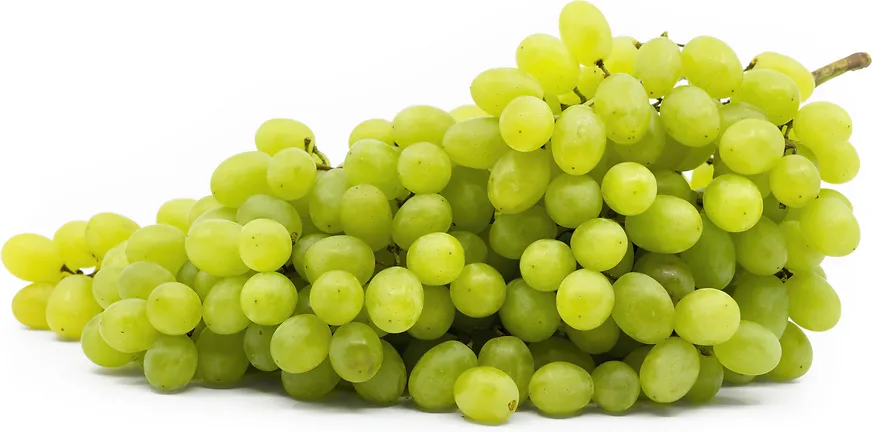
After pollination and the natural shedding of excess fruit sets, the grape inflorescence transforms into a bunch. The inflorescence peduncle becomes the bunch stem, its axis becomes the rachis, and the remaining fruit sets develop into berries. Mechanical and conducting tissues, especially soft bast, actively form in the rachis, which ensures the strength of the structure and provides a stable inflow of nutrients to the ripening berries.
The appearance, density, and size of the bunch depend on the branching pattern of the rachis and the length of its axes. The bunch stem can be short or long, herbaceous or woody. A node on the stem produces a branch — a tendril. If the tendril had flowers, after pollination it turns into an auxiliary bunch wing, of which some cultivars have 1–2.
The anatomical structure of the bunch stem and the berry pedicel is identical to the structure of a young shoot internode. In practice, the size of the bunch directly determines the yield of the cultivar and the convenience of manual harvesting. The higher the average bunch weight, the higher the berry harvest per hectare.
Bunches located closer to the base of the fruit-bearing shoot always grow larger than those located higher up the stem.
The growth of grape bunches and berries is significantly influenced by treatment with gibberellin and other growth regulators.
Berry structure and cultivar features
A grape berry forms from the flower's fruit set after fertilization, which stimulates the growth of the pericarp. On the top of a ripe berry, a dried-out pistil with a stigma remains — the navel. The berry is attached to the rachis by a pedicel that transitions into a brush. Through them, vascular bundles enter the inside of the berry, which are distributed under the skin and approach the seeds. When the berry is harvested, these bundles break off, leaving a characteristic brush on the pedicel.
The berry skin (epicarp) consists of an outer epidermis with respiratory stomata and 10–15 underlying layers of cells. As the berry grows, these stretch and transition into the pulp (mesocarp). Two zones are distinguished in the pulp: the outer one (large cells with a diameter of 0.3–0.4 mm) and the inner one (the core or endocarp consisting of 5–6 layers of cells). The total number of cell layers from the skin to the core is from 25 to 30.
- Epidermis thickness — 30–40 µm
- Number of skin cell layers — 10–15
- Diameter of large pulp cells — 0.3–0.4 mm
- Total number of cell layers in the berry — 25–30
- Water proportion in juice of ripe berries — 55–95%
- Organic acid content — 0.5–1.9%
The anatomical structure of the fruit directly determines its intended use. In table cultivars, a tough skin ensures high transportability and storage suitability. In technical cultivars, on the contrary, thin skin and tender pulp facilitate juice extraction during processing.
| Indicator | Table cultivars | Technical (wine) cultivars |
|---|---|---|
| Skin | Consists of a larger number of layers; cells are larger and stretch significantly during ripening. Does not separate from the pulp, crushed together with it. | Thin, elastic, with fewer layers and smaller cells. Easily tears and separates from the pulp when crushed. |
| Pulp (mesocarp) | Cells near the skin have a dense membrane and release little juice. Consistency is fleshy, dense, cartilaginous, or crunchy. | Consists of large cells with delicate membranes that dissolve during ripening, turning the pulp into a liquid mass with plenty of juice in the vacuoles. |
The dry residue of the pulp (fiber and cellulose of cell walls) accounts for only 0.3–0.5%; the rest is cell juice. The juice of a ripe berry is rich in water, contains 5 sugars (glucose, fructose, sucrose), and organic acids (tartaric, malic, gluconic, glucuronic, citric). The bulk of vitamins (A, B1, B2, PP, C) is concentrated in the skin, while there is significantly less in the juice and pulp. Tannins and starch completely disappear by the time of ripening. Volatile aromatic essential oils that form the aroma accumulate in the conducting bundles directly near the skin.
Commercial properties of the berry: color, skin, and pulp consistency
The color of grapes is formed as they ripen due to the destruction of initial pigments and the accumulation of new ones in the skin cells. In white cultivars, chlorophyll and carotenoids are replaced by flavonols (quercetin and quercitrin), giving shades from light green to golden amber. In dark-colored cultivars, pigments of the anthocyanin complex (ampelopsin, enin, and others) accumulate, providing a range from pink to black-blue.
The intensity of the color strongly depends on growing conditions. For example, the cultivars Tayfi Rose, Oktyabrsky, and Zabalkansky produce intensely pink or red berries in the conditions of Crimea, but only light pink ones in Central Asia. In most cultivars, the pulp is colorless, but in teinturier cultivars (Petit Bouschet, VIR 1, Odessky Cherny, Saperavi), pigments are also contained in the pulp vacuoles, which makes them valuable raw materials for obtaining rich juices and wines.
On the outside, the berry skin is covered with a waxy coating called bloom, which protects the harvest from moisture loss, decay, and adverse external conditions. Beneath the bloom, lenticels are visible on the skin — stomata that have become corky by the time of ripening. The consistency of the skin and pulp directly determines the storage life and transportability of the grape. Cultivars with firm, cartilaginous pulp release juice less easily during pressing, but they withstand long-term storage and transportation over long distances.
Cultivars with thin skin and juicy, melting pulp are easily damaged during harvesting. Such grapes are not transportable, cannot be stored, and require quick sale or processing.
The taste of grapes is determined by the balance of sugars and acids, and the aroma by volatile substances. Based on this characteristic, cultivars are divided into aromatic and neutral ones:
- Specific aroma (muscat or varietal): Muscat Blanc, Muscat Noir, Hungarian Muscat, Riesling, Traminer Rose, Cabernet Sauvignon, Isabella, Lydia.
- Without a pronounced aroma: Chasselas group, Portugieser.
Weight dependence on seeds and types of seedlessness
The mass of a berry directly depends on the number of seeds that have developed within it. Fertilization determines not only the weight of an individual berry but also the mass of the entire cluster, and therefore the final yield per vine and per unit of area. As they ripen, the seeds transition from a soft "milky" state to a hard one, becoming covered with a durable skin containing stony cells and phenolic substances, acquiring a yellowish-brown color.
- Increase in berry mass per seed — about 10%
- Number of seeds per berry — from 1 to 4 pcs.
- Share of seedless cultivars in the regional assortment — about 4%
Seedless grape cultivars originated as mutations of seeded cultivars and were then propagated through natural and targeted selection. Out of more than 250 regionalized cultivars, only 9 are seedless. They are divided into two biological groups:
- Corinth (white, rose, black) — berries form without pollination and fertilization due to the enlargement of the fruit set to the size of a pea (parthenocarpy).
- Sultanas (white, rose, black, and new seedless cultivars) — pollination is required for berry set, but fertilization is interrupted at early stages, leaving only small, underdeveloped seed rudiments (stenospermocarpy).
In some cultivars, forms of seedlessness can be combined within a single cluster. For example, in clones of Sultana White, both standard oval berries with stenospermocarpy and small round parthenocarpic berries can form simultaneously.
Partial parthenocarpy (millerandage) is often observed in cultivars with a functionally female flower type (Madeleine Angevine, Chaouch Blanc) under poor pollination conditions. Pollen tubes die off without penetrating the nucellus, causing some berries in the cluster to remain small and seedless.
Seed structure and categories of seedlessness
A grape seed has a ventral side with two longitudinal grooves and a seed raphe, which extends to the convex dorsal side up to the chalaza — the entry point of the vascular bundles. Beneath the seed coat lies the endosperm with a reserve of proteins and fats, and the embryo is located in the beak. It carries the primordia of the root (facing the micropyle opening), the stem, two heart-shaped cotyledons, and the apical bud — the epicotyl. The protective seed coat consists of three layers that safeguard the embryo from external influences.
The intermediate layer of the seed coat, made of thin-walled cells, contains starch and raphides in unripe seeds. As the berry ripens, these cells dry out, flatten, and accumulate tannins, which affect the astringency of grape juice and wine.
The outer layer of the seed coat is formed by a single row of tangentially elongated cells. The inner protective layer consists of 2–6 rows of radially elongated stony cells with lignified walls. This durable shell completely surrounds the seed, breaking only in the zone of the chalaza and micropyle, with significantly more stony cells present in the beak itself.
Seeds of the cultivated grape V. vinifera are distinguished by their large size and elongated beak. The chalaza in them is shifted to the upper third of the dorsal side, whereas in wild species, it is located in the center. In seedless cultivars, seeds are reduced, and based on the size of the rudiments, they are divided into three distinct categories.
- Typical number of seeds per berry — 2–3 pcs.
- Maximum number of seeds — 4 or more
- First category rudiments — up to 6 mg
- Second category rudiments — 6.1–10 mg
- Third category rudiments — 10.1–14 mg
| Category of seedlessness | Size of seed rudiments | Examples of cultivars |
|---|---|---|
| First | up to 6 mg | Sultana White Round, Sultana White Oval, Sultana Rose, Sultana Black |
| Second | 6.1 — 10 mg | Askeri, Bedana |
| Third | 10.1 — 14 mg | Sultana Lyunda, etc. |
Age stages and ontogeny of grapes
The individual development of grapes (ontogeny) represents a chain of qualitative morphological and physiological changes from inception to the death of the vine. The method of vineyard propagation directly affects the stability of economic traits in subsequent generations. With vegetative propagation by cuttings, young plants fully retain the heredity of the mother vine. Seed propagation produces significant variability in offspring, which is valuable for breeding but unacceptable for commercial cultivar cultivation.
In general biology, the life cycle of plants is divided into 5 stages. However, in practical viticulture, it is customary to distinguish 4 key age periods of a bush: embryonic, juvenile, productive, and the senescence stage. The progression of these phases determines the growth pattern, organ differentiation, and overall productivity of the plantings.
The embryonic stage in seedlings begins from the moment of gamete fusion, zygote formation, and embryo development within the seed. When an optimal combination of heat and humidity occurs, respiration in the seed is activated, and enzymes convert the reserve substances of the endosperm into a form accessible to the embryo. The period concludes with the germination of the seed, the emergence of two cotyledonary leaves, and the appearance of the first true leaf.
Grapevine development during the juvenile and embryonic stages
At the start of development, the grapevine is highly plastic and responsive to care. In seedlings, the embryonic stage lasts up to 2.5 years, whereas in nursery plants it passes much faster — from the initiation of the bud in the leaf axil to its sprouting. The juvenile period requires increased attention from the agronomist: during this time, the root system actively grows and organic matter is accumulated. At this moment, bushes vitally need enhanced nutrition and stable soil moisture.
| Cultivation method | Duration of the embryonic stage | Onset of fruiting |
|---|---|---|
| Seedling (from seed in soil) | From 6 months to 2.5 years | In the 3rd year (Eastern group — in the 4th) |
| Nursery plant (vegetatively propagated) | From the start of bud tubercle initiation to sprouting | In the 2nd year (after trunk and arm formation) |
The timing of the first fruiting directly depends on how the grapevine was propagated. Seedlings from conventional sowing will produce their first bunches only in the 3rd year, and cultivars of the Eastern group — in the 4th. Nursery plants are ready to fruit as early as the 2nd year, as soon as the skeletal parts of the bush — the trunk and arms — are formed. Managing these timelines allows for shortening the breeding process in seedlings and faster initiation of the commercial cycle in the vineyard.
- Grafting the seedling in the cotyledonary leaf phase onto an adult fruiting bush.
- Cultivating seedlings using hydroponics to accelerate growth.
- Extending the growing season using a cover.
To ensure vegetatively propagated nursery plants produce their first harvest faster, provide them with a high level of agricultural practices and an enhanced nutrient background at the start.
Productive period and management of bush aging processes
The fruiting period is the longest and most economically important stage in the life of a vineyard. During this time, shoot growth and bunch formation are balanced, and the bushes reach their maximum performance. The peak yield occurs between the ages of 10–20 years. With proper care, the vineyard fruits steadily for 40–50 years, after which the yield inevitably declines, and the plantings must be rejuvenated or uprooted.
- Start of fruiting for nursery plants — 2nd year
- Start of fruiting for Eastern cultivars — 4th year
- Peak bush productivity — 10–20 years
- Economically viable fruiting period — 40–50 years
To extend the productive age of plantings and prevent the periodicity of fruiting, systematic care is essential. The load of shoots and buds on the bushes is regulated by annual pruning and the removal of excess shoots. Robust, properly formed bushes last longer and withstand loads more easily. Regular fertilizer application and irrigation help maintain the balance of nutrients and moisture.
Vineyard aging is accelerated by moisture deficit, high air and soil temperature, lack of nitrogen and potassium, as well as excessive calcium absorption by the bush.
The aging of a grape bush begins from the tips of the shoots and higher-order branches — the zones most distant from the roots. The connection between the root system and the leaf canopy weakens over the years, disrupting the transport of nutrients. Irreversible physiological changes are triggered in cells and tissues, which block the normal function of the conducting pathways.
- decrease in tissue hydration;
- drop in protein content;
- slowing of photosynthesis and respiration;
- activation of substance breakdown (hydrolysis) by enzymes instead of synthesis;
- appearance of tyloses — deposits that clog the vessels of the conducting system.
Over time, dead wood inevitably forms inside the perennial parts of the grape bush. Aging proceeds fastest in the arms, which are also often affected by necrosis. To restore plant vitality, damaged arms must be removed. To replace them, new shoots are grown from dormant buds located on the trunk or the head of the bush.
The roots and the above-ground trunk are the most long-lived parts of a grape bush. All vineyard rejuvenation technologies are based on their viability.
| Part of the bush | Vessel functional life (years) |
|---|---|
| Arms | 2–5 (sometimes 6–7) |
| Underground trunks | 10 |
| Skeletal roots | 15 and more |
How pruning and environmental conditions affect vine aging
Regular pruning inflicts wounds on the grapevine that significantly accelerate natural aging processes. Although the plant activates self-repair mechanisms, the volume of necrotic tissue still increases. Dead wood gradually penetrates the underground trunk and skeletal roots, regeneration processes fade, and the bush dies.
Wounding perennial parts of the bush accelerates tissue necrosis and leads to the formation of dead wood in the underground trunk and old roots. Over time, this completely blocks regenerative processes.
The total lifespan of a plant depends on a complex of biological and environmental factors. The longevity of a vineyard is directly influenced by:
- biological characteristics of a specific cultivar and its growth vigor (vigorous bushes are more long-lived);
- environmental conditions of the site;
- applied agricultural practices.
Unlike other perennial crops, the grapevine goes through its life cycle in strictly defined stages. At each stage, its morphological traits and physiological functions change predictably, which must be taken into account when planning crop care.
Read next
Viticulture For agronomists
Characteristics and classification of the grapevine species Vitis vinifera L.
Greenhouses and covers For gardeners
Preparation of the soil substrate for growing lingonberry, blueberry, and cranberry
Pruning and training For students