
Anatomy and physiology of the leaf apparatus of fruit trees during canopy formation
2 min read
Pruning and canopy training directly control the light regime of a tree, which determines the internal structure of the leaf and its ability to produce nutrients. The leaf is the main organ of assimilation, laying the foundation for the future harvest. However, its productivity is formed at the very early stages of growth. If leaves develop in the shade of dense branches, the tree receives a weak foliage apparatus that will never be able to work at full capacity.
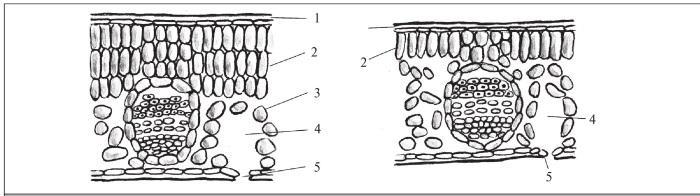
Below the protective covering tissue (epidermis) lies the parenchyma. Directly under the upper skin is the palisade parenchyma with elongated, tightly packed cells. The structure of this tissue is entirely determined by the level of illumination during the formation of the leaf blade. Below lies the spongy tissue with numerous intercellular spaces, which is responsible for transpiration and air exchange. Through the stomata in the lower skin, moisture evaporation and gas exchange occur, which maintains the optimal temperature of the leaf and ensures the supply of nutrients from the roots.
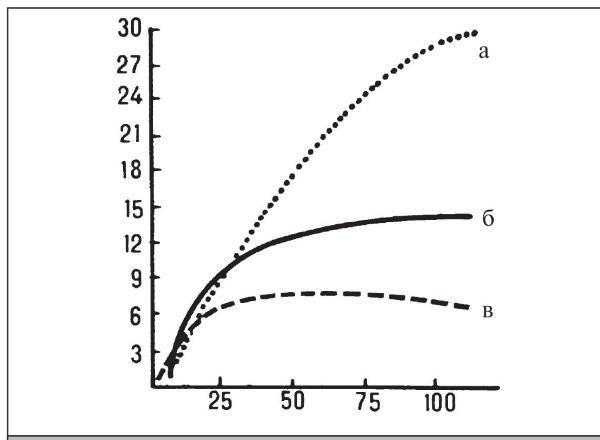
Light curves of photosynthesis prove that a leaf is most productive at the light level in which it grew. A shade leaf is physiologically not adapted to bright sun. It will not be able to sharply increase the production of assimilates after delayed pruning.
- Layers of parenchyma in good light — 2–3
- Layers of parenchyma with light deficiency — 1
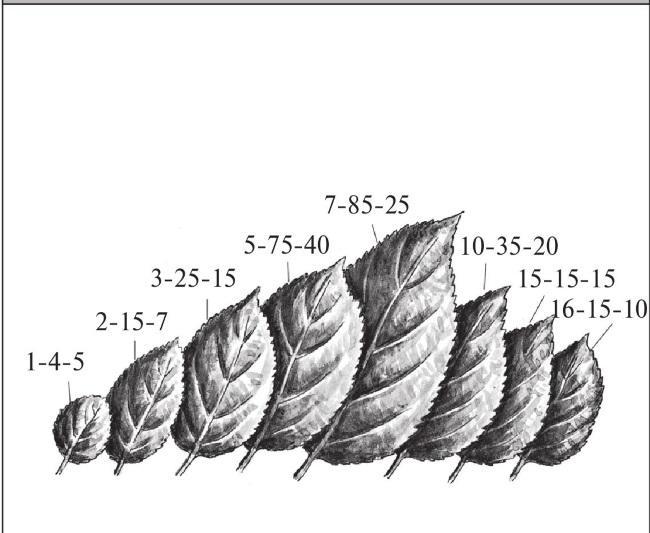
- Area of the first leaves on a shoot — 3–5 cm²
- Area of subsequent large leaves — up to 80 cm² or more
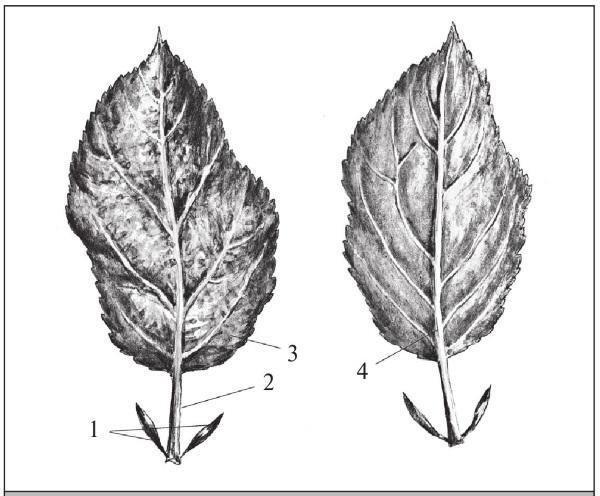
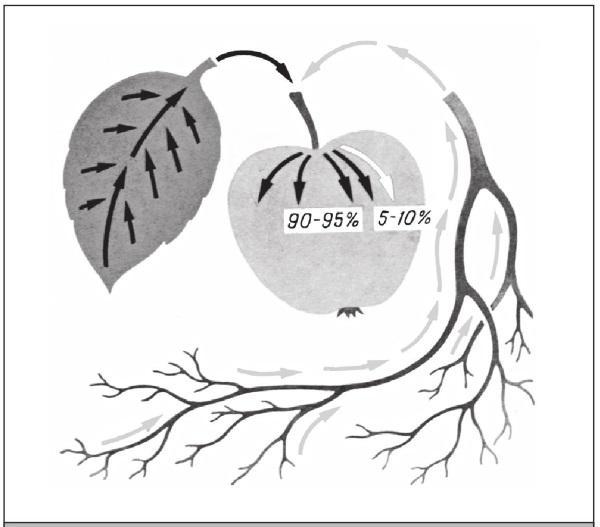
Leaves on a shoot develop unevenly, which is due to the evolution of fruit trees. The first small leaves at the base of the shoot always remain small, their area is only 3–5 cm². They quickly stop growing and are the first to start supplying reserve carbohydrates for the development of the shoot. The leaves following them grow large — up to 80 cm² or more. It is in the axils of such leaves that the largest buds are formed, and long internodes develop above them.
How canopy design and planting pattern determine the active photosynthesis zone
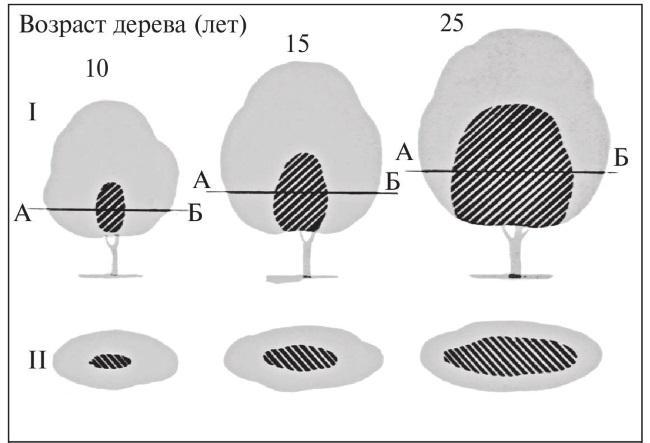
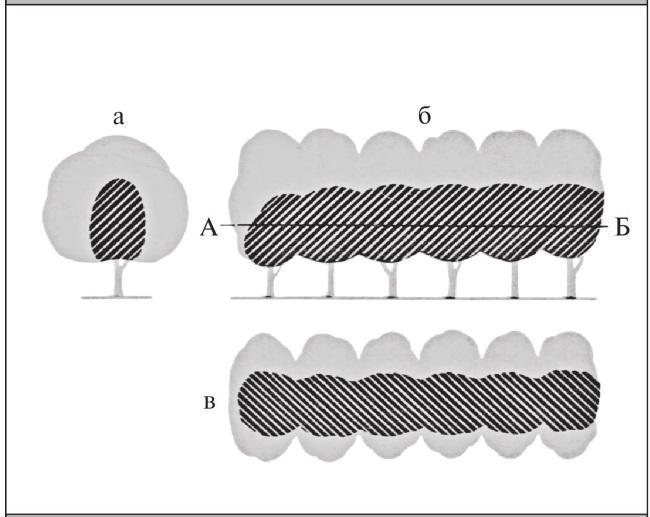
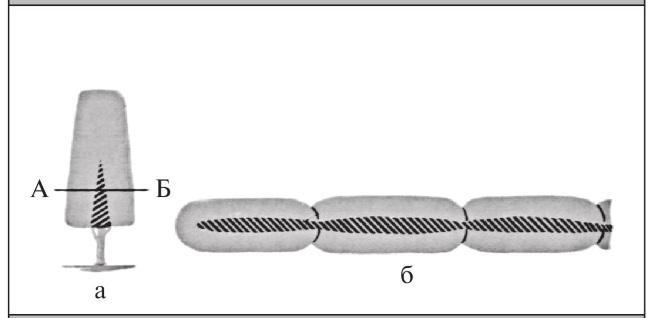
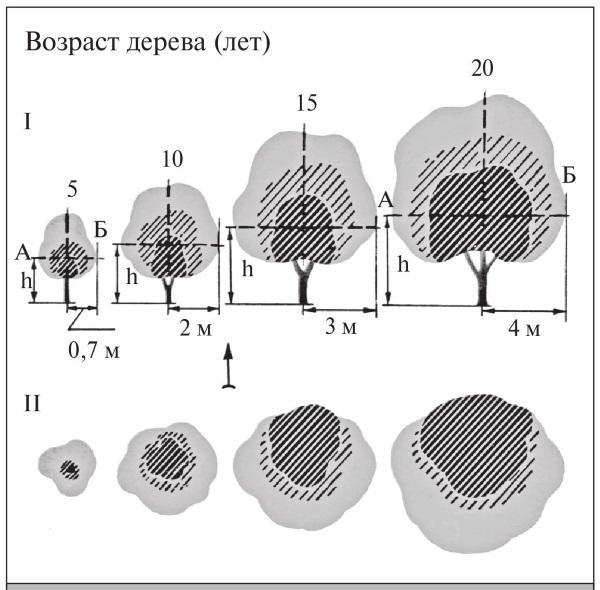
The choice of canopy design and planting pattern directly dictates the spatial position of the productive leaf canopy. In shaded parts of the canopy, leaves work inefficiently, consuming assimilates for respiration. Pruning should be aimed at maximizing the illumination of the most important working zone.
Depending on the training type, the productive canopy is distributed as follows:
- In spherical, voluminous canopies with sparse planting, the active zone is located exclusively on the outer periphery of the light canopy.
- In high-density row plantings, the productive canopy shifts to the upper part and the sides of the row.
- In flat canopies, the light canopy is distributed most evenly over the entire profile of the row.
The photosynthesis efficiency of each individual leaf depends not only on its anatomy. The final productivity is influenced by the level of insolation, moisture supply, and availability of mineral nutrients. Proper canopy training allows for maximum use of the biological potential of the foliage apparatus.
Read next
Agrochemistry For students
Classification of plants by their water regime regulation methods and moisture requirements
Pruning and training For students
Optimization of the light regime within the fruit tree canopy
Viticulture For agronomists