
Specifics of growing savoy cabbage and kohlrabi, and pest protection
20 min read
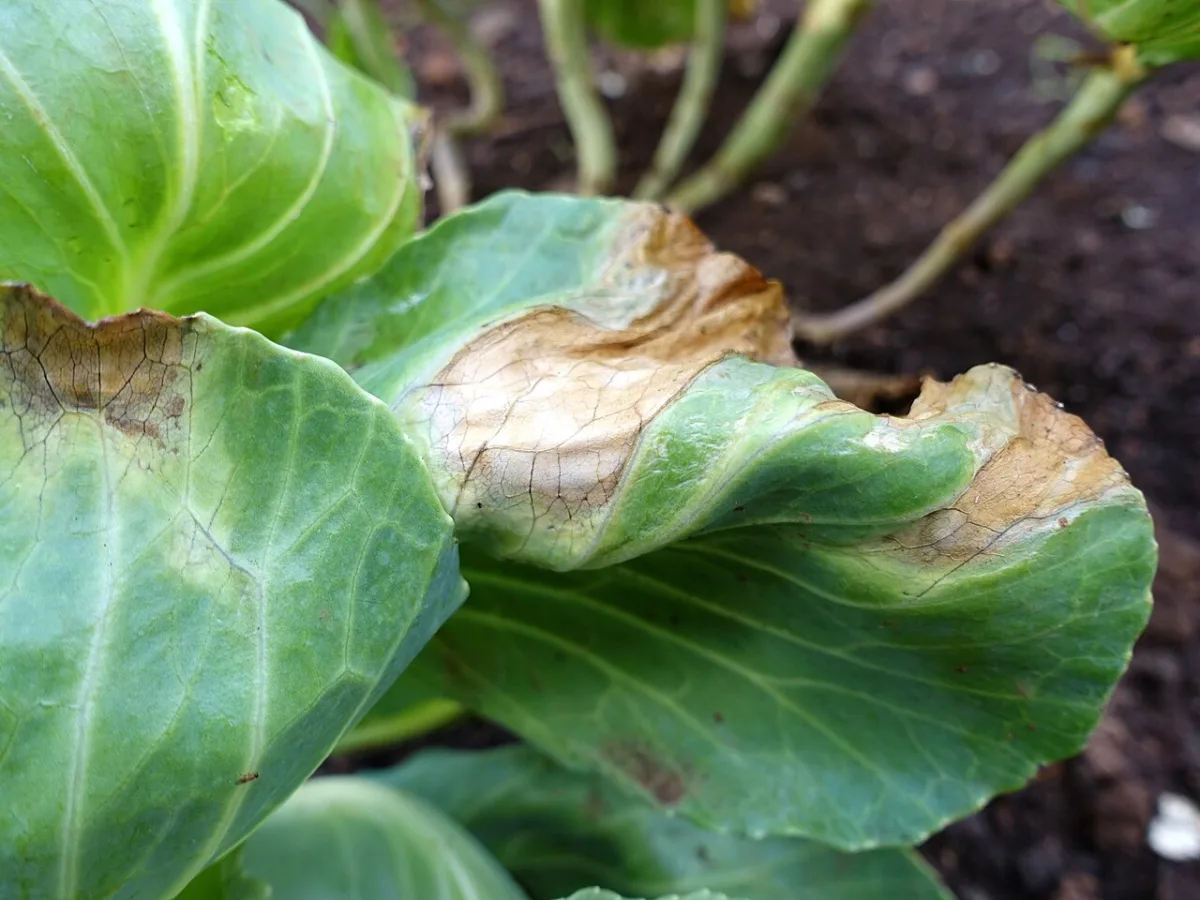
Growing Savoy Cabbage and Kohlrabi
Savoy cabbage differs from white cabbage by its loose head of crinkled leaves. It contains a large amount of proteins, vitamins, and specific substances that stimulate the growth of a young organism. The crop cultivation technology is identical to that of white cabbage. Early-maturing cultivars "Yubileynaya 2170" and "Vienskaya rannaya 1346" mature earlier than early-maturing white cabbage cultivars, forming heads weighing up to 1 kg.
Kohlrabi is the earliest of all cabbage varieties. Tender, non-lignified stem-tubers up to 7 cm in diameter (maximum diameter is 10 cm) are used for food. They are rich in ascorbic acid, which is why kohlrabi is called the "northern orange," as well as potassium, magnesium, and iron salts. The crop is grown using transplants or by direct sowing of seed into open soil.
- Age of potted seedlings — 40–45 days
- Sowing depth for seed — up to 1 cm
- Temperature for emergence — 18–20 °C
- Frost tolerance for seedlings — down to -6 °C
- Daytime temperature for growth — 15–18 °C
- Nighttime temperature for growth — 8–10 °C
To extend the harvesting period, seeds are sown simultaneously with the transplanting of potted seedlings. The sowings are necessarily mulched with humus or peat. The optimal layout for kohlrabi regardless of the growing method is a two-line strip pattern with 50 cm between strips, 20 cm between rows, and 10 cm between plants within a row. When the stem-tubers reach a diameter of 5 cm, the plantings are thinned by removing every other plant for consumption, while the remaining plants continue to grow until they reach a diameter of 10 cm.
Kohlrabi, unlike heading cabbages, is not hilled. Irrigation of the plants is significantly increased during the period of active stem-tuber formation.
If kohlrabi is grown after cucumbers or onions, organic fertilizers do not need to be applied during soil digging. It is sufficient to incorporate a standard dose of nitrophoska or a vegetable fertilizer mixture into the soil. The first top dressing is performed with urea, and at the beginning of stem-tuber formation, the sowings are fertilized with potassium nitrate. The early-maturing cultivar "Vienskaya belaya 1350" matures in 65–75 days after emergence.
Protection of cabbage crops from pests and diseases
Systematically remove weeds around the plot, preventing them from setting seed, and clear away plant debris after harvesting. Pupae of the large white butterfly and cabbage moth overwinter on remaining stumps and leaves. In the spring, adult cabbage flea beetles emerge after hibernation, feed on weeds first, and then move to the young crop seedlings. To combat flea beetles, dust the seedlings with tobacco (preferably shag) dust or sifted ash mixed with pyrethrum in a 3:1 ratio.
To protect plantings from cabbage clubroot infection, before planting the transplants, pour a glass of liming milk (800 g of lime per bucket of water) into each hole.
The egg-laying period of the cabbage root fly coincides with the flowering of birch, cherry, and lilac. The pest's white eggs must be raked away from the stems into the aisles, where they perish. Upon larval hatching, a glass of carbophos or chlorophos solution, prepared at a rate of 20–30 g of the product per bucket of water, is poured under each plant.
The biological preparation entobacterin is effective against all types of caterpillars only at an air temperature of no less than 17 °C.
- Dilute the required amount of the preparation (20 g per bucket of water) with a small volume of water at a temperature of 12–15 °C so that the bacterial spores do not germinate prematurely.
- Thoroughly mix the preparation with the water.
- Add warm water to reach the full volume.
- Perform spraying immediately after preparing the solution (no later than 2–3 hours).
To combat lepidopteran pests and aphids, apply a three-time foliar top dressing with phosphorus-potassium fertilizers. Under the action of these elements, free nitrogen in the leaves quickly converts into protein substances, depriving young caterpillars and aphids of the necessary nitrogen nutrition. A 24-hour infusion of wood ash (1 glass per bucket of cold water with regular stirring) has a similar effect.
| Treatment stage | Pest and trigger for spraying | Solution composition per 10 l of water |
|---|---|---|
| First top dressing | Appearance of bright yellow egg clutches of the large white butterfly | Superphosphate (100 g) and potassium chloride (50 g) |
| Second top dressing | Appearance of cabbage moth egg clutches (initially almost white, then darken) | |
| Third top dressing | Appearance of aphids |
To combat aphids and the large white butterfly, it is effective to attract beneficial entomophagous insects to the plot:
- Hoverflies (Syrphidae): their larvae destroy up to 100 aphids each. To attract the flies, plant flowering dill and parsley or place paper soaked in crushed aphids.
- Trichogramma: these tiny egg parasitoids are bred in biofactories and released against the large white butterfly.
- Lacewings: they destroy aphid colonies. They lay oval greenish eggs on long, thin stalks right among the pest colonies. The larvae, hatching after 1–2 hours, begin to actively exterminate the aphids.
Despite the common belief that the nutritional value of cucumbers is low due to their high water content (up to 97%) and negligible amount of proteins and carbohydrates, and the absence of fats, let us try to imagine our table without cucumbers and their refreshing taste. Their primary value lies in the fact that they contain peptonizing enzymes, which facilitate the body's assimilation of protein foods. Cucumbers are dominated by alkaline salts, which dissolve uric acid, preventing rheumatic diseases and easing the burden on the heart and kidneys. Cucumber seed germinates at a temperature of 12—13°C, and hardening swollen seed with low temperatures promotes germination even at 10°C. However, germinated seed sown into unheated soil (below 10°C) soon dies. Only at a soil temperature of 14—15°C do seedlings emerge in two weeks; at a temperature of 19—20°C, cucumber seedlings appear in six days. The most favorable air temperature for seed germination and further plant growth and development is 25—30°C, and for the soil, 23—25°C. For young plants, the best temperature during the day on sunny days is 24—28°C, on overcast days — 20—22°C, and at night 16—18°C. Most cultivars form male flowers (these are called barren flowers) on the main stem first, and female flowers on lateral shoots. Exceptions include such early-ripening cultivars as Muromsky 36 and Altaysky Ranniy, as well as hybrid Uspekh 221, Signal 235, etc. In these, male and female flowers appear almost simultaneously on the main shoot. There are also so-called parthenocarpic cucumbers, which produce seedless fruit without pollination and are grown in greenhouses.
Often, the appearance of female flowers on cucumber plants is delayed. There are several reasons for this phenomenon. One is sowing with fresh seed. In plants from fresh seed, female flowers form later than male ones. It is better to sow seed that is two to three years old, but this is not always possible. A solution was found in heating fresh dry seed at a temperature of 50°C for 2 hours. The seed is spread out on a sheet of paper and placed on a radiator along with a thermometer. If there is no radiator, the seed is hung in a gauze bag from the ceiling of a warm room for two to three months before sowing, and the heated seed forms female flowers faster.
When sowing with large, full-weight seed sorted in a 3-percent solution of table salt (a teaspoon of salt per glass of water), female flowers form earlier on the main vine. However, it is not only heat but also cold that accelerates the appearance of female flowers. Cold is applied not to dry seed, but to swollen seed, just as with tomato seed. A lack of phosphorus also delays the flowering of female flowers. A lack of carbon nutrition also affects the appearance of female flowers. It is not for nothing that the carbon dioxide content in greenhouses is increased by using dry ice (solid carbon dioxide). In open ground, plants are mulched with fresh manure, but in such a way that it does not touch them, and the aisles are carefully loosened so as not to damage the root system. A reason for the delayed appearance of female flowers is irrigation with cold water and the close proximity of cold groundwater on the plot. Cucumbers should be irrigated only with warm water (a temperature of 25°C — cool to the touch). Cucumbers are moisture-demanding plants. An excess of moisture also delays the flowering of female flowers, so a few days before flowering, the soil is dried out by stopping irrigation. The root system of cucumbers is quite powerful and is mainly located in the surface loosened layer of soil, but in protected ground, it develops relatively weakly compared to open ground, which is associated with insufficient illumination of the plants, and the roots often come to the surface; therefore, in a greenhouse, the soil is not loosened, but soil is added to the aisles after irrigation. The rapid appearance of lateral shoots, and on them female flowers, is facilitated by pinching the plants above the fourth or fifth leaf, but in such a way as not to damage the apical bud. After flowering, the growth of the main stem resumes. Reduced night temperature promotes the formation of female flowers due to a decrease in plant respiration and a reduction in carbohydrate consumption. At a temperature below 15°C, plants may flower, but they do not produce fruit set.
However, even the timely appearance of female flowers does not guarantee an early harvest if there is no pollination by bees. In that case, manual pollination is performed by inserting a male flower (it is without fruit set) with stripped-off petals into a female one (with fruit set), or by carefully taking pollen with a brush from a male flower and applying it to the stigma of the female one. Cucumber fruits grow mainly at night, when the breakdown of complex organic substances and the outflow of breakdown products to the fruits occurs, so during the fruiting period, a temperature reduction in the greenhouse at night is permissible only down to 20°C. In sunny light during this period, the best temperature is within 28—32°C; at higher temperatures, the pollen becomes sterile. Overheating the plants causes increased respiration and exhaustion. In open ground, a night temperature below 18°C sharply reduces the rate of fruiting, and the plants are more easily affected by powdery mildew. Cucumbers are light-demanding plants, so a decrease in illumination leads to delayed flowering and fruiting. A lack of light is especially felt when growing transplants. Cucumbers are short-day plants. If the transplants are shaded, or rather, given complete darkness for 12—14 hours, this helps accelerate the appearance of female flowers and accelerate fruiting.
Cucumbers require high air humidity, so in open ground during the hot hours of the day, plants are sprayed with water, which also helps lower the temperature of the leaves and resume photosynthesis, while in greenhouses, air humidity is maintained within 80—90%, while simultaneously lowering soil moisture with infrequent irrigation (until the start of fruiting). On acidic soil, cucumbers grow poorly. The most favorable soil solution reaction for them is pH 6.5. Cucumber plants are very responsive to liming of the soil.
Growing cucumbers in film greenhouses. While in the Moscow region, the harvesting of cucumbers in open ground in favorable years begins only from the end of July, in film greenhouses with solar heating when planting month-old transplants on May 5—15, fruits are harvested in the second ten days of June, and with biological heating when planting transplants in the second ten days of April — as early as mid-May. To accelerate soil warming, greenhouse frames are covered with film 7—10 days before the start of work, and if the soil is too wet, openings in the lower part of the greenhouse and vents in the roof are opened to dry it out. Subsequently, when growing cucumbers, only exhaust ventilation is used. Heat is better retained when covering the greenhouse with two layers of film with air gaps between them of 5—7 cm (as is done in the north), and during a sharp cold snap, additional covers for plants are arranged in the form of film tunnels.
Before starting to grow cucumbers in a film greenhouse, it is necessary to consider that one cannot grow such opposite plants as cucumbers and tomatoes in the same greenhouse, although this is often done. The requirements of these crops for heat are different. Cucumbers need a greater influx of heat than tomatoes, and most importantly, they differ in their requirements for soil moisture and relative air humidity: cucumbers need more frequent irrigation than tomatoes, and as for air humidity, for cucumbers it should be increased to 95% on sunny days, 85% on overcast days and at night, while for tomatoes the optimal relative air humidity should not exceed 60—65%, since with increased air humidity, flower fertilization worsens and plant morbidity increases. Therefore, when growing tomatoes in a greenhouse, it needs to be ventilated frequently, while cucumbers do not tolerate drafts. In addition, in dry air, cucumber plants suffer and produce more barren flowers. Only when the air temperature in the greenhouse drops can the relative air humidity be 70—75%. Therefore, it is necessary to install a transparent film partition in the greenhouse, isolating cucumber plants from tomatoes, or grow each of these crops in a separate greenhouse, with their annual rotation to avoid viral, fungal, and bacterial diseases. An unheated film greenhouse has the disadvantage that strong temperature fluctuations are possible in it, since polyethylene film does not retain heat rays, as is characteristic of glass, and on cold April nights, the temperature in the greenhouse can drop to zero, while on sunny days it can rise to 40°C, and humidity during this time drops to 45—50%. Both are harmful to plants. To avoid killing the plants, greenhouses should be covered at night before frosts with opaque material, and to increase air humidity, the greenhouse posts and the plants themselves should be sprayed with water during the day.
In the Moscow region, cucumber transplants are planted when growing with solar heating on May 5—15, and with biological heating — in the second ten days of April, at a soil temperature of 18—20°C. In an unheated greenhouse, planting is also allowed at 10—12°C. However, for faster soil warming, it should be mulched with film and the plants additionally covered with it after planting, as a result of which the soil temperature rises by 5—6°C. Transplants should be planted either on overcast days or in the evening on sunny days in a single row with 60 cm between rows and 30 cm between plants. A two-line arrangement of plants can be used with distances of 80 cm between rows, 60 cm between rows, and 40 cm between plants. A wire is stretched above each row at a height of about 2 m, and a 2.5 m long twine is stretched above the plants, throwing it over the wire; one end of it is tied with a loose loop to the plant stem under the first leaf, coiling the stem around the twine as it grows, and the second end of the twine is secured to the wire with a sliding knot. Free space along the walls of the greenhouse is filled with green crops (scallions, Khibiny cabbage, leaf lettuce). Radish should not be sown as a filler, as the latter requires more light and does not tolerate high temperatures. When a cucumber plant reaches the wire, it is pinched, and lateral shoots are subsequently pinched above the second or third leaf.
The temperature in the greenhouse is maintained until the onset of fruiting on sunny days within 20—25°C, on overcast days — 18—22°C, and at night — no higher than 18°C. During the fruiting period: on sunny days — 25—27°C, but no higher than 30°C; on overcast days — 22—24°C; and at night — 20—21°C. Plants can only be irrigated with warm water (24—26°C), and air humidity must be maintained on overcast days and at night within 80—85%, and on sunny days it should be increased to 85%, by spraying the walls and the top of the greenhouse with water. Plants are top-dressed every 7—10 days, and on fertile soil every 12—15 days with a solution of mineral fertilizer: urea — 20—30 g per 10 l.
Pollination of cucumber flowers, superphosphate — 30—40 g and potassium sulfate — 10—20 g, depending on the condition of the plants. The concentration of the solution before fruiting should not exceed 0.3%, and during the fruiting period — no more than 0.5%. At this time, it is better to provide top dressing with potassium nitrate, adding a micro-fertilizer tablet to the solution. Foliar top dressing of plants with a urea solution — 20 g per 10 l of water, superphosphate — 10 g, potassium sulfate — 10 g, and a solution of micro-fertilizers: boric acid — 2 g, copper sulfate — 2 g, manganese sulfate manganese — 3 g and ferrous sulfate — 3 g (1 l of solution per 1 m2) is beneficial. Foliar top dressing is best carried out on cloudy days, and in sunny weather — in the second half of the day. Plants are fed alternately with mineral and organic fertilizers. As an organic fertilizer, it is better to use poultry manure. It is placed in a barrel up to half, filled to the top with water while stirring, the barrel is covered with a lid and left for a day to allow the manure to soak better. Old gardeners used to keep the manure in the barrel for several days, until gas bubbles appeared. This should not be done, as nitrogen is lost in the form of ammonia. For plant top dressing, the thoroughly stirred mixture is diluted with water 10—12 times, adding three tablespoons of superphosphate per bucket of solution. One should not forget about top dressing with "dry ice" (solid carbon dioxide) or fresh manure placed in a barrel in the greenhouse. Such top dressing is especially necessary on sunny days. If there are no bees flying, manual pollination of flowers is used. It should be taken into account that cucumber flowers begin to open on sunny days at 5—6 a.m., and on cloudy days — at 8—10 a.m. Pollen and the stigma mature while still in the buds several hours before the flowers open. There is the most pollen in the period from 9 a.m. to 12 p.m. At this time, it is most viable. For pollen germination after pollination, a temperature of at least 13—15°C is required. After the first harvest, plants are irrigated every one to two days, but the humidity is lowered to 80—85%, which helps to protect the plants from diseases. During irrigation, ensure that water drops do not get on the leaves. The greenhouse must be ventilated daily, avoiding drafts, and after irrigation, the film should be lowered. Harvesting is carried out every one to two days, preventing them from overgrowing; at the same time, deformed fruits are removed, as well as lateral shoots that have finished fruiting. Growing cucumbers in hotbeds. When the biofuel warms up, after leveling it, a longitudinal groove 10—12 cm deep and 30—35 cm wide is made in the middle of the hotbed. This groove is filled with a prepared mixture of peat, humus, and sod soil (1:1:1), and if there is no peat, then from humus and sod soil (2:1) in a layer of 22 cm. When filling the entire surface of the biofuel with the mixture, the soil thickness on the rest of the hotbed will be 10—12 cm. In the resulting ridge, cucumber transplants are planted in oval holes made across it in pairs in a tilted position, placing the plants in opposite directions (north and south). Three to five pairs of plants are planted under each frame. In sunny weather, the transplants are shaded for the first two to three days. The free area is occupied by green onions, planted previously in sowing boxes, so as not to damage the root system of the cucumbers when harvesting the onions. You can sow seeds of fast-growing Chinese cabbage with the expectation of harvesting it in a month. As the shoots grow, they are pinned to the ground with small twigs and covered with moist soil. On hot days, the hotbeds are ventilated by raising the frames on high supports from the north side, and the glass is sprayed with a chalk solution. Plant care is the same as in plastic greenhouses. Growing cucumbers under plastic covers. Of the existing frame covers, the simplest is the tunnel-type cover on a frame made of wire with a diameter of 5—6 mm or willow branches. They are installed in the form of hoops over a bed 90—100 cm wide every 1 m. Moreover, to protect the film from being blown away by the wind, the hoops are first placed every 2 m, and after covering with the film, other hoops are placed on top in the skipped intervals. At the ends of the bed, pegs are driven in to tie the end arches with twine. On the sides, the film is nailed to slats with a diameter of 5 cm with a layer of burlap or old oilcloth. The slats should not touch the ground, so that their weight pulls the film taut. Hoops can also be made from last year's raspberry stems, intertwining them and tying them at the tops after removing the lateral shoots. Such arches are better to install every 50 cm. Hardware stores sell standard covers made of stabilized polyethylene film and a frame made of polyethylene pipes. The frame width is 1 m, height — 0.5 m, and length — 3 m. The URP-20 collapsible portable cover is factory-made and consists of three or four trusses with uprights, two side boards 15 cm wide and 1.9 cm thick, two ridge beams with a cross-section of 5x5 cm, and two base beams also measuring 5x5 cm. The usable area under one frame is 9.6 m2. The mass of the assembled cover is 48 kg. After planting the transplants under plastic covers, the plants must be fed every 8—10 days until fruiting with a solution of urea, superphosphate, and potassium sulfate (a teaspoon of each per 10 l of water with the addition of 0.5 g of boric acid dissolved in hot water for the first top dressing, and for subsequent top dressings — a tablespoon and without boric acid). During the fruiting period, it is sufficient to top-dress
Read next
Greenhouses and covers For gardeners
Peculiarities of melon cultivation in greenhouses and hotbeds
Nutrition and fertilizers For gardeners
Nutritional characteristics and fertilizer system for open-field vegetable crops
Soil and tillage For students