
Pruning and canopy formation of fruit-bearing trees in the orchard
15 min read
How to avoid overcrowding and maintain canopy structure
Regular pruning of fruit-bearing trees is a mandatory condition for obtaining a stable harvest. Without maintenance, even a well-formed canopy thickens in just two to three years. The main task of an agronomist at this stage is to evenly distribute new primary and lateral branches throughout the entire volume of the canopy to prevent the formation of dangerous sharp crotches.
In the conditions of the Central region, fruit trees often suffer from frost, which provokes the massive growth of vigorous water sprouts. Water sprouts and powerful ramifications on the upper (inner) side of the main branches thicken the canopy particularly heavily. Remove them first — prune them flush to the collar or suppress them with heavy pruning, heading back to a weaker branch directed into open space.
- Maximum canopy height — 3–3,5 m
- Thickening without pruning — in 2–3 years
- Central leader cut — after 1–2 years
- Primary pruning for lateral development — to 6–8 buds
To balance the tree, follow the rules of branch subordination. The ends of the main branches should be located along a slightly convex arc, and secondary branches should be subordinate to the primary ones. One to two years after laying the last main branch, once it has strengthened, cut the central leader, heading back to it. Subsequently, keep the center of the canopy open and limit the total height of the tree by heading branches back to outer ramifications.
Cyclical branch pruning technology
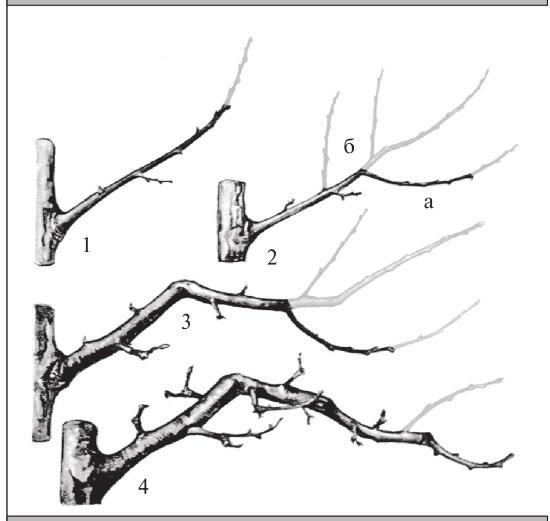
To transform vigorous branches into fruit-bearing structures, apply a cyclical pruning scheme. This technique helps to turn vigorous growth into a lateral branch and shift the branching zone closer to the base, preventing the wood from becoming bare. It is also used to prevent the appearance of sharp crotches and establish branch subordination when other methods fail.
Do not get carried away with excessive thinning of the canopy if you need to accelerate fruiting. Preserve all branches with potential for future development and train them into a horizontal or drooping position. Shortening shoots during this period should only be used in case of absolute necessity.
- First year: shorten the one-year growth to 6–8 buds.
- Second year: prune the vigorous shoot from the top bud short — to 2–3 buds.
- Subsequent years: stimulate the branch to develop fruit-bearing structures with annual short pruning.
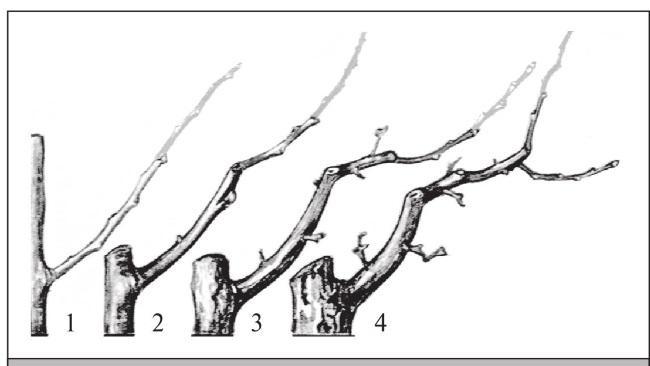
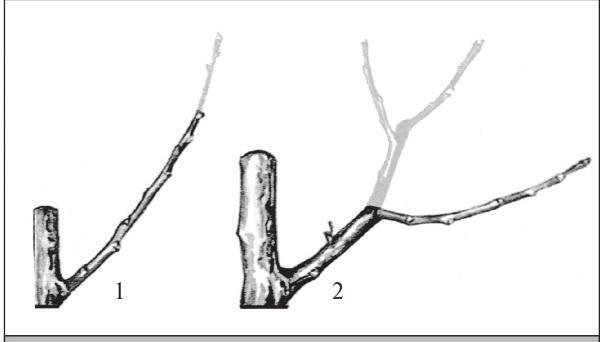
Always adjust the pruning scheme taking into account the spatial orientation of the shoots and cultivar characteristics:
- Upward-growing branches: in the first year, prune to an outer bud; in the second year, head back to a lower horizontal ramification.
- Highly inclined branches: make the first cut to an inner bud, and then head back to an outer, almost horizontal ramification.
- Cultivars with good shoot-forming capacity: in the second year, head back the branch to a lower ramification, removing the vertical shoot, and in the third year, cut off all vigorous growth completely.
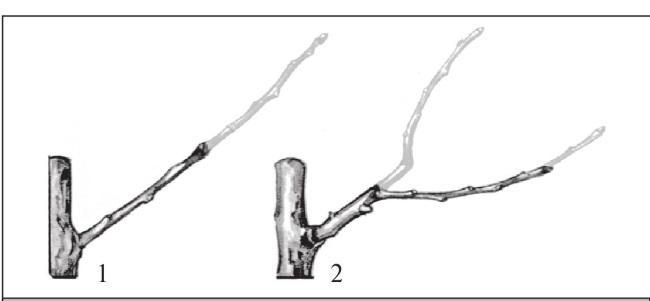
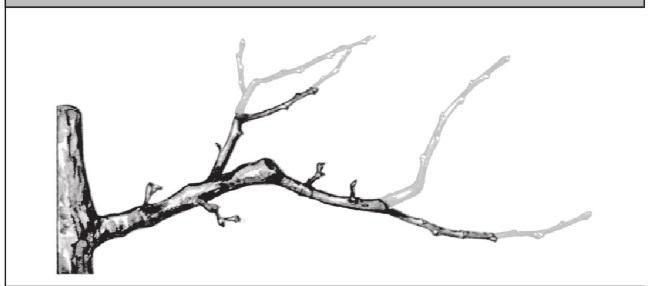
For cultivars with high shoot-forming capacity, it is easy to saturate the canopy with fruit-bearing twigs. The main task of the gardener in this case is to regularly thin the canopy and prevent excessive density. Carefully ensure that small lateral branches do not overgrow into large skeletal branches.
Apple cultivars such as Korichnoye Polosatoye require a special approach due to weak bud break and low shoot-forming capacity. They are prone to bearing fruit at a young age on the very tips of long one-year growths. Without special intervention, the branches of such trees quickly become bare, shifting the fruiting zone to the periphery of the canopy.
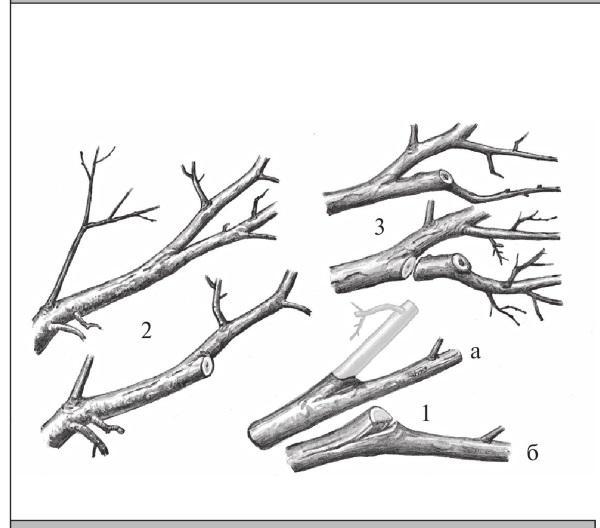
To stimulate the emergence of fruiting shoots, several technical methods are used. The best result is provided by pruning to a lateral branch on two-year-old wood. Other methods include bending shoots to a horizontal position, pruning a post-fruiting branch below the fruit cluster, and pruning for replacement.
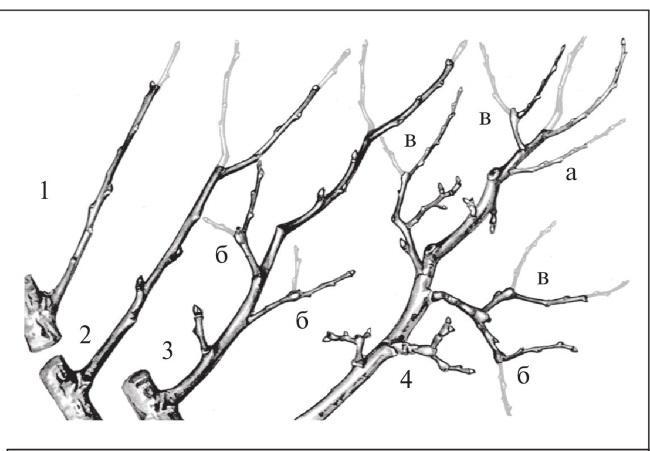
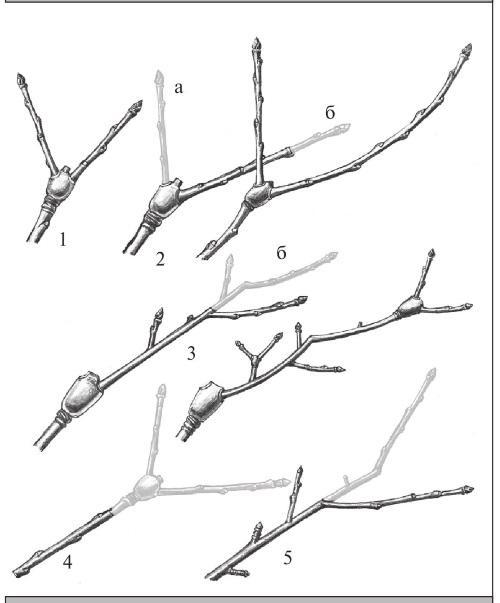
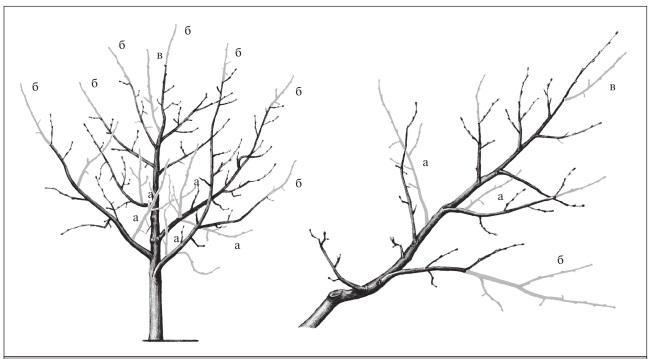
For cultivars with a late onset of fruiting, minimal pruning is effective. To accelerate the appearance of the first fruits, combine light pruning with artificial bending of branches, pairing and intertwining them, or girdling strong fruiting branches.
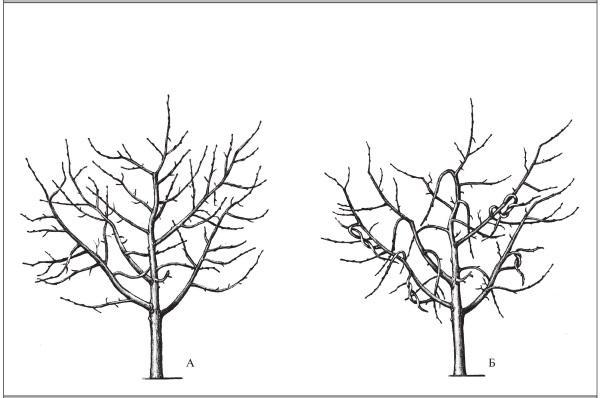
In early-bearing cultivars, abundant harvests in the first years can lead to alternate bearing. Be sure to regulate the load on the tree by pruning or thinning the fruit set.
The period of combined growth and active fruiting is the most valuable from an economic point of view. Trees produce high yields while maintaining sufficiently strong vegetative growth. By this point, canopy formation is practically complete. The gardener only needs to maintain the optimal canopy volume and good light penetration throughout its depth.
Reducing and thinning an overgrown canopy
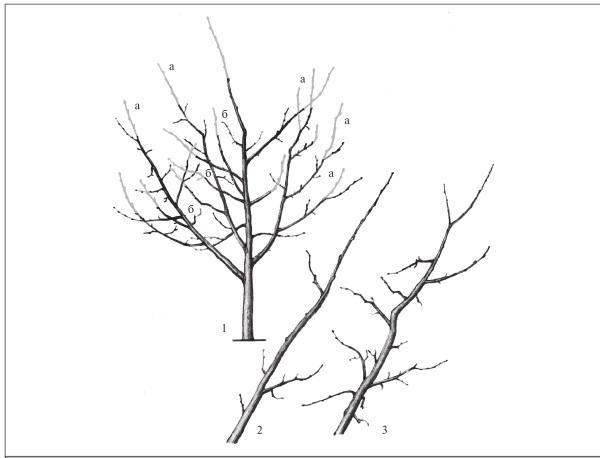
With regular maintenance, pruning adult trees is limited to removing one-year-old branches that overcrowd the canopy. However, in neglected areas, it is necessary to perform a major height reduction and thin the central part of the tree. When performing this work, follow key pruning parameters.
- Leader reduction – 2–2.5 m
- Transfer of upper branches – 2.5–3 m
- Age of wood for transfer to a lateral branch – 2 years
- Shortening degree of one of the paired branches – 1/3
- Cut zone for rejuvenation – 30–40 cm growth
- Length of the protective stub – 15–20 cm
When thinning, the rule applies: it is better to remove one large branch if it solves the problem than to inflict multiple small wounds on the tree by pruning many small twigs.
To tidy up an overgrown canopy, follow a clear sequence of operations:
- Reduce the canopy by removing the upper part of the leader at a height of 2–2.5 m above a single main branch.
- Transfer all remaining branches in the upper part of the canopy at a height of 2.5–3 m to outer lateral branches directed toward the periphery.
- Cut out dry, damaged, and clearly overcrowding branches.
- Prune drooping lower branches, transferring them to upward-growing lateral branches (this will also facilitate maintenance of the tree circles).
- Perform a general restriction of canopy dimensions in width.
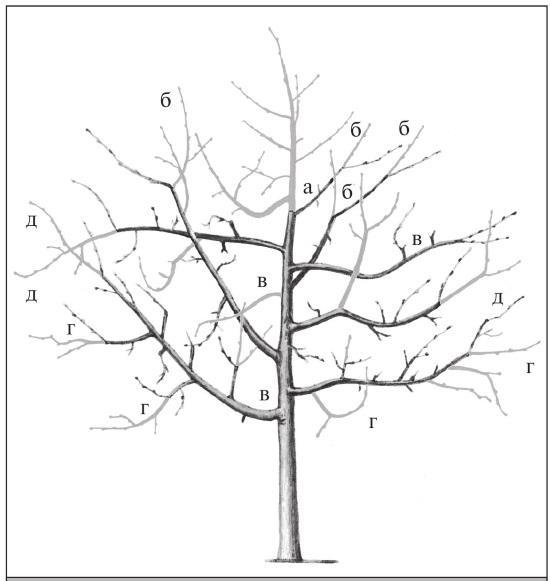
At the end of the fruiting period, shoot length growth fades, and tissue aging intensifies near the branch tips. An old tip absorbs nutrients poorly but continues to draw the bulk of them toward itself. As a result, the tree loses frost resistance, shifts to alternate bearing, and fruits become smaller. Small fruits have an unfavorable ratio of seeds to pulp: the dry matter content in seeds is several times higher, so the formation of small fruit mass significantly exhausts the tree.
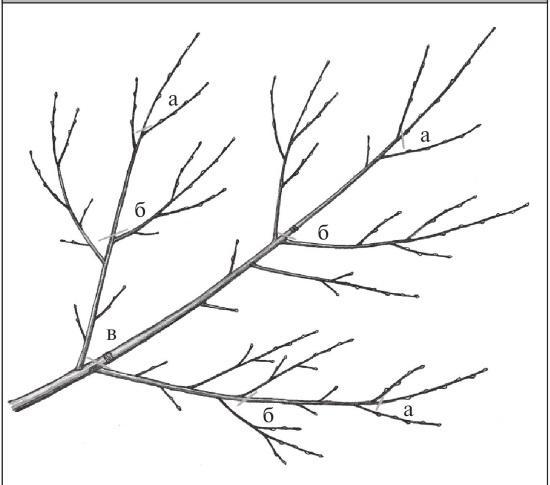
Begin rejuvenating branches before growth stops completely. Young wood is physiologically more active, prone to annual fruiting, and produces large fruits. At the first signs of weakened terminal growth, perform heading back of the branches. When pruning, be sure to observe the principles of branch subordination.
Depending on the type of fruiting, pruning (heading back) is performed in the following ways:
- by removing the one-year-old growth above a lateral branch on two-year-old wood;
- by making a cut above a spur or another fruit-bearing formation (for weak-branching cultivars with a spur-type of fruiting).
In years with an excessive harvest, additionally remove a portion of the fruit buds. This will help smooth out alternate bearing and reduce the load on the tree.
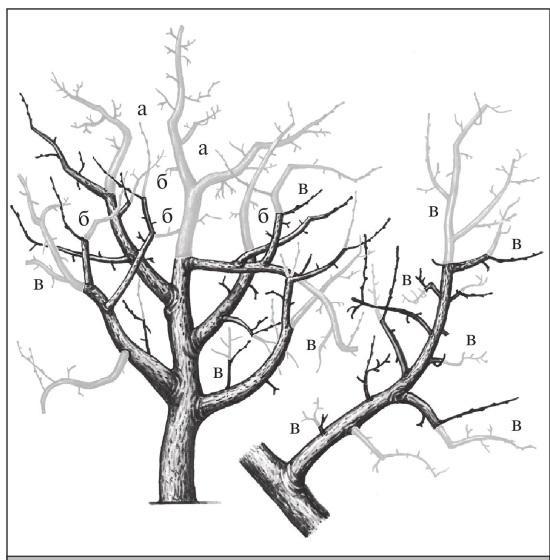
Step-by-step rejuvenation and canopy limitation
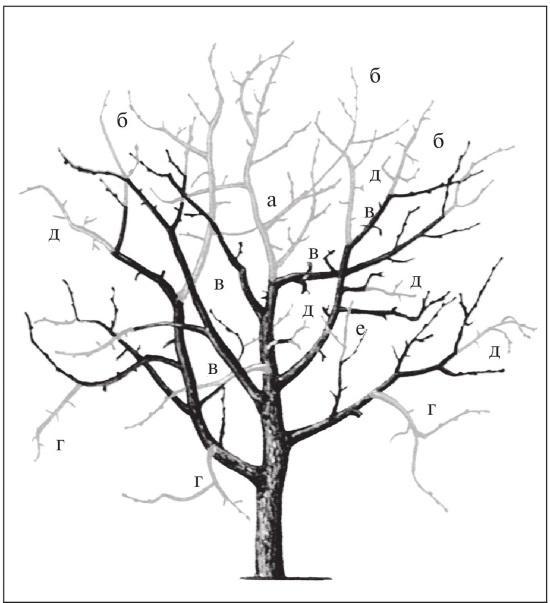
Excessive branching eventually leads to overloading the tree with buds. The tree's reserves are no longer sufficient to ensure vigorous shoot growth, resulting in short growths with flower buds at the tips. Too many resources are spent on excessive flowering and supporting surplus fruit set, which further weakens the tree. To restore the balance between growth and fruiting, rejuvenating pruning of the entire canopy is applied.
Do not rely on the chronological age of the wood when rejuvenating. In trees with declining growth, five-to-seven-year-old sections of a branch may be only a few centimeters long, and a cut there will yield no results.
- Length of growth for the cut zone — 30–40 cm
- Length of the protective stub — 15–20 cm
- Volume of the initial removal — up to 90%
It is more correct to make the cut in the part of the branch where the length of the previous year's growth was 30–40 cm. This zone is determined visually by the outer annual rings. Conduct the rejuvenation of mature fruit-bearing trees in stages so as not to overload the tree with stress.
- In the first year, remove 1–2 large, most crowding main branches (this will account for up to 90% of the total pruning volume); do not touch the remaining branches.
- Fill the resulting empty space with new branches, which should be formed from water sprouts.
- The following year, remove another large branch on the opposite side and in a different canopy tier, continuing the replacement until the skeleton is completely renewed.
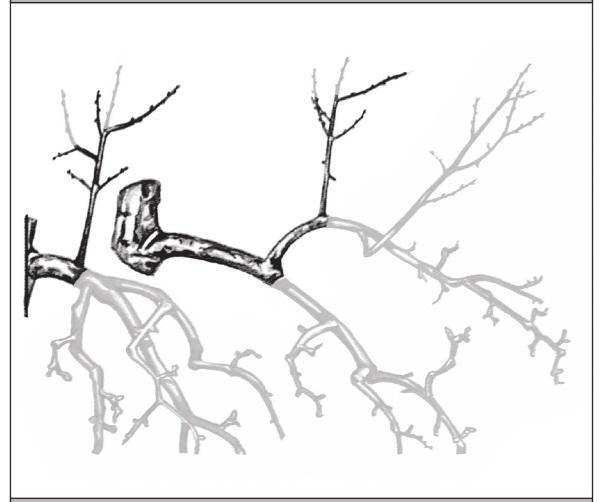
An old branch can also be cut off leaving a protective stub 15–20 cm long. In this case, the young water sprout is not shortened but bent parallel to the replaced branch and tied to the stub, which is completely sawed off a year later. The new branch is formed using the standard method and directed into its growth sector. Pruning in the zone of receding growth also yields good results.
Limiting the size of the canopy is an mandatory stage of care for a fruit-bearing orchard. Reducing tree height and pruning branches that extend into the row spacing ensure free passage for tractors and sprayers. Furthermore, this improves the light regime inside the canopy, prevents the base of the branches from becoming bare, and extends their productive period. Such pruning can be performed either manually by cutting to laterals along the row or mechanically.
Rejuvenating pruning helps regulate the tree's harvest load. To achieve this, not only large skeletal branches are renewed, but also the fruiting wood. As a result, the total number of fruiting points decreases, while vegetative growth is noticeably enhanced.
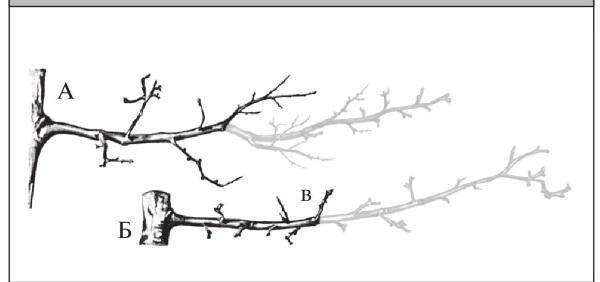
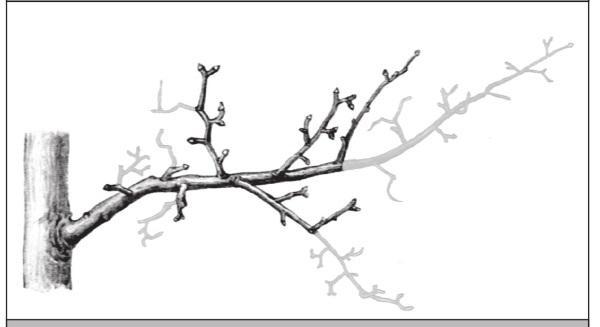
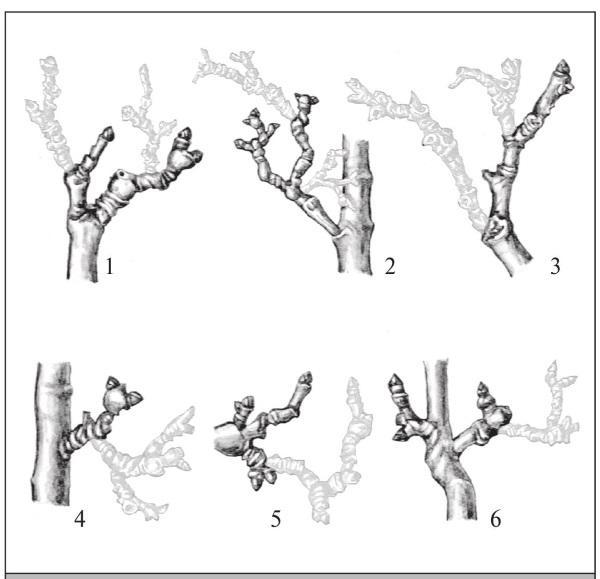
Working with fruiting wood requires care and a strict sequence of actions. Systematic renewal of fruit-bearing branches allows for maintaining high fruit quality and prevents overloading the tree. Perform detailed pruning of fruiting branches sequentially:
- Completely remove all low-productivity, weak, and drying branches.
- Shorten strong fruit-bearing spurs, as well as complex spurs and fruit-bearing branches by 1/3–1/2 of their length.
- Make cuts strictly above one of the most developed and strong ramifications.
- Period of complete canopy rejuvenation — 4–5 years
- Shortening of complex spurs — by 1/3–1/2 of the length
- Shortening of barren twigs of 'Pepin Shafrannyi' — by 1/2–1/3 of the length
- Pruning the tip of twigs in a heavy crop year — by 3–4 buds
When starting work, always compare the pruning intensity with the fruiting characteristics of the cultivar and the tree's expected load in the current season. If a cultivar bears fruit primarily on spurs and the current year promises a heavy harvest, detailed pruning can be performed boldly. In a lean year, heavy pruning and thinning will also be beneficial, as they will stimulate the growth of vigorous vegetative shoots, fruit-bearing twigs, and darts.
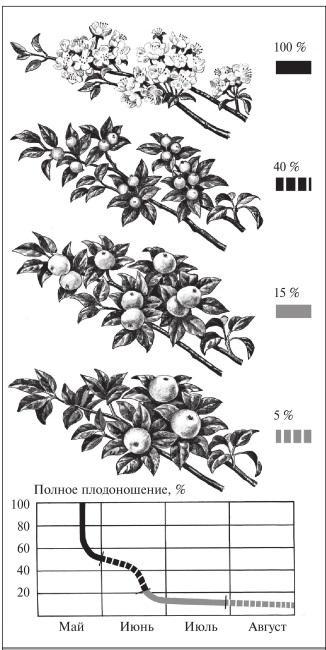
If the expected harvest is poor, prune the canopy with maximum caution, aiming to save as many fruit buds as possible. The remaining fruits will naturally restrain excessive flower bud initiation for the next season, which will help smooth out the alternate bearing. For cultivars like Pepin Saffron, which form their harvest primarily on fruiting twigs, use a differentiated approach.
In a productive year for such cultivars, shorten a portion of the twigs by cutting off the tip with 3–4 buds. This regulates the future load and stimulates bud initiation for the next year. In lean seasons, protect the fruit buds by shortening only those twigs that have no flower buds by 1/2–1/3 of their length.
Step-by-step replacement of scaffold branches and canopy restoration with watersprouts
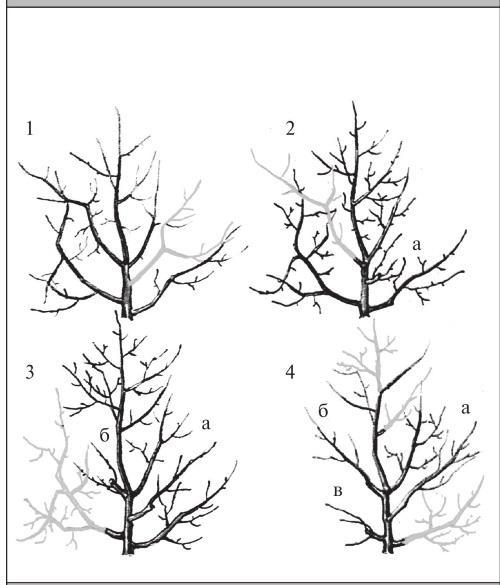
Replacing aging scaffold branches cannot be done all at once, otherwise, the tree will suffer from a sharp loss of leaf surface. The process is stretched over 4 years, systematically distributing the work across seasons. This allows for rejuvenating the canopy without severe stress to the plant.
| Year of work | Pruning and canopy formation technology |
|---|---|
| 1st year | Completely cut out 1 or 2–3 of the strongest old main branches. |
| 2nd year | New shoots are formed at the sites of last year's cuts. Simultaneously, 1–2 more old main branches are removed in another part of the canopy. |
| 3rd year | Continue forming young branches at the site of the first cuts. Cut out 1–2 more large old branches in the remaining part of the canopy. |
| 4th year | Form new branches from the young growth of the last stage and remove the last of the old main branches slated for replacement. |
In aging trees, the drying out of scaffold branches always spreads from the periphery to the center. By this moment, strong watersprouts often appear in the central part of the canopy. Do not cut them out completely—they are a valuable resource for canopy restoration. Select the most favorably positioned watersprouts and form new scaffold branches from them, while completely removing the old drying parts of the canopy directly at the point where these shoots emerge.
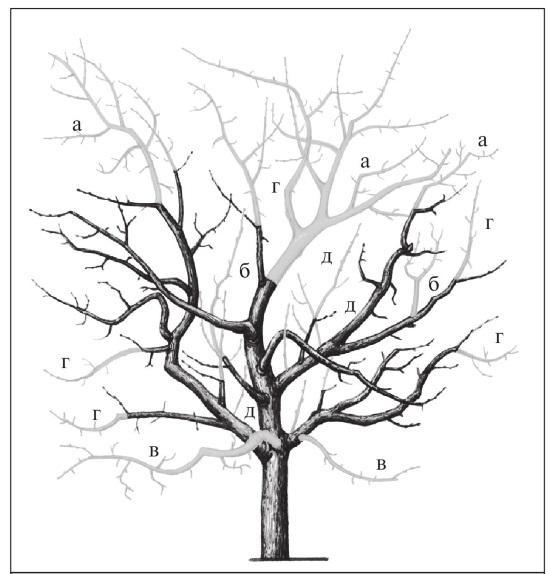
Such reconstruction allows for returning an aging orchard to a productive state without expensive uprooting. At the same time, the plant makes full use of its powerful, already developed root system. Form and prune vertically growing watersprouts according to the same rules as ordinary new branches. If a cultivar has a low shoot-forming capacity and is reluctant to produce water shoots, their appearance can be stimulated by deep rejuvenation of the main branches.
Rejuvenating pruning is permitted only on trees with a healthy trunk and strong bases of scaffold branches. To reduce physiological stress for the plant, the pruning procedure itself is stretched over 2 years. Over time, the rejuvenated growth will begin to shorten, and the zone of active fruiting will shift to the periphery of the canopy.
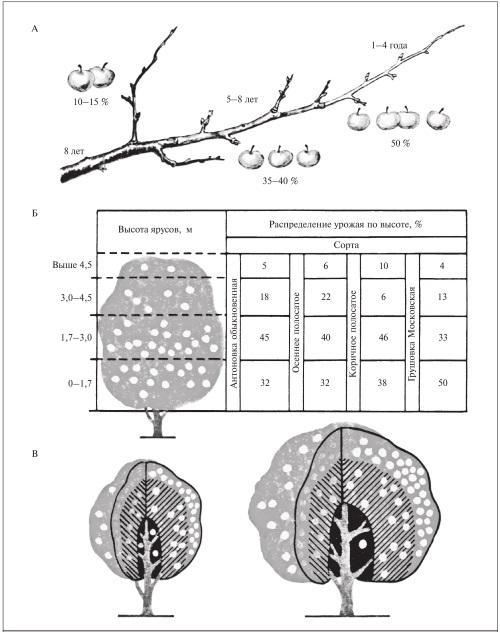
The efficiency of a fruit orchard depends directly on the age of the fruiting wood. Over the years, the distribution of the harvest in the canopy changes, which requires the agronomist to adjust branches in a timely manner to prevent a decline in productivity.
- Share of harvest on wood up to 4 years old — 50–60%
- Share of harvest on wood from 5 to 8 years old — 25–35%
- Share of harvest on wood older than 8 years — 10–15%
- Age of most productive pear wood — 2–6 years
- Period of heavy branch rejuvenation — 2 years
- Maximum age of the fruit-bearing part of a branch — 7–8 years
In young trees, fruits are distributed relatively evenly throughout the canopy. In old apple and pear trees, the fruiting zone gradually moves to the periphery, where the thickness of the productive zone is only 1–1.5 m. The inner part of the canopy becomes bare as a result.
| Tree age, years | Share of fruits in the center of the canopy, % | Share of fruits in the middle zone, % | Share of fruits at the periphery, % |
|---|---|---|---|
| 10–12 | 24–25 | 55–60 | 15–20 |
| 20–25 | 2–4 | — | about 70 |
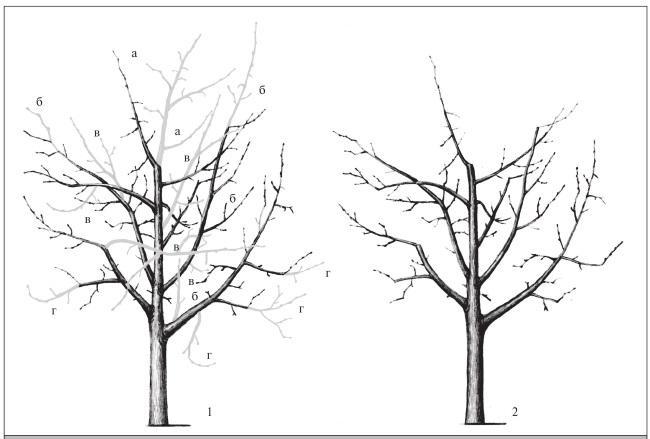
Rules for pruning neglected trees
Putting a neglected orchard in order is a labor-intensive process. Removing a large number of branches at once inflicts many large wounds on the tree and weakens it. To avoid severe overcrowding and minimize stress for the plants, pruning should be carried out systematically.
When working with neglected trees, always prioritize removing one or two large branches rather than pruning out a multitude of small shoots. This will significantly reduce the total wound load on the tree.
- Carry out detailed thinning. Remove all dry, broken, stunted, diseased, rubbing, and crossing branches.
- Reduce the wound load. Remove one or two large crowding branches instead of cutting off a mass of small twigs.
- Perform canopy rejuvenation. After thinning, proceed to the rejuvenation of the main and secondary branches using standard technology.
- Direct the growth of young trees. If a neglected tree is still young, limit yourself to thinning, changing the direction of branches, and restoring subordination.
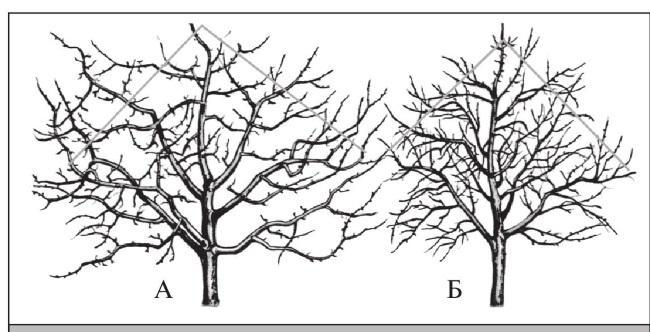
When rejuvenating and top-working the canopy, strictly observe the subordination of branches. The angle at the apex should be approximately 100° for apple trees and about 90° for pear trees.
Choose the pruning technique taking into account the direction of branch growth. For trees with upward-growing branches, use pruning to receding growth. If the branches are drooping, perform pruning to receding growth.
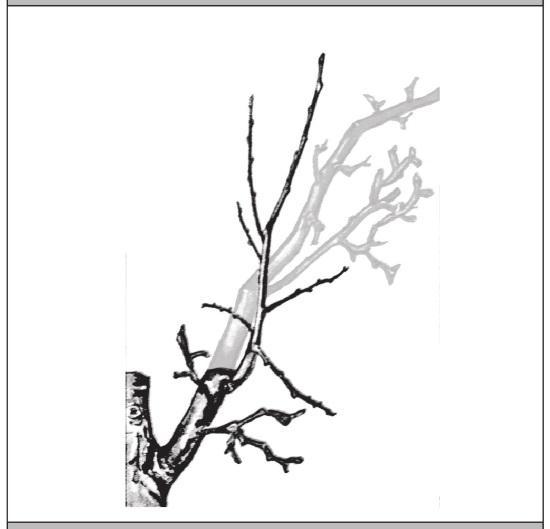
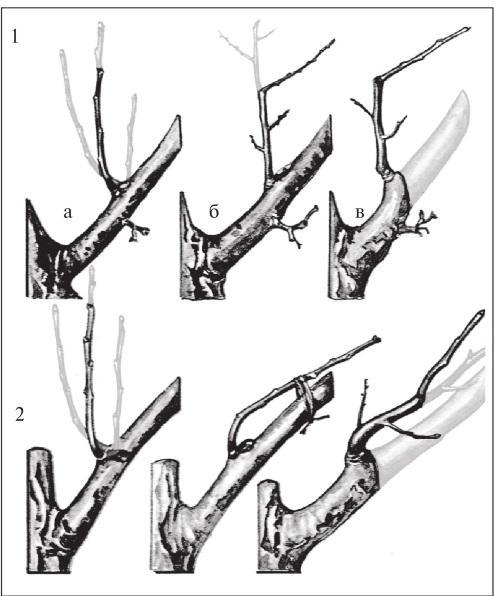
Pay special attention to eliminating narrow-angled crotches. Removing the upper branch in a crotch is a poor solution, as it often leads to the lower branch breaking off and provokes massive water sprout formation. Depending on the condition of the canopy, choose one of two options: remove the lower branch or prune one of the branches to a lateral, followed by removal to the collar later.
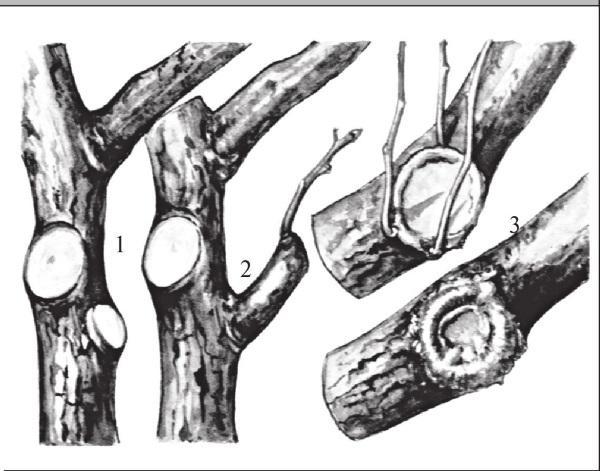
When working with neglected trees, it is important to properly distribute the load on the plant. Removing a large number of large branches at once severely weakens the tree and may provoke canopy dieback due to the disruption of sap flow. To reduce stress on the tree, bring severely crowded canopies into order in stages.
Avoid creating multiple large wounds at the same level on opposite sides of the trunk or a skeletal branch. This can lead to the dieback of the entire tree part above these wounds.
- Pruning period for severely crowded trees — 2 years
- Period for removal to the collar after pruning to a lateral — 1–2 years
- Retaining water sprouts near wounds for healing — 1 year
Remove large branches in sections, transferring them to weaker ramifications:
- In the first year, prune the branch to a weaker side branch.
- After one or two years, once the wound has adapted, remove the branch completely to the collar.
Pay special attention to young crowded trees — narrow-angled crotches must be eliminated there first. Do not rush to remove water sprouts that form near large wounds in the first year, even if they are growing in an unfavorable direction. They provide a flow of nutrients to the damaged area and facilitate rapid wound healing.
Pruning and restoring trees after winter frosts
The frost resistance of fruit trees directly depends on the level of orchard management. Proper site selection, the use of site-adapted rootstocks and cultivars, and the use of trunk- and scaffold-forming varieties help reduce the risk of frost damage. Timely protection against diseases and pests, controlling fruit set, and balanced mineral nutrition are also critical.
Freshly transplanted trees are most sensitive to low temperatures due to the disrupted connection between roots and canopy, as well as old trees with weakened growth. Trees with biennial fruiting in the winter following a heavy harvest represent a special risk group. Before starting spring pruning, be sure to assess the nature and degree of tissue damage.
- Cut off several control branches after winter frosts.
- Place them in a container of water in a warm room.
- Calculate the percentage of surviving buds by the number of sprouted eyes.
- Make longitudinal and cross-sectional cuts of the branches to evaluate the color of the wood.
| Degree of wood damage | Color of tissues in cross-section |
|---|---|
| Healthy | White or greenish |
| Slight damage | Yellowish tint |
| Severe frost damage | Light brown |
| Complete death | Brown |
In cases of sunscald and frost cracks, the bark initially takes on a reddish hue, and then, as it dries, forms characteristic depressed areas. The scale of damage to the bark and branches can be visually assessed by the nature of their dieback. Spring pruning tactics depend directly on the results of the diagnosis.
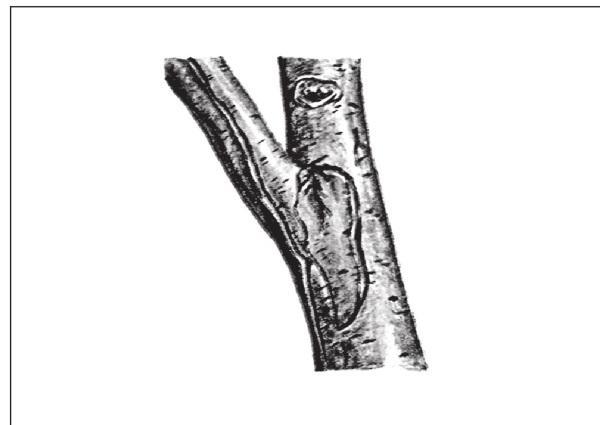
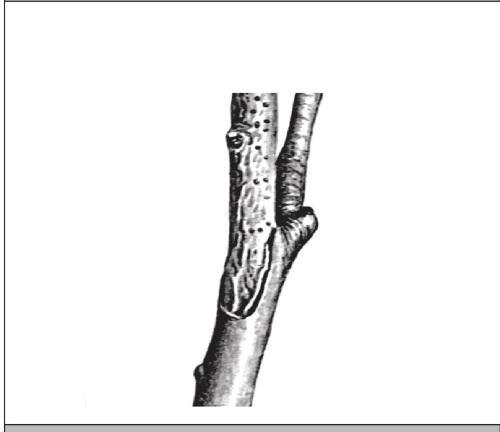
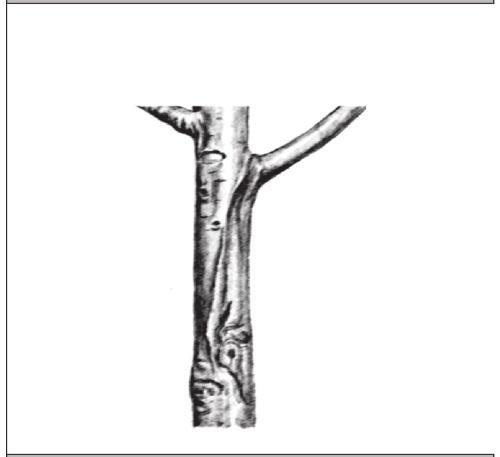
- Slight frost damage: pruning is carried out in the normal mode, as for healthy trees. The same rule applies to trees where only the wood is damaged, while the bark and cambium remain intact.
- Frost damage to branch tips: branches are shortened to healthy or relatively healthy wood. For young trees, it is important to strictly observe the rules of branch subordination.
- Medium degree of frost damage: more severe shortening of branches is performed, down to zones where young and sufficiently strong shoots have been preserved. Such shortening is necessary to reduce the overall length of leggy branches and stimulate their recovery.
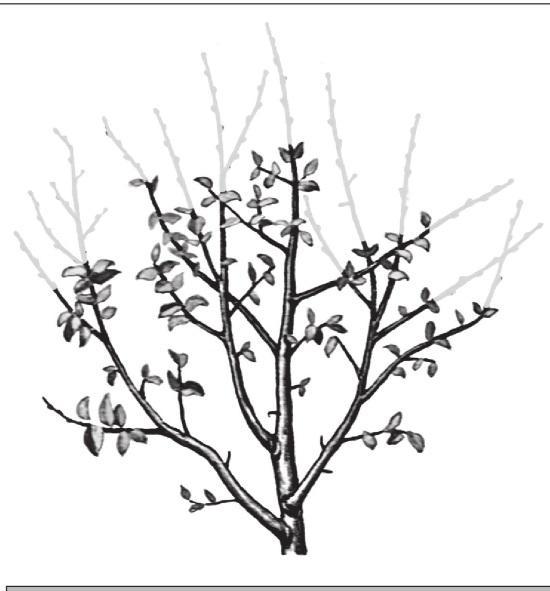
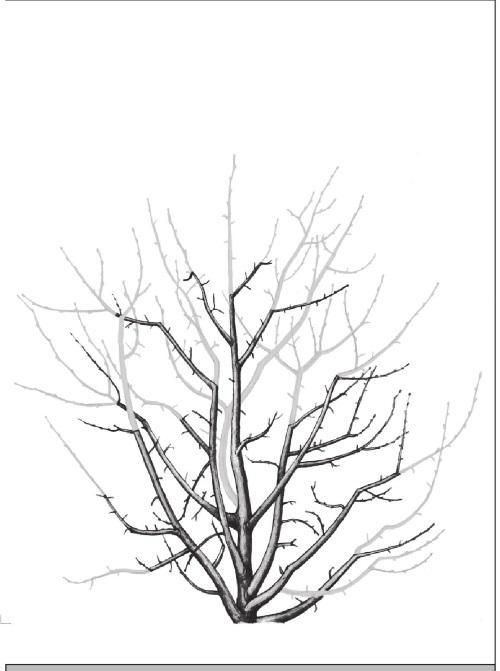
The point is that in the first years after frost damage, the connection with the root system is weakened due to the deterioration of the wood's conductive capacity; growth begins later, shoots grow more slowly, and their foliage is poor. For these reasons, the accumulation of new wood layers is slow, and the old, frost-damaged part is very fragile.
Later, when a sufficiently thick layer of new wood has grown, the strength of the branches will increase, but their flexibility will remain low. As a result, even with a small fruit load, branch breakage is possible.
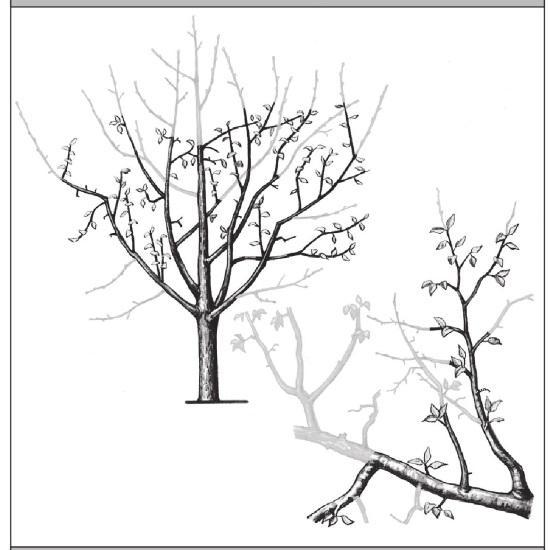
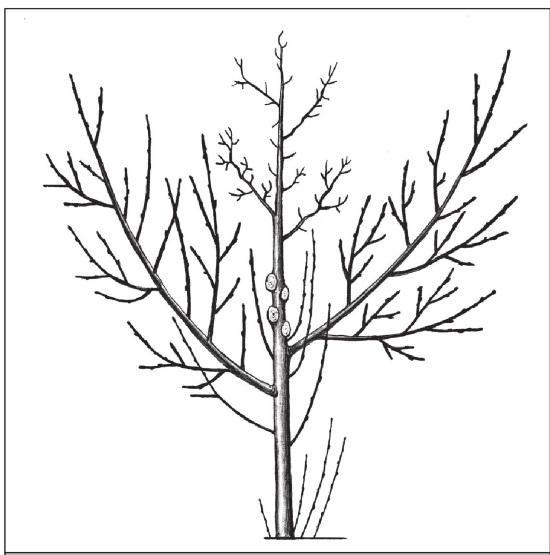
Pruning of trees severely damaged by frost is better left until the zone of frost damage is clearly defined or until the next year. It is quite possible that they will not need pruning at all.
When pruning such trees, the following rules are observed:
- cuts are made in the zone where strong water sprouts appear, without following the rules of branch subordination and balance;
- all healthy branches, even those that would normally be removed in standard trees, are left.
The more of them remain, the more active the tree recovery will be. With severe frost damage to the above-ground part, a large number of suckers appear near the trunk, indicating good preservation of the root system.
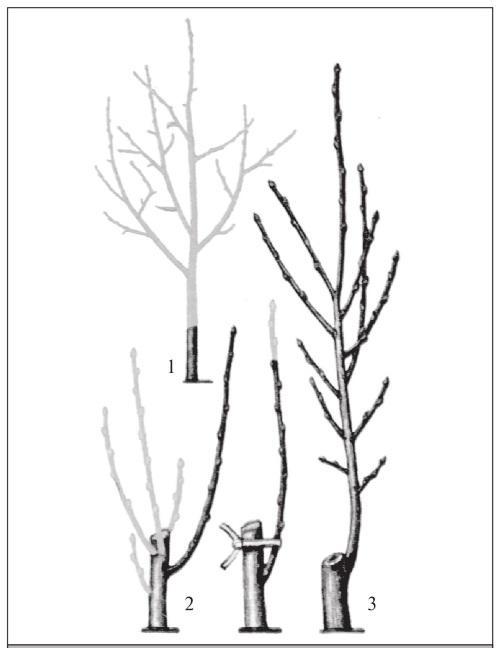
If trees aged two to four years have completely frozen (to the snow level), pruning should not be delayed. It is advisable to carry out the following actions:
- cut the entire above-ground part down to healthy tissue;
- choose one of the strong branches that appeared above the grafting site, the one most favorably positioned;
- form a new canopy based on it.
When pruning frost-damaged trees, ensure that there are no large wounds on the central leader or main branches, especially at the same level on opposite sides. This can cause severe suppression or even death of the part of the trunk or branch located above such cuts.
If such pruning is necessary, it is better to make a cut to a lateral branch, even a weak one, and later, when the tree becomes stronger, saw off the remaining part flush with the collar.
In subsequent years, pruning of trees severely affected by frost is a form of structural training. The work sequence is as follows:
- select well-positioned water sprout branches;
- begin creating new main branches based on them, ensuring they are well-covered with fruiting structures;
- gradually remove the severely damaged branches.
In the first few years after severe frosts, trees should not be allowed to become overloaded with flowers and fruit set.
Read next
Pruning and training For gardeners
Fundamentals of canopy formation and pruning of sweet cherry in the orchard
Pruning and training For agronomists
Regulation of tree growth and fruiting by changing the branch angle
Pruning and training For agronomists