
Regulation of tree growth and fruiting by changing the branch angle
9 min read
Bending of branches in intensive horticulture is not just an auxiliary technique, but a full-fledged substitute for heavy pruning. By changing the inclination angle, an agronomist redirects the flow of nutrients and hormones within the tree. This allows for the regulation of shoot growth vigor, the activation of dormant buds, and the acceleration of the young orchard’s transition to commercial fruiting.
The physiology of this process is simple. In a vertically growing branch, only the apical shoots develop actively, while the buds at the base remain dormant. A horizontal position redistributes sap along the entire length: the growth of individual shoots slows down, but the buds wake up. As a result, strong vegetative branches quickly turn into fruiting spurs.
- Critical crotch angle — less than 40°
- Position for growth reduction — about 30° to the horizontal
- Maximum fruiting — horizontal position
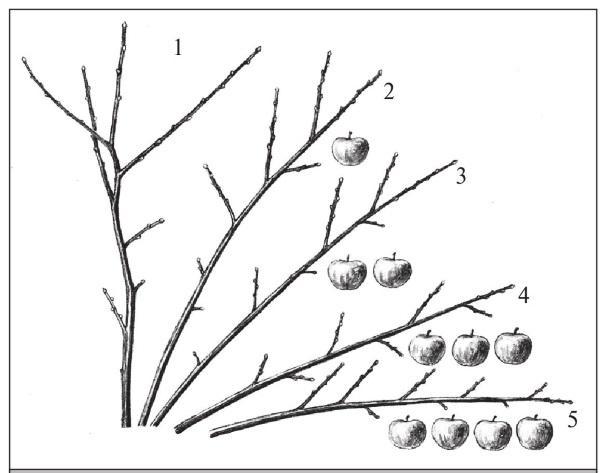
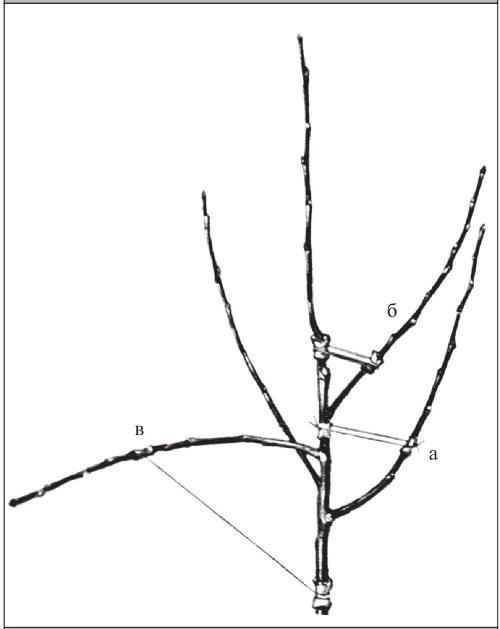
Bending technique and methods of branch fixation
To secure shoots in the desired position, choose a fixation method based on the age of the tree and the thickness of the wood. The choice of method also depends on the orchard planting scheme. Thin branches often sag under their own weight, while rigid ones will require props or ties.
- installing a spreader;
- tying to a neighboring or lower-positioned branch;
- tying to a trellis;
- tying to the trunk or stem;
- tying to a peg driven into the ground.
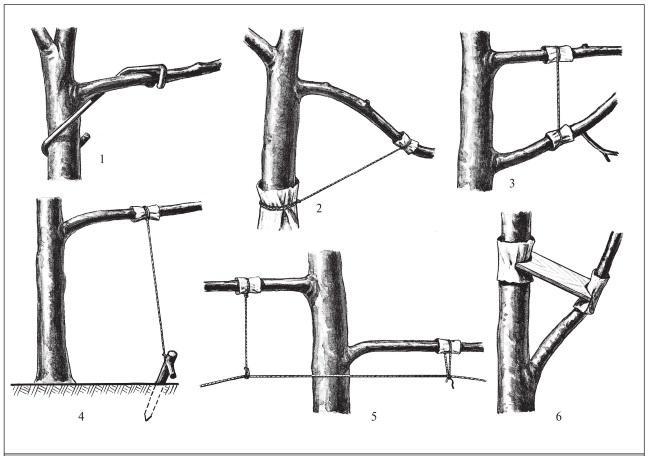
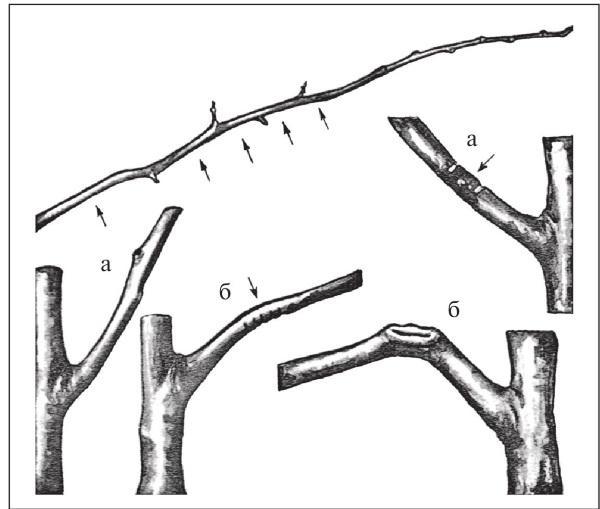
When working with branches originating at an acute angle, there is a high risk of splitting from the trunk. Angles of less than 40° pose a particular danger. To safely change the direction of growth for a rigid or thick branch, follow a strict sequence of actions.
- Tie the base of the branch near the crotch to prevent it from breaking off the trunk.
- Soften the wood in the bend zone by carefully and gently twisting the base of the branch.
- Make cuts with a saw on the underside at the base of the branch if it is too rigid.
- Secure the branch in the desired position using the chosen tying method.
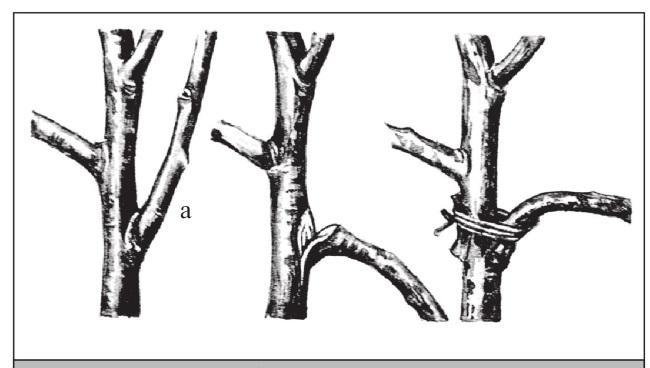
It is also possible to change the direction of growth without tying materials. For this, shoot deformation, twisting, or pairwise braiding are used in the orchard. In practice, cuts in large branches and classical pruning to a lateral branch are also used.
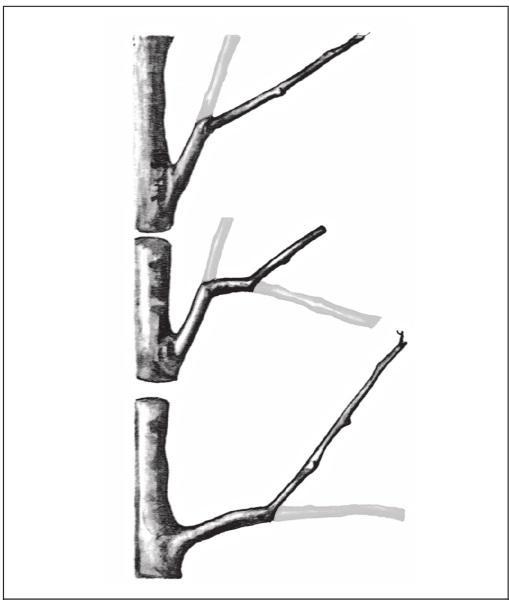
When bending branches to a horizontal position, do not allow an arc to form. Strong water sprouts will inevitably start to grow at the top of the bend, which will consume the nutrients. Also, remember that bending branches with a crotch angle of less than 40° without prior tying at the base will lead to their breakage.
Sometimes an arc-shaped bend is created intentionally. This effect is used when forming Lepage, Russin, or Ferrugati palmettes, as well as when rejuvenating a spindle bush. Water sprouts appearing on the bend are controlled through timely pinching and removal.
Pinching and removal: managing green shoots
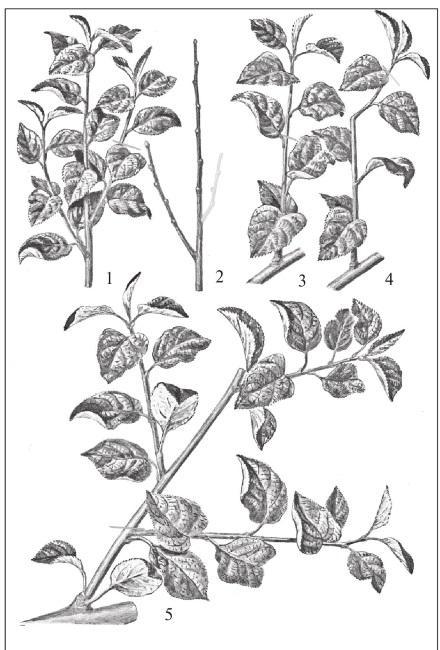
Summer growth regulation helps to redistribute nutrients and set fruit buds, avoiding traumatic pruning. Pinching consists of removing the non-lignified apex of a growing shoot. The technique helps to restrain growth, accelerate wood maturation, and turn vegetative shoots into generative (fruiting) ones. The timing and degree of pinching depend on the task at hand.
- Timing in the temperate zone — the first two decades of July
- Optimal time before growth cessation — 2–3 weeks
- Length of competitors for the first pinching — 7–10 cm
One should not rush with pinching. Too early pinching will trigger a second wave of strong growth, negating the entire effect of the operation.
Competitor shoots are usually not suitable for forming the canopy framework or fruiting branches. If they are removed too early, their place will be taken by lower buds. The optimal algorithm for working with competitors and excess shoots is as follows:
- Perform early pinching of competing shoots when they reach a length of 7–10 cm.
- If new buds have begun to grow on the pinched shoot, pinch the new growth even shorter.
- Finally, remove the pinched competitors during the winter pruning of the following year.
Cultivars with high bud break capacity produce an excess of shoots. Pinching suppresses the growth of branches not intended for the canopy skeleton, shifting them into the category of fruiting wood. This same technique is applied to water sprouts and other unwanted shoots to avoid canopy overcrowding.
If one strong shoot grows from an axillary bud after the first pinching, it is pinched above the first true leaf. If several buds sprout at once, the shoot is cut above the lowest of the new strong shoots. If only spurs and short shoots are formed, no additional operations are required.
Shoot removal at the beginning of their development works similarly to canopy thinning. The removal of buds and young shoots that would eventually have to be pruned anyway significantly reduces labor costs compared to winter or spring pruning. Removal is especially effective on the upper side of the branch bases, where vigorous water sprouts are most often initiated. Wounds after early removal are minimal and heal much faster.
Mechanical action: interweaving and deformation of branches
To regulate growth vigor and accelerate fruiting in orchards, mechanical techniques of influencing branches are used. If the tilt angle cannot be changed by ordinary tying, wood deformation, bud blinding, notching, or girdling are applied. These methods redistribute nutrient flows and regulate canopy development without radical pruning. For example, interweaving shoots in pairs allows for weakening their apical growth and stimulates bud break further down the stem. As a result of this operation, the branch tips assume a horizontal or drooping position. Shoots can be interwoven throughout the season, but the earlier the technique is performed, the faster the wood will fix the new shape.
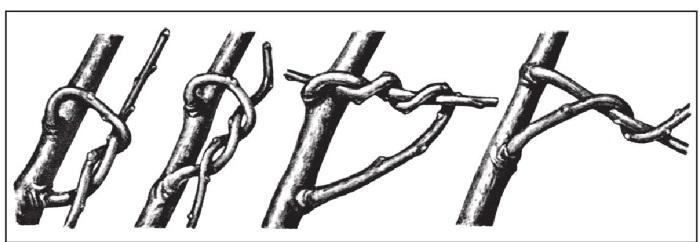
| Interweaving timing | Unweaving timing |
|---|---|
| Second half of July | One week later |
| End of August | Two weeks later |
| End of October | Only in spring |
Twisting and breaking shoots at the base help to weaken the growth of unwanted branches inside the canopy of young trees. However, this method has a serious drawback: under the influence of wind, the broken shoots constantly sway. As a result, wounds heal poorly, leading to the gradual drying out of the branches.
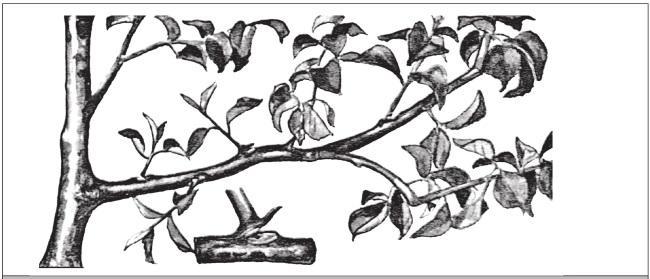
To give skeletal branches the desired position, artificial deformation is used. To avoid waiting for the natural tilt under the weight of the harvest and to direct growth in the right direction, branches are deformed forcibly. Young branches can be bent by hand: for this, the shoot is carefully bent, supporting it from below with the thumbs, until a slight crunch is heard. If one deformation is insufficient, breaks are made sequentially at several internodes. Thin branches are bent without preparation, while thick ones are pre-cut to facilitate deformation.
Make the break strictly in the middle of the internode. Breaking in the node area injures the tree: an open wound forms that heals poorly, the branch may dry out completely, lag in growth, or produce water sprouts below the injury site.
To change the position of thick skeletal branches, notches are used on the upper or lower side. Under its own weight, the branch lowers and rests on the shoots located below. However, this method has many drawbacks: wounds on large branches heal with difficulty, provoke the appearance of water sprouts, and worsen the light regime in dense canopies.
Surgical regulation methods: from bud blinding to bark scoring
Surgical intervention in the canopy structure allows for the redirection of nutrients without removing large branches. These techniques help to balance the tree's growth vigor, stimulate or inhibit the development of individual zones, and accelerate fruiting. The practical gardener's arsenal includes bud blinding, pruning "to the heel" (heel-in pruning), notching, girdling, and scoring.
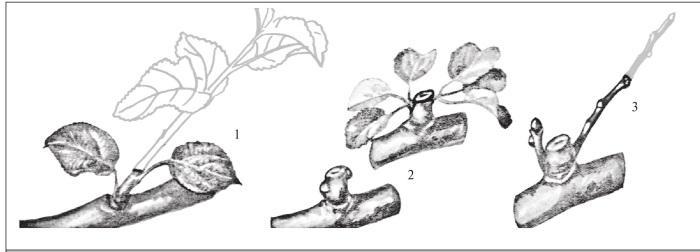
To prevent canopy overcrowding even before shoot growth begins, blinding is performed — the mechanical removal of excess buds. If the shoot has already begun to grow, summer "heel" pruning is applied. This method allows for strictly limiting branch growth and stimulating the development of axillary buds below the cut site.
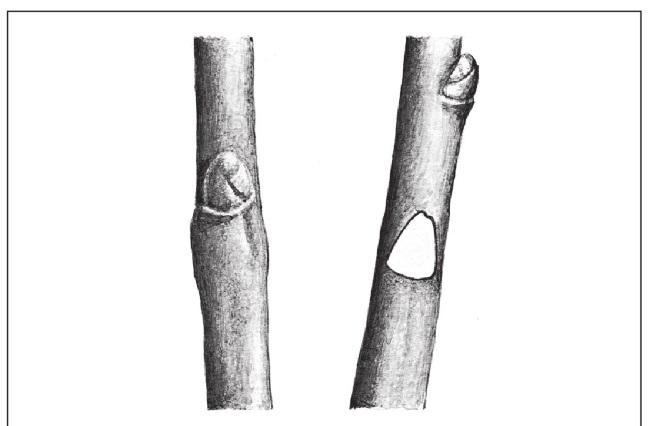
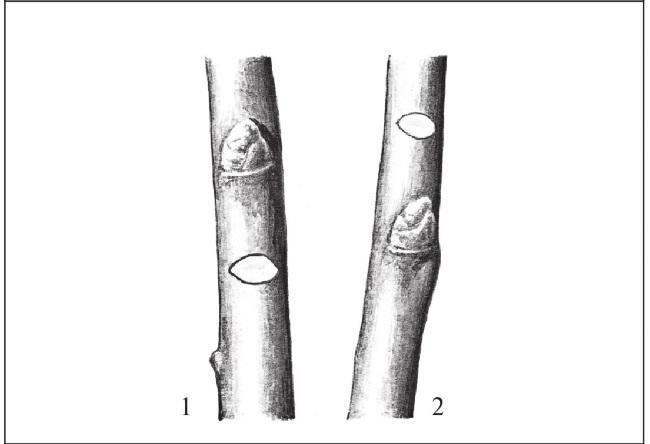
Notching helps to selectively control the development of a specific bud or branch at the end of the dormant period or at the very beginning of the growing season. To do this, a semi-lunar or transverse incision is made above or below the bud, removing a strip of bark and a portion of wood. An incision above the bud enhances its growth by obstructing the upward flow of nutrients. An incision below a branch, conversely, weakens its development until the wound is completely healed.
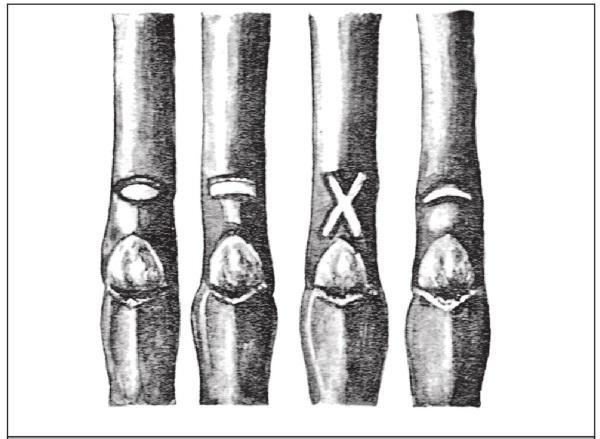
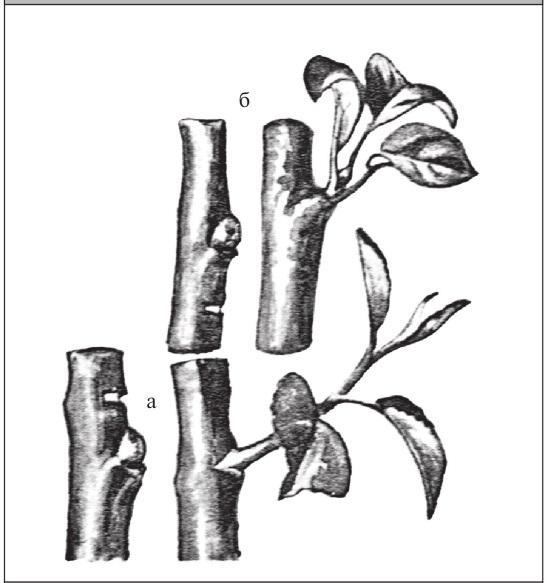
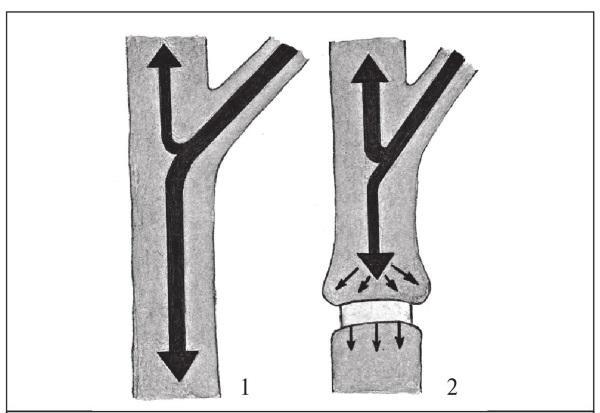
Girdling is aimed at accelerating fruiting in vigorously growing trees. The method stops the outflow of assimilates to the roots, concentrating them in the above-ground part of the branch. This technique acts locally, so only branches that are planned to be removed in the following season are girdled — they develop the harvest. The weakening effect of the procedure persists for one to two years, and sometimes longer.
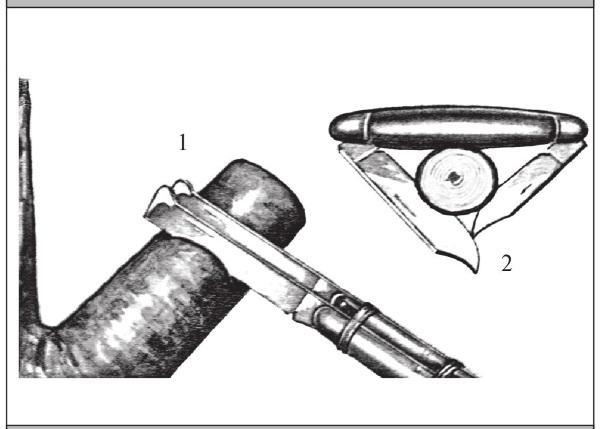
- Height of summer "heel" pruning — 1 cm
- Width of incision during notching — 2–4 mm
- Width of the strip during girdling — 0.5–1 cm
- Distance between semi-rings — 5–10 cm
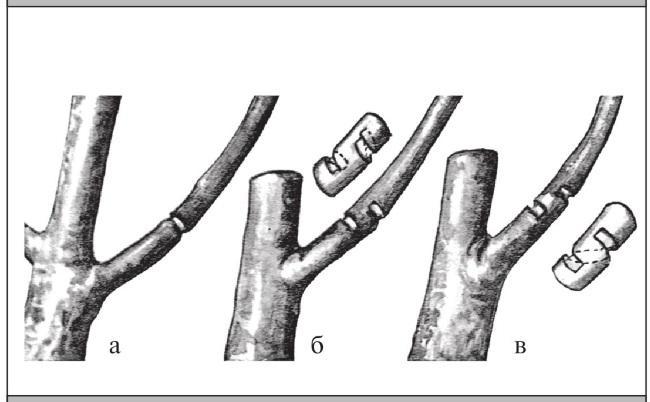
- Remove a strip of bark at the base of a vigorously growing branch in a ring, in a spiral, or in two semi-rings.
- Cover the wound with grafting wax or bind it with protective material (film, parchment, bast) to prevent the tissues from drying out.
Do not perform girdling on young or weakened trees, as well as on stone fruits. The technique is dangerous for pear trees: their wounds heal very poorly, which leads to the drying out of branches. The timing for implementation is strictly after the start of the growing season (at the "green cone" phase). Girdling after flowering sharply reduces the winter hardiness of trees. The technique is ineffective when trying to accelerate fruiting in hybrids or cultivars with a genetically very late onset of fruiting.
A less traumatic alternative to girdling is the application of a fruit belt made of soft tin with cut edges (to avoid deep cutting of the metal into the bark). The main advantage of the belt is the possibility of its painless removal at any time. However, it should not be kept on the branch for too long, as this can excessively weaken the development of the branch or the tree.
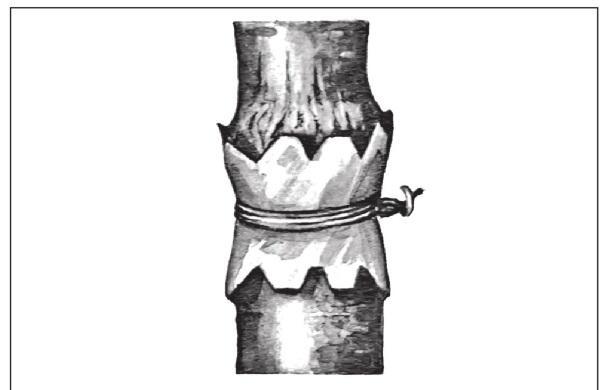
Bark scoring is applied in early spring, at the beginning of sap flow, on trunks and scaffold branches. This procedure prevents the tearing of thickened, inelastic bark under the pressure of growing wood and protects the tree from winter sunscald. Longitudinal incisions are made with a special scorer or a garden knife on the northern side of the trunk, taking care not to damage the cambium and wood.
| Scoring parameter | Technological standard |
|---|---|
| Length of a single incision | No more than 50–60 cm |
| Breaks in uncut bark | 1–2 cm |
| Gaps on thick branches and the trunk | 6–8 cm |
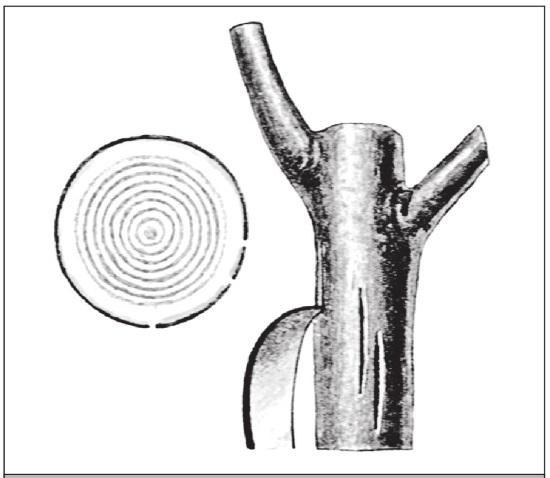
Scoring is also used to accelerate the healing of wounds (vertical incisions of callused, thickened bark) and to eliminate constrictions from binding material that has grown into the bark during grafting.
It is not advisable to use scoring on young plants with elastic bark and on old ones where the bark has already become very thickened and cracked.
Root pruning is done immediately before planting. The process includes the following operations:
- All damaged roots are pruned back to healthy tissue.
- For the rest, wounds made during the lifting of nursery plants are refreshed — dried ends are removed.
- Wounds on which callus has formed are not refreshed.
Pruning of roots should be minimal. One should strive to leave as many roots as possible, especially fibrous roots.
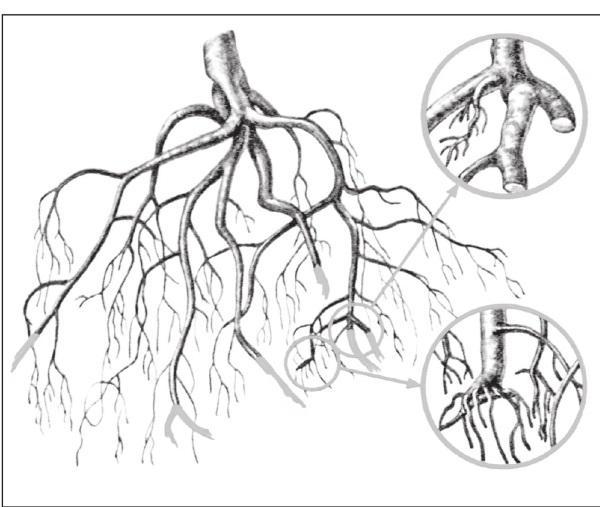
Sometimes root pruning is used in the orchard to weaken the overly strong growth of the above-ground system and thereby promote the switching of trees to fruiting. The time for pruning is autumn.
The technique is simple: using a pitchfork to avoid damaging fine roots, dig a trench around the tree at a distance from the trunk equal to approximately ten times the trunk thickness, and sever all thick roots encountered. Then, carefully spread out the remaining fine roots and fill in the trench. It is possible to prune roots only on two sides of the tree by digging parallel trenches. In commercial orchards, deep ploughing along the row is used for this purpose.
Read next
Pruning and training For agronomists
Methods for forming columnar and spindle-shaped canopies of fruit trees
Pruning and training For agronomists
Technology for training classic cordon canopies in intensive horticulture
Pruning and training For gardeners