
Methods of tomato protection against powdery mildew and fungal diseases
20 min read
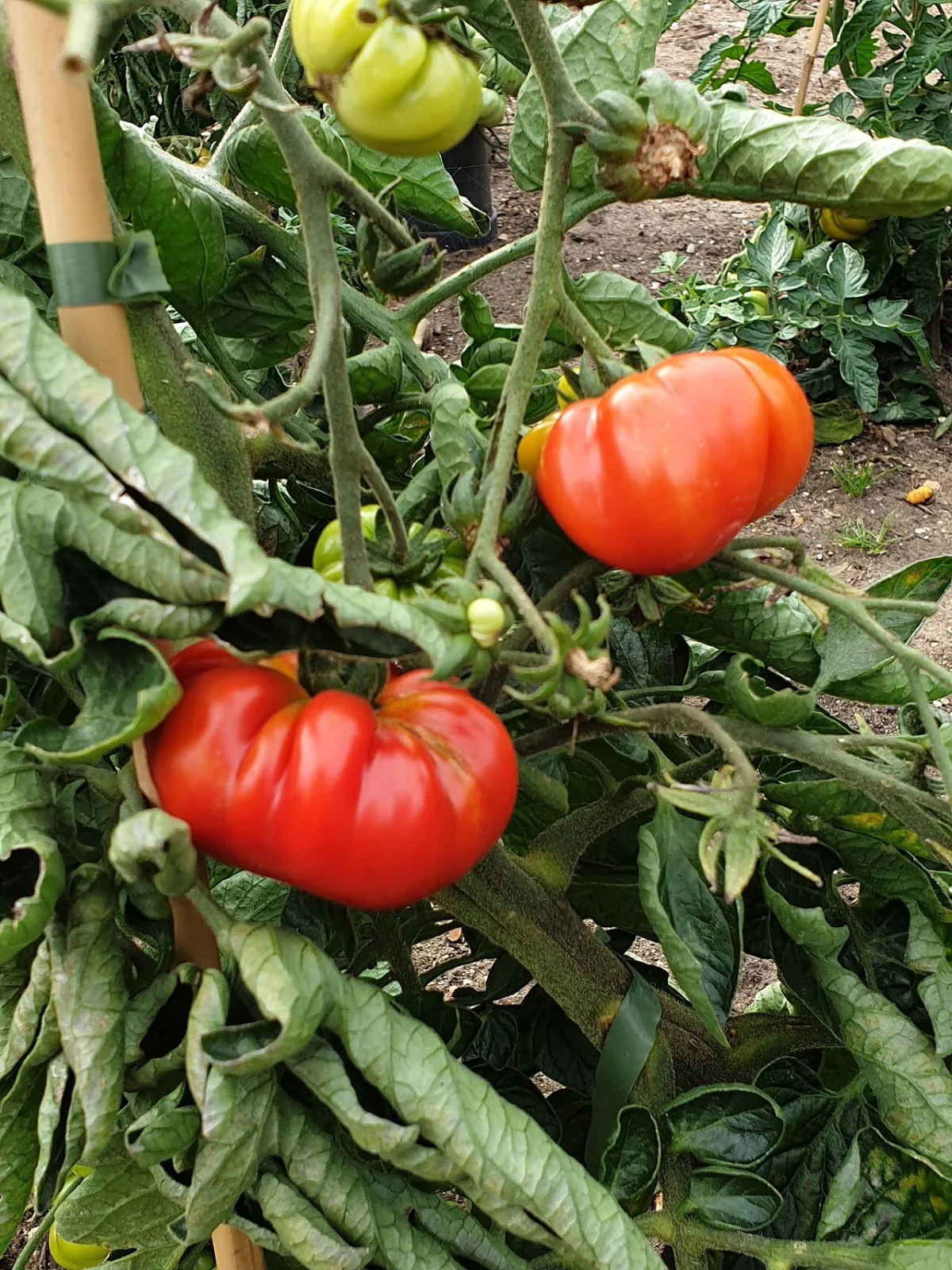
Prevention and treatment of tomato powdery mildew
To increase the resistance of tomatoes to a complex of fungal and viral diseases, it is recommended to soak seeds in a solution of Epin or Immunocytophyte. This method is suitable for hybrids E, Milane, as well as two hybrids from the joint breeding of VNIIO and the Ilyinichna seed company. Plant immunity can also be enhanced by the preparations Fumar, Monophilin, and Fusaxin, the use of which is not yet strictly regulated. Their mechanism of action is based on altering the metabolism of tomatoes, which activates the enzymes PAL-lipase, chitinase, and RNase.
In the fight against powdery mildew, regular treatments show high efficacy. For example, sodium humate at a concentration of 0.001% reduces the number of germinated pathogen conidia by 3.8 times compared to the control group within 42 hours. The preparation at concentrations of 0.01% and 0.1% completely suppresses germination and causes conidial hyperplasia. Spraying with a 0.01% sodium humate solution during the growing season reduces the disease development by 1.5–2.5 times, stopping the infestation of young leaves. Despite the fact that the biological efficacy of sodium humate against powdery mildew is 2–3 times lower than that of chemical fungicides, its use in production conditions is fully justified.
Adding silicate glue to the working solution not only improves the adhesiveness of fungicides but also additionally inhibits the development of powdery mildew fungi.
When leaves are affected at a level of 2–3 points, the bloom turns brown after treatment with sodium humate and disappears after 5–6 days, leaving dirty-grey marks. Upon the appearance of the first disease outbreaks, preparations from the Narcissus series are also used, and in private subsidiary plots, affected tomatoes are sprayed with a 10% solution of skim milk or whey. Biological and chemical plant protection products are applied according to strictly defined schedules.
| Preparation / protection product | Concentration / application rate | Features and treatment frequency |
|---|---|---|
| Sodium humate | 0.01% solution | Spraying once every two weeks during the growing season. |
| Bactofit (prevention and treatment) | 1% working solution (7–12 kg/ha) | Repeat treatments at 15-day intervals. |
| Planriz | 10–12 l/ha | Spraying at the first symptoms. Minimum of 3 treatments every 7–10 days. |
| Alirin (series of preparations) | According to regulations | Applied upon the appearance of the first signs of disease. |
| Bayleton | 0.05% solution | Chemical spraying upon the appearance of the first signs. |
| Quadris, Strobi, Topaz | 0.02–0.03% solution | Chemical spraying upon the appearance of the first signs. |
| Thiovit, Kumulus | 0.3% solution | Chemical spraying upon the appearance of the first signs. |
| Tank mixture of sulfur-containing preparations with Topaz | According to regulations | Increases efficacy and extends protection by 3–5 days. |
Use preparations from the strobilurin class (Quadris, Strobi) only prophylactically or during the early stages of the disease. No more than two treatments are permitted per season due to the high risk of pathogen resistance development.
Control of Alternaria (early blight)
The causative agent of tomato early blight is the fungus Alternaria solani [syn.: Macrosporium solani Ell. et Mart.]. In glass greenhouses, the disease mainly affects leaves at the onset of fruit set. In spring plastic greenhouses, the harmfulness of Alternaria manifests at the end of the growing season on the fruits, reducing the marketable tomato harvest by 50–60% due to the deterioration of fruit quality during storage.
The pathogen forms short, bent, or slightly nodular multicellular conidiophores. The fungus conidia are dark, obclavate, multicellular, measuring 90–140 x 12–20 µm. Dark spores measuring 20–80 x 2–20 µm have transverse and longitudinal septa and are connected in chains. The disease develops rapidly under conditions of high temperature and increased air humidity, especially with frequent alternation of dry and hot weather with rain and dew.
The source of infection is contaminated post-harvest residues, dry fruit debris, and impurities in the seeds, where the fungus survives in the form of mycelium and conidia. Resistance to A. solani is controlled by a single pair of genes with partial dominance of susceptibility. In the tomato cultivar Devon Surprise, a resistance gene to A. solani was discovered, designated with the symbol as.
To protect plantings, vegetative plants are sprayed with a 0.2% working solution of preparations containing mancozeb or copper oxychloride. These include Dithane M-45, Oxyhom, and Ridomil MC. It is also recommended to spray plantings with the preparation Quadris for the prevention of Alternaria.
- Reduction in marketable harvest in spring plastic greenhouses — 50–60 %
- Reduction in the number of germinated conidia by sodium humate (0.001%) — by 3.8 times
- Extension of the effect of the sulfur and Topaz mixture — by 3–5 days
- Concentration of skim milk for private subsidiary plots — 10 %
Biological agents. It is recommended to spray plants with Alirin-B, Alirin-S, or Trichodermin. 2.2.3.13. Cladosporium leaf mold, or brown spot. Pathogen — Cladosporium fulvum (Cooke) Sacc. [syn.: Fulvia fulva]. Harmfulness. The disease causes the greatest damage to tomatoes in unheated greenhouses in the second half of summer or on susceptible cultivars and hybrids in the spring period in southern regions. Due to the loss of part of the photosynthetic apparatus, productivity is significantly reduced. There are many cultivars and hybrids resistant and tolerant to Cladosporium leaf mold, which is why this disease has become extremely rare in greenhouse complexes. Symptoms of tomato Cladosporium leaf mold on susceptible cultivars and hybrids first appear on the lower leaves; subsequently, the disease covers the entire plant. On the upper side of the leaves, round yellowish-brown spots initially appear, which turn reddish-brown after the spores mature. On the underside, a light grey and then brownish-brown velvety bloom forms on the spots, consisting of conidial sporulation, which spreads the disease. As the disease develops, the leaves curl and dry out. Less frequently, flowers and young fruits are affected, which wither, turn brown, and dry out. Pathogen biology. Conidiophores are simple or slightly branched, nodular, brown, arranged in bundles. Conidia are solitary, oval, ellipsoidal, light brown, unicellular or with 1-4 septa, 10-28 x 4-7 µm. Cladosporium fulvum is capable of surviving for a long time (more than 10 years) in greenhouses. The disease reaches its greatest development at a high relative humidity (> 80 %) and a temperature of 22-25°C. The pathogen is represented by many races. The process of tomato cultivation intensification has led to the rapid evolution of the Cladosporium leaf mold pathogen.; = Fig. 120. TOMATO LEAF AFFECTED BY CLADOSPORIUM LEAF MOLD. E
Cultivating resistant cultivars alongside susceptible ones, which can often be observed in private plots, leads to the accumulation of more complex virulent races capable of infecting previously resistant cultivars (Sadykin, Sadykina, 2001).
Pathogen spread and survival. Conditions with high relative humidity and air temperature are most favorable for spore dispersal. Spores are shed and spread by irrigation water, air currents, and people. Spore viability is maintained for several months. The pathogen survives until the next season as conidia on plant residues, on shelving, and in the soil. Spores withstand prolonged desiccation and freezing and are capable of remaining viable for up to 10 months.
Resistant cultivars. Tomato resistance to leaf mold is inherited as a fully dominant trait. The genetic mechanism of tomato resistance to leaf mold is complex and controlled by 24 dominant genes, the localization of which in chromosomes has been determined. For instance, eight races of the fungus C. fulvum have been identified in Russia.
| Isolate type | Prevalence |
| Race 1 | 19 % |
| Race 1.3 | 81 % |
In some regions of Ukraine, new races 1.2.3. and 1.2.3.4. have been noted (Ivchenko, Sadykin, Sadykina, 1990). The high intrapopulation variability of the leaf mold pathogen has led to the fact that Cf and Cf genes have lost their practical significance almost everywhere. In this regard, breeding work is being conducted using homozygous lines with Cf, Cf, Cf, Cf genes.
Most modern tomato cultivars and hybrids possess vertical resistance to this disease due to the fact that they contain several resistance genes. However, such hybrids as F1 Atletiko and F1 Semko-99 do not contain such genes, and the F1 Miledy hybrid has only one resistance gene Cf. In this regard, it is necessary to use fungicides to protect such hybrids.
Protection measures. Agrotechnical practices:
- Maintaining the technological regime optimal for the plants.
- Frequent ventilation of greenhouses and timely removal of old leaves.
- Upon the emergence of primary foci, stop overhead irrigation of plants.
- Steaming and disinfection of soil contribute to the destruction of overwintering infection.
Biological agents. Spraying during the growing season with the preparation Pseudobacterin-2, PS and Zh. Preparation application rate — 10 g/ha, and working solution — 1000 l/ha. Repeat treatment after 20 days.
It is known that Alirin-B and Trichodermin are effective to varying degrees against Alternaria blight.
Chemical agents. When disease foci appear, agrotechnical measures are supplemented with high-volume spraying of plants in the evening or morning hours using such preparations as Acrobat MC, copper oxychloride, and Oxyhom. Spray the vegetating plants with a 0.3-0.4% working solution of one of the listed preparations, application rate — 2.4-3.2 kg/ha. Good results are obtained by preventive spraying of tomatoes with a 0.04-0.06% Quadris solution.
Harmfulness. The disease is more dangerous in open ground. In greenhouses, it occurs only during gross violations of cultivation technology of tomatoes. Mass manifestation of Septoria leaf spot on tomato plants is observed during the fruit ripening period. In film greenhouses, up to 50% of fruits can be affected.
Tomato Septoria leaf spot and anthracnose: diagnosis and control measures in the field
Septoria leaf spot (white spot) affects mainly tomato leaves, starting from the lower aging tiers. The infection manifests as watery gray or dirty-white rounded spots with a brown border. As the disease develops, the affected leaves turn brown, curl up, and dry out, and the fungus can spread to stems and fruits.
- Temperature for Septoria leaf spot development — 15–27 °C
- Relative humidity for Septoria leaf spot — 77–94 %
- Size of Phoma spots on leaves — 0,5–1,0 cm
- Diameter of fruit anthracnose spots — up to 1 cm
The causative agent of the disease is the fungus Septoria lycopersici. The infectious hypha penetrates the plant directly through the cuticle. The pathogen also affects other nightshade crops (black nightshade, eggplant, thorn apple), on which it successfully overwinters. Resistance to the disease is controlled by a partially dominant gene Se found in the wild tomato species Lycopersicon hirsutum.
Tomato anthracnose is caused by fungi of the genus Colletotrichum. The disease affects both vegetative organs and fruits, significantly reducing yield. Leaf anthracnose, caused by Colletotrichum atramentarium, develops only on adult plants. Their upper leaves wilt, root tissues soften, and small black sclerotia form on the affected parts.
Fruit anthracnose causes the greatest damage in open ground and film greenhouses in late summer. The disease is caused by two types of pathogens. The fungus Colletotrichum phomoides forms depressed dark zoned spots on ripening fruits. The pathogen Colletotrichum kruegerianum causes the appearance of softened spots that gradually turn black, leading to mummification of the fruits.
At the end of summer, optimal conditions for anthracnose occur. During this period, it often occurs in conjunction with alternaria blight, forming dangerous mixed infections.
To control Septoria leaf spot, be sure to remove weeds and plant residues. At the first signs, treat plantings with "Oxyhom", "Ridomil MC", or other mancozeb-based products. Morphological characteristics of the pathogens of Septoria leaf spot and anthracnose are given in the table below.
| Pathogen (disease) | Microstructure | Dimensions |
|---|---|---|
| Septoria lycopersici (Septoria leaf spot) | Pycnidia, diameter | 100–160 µm |
| Pycnospores | 32–130 × 1.5–3 µm | |
| Colletotrichum atramentarium (Leaf anthracnose) | Conidia | 15.2–22 × 3–5 µm |
| Colletotrichum phomoides (Fruit anthracnose) | Acervuli, diameter | 0.08–0.18 mm |
| Setae, length × width at base | 0.06–0.15 mm × 4–6 µm | |
| Conidia | 12–20 × 3.5–4 µm | |
| Colletotrichum kruegerianum (Fruit anthracnose) | Conidia | 20–22 × 4.7–7 µm |
For effective control of anthracnose, use an integrated plant protection scheme combining biological and chemical methods.
- Choose resistant tomato cultivars and hybrids for planting.
- Carry out pre-sowing seed treatment by soaking seeds in the "Immunocytophyte" preparation.
- Perform preventive spraying of plants with fungicides from the strobilurin group (e.g., "Strobi").
- Upon the appearance of the first symptoms, spray plantings with the biological products "Alirin-B" or "Alirin-S".
- During active disease development, switch to copper-based ("Kartotsid", Bordeaux mixture, copper oxychloride, "Oxyhom") and sulfur-based preparations ("Thiovit", colloidal sulfur, "Kumulus").
Tomato Phoma rot: danger during storage and transport
Phoma rot, or black rot of tomatoes, is caused by the fungus Phoma destructiva (asexual stage — Pleospora destructiva). In plastic greenhouses, the disease occurs periodically, sometimes affecting leaves and stems. However, Phoma rot poses the greatest danger to fruits during their transport and storage. Sunken gray spots appear on fruits at the base of the peduncle, which then turn brown, become covered with pycnidia, and turn black.
On tomato leaves, Phoma rot manifests as circular dark red or olive-brown spots 0.5–1.0 cm in diameter, which often merge and resemble alternaria blight. On the stems, indistinct, dark brown, concentric elongated spots form. Accurate identification is important for choosing the correct protection scheme.
The main sign that allows distinguishing Phoma rot from similar manifestations of Ascochyta blight and Septoria leaf spot is the structure of the pycnospores. In the black rot pathogen, they are strictly unicellular.
Stem Ascochyta blight and root-knot nematodes: control methods in greenhouses
Ascochyta blight and root-knot nematodes pose a serious threat to tomatoes in greenhouse soil. Without timely control measures, these pathogens can destroy up to half the harvest or lead to premature death of plantings. Controlling them requires an agronomist to have a systematic approach, including substrate disinfection, hygiene, and the correct selection of resistant hybrids.
The Ascochyta blight pathogen persists in plant residues in the form of circular pycnidia with a diameter of 100-150 µm with a nipple-shaped ostiole. High humidity and elevated air temperature create optimal conditions for the fungus development. Its conidia are cylindrical or oblong in shape with rounded ends; they can be straight or bent, measuring 7-11 × 2.5-3.5 µm. Initially, they are unicellular, but later form a septum.
- Strictly observe labor hygiene rules when working in greenhouses.
- Promptly remove and destroy all affected plant residues.
- Carry out steaming or sterilization of the soil before the start of a new crop rotation.
- Spray infected plants with copper-based preparations upon the appearance of the first symptoms.
Root-knot nematodes — Meloidogyne incognita (Southern), M. javanica (Javanese), and M. arenaria (Peanut) — cause enormous damage in ground-based greenhouses. Infected plants look stunted, drop their fruit set or do not form them at all, and wilt on sunny days. Leaves turn yellow, mimicking nutrient deficiency, and characteristic knots (galls) form on the roots. During microscopic analysis, female root-knot nematodes with characteristic egg sacs on the root surface are detected.
The relative resistance of tomato to the pest is determined by the dominant M gene, originally discovered in ancestral forms in Central America. Nematode-resistant cultivars with the homozygous gene are rarely used in practice, as in the homozygous state, the M gene reduces pollen fertility by 25-30%, which leads to a decrease in fruit size and total harvest. In production, tomato F1 hybrids are used, which have the M gene in a heterozygous state. In heterozygotes, fertility is restored, but their resistance depends directly on the temperature regime and infection pressure.
- Decrease in pollen fertility in homozygotes for the M gene — 25-30%
- Maximum air temperature for maintaining resistance — 28°
- Limit of invasion pressure — 5-7 larvae per 10 g of soil
- Decrease in yield of non-resistant hybrids in the second crop cycle — by half
The resistance of tomato cultivars with the Mi gene in a heterozygous state decreases at air temperatures above 28° and an infestation level of more than 5-7 larvae per 10 g of soil. Complying with these conditions is especially important in the first month after planting transplants. In the second crop rotation (usually after cucumber), the use of such tomatoes does not allow for a full harvest and does not lead to a reduction in infestation pressure.
For effective pest control, resistant tomatoes should be planted in the first or extended crop rotation, necessarily combining them with preliminary anti-nematode soil treatment. This allows for a significant reduction in soil infestation and obtaining a stable harvest. Domestic and foreign breeding companies Semko-Junior, Gavrish, De Ruiter Seeds offer tomato hybrids with a resistance gene to root-knot nematodes (Mi) in a heterozygous state:
- Pharaon, Shulga, Figaro, Shuttle, Evpator, Valet, Talitsa;
- Semko-99, Streza, Straus, Olya, Kupets, Flamingo, Vikont;
- Anabelle, Bence, Enna, Nagano, Fontana, Baldo;
- Kilian, Muril, Preti, Gabor, Romatos.
Blossom-end rot: diagnostics of a physiological disorder
Blossom-end rot is a common non-infectious disorder affecting growing green tomato fruits. The first symptoms appear as whitish or brown spots in the area of the blossom scar. As the disease progresses, tissue necrosis develops at the apex of the fruit, which can cover up to 1/3 of the tomato volume. The lesion appears as a sunken, dry, black-brown spot.
In humid conditions, opportunistic microorganisms, for example, fungi of the genus Penicillium sp., can colonize the surface of blossom-end rot spots, leading to fruit decay.
fruit growth and Ca2+ supply to its upper part. There are genetic factors affecting the sensitivity of individual cultivars. Large-fruited plants that are unable to rapidly transport Ca2+ through the vascular system to the upper parts of the fruit are predisposed to the disease. Most of the factors affecting the balance and ways to restore it are presented in Table 5. NON-INFECTIOUS BLOSSOM-END ROT OF FRUITS... 2.2.5.2. Non-pathogenic disorders associated with a deficiency or excess of mineral nutrition elements. Symptoms. Changes in color and shape of vegetative and generative organs during various disorders are discussed in more detail in Tables 6 and 7. ON THE SURFACE OF A FRUIT AFFECTED BY BLOSSOM-END ROT. Cause. A disturbance of normal metabolism, resulting in insufficient synthesis of enzymes and other vital substances. In case of excess elements, phenomena of toxicosis or competition of elements for certain receptors or enzymes are most often observed, which leads to a disruption of the regulation of functions within cells or the entire organism as a whole... Fig. 124 SYMPTOMS OF Mg DEFICIENCY. Fig. 125. SYMPTOMS OF Mn DEFICIENCY. TABLE 5. FACTORS DETERMINING THE DEVELOPMENT OF BLOSSOM-END ROT OF TOMATO FRUIT. Governing factor | Promotes disease development | Inhibits disease development. Ca deficiency in the nutrient solution | One of the main factors | Application of Ca in the form of root and foliar top dressing. Influence of individual mineral nutrition elements | Excess Na, NH4, Mg causes competition between ions. Phosphorus deficiency. | K/Ca ratio = 0.56..0.8, optimal phosphorus concentration - 1.5 mM/l. Total concentration of the soil solution | High soil solution concentration, above 4.5 mS/cm | At EC=3.0, K/Ca ratio = 9.5/5.4 mM/l. At EC=4.0, K/Ca ratio = 6-8/10. Optimum EC=4-4.5 mS/cm. Humidity | Low daytime humidity | Above 60% during the day and high at night against the background of low temperature values. Irrigation, water supply to plants | Excessive irrigation suppresses the root system, insufficient in hot weather does not ensure the supply of the required amount of Ca | In rockwool, the irrigation rate is 85 ml/hour per plant. The irrigation rate must be balanced with the intensity of solar radiation. Late after sunset, before the start of plant transpiration. Temperature | Increased | Normal average daily temperature 17-18 °C. Leaf surface | High foliage density with a large number of small green fruits | Balance between the number of leaves and fruits. IN TOMATO PLANTS (according to Fletcher, 1987). Nitrogen | General light green color, yellowing and reddening of aging leaves | Throughout the plant, starting from aging leaves, gradually turning completely yellow. Phosphorus | Leaves are dark green with purple spotting on the underside. Stunted plant growth. | Throughout the plant. Calcium | Leaf tips are light green, then necrosis | On young leaves. Sulfur | Interveinal chlorosis, reddening of veins, purple spotting and partial interveinal chlorosis | Throughout the plant. Manganese | Light green interveinal chlorosis, often confined to the vein tissues | On young leaves and leaves of medium age. Iron | Pale interveinal chlorosis, rapid yellowing and bleaching of tissues, but veins remain green. No necrosis. | On young leaves. Boron | Leaf edges are chlorotic, weak necrosis on veins. In acute deficiency, the growth point dies. | On lower and middle leaves, in acute deficiency — on the top of the main stem, lateral shoots form. Zinc | Necrotic spotting of leaves, gradual curling of petioles DOWNWARDS. | Mainly on young leaves. Copper | Cupping of leaves (boat shape) | The same. ... (localization) on tomato plants (according to Fletcher, 1987). Nitrogen | Cessation or slowing of growth, plant color is dark green | On young leaves. Phosphorus | Symptoms of deficiency occur | On young leaves. Potassium | Stunted and slowed growth, plant color is dark green | Throughout the plant, but in different ways. Calcium | Symptoms of deficiency occur | -. Magnesium | Necrotic interveinal spotting on adult leaves, brown streaking on petioles and stems. Interveinal chlorosis and reduction in the size of young leaflets | On young and adult leaves. Boron | Marginal necrosis, curling of leaf lobes, interveinal necrotic spotting. | On adult leaves. Zinc | Dwarfism of plants. Development of thin stems and small leaves. On young leaves, interveinal chlorosis and reddening of the underside of the blades. Adult leaves are less affected but may curl downwards. | Throughout the plant, but especially on young leaves. Chlorine | Similar to those caused by nitrogen | The same. 2.2.5.3. Sunscald and heat injury of fruits. Temperature has a significant effect on the development of tomato fruits. Like any self-pollinating crop, tomato is able to set fruit within a narrow temperature range. At low temperatures, pollen does not ripen in time, and fruits are formed very small. At elevated temperatures, pollen becomes sterile, which is why fruits do not form at all. In reddening fruits under high solar radiation, the red pigment is destroyed, resulting in a loss of color on the part of the fruit facing the sun. If, in addition, the temperature in the greenhouse rises excessively, for example, when the vent ventilation fails on a sunny day, the fruit becomes almost completely discolored, softens, and becomes completely unsuitable for sale. 2.2.5.4. Leaf curling
Read next
Plant protection For agronomists
Application of biological products Baktofit and Alirin-B for plant protection of crops
Plant protection For agronomists
Disease and viral infection protection system for greenhouse strawberries
Plant protection For agronomists