
Application of biological products Baktofit and Alirin-B for plant protection of crops
3 min read
——- Bacillus sp. Application features (frequency) Spraying during the growing season %-
IA -— From the first signs of disease with an interval of 6-10 days in working solution for 6 h
yy | weeks with 0.2% working solution o m with working solution for prophylaxis and upon appearance of the first signs of disease with an interval of 15 days with 1% working solution for prophylaxis and upon appearance of the first signs of disease with an interval of 8 days
A S I Ron SII solution p [right | right Soaking of cuttings in 0.1% before planting. Application rate — 1 l / 1000 cuttings Soaking of cuttings in 0.1-0.3% PO AND PONIO ORNII Roses Spraying during the growing season -(2) m o month of growing season with 0.7% solution Soaking of cuttings in 0.1% before planting. Application rate — 1 l / 1000 cuttings
With two treatments at an interval of 8-9 days, the effectiveness of Bacto-fit application is 76-82%, and disease development is suppressed for 15-18 days. The volume of Bacto-fit application, for example, in Primorsky Krai is 180-350 thousand m³ annually. Guaranteed protection is provided by treatments with a tank mixture of trichothecin and Bacto-fit.
Bacto-fit is used for soaking cuttings immediately before planting in a 0.1% solution for 15 minutes. The consumption of the working solution is 1 l per 1000 cuttings.
Alirin-B The preparation is based on the Bacillus sp. B-10-VIZR strain. It is a culture liquid containing spores of antagonist bacteria, polyene antibiotics, and growth stimulators
The preparation is recommended in greenhouses for controlling fungal infection pathogens: Fusarium root rot, gray and white rot of cucumber and tomato, powdery mildew (of cucumber and roses), Ascochyta blight, Alternaria blight, and anthracnose of cucumber, and late blight of tomato. The preparation's action is based on the ability of bacteria to multiply in the soil and suppress the development of many plant pathogens. As a result of this interaction, the ratio of beneficial and harmful microorganisms in the rhizosphere of crops changes. A stimulating effect is observed, which consists of a yield increase of 25-30% and an increase in the content of proteins and ascorbic acid. In addition, the nitrate content in the produce is reduced by 25-40%.
Plants are preventively drenched three times with the working solution of the preparation, diluted in water at a ratio of 1:20 or 1:30. The first drenching is performed on seeds after sowing, the second — on transplants after planting to a permanent location, the third — on fruit-bearing plants at the beginning of the reproductive period.
Upon the appearance of the first symptoms of powdery mildew, leaf spots, Ascochyta blight, anthracnose, Alternaria blight, it is recommended (List of preparations..., 2001) to perform three-time spraying with an interval of 8 to 20 days with a working solution diluted 1:40. Application rate: 50-90 l/ha. Consumption of the working fluid is 1-3 thousand l/ha. The effectiveness of the preparation largely depends on the species of the protected plant and the pathogen.
Analysis of the table allows us to conclude that the preparation itself is only capable of suppressing disease development in the early stages, therefore it is recommended to use it in combination with other biological preparations (Bacto-fit, Alirin-S, Gamair).
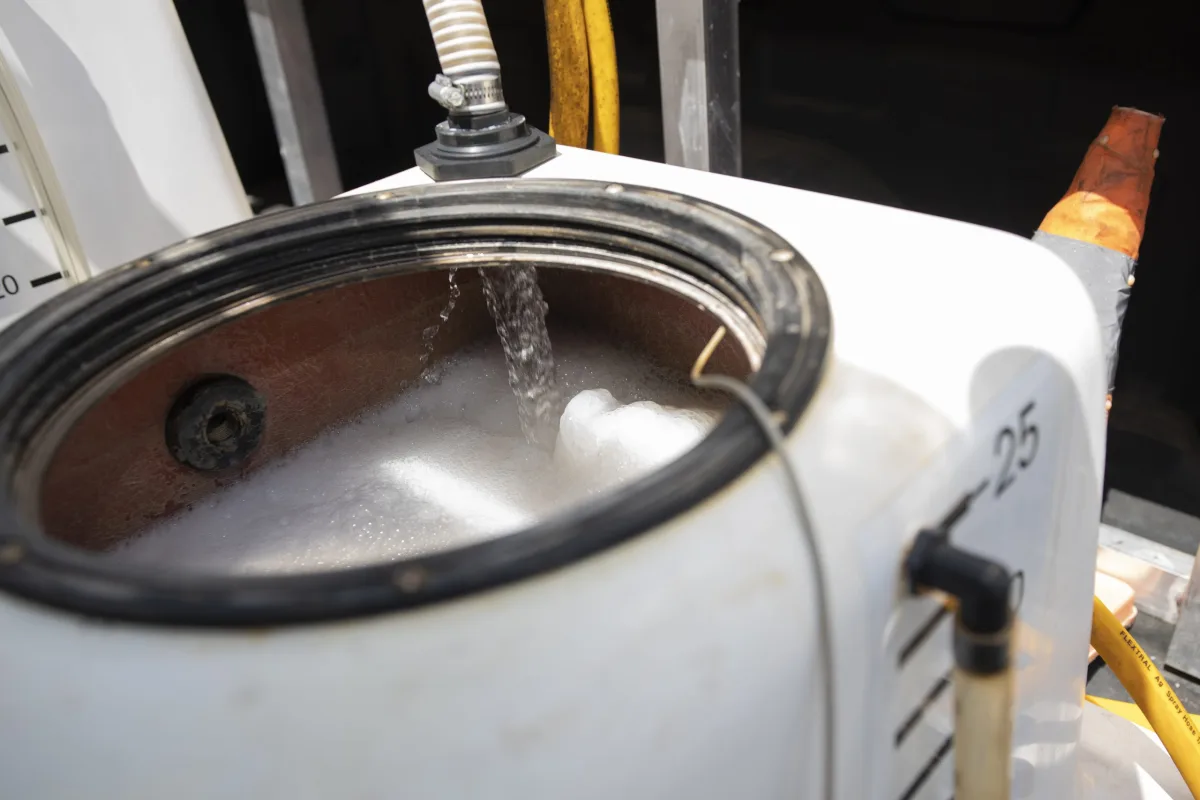
The producer strain belongs to the fourth hazard class, i.e., it is harmless to humans and warm-blooded animals. Guaranteed storage life — 1.5 months. Packaging: 50 and 220 l barrels. Manufacturer: VIZR and the Agency for Biochemical Protection of Agrocomplexes
Read next
Plant protection For agronomists
Application of biological preparations based on bacteria and actinomycetes for plant protection
Plant protection For agronomists
Methods of tomato protection against powdery mildew and fungal diseases
Plant protection For agronomists